There was a time when every open-world crime game got one label:
“GTA clone.”
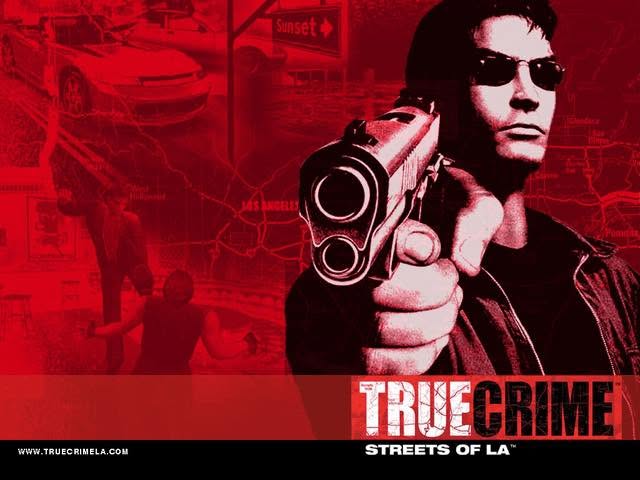
It didn’t matter what it did differently. If you could drive a car, punch somebody, and explore a city, the comparison was inevitable. But True Crime: Streets of LA wasn’t trying to make you the criminal. It wanted to know what would happen if the loose cannon was wearing the badge.
If you mention True Crime: Streets of LA today, chances are you’ll hear one of two reactions.
The first: “Oh yeah… I forgot about that game.”
The second: “Wasn’t that just a GTA clone?”
It’s an understandable reputation.
Released in 2003, True Crime arrived right in the middle of Grand Theft Auto’s explosion in popularity. Every publisher wanted its own open-world sandbox, and Activision wasn’t about to sit on the sidelines.
On the surface, the similarities were obvious.
- An open city.
- Cars to drive.
- Gunfights.
- Pedestrians.
- Side activities.
If you only watched thirty seconds of gameplay, you’d probably assume they were chasing Rockstar’s success. But the moment you picked up the controller, something became clear.
This wasn’t a game about becoming a criminal kingpin.
It was about trying to clean the city up… even if your methods occasionally looked like they belonged in an action movie directed by someone who had consumed entirely too much coffee.
That made all the difference.
People remember True Crime because of the city. They should remember it because of the badge. Once you’re the one enforcing the law instead of breaking it, the entire open-world formula changes.
Mechanics — Being a Cop Is Harder Than Being a Criminal
At its heart, True Crime: Streets of LA is an open-world action game, but the rhythm feels completely different from its contemporaries.
You play as Nick Kang, an LAPD detective with a reputation for bending rules almost as often as he follows them. Instead of stealing cars and outrunning police, you’re responding to crimes, chasing suspects, conducting traffic stops, and deciding how much force is actually necessary.
That last part was surprisingly ambitious. Every encounter presents a choice.
- Do you arrest the suspect?
- Do you shoot them?
- Do you let them go?
Your decisions influence your standing as an officer, affecting your progression and even helping determine which ending you’ll ultimately receive.
The game also mixes driving, third-person shooting, and surprisingly robust martial arts combat. Nick isn’t just another action hero with a pistol—he’s capable of chaining punches, kicks, throws, and counters that make street fights feel more like a Hong Kong action film than a typical crime game.
For 2003, that was a remarkably varied gameplay loop.
Story & Characters — Every Cop Movie Rolled Into One
Nick Kang is, without question, one of the most early-2000s protagonists ever created.
- He’s sarcastic.
- Hot-headed.
- Unconventional.
He’s constantly irritating his superiors while somehow remaining one of their best detectives. Sound familiar? That’s because True Crime proudly wears its inspirations on its sleeve.
You can see pieces of Lethal Weapon, Rush Hour, Bad Boys, Training Day, and countless other police thrillers woven throughout the story.
Nick’s investigation into organized crime quickly becomes personal as he uncovers connections to his father’s murder and a conspiracy stretching across Los Angeles.
Is it over-the-top? Absolutely.
- Corrupt officials.
- Triads.
- Russian mobsters.
- Double-crosses.
- Ancient secrets.
At one point, the game almost seems to look directly at the player and say, “You know what? Let’s make this even crazier.” And somehow… it works. Because it fully commits to the bit.
World / Visuals / Atmosphere — Los Angeles Becomes the Star
One of the game’s biggest achievements was recreating Los Angeles on a scale that felt genuinely impressive at the time.
- Hollywood.
- Downtown.
- Residential neighborhoods.
- Industrial districts.
The city feels busy, unpredictable, and alive. Random crimes can break out while you’re simply driving between missions.
You can ignore them. Or pull over and handle the situation.
That simple mechanic changes exploration dramatically. Instead of causing chaos wherever you go, you’re constantly reacting to it. It’s a subtle shift, but it gives True Crime an identity all its own.
Sound & Music — Peak Early-2000s Energy
If you wanted a soundtrack that screamed 2003, True Crime delivered. Hip-hop. Rock. Electronic beats. Everything about the presentation feels ripped straight from the era’s biggest action movies.
The voice acting leans heavily into the genre, with Nick Kang delivering one-liners that somehow manage to be both cheesy and incredibly charming.
Meanwhile, the sound design sells every screeching tire, every martial arts strike, and every chaotic shootout. It’s loud. It’s dramatic. It’s unapologetically cinematic. Exactly as it should be.
Before Morality Systems Became Cool
Looking back, one of the most fascinating things about True Crime is how many ideas it experimented with.
- Branching endings.
- Player morality.
- Open-world policing.
- Hand-to-hand combat mixed seamlessly with gunplay.
- Random world events.
Today, many of those features feel normal. Back then? They were surprisingly bold. Not every system landed perfectly, but the ambition deserves recognition. Sometimes being first is just as important as being best.
WHY IT MATTERS
Gaming history has a funny habit of celebrating the games that perfected an idea while quietly forgetting the ones that helped invent it. True Crime: Streets of LA belongs firmly in that second category.
It dared to ask a question most open-world games weren’t asking: “What if the player wasn’t the criminal?” That perspective shift opened the door for later titles like Sleeping Dogs, L.A. Noire, and other games that blended open-world freedom with structured law enforcement or investigative storytelling.
Did True Crime have rough edges? Absolutely. Did it deserve to be remembered as nothing more than a GTA clone? Not even close.
It was trying to do something different. And in many ways, it succeeded.
MODERN CONNECTION
Today, players celebrate games that let them shape the story through their choices. They expect branching narratives, morality systems, and dynamic worlds.
True Crime was experimenting with those ideas over twenty years ago. You can see its fingerprints all over modern open-world design.
And perhaps most importantly, it reminds us of something the PlayStation 2 era did remarkably well: Developers weren’t afraid to swing for the fences.
Some ideas missed. Some became classics. But almost all of them were memorable.
True Crime: Streets of LA may not have changed gaming forever. But it absolutely helped make the road a little wider for the games that followed.
QUESTION
Let’s settle this one.
When you think of underrated PlayStation 2 games, does True Crime: Streets of LA deserve a place near the top of the list… Or is there another forgotten gem that deserves the spotlight even more?