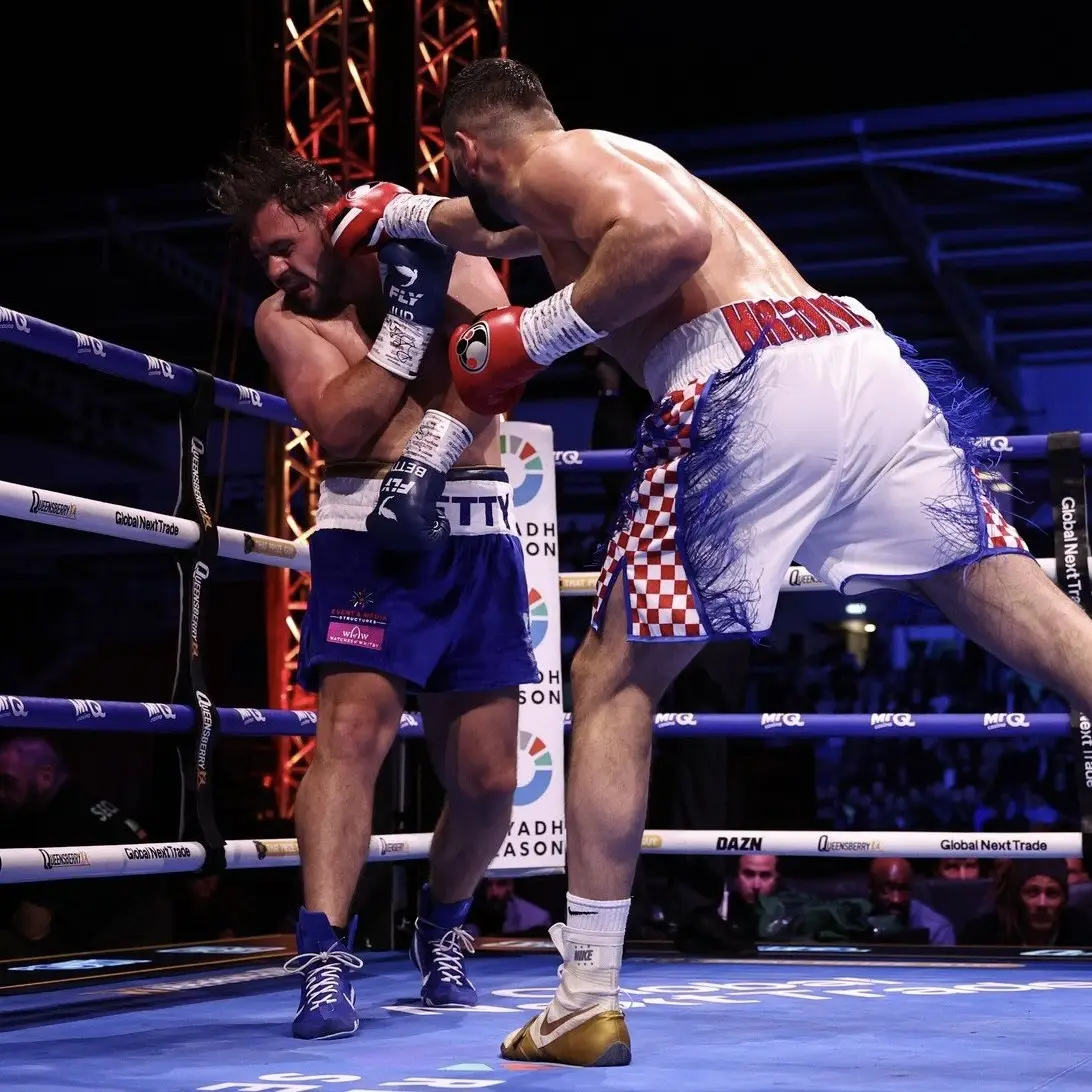
Every sport has its folklore.
The impossible comeback.
The legendary champion.
The rivalry that fans still argue about decades later.
But sometimes the most important story isn’t about what happened inside the ropes.
Sometimes it’s about who was watching.
This week in 1939, one of the first major boxing matches ever broadcast on American television took place at Yankee Stadium.
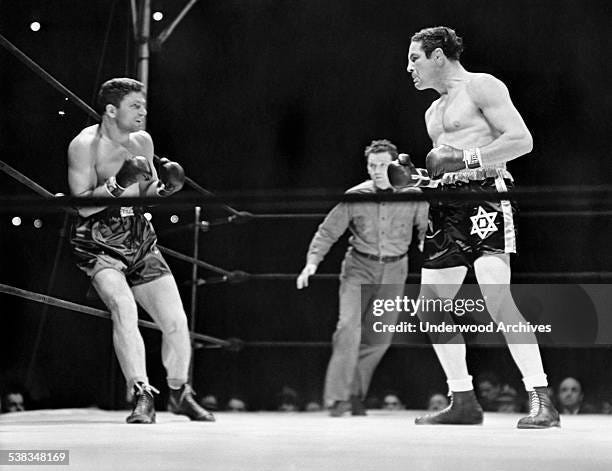
Former heavyweight champion Max Baer faced rising contender Lou Nova. Nova would eventually win by technical knockout in the eleventh round.
At the time, it probably felt like a novelty.
Today, it looks like the beginning of something much bigger.
Because long before the NFL dominated Sundays, long before ESPN became a household name, and long before millions of people streamed games on their phones, boxing helped prove that sports and television belonged together.
And that changed everything.
Most people think of boxing’s history through its champions.
Muhammad Ali.
Joe Louis.
Mike Tyson.
Sugar Ray Leonard.
The assumption is simple:
Great fighters made boxing popular.
And that’s true.
Boxing has always had larger-than-life personalities. The sport practically manufactures characters. Heroes. Villains. Comebacks. Tragedies. Redemption arcs.
If Hollywood invented a sport, it would probably look a lot like boxing.
Two competitors. One winner. No teammates to blame. No clock to save you.
Just you and the person standing across the ring.
It’s easy to see why fans were drawn to it.
But here’s the thing…
The fighters made people care.
Television made everyone watch.
And once those two forces met, sports would never be the same.
The Origin Story
When that Max Baer-Lou Nova fight aired in 1939, television was still in its infancy.
Very few Americans actually owned televisions.
Broadcast signals only reached limited areas.
Nobody knew if sports would work on this strange new medium.
Radio had already become a massive success. Families gathered around living rooms listening to baseball games, boxing matches, and horse races unfold through the power of imagination.
Television was asking a different question:
What happens when people can see it?
The answer turned out to be obvious.
Sports were perfect for TV.
They were live.
They were unpredictable.
They created natural drama.
And unlike scripted entertainment, nobody knew the ending.
Boxing, perhaps more than any other sport, showcased those strengths immediately.
The camera could focus on the fighters.
The audience could see the punches land.
The tension translated through the screen.
You didn’t need to understand strategy to understand conflict.
The Key Characters
The timing couldn’t have been better.
In the years that followed, boxing became one of television’s first superstar attractions.
The sport already had charismatic champions.
Joe Louis wasn’t just a fighter. He was a national figure.
His bouts drew enormous attention.
People didn’t simply watch the fights.
They experienced them together.
Later came Rocky Marciano.
Then Muhammad Ali.
Then Joe Frazier.
Then George Foreman.
Then Floyd Mayweather.
Then Tyson Fury.
Every generation seemed to produce another unforgettable personality.
And television loved all of them.
Because television doesn’t just broadcast competition.
It broadcasts stories.
Muhammad Ali understood this instinctively.
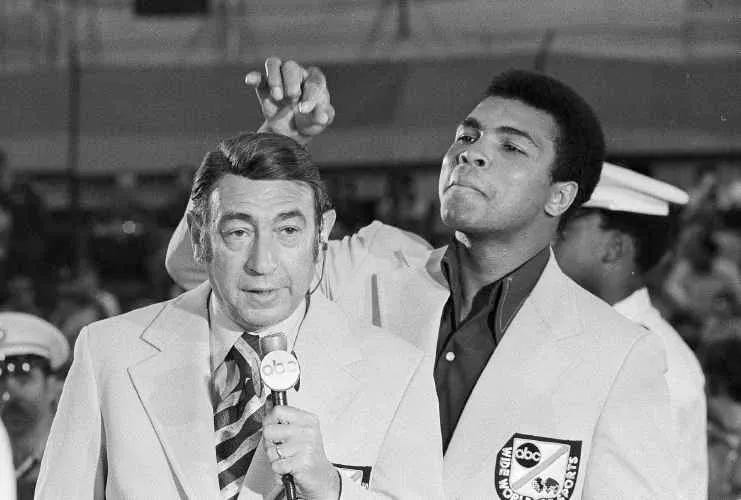
His interviews became as famous as his punches.
His predictions became part of the show.
The fight began long before the opening bell.
Modern athletes do this every day on social media.
Ali was doing it decades before Twitter existed.
Defining Moments
As television grew, boxing grew with it.
Friday Night Fights became appointment viewing.
Networks discovered that live sports kept audiences engaged.
Sponsors discovered people would stay through commercials.
Executives discovered viewers would return week after week.
It sounds obvious now.
In the 1940s and 1950s, it wasn’t.
Boxing became one of the first sports to prove that television wasn’t just another distribution method.
It was a force multiplier.
The irony is that television eventually helped create some of boxing’s challenges too.
When fans could watch major fights from home, live attendance became less essential.
As technology evolved, boxing adapted again.
Closed-circuit broadcasts.
Premium cable.
Pay-per-view.
Streaming.
In many ways, boxing became the laboratory where sports media learned what worked.
The Weird Fact
Here’s the part I love.
The first major televised boxing matches were watched by an audience so small that many Americans had never even seen a television.
Imagine explaining that to someone today.
A sporting event broadcast on a technology that barely existed.
Yet within a few decades, sports television would become one of the largest entertainment industries on Earth.
Those early broadcasts weren’t just showing fights.
They were showing the future.
Why This Matters
It’s easy to think of television as something that simply arrived.
But every medium needs a reason for people to care.
Sports became one of those reasons.
And boxing was one of the first sports to prove the concept.
The relationship transformed both industries.
Television gave sports larger audiences.
Sports gave television reliable audiences.
Together, they created a cultural force that still shapes how we spend weekends, how we connect with family, and how entire communities share experiences.
Every time millions of people gather around a screen for the Super Bowl, the World Series, March Madness, or the Olympics, they’re participating in a tradition that traces part of its lineage back to those early boxing broadcasts.
Modern Connection
In some ways, the questions from 1939 are the same questions we ask today.
Back then, people wondered:
Who would watch sports on television?
Today we ask:
Who would watch sports on YouTube?
Who would watch sports on Netflix?
Who would watch sports on Twitch?
The technology changes.
The question stays the same.
And every generation eventually discovers what the last one learned:
People don’t just watch sports because of the result.
They watch because of the story.
That’s why Rocky still works.
That’s why sports anime works.
That’s why rivalries, underdogs, champions, and comeback stories continue to capture us.
The medium evolves.
The storytelling doesn’t.
Final Whistle
The Max Baer-Lou Nova fight wasn’t the biggest boxing match ever.
It wasn’t the most famous.
It wasn’t even the most important fight in either man’s career.
But it was part of something larger.
A moment when a new technology and an old sport found each other.
And together, they helped create the world of sports media we live in today.
Not bad for a Tuesday night at the fights.
Ctrl+Binge Question
Which sport do you think benefited most from a new technology?
Boxing and television?
Baseball and radio?
Football and television?
Basketball and cable?
Or something else entirely?