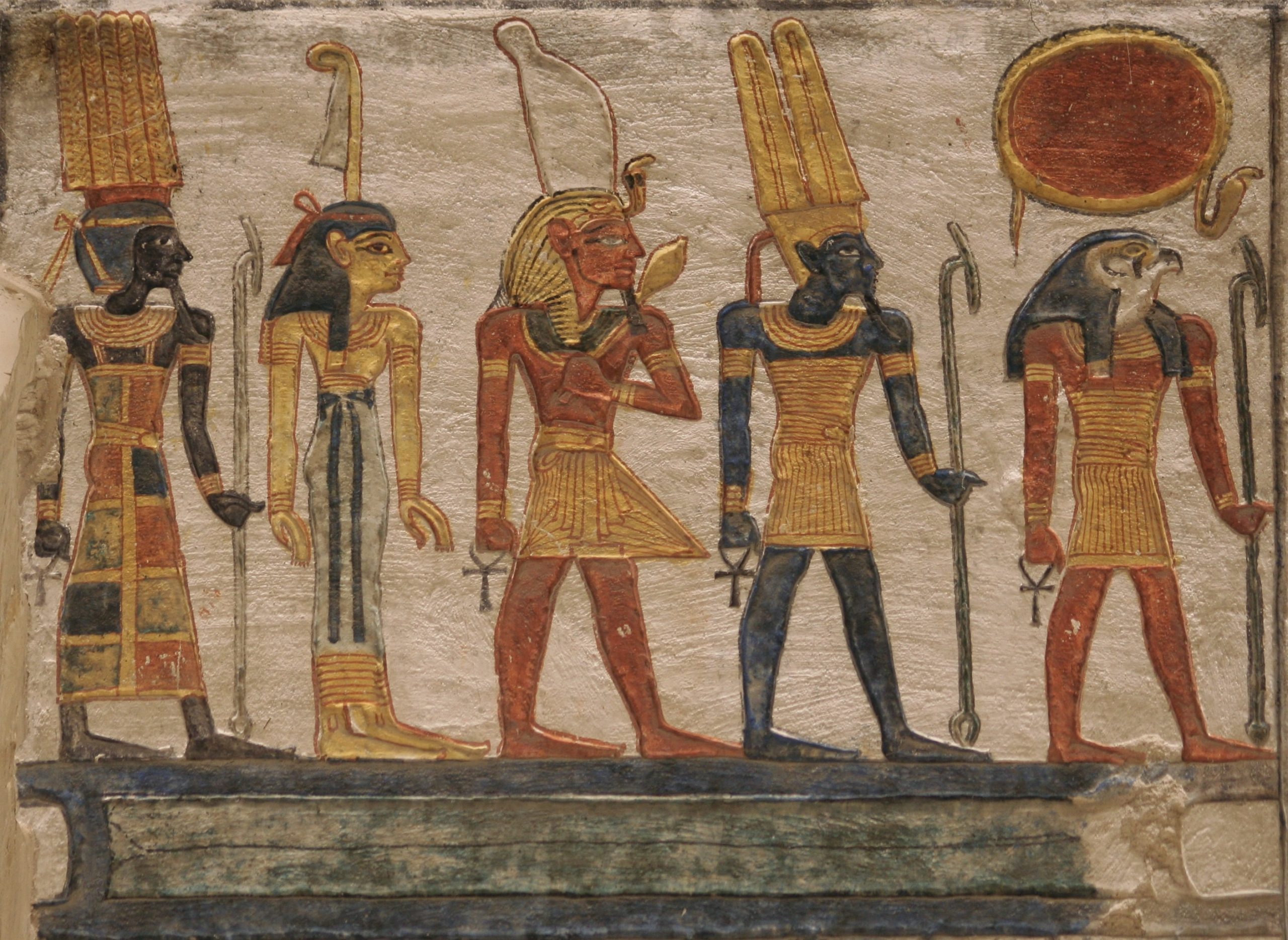
Everybody knows the Egyptian gods.
- The jackal-headed one.
- The falcon-headed one.
- The guy carrying the sun across the sky.
- The one wrapped like a mummy.
You’ve seen them in movies, video games.
anime and trading cards. Yet somehow, they always feel distant. Ancient. Untouchable. But here’s the strange thing: The central story of Egyptian mythology isn’t really about pyramids. Or mummies. Or animal-headed gods.
It’s about a kingdom thrown into chaos. A beloved king murdered by his own brother. A queen who refuses to let death win. A child raised in hiding. A usurper sitting on a stolen throne. And a war that would decide not just who ruled Egypt…but whether order itself could survive. Because beneath all the gold masks and temple walls lies one of mythology’s greatest stories:
A family.
And like the best family stories?
It’s messy.
Which raises a better question: What if Egyptian mythology wasn’t a collection of random gods at all? What if it was one enormous family saga?
THE FAMILIAR VERSION
Most people know a handful of Egyptian gods.
- Ra is the sun god.
- Anubis is the jackal-headed guide of the dead.
- Horus is the falcon warrior.
- Set is the villain.
- Isis is the powerful goddess of magic.
- And Osiris is usually the mummy-looking king of the underworld.
Pop culture tends to treat them like separate characters. A collection of cool designs. Boss fights waiting to happen. You’ll see them pop up in everything from Moon Knight to Assassin’s Creed Origins, from Yu-Gi-Oh! to Smite.
Most adaptations focus on the visuals: Animal heads. Golden armor. Pyramids. Deserts. Ancient magic.
Those visuals are awesome.
But they can accidentally make Egyptian mythology feel more complicated than it actually is.
Because at its core, the Egyptian pantheon isn’t a giant collection of unrelated gods.
It’s a family tree. A very powerful family tree. And nearly every major story connects back to one central conflict:
Who deserves to rule?
The rightful king?
Or the one strong enough to take the throne?
That question drives almost everything. And it turns Egyptian mythology into something surprisingly familiar. Not a mythology textbook.
A dynasty drama.
Then mythology takes a hard left turn.
THE DEEP DIVE
THE HEAVY HITTERS OF THE PANTHEON
Before we dive into the family feud, let’s meet the main cast.
☀️ Ra — the sun itself. Creator, king, and cosmic engine of the universe.
👑 Osiris — ruler of Egypt, symbol of civilization, and eventually lord of the dead.
🪄 Isis — goddess of magic, motherhood, protection, and arguably the smartest person in the mythology.
⚔️ Set — God of storms, deserts, violence, and chaos.
🦅 Horus — the avenging son and rightful heir to the throne.
⚖️ Anubis — guide of the dead and keeper of the scales.
📜 Thoth — wisdom, writing, knowledge, and divine record keeper.
If Egyptian mythology were a fantasy RPG…
This is your main party.
THE MURDER OF OSIRIS
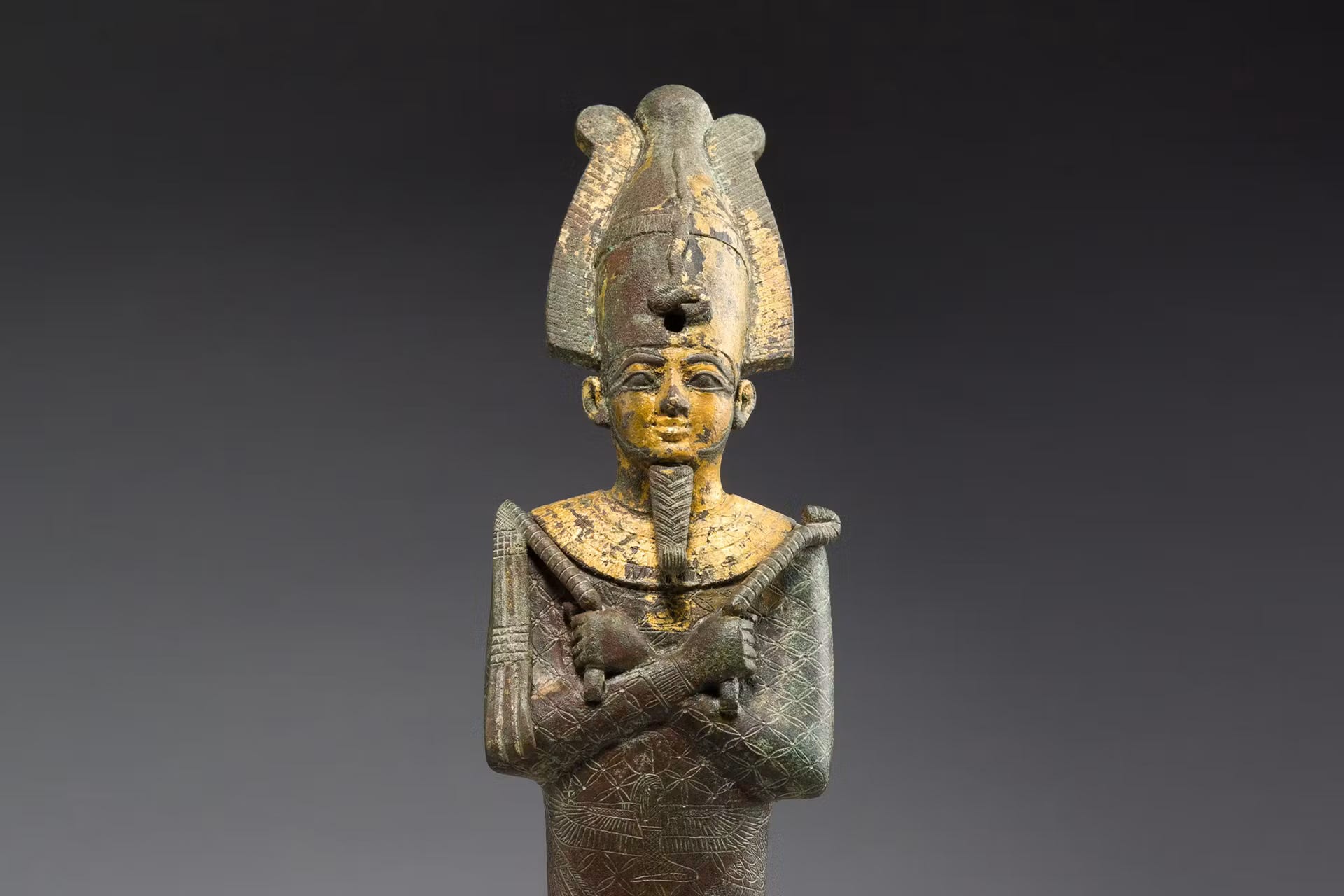
At the center of everything stands Osiris.
According to tradition, Osiris ruled Egypt during a golden age. He taught agriculture. He taught law. He brought order to civilization. People loved him.
And that’s exactly why Set hated him.
Depending on the version, Set is jealous. Or ambitious. Or convinced he deserves the throne. Regardless of the motive, the outcome is the same.
Set decides Osiris has to go.
So, he creates one of mythology’s most elaborate assassination plots. He commissions a beautiful chest crafted precisely to Osiris’s measurements. Then he hosts a banquet. Anyone who fits perfectly inside gets to keep it. Naturally, Osiris climbs in. The lid slams shut. The chest is sealed. And it is thrown into the Nile.
The king is dead.
At least, that’s the plan.
ISIS REFUSES TO ACCEPT THE END
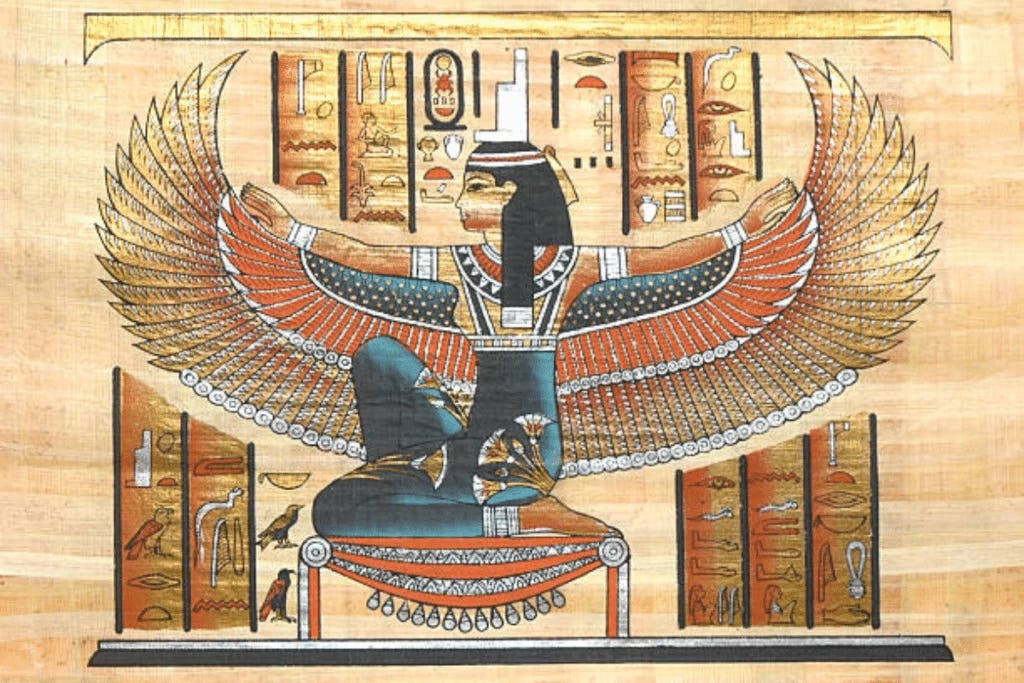
If Osiris is the heart of the story, Isis is its soul. Most mythology gives us powerful warriors. Isis wins through persistence.
When Osiris disappears, she doesn’t surrender. She searches.
- Across rivers.
- Across kingdoms.
- Across the world.
Eventually she recovers his body.
In some versions, Set discovers this and becomes furious. He tears Osiris apart and scatters the pieces across Egypt. It’s one of the most brutal moments in ancient mythology. And Isis goes searching again. Piece by piece.
Literally.
Eventually she gathers enough of him together to perform one of mythology’s earliest resurrection stories. For a brief moment, Osiris returns. Long enough for Isis to conceive a child:
Horus.
The future heir. The future avenger. The future problem for Set.
HORUS VS SET: THE DIVINE CIVIL WAR
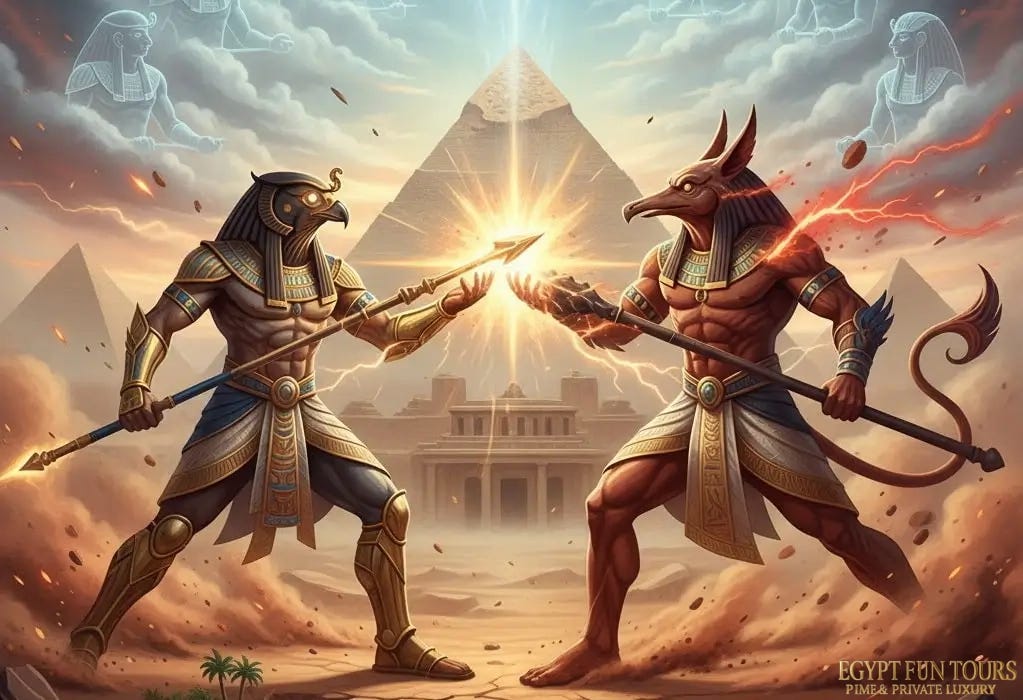
Horus grows up knowing one thing: The throne belongs to him.
Set disagrees.
What follows isn’t a single battle. It’s an entire mythology’s worth of conflict. Because Egyptian mythology keeps returning to one question:
Who should rule?
The rightful heir? Or the strongest survivor?
That’s not an ancient question. That’s a human question. The Egyptians simply turned it into a cosmic war.
Different stories describe:
- massive battles
- contests of strength
- courtroom debates among the gods
- magical duels
- transformations into animals
At one point Horus loses an eye. The famous Eye of Horus becomes one of the most important symbols in Egyptian culture. Eventually the gods rule in Horus’s favor. Set loses. The rightful king takes the throne. Order is restored.
Mostly.
WHERE ANUBIS FITS IN
One of the biggest surprises for modern audiences? Anubis isn’t originally the ruler of the dead: That’s Osiris.
After his death and resurrection cycle, Osiris becomes king of the underworld. Anubis takes on a different role. He becomes the guide; an escort and the one who helps souls navigate the afterlife.
He’s also associated with one of Egyptian mythology’s most iconic scenes: The Weighing of the Heart.
After death, your heart is placed on one side of a scale. A feather representing truth and justice sits on the other. If your heart is balanced? You move forward. If it’s heavier? Let’s just say eternity gets significantly worse.
It’s one of the oldest moral judgment systems in mythology.
Truthfully?
Still a pretty effective image.
THE WEIRD STUFF
This is the part people usually leave out. There isn’t one Egyptian mythology. There are many. Different cities favored different gods. Different temples told different versions of creation. Different eras elevated different divine figures.
Sometimes gods merged together.
Literally.
Ra becomes Ra-Horakhty.
Amun becomes Amun-Ra.
Multiple truths existed simultaneously. And the Egyptians didn’t seem nearly as bothered by contradictions as modern fandoms. They were comfortable with symbolism. Comfortable with overlap. Comfortable with mystery.
Which feels surprisingly modern.
POP CULTURE TAKEOVER
Modern media absolutely loves Egyptian mythology. It’s easy to see why. The visual design alone is incredible. You can find Egyptian gods everywhere:
- Moon Knight
- Assassin’s Creed Origins
- Age of Mythology
- Smite
- Yu-Gi-Oh!
- countless anime and fantasy games
But modern adaptations usually focus on the aesthetics of animal heads with ancient magic inside desert temples filled with golden relics.
The original stories are far messier, far more human and far more emotional.
They’re less about ancient monsters…and more about
- Grief.
- Justice.
- Legacy.
- Power.
- Family.
In many ways, Egyptian mythology isn’t mythology’s answer to a monster movie. It’s mythology’s answer to Game of Thrones. Just with more falcons and fewer (but never zero) dragons.
WHY WE KEEP TELLING THIS STORY
Because the questions never go away.
Who deserves power? Can justice survive betrayal? Can a family survive ambition? Can order ever fully defeat chaos? Can death truly win?
The Egyptians wrapped those questions in gods. We wrap them in superheroes, fantasy novels, anime protagonists and video game heroes.
But we’re still asking the same questions thousands of years later.
The costumes change. The questions don’t.
And that’s why these stories endure.
Not because they are old.
Because they are familiar.
CTRL+BINGE CONNECTION
This is why Egyptian mythology keeps showing up everywhere. Not just because the designs are cool. Though they absolutely are. It’s because the core story still works.
A murdered king.
A grieving queen.
A rightful heir.
A usurper.
A battle for the future.
That’s not ancient storytelling. That’s eternal storytelling. Every generation finds a new way to tell it. Every generation finds a new Set.
A new Horus.
A new struggle over who should lead.
The mythology survives because the conflict survives.
Five thousand years later, we still remember their names. Not because they were gods, but because they were family. They loved. They betrayed. They grieved. They fought. They hoped. The Egyptians simply made those emotions large enough to echo across millennia.
And somehow…we’re still listening.
THE QUESTION THAT LINGERS
If you had to pick the most important figure in Egyptian mythology—
Ra, Isis, Osiris, Horus, Anubis, Set, or Thoth—
who would you choose? And does that answer say more about the mythology… or about what you value in a hero?