Forty years ago, everyone forgot. Not one person. Not one family. Not one city block. Everyone.
An entire civilization woke up one day without its past. No history. No context. No memory of what happened before. And somehow, life went on.
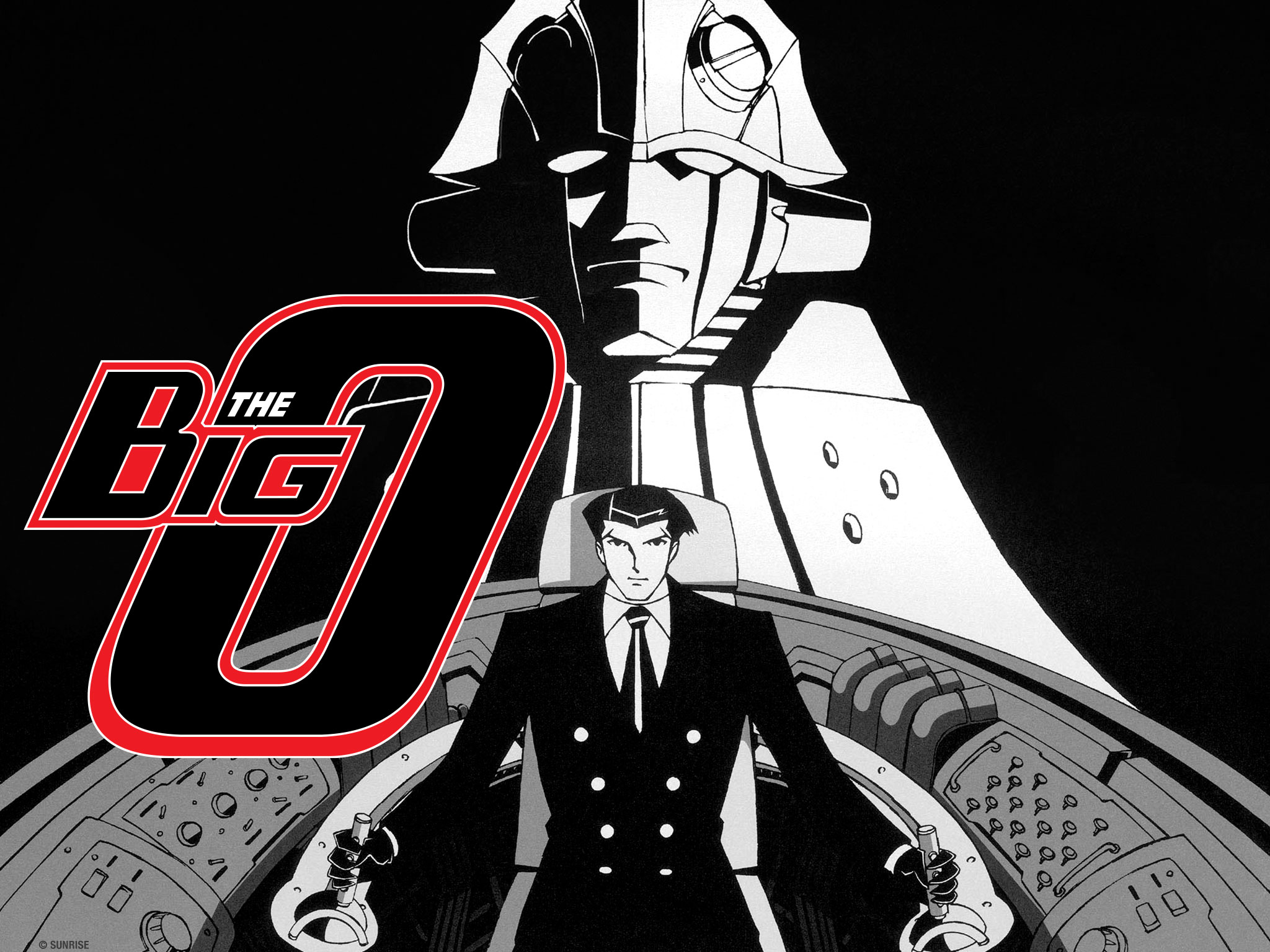
That is the beautifully strange nightmare at the center of The Big O, one of the quirkiest, coolest, most oddly stylish mecha anime ever made.
At first glance, this looks like Batman with a giant robot.
You have Roger Smith, a sharply dressed negotiator in black, driving around Paradigm City in a sleek car, solving mysteries with the help of a loyal butler, a deadpan android, and enough rich-guy confidence to make Bruce Wayne nod in approval.
Then things go sideways. A skyscraper-sized robot rises from beneath the city. Jazz starts kicking. Buildings crumble. Roger declares that it is “showtime.” And suddenly, a noir detective story turns into a giant robot slugfest.
But that is only the surface. Because The Big O is not really about giant robots. It is about memory. And what happens when an entire society forgets who it is.
The Big O takes place in Paradigm City, a massive, gloomy metropolis where every person lost their memories forty years before the story begins. Nobody knows exactly what happened. Nobody remembers what the world used to be. Nobody knows what caused the event.
The city simply survives.
- People work.
- People argue.
- People build.
- People lie.
- People pretend everything is normal.
In the middle of all this is Roger Smith, a professional negotiator who handles dangerous disputes, ransom cases, corporate secrets, and the kind of problems normal law enforcement cannot solve.
He is calm, stylish, wealthy, stubborn, and deeply committed to doing things his way.
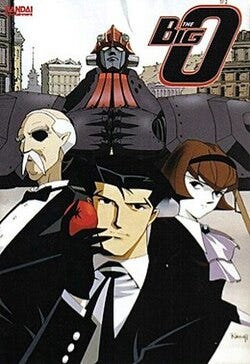
Roger is joined by Norman, his loyal butler and mechanic, and R. Dorothy Wayneright, an android with a dry wit so sharp it could cut steel.
And when diplomacy fails? Roger summons Big O, a massive black Megadeus from the forgotten past. That is the hook.
The Big O is part detective noir, part superhero story, part mecha anime, part mystery box, and part philosophical fever dream. Imagine Batman: The Animated Series, Gundam, film noir, kaiju movies, and jazz all getting locked in the same elevator.
Somehow, it works.
Most people think The Big O is just the anime where Batman pilots a giant robot. Truthfully? That description is not wrong.
Roger Smith absolutely gives off anime Bruce Wayne energy.
- He wears black.
- He lives in a mansion.
- He has a loyal butler.
- He drives a cool car.
- He solves crimes in a corrupt city.
- He has a strict personal code.
And when things get out of hand, he brings out the big dramatic symbol of justice. Except instead of a bat-shaped costume, Roger has a giant robot that can punch monsters through buildings.
That alone would be enough to make The Big O memorable. The show is stylish in a way few anime are.
It has that smoky, shadowy, art deco look. It loves dramatic lighting. It loves absurd villain entrances. It loves mechanical spectacle. It has a soundtrack that gives the whole thing a swagger most shows would kill for.
And yes, it can be very funny.
Dorothy’s deadpan delivery alone gives the show a completely different rhythm than most mecha anime. Roger can be suave one minute and hilariously exasperated the next. Jason Beck shows up like a cartoon criminal who wandered into the wrong genre and decided to stay.
The Big O is strange, cool, theatrical, and sometimes ridiculous in the best possible way. But treating it as only “Batman with a robot” undersells what makes it special. That is the shallow read. Because beneath all that style is one of the most fascinating identity stories in anime.
The real story lives underneath Paradigm City. Under the domes. Under the streets. Under the polite lies everyone tells themselves. The Big O is not really asking, “Can Roger defeat the monster this week?”
It is asking: If your memories disappear, are you still you? And if a whole society forgets its history, what does it become?
Roger Smith
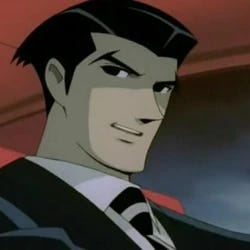
Roger Smith is one of the coolest protagonists in anime because he feels like he walked out of three different genres at once.
- He is a detective.
- A negotiator.
- A gentleman.
- A rich eccentric.
- A reluctant hero.
- A man with a giant robot parked somewhere under the city.
Roger works because he is not a hot-blooded mecha pilot in the usual sense. He is not screaming about destiny every episode. He is not trying to become the strongest. He is not chasing glory.
He is trying to keep order in a city that barely understands itself. His job title matters. Roger is a negotiator. That means he believes problems can be solved through words, compromise, leverage, and understanding.
Which makes it very funny that his backup plan is a giant robot named Big O. That contradiction is the whole charm of the character. Roger wants to be civilized in an uncivilized world. He wants rules in a city built on missing information.
He wants truth in a place that survives by avoiding it. And over time, you start to realize Roger’s confidence might not just be style. It might be armor. Because he is living in the same amnesiac world as everyone else. He does not fully know who he is either.
R. Dorothy Wayneright
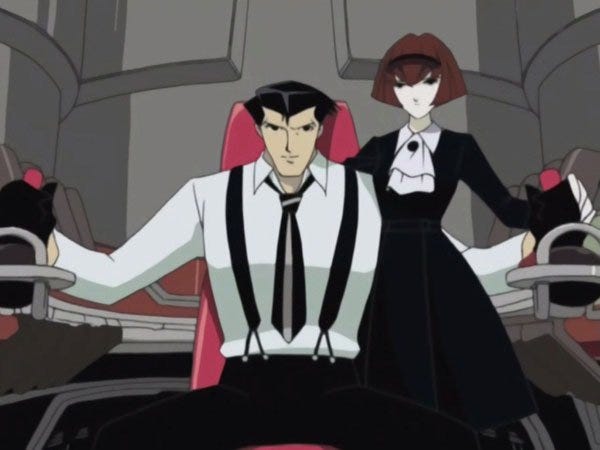
Dorothy is one of the best parts of the show. She is an android, but the series wisely avoids making her just a cold machine learning emotions in the most obvious way possible. Instead, Dorothy is dry, blunt, strange, and quietly hilarious.
Her relationship with Roger gives the show a lot of its personality. She needles him. He gets annoyed. She remains completely calm. He acts like he is in control. She proves he absolutely is not.
But Dorothy also strengthens the show’s deeper questions. In a city full of humans who have forgotten their past, the android may be one of the most emotionally honest people in the story. That is a wonderful contradiction.
Norman Burg
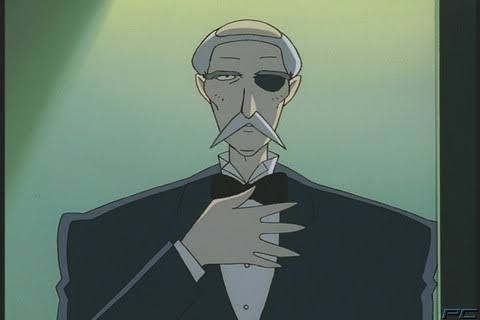
Norman is the butler every ridiculous gothic mansion deserves. He is loyal, capable, calm under pressure, and apparently ready for anything. Need tea? Norman has it. Need a giant robot repaired? Norman has that too.
Need someone to treat the apocalypse like a minor scheduling inconvenience Norman is your man. He adds warmth to the cast but also helps sell the show’s odd balance of elegance and absurdity.
The Supporting Cast
The Big O has a memorable bench of side characters
- Dan Dastun brings the weary police perspective.
- Angel adds mystery, glamour, and ambiguity.
- Schwarzwald turns obsession with truth into something almost mythic.
- Alex Rosewater represents the arrogance of people who believe they can control history.
And Jason Beck? Jason Beck is what happens when a Saturday morning cartoon villain crashes a noir thriller and refuses to leave.
The cast works because everyone reflects a different response to the same problem. Some people want truth. Some want power. Some want stability. Some want to bury the past forever. And Roger keeps getting pulled between them.
WORLDBUILDING
Paradigm City is the real main character. That might sound dramatic, but it is true. The city is not just a backdrop. It is the mystery.
Paradigm City feels like a place built out of fragments. There are domes covering parts of the city. There are abandoned areas. There are rich elites living above everyone else. There are people scraping by in the shadows. There are giant machines from a forgotten age buried beneath the streets.
Everything feels artificial and old at the same time. That is what makes the setting so effective. Paradigm City looks like a civilization that kept moving after its soul went missing.
People still go to work. The police still patrol. Businesses still operate. The wealthy still protect their comfort. Criminals still exploit weakness. But underneath all of it is a question nobody can escape: What happened forty years ago?
The show does not treat memory like simple backstory. Memory is currency. Memory is power. Memory is danger. To remember something in Paradigm City is not just to learn information. It is to threaten the structure holding the city together. That gives the world a strange tension.
Every case Roger takes could be just another job. Or it could be another crack in the city’s carefully maintained illusion. That is why the setting works so well. Paradigm City feels alive because it feels haunted. Not by ghosts. By missing history.
ACTION / POWER SYSTEM
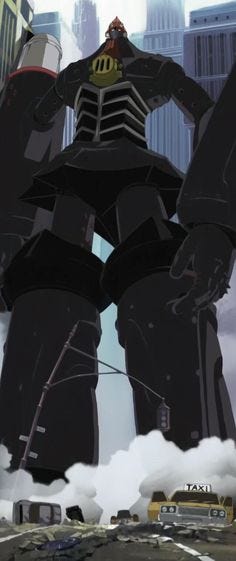
The action in The Big O is pure mecha theater. Big O does not move like a sleek, modern Gundam. It moves like a walking monument. It feels heavy. Massive. Ancient.
When Big O punches something, the impact feels like architecture losing an argument. That is part of the appeal. The fights are not always fast, but they have presence.
Big O rises like judgment. It does not just enter a fight. It arrives.
The Megadeus battles are strange, stylish, and often beautifully overdramatic. There are cables. Cannons. Missiles. Piston punches. Giant machines that look like nightmares dragged out of forgotten history.
And of course, there is the legendary cockpit phrase: “Cast in the name of God, ye not guilty.” That line alone tells you what kind of show this is. It is dramatic. It is weird. It is maybe a little too much. And that is exactly why it rules.
But the action is not just spectacle. The robots are tied to memory. They are artifacts of a past nobody understands. Every Megadeus feels like evidence from a forgotten crime scene. So, when Roger pilots Big O, he is not simply using a weapon. He is interacting with history. A history that might not want to stay buried. That gives the action weight.
The robot fights are fun because giant robots are fun. But they matter because every battle feels like the past trying to force its way back into the present.
EMOTIONAL CORE
The Big O is really about identity. That is the heart of the show. If memory shapes who we are, then what happens when memory is taken away? Are people still themselves? Can a city still be a city if it does not know its own history? Can justice exist without context? Can progress exist without memory?
Paradigm City is terrifying because it has adapted to amnesia. People have normalized the impossible. They do not understand the past, so they build routines around the present. They keep living because that is what people do.
But the show keeps asking whether survival is enough. That is where The Big O becomes more than just a cool mecha series. It is not simply about discovering what happened forty years ago. It is about whether people even want to know.
Because truth is dangerous. Truth can destroy comfort. Truth can expose lies. Truth can make people responsible for things they would rather forget. That is a very human fear.
Sometimes forgetting feels easier. Sometimes ignorance feels peaceful. Sometimes rebuilding without remembering seems like mercy.
But The Big O does not let that idea sit comfortably. Because if you do not remember who you were, someone else can tell you who to be. That is the nightmare.
A society without memory becomes easy to control. A person without identity becomes easy to manipulate. And that is why Roger matters.
He is not perfect. He is not all-knowing. He does not have all the answers. But he keeps pushing toward truth anyway. Even when the truth is absurd. Even when it hurts. Even when it makes no sense. That is what gives the show its emotional power.
Under all the jazz, robots, noir shadows, and deadpan comedy, The Big O is asking one of the biggest questions any story can ask: Who are we without our past?
STYLE / PRESENTATION
The Big O has one of the strongest visual identities in anime. You can recognize it instantly.
- The black suits.
- The domed city.
- The heavy shadows.
- The art deco architecture.
- The retro-futuristic machines.
- The noir lighting.
- The giant robot designs that look less like technology and more like buried gods.
This show has style for days. It does not look like most mecha anime. It does not feel like most mecha anime either. The influence of Western animation and detective fiction gives it a unique rhythm. There are moments where it feels closer to Batman: The Animated Series than Gundam. Then a giant robot appears and reminds you that, yes, this is still very much anime.
The soundtrack is a huge part of the personality. It gives the series swagger. Mystery. Melancholy. Sometimes even comedy. The music knows exactly when to be cool and exactly when to be enormous.
The voice performances also help sell the tone. Roger has to be charming without becoming smug. Dorothy has to be emotionless without becoming boring. Norman has to be absurdly competent without turning into a joke.
When those pieces click, the show becomes incredibly watchable. Even when the story gets strange, the presentation keeps you locked in. The Big O is not just weird. It is confidently weird. That makes all the difference.
LET’S BE FAIR
The Big O is not for everyone. The biggest issue is that the show can be very cryptic. If you need every mystery answered cleanly, this series may frustrate you. It loves ambiguity. It loves mood. It loves raising questions that do not always get simple explanations. That is part of its charm, but it can also be a barrier.
The pacing may also feel unusual for modern viewers. Some episodes work like standalone noir cases. Others push the larger mystery forward. Some are funny. Some are unsettling. Some feel like dream logic with giant robots.
That shifting rhythm is part of the experience, but it can feel uneven if you are expecting a more traditional mecha plot.
The ending is also famously divisive. Some viewers find it fascinating. Some find it confusing. Some find it brilliant and confusing at the same time. That might honestly be the most accurate reaction.
The show also leans heavily into style, which means certain characters and plot threads can feel more symbolic than straightforward. If you want clean answers, direct exposition, and tidy emotional closure, The Big O may not fully satisfy you.
But if you enjoy shows that linger in your brain afterward? This thing has staying power. The Big O is not perfect. It is too strange to be perfect. But that strangeness is also the reason people still talk about it.
WHO IS THIS FOR?
This is for people who love:
✔ Mecha anime with personality
✔ Noir detective stories
✔ Batman-style city mysteries
✔ Giant robots with weight and presence
✔ Weird philosophical anime
✔ Stylish retro-futuristic worlds
✔ Deadpan comedy
✔ Shows that feel unlike anything else
✔ Mystery boxes that actually have atmosphere
This may NOT be for you if:
✖ You need clear answers immediately
✖ You dislike slower episodic storytelling
✖ You only want fast-paced robot battles
✖ Ambiguous endings drive you insane
✖ Older anime presentation is hard for you to get into
The Big O is best for viewers who like vibes, questions, atmosphere, and giant robots punching metaphors through buildings.
WHY IT MATTERS
The Big O matters because it is one of the rare mecha anime that feels completely singular.
It is not trying to be Gundam. It is not trying to be Evangelion. It is not trying to be a traditional superhero show. It is its own strange machine. That is important.
Anime is full of giant robots, but not many mecha shows use the genre this way. The Big O turns the robot into an extension of memory. A symbol of lost history. A weapon from a past nobody understands. A question mark with fists.
It also stands out as a fascinating bridge between Japanese and Western influences. You can feel the noir detective inspiration. You can feel the superhero influence. You can feel the kaiju energy. You can feel the mecha tradition. But none of those pieces overwhelm the others. They combine into something that feels oddly timeless.
The show also has a special place for many Toonami-era fans. For a certain generation, The Big O was one of those late-night anime experiences that felt different from everything else on television. It was cool. It was strange. It was stylish. It made no apologies for being confusing. And for some viewers, that was the hook.
Because sometimes the shows that stay with us are not the cleanest ones. They are the ones that make us ask questions years later. The Big O is absolutely one of those shows.
CTRL+BINGE FINAL TAKE
The Big O is not great because it explains everything. It is great because it makes forgetting feel terrifying.
This is a kickass, quirky, sometimes funny mecha noir about a sharply dressed negotiator, his deadpan android partner, his absurdly capable butler, and a giant robot that rises like judgment from beneath a city with no past.
But underneath all that style is a haunting question: If we lose our memories, do we lose ourselves?
Watch it for the robot fights.
Stay for the jazz, the mystery, the weird comedy, the gothic city, and the feeling that every answer is hiding under forty years of dust.
The Big O is not just one of the strangest mecha anime ever made.
It is one of the coolest.
QUESTION
If forgetting the past gave everyone a chance to start over…
Would that be freedom?
Or would it just make us easier to control?
FAQ
Is The Big O beginner friendly?
Yes, but with a warning. The premise is easy to understand, but the mystery becomes more abstract as the series goes on.
Is The Big O basically Batman with a giant robot?
That is the easiest description, and it is not wrong. But the show is also a noir mystery about memory, identity, power, and forgotten history.
How many episodes is The Big O?
The anime has 26 episodes across two seasons.
Is The Big O a mecha anime?
Yes. But it is a very unusual mecha anime. The giant robots matter, but the real focus is mystery, atmosphere, memory, and identity.
Is The Big O worth watching today?
Absolutely, especially if you enjoy stylish, strange, atmospheric anime that does not feel like everything else.