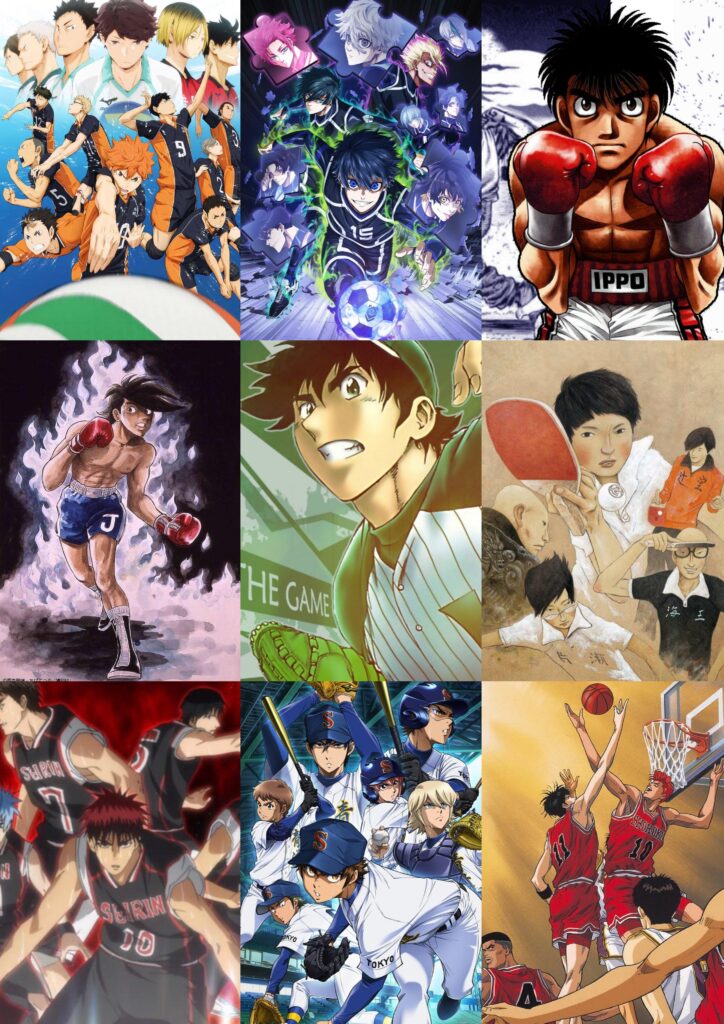
It’s just a game.
A ball. A court. A ring.
No monsters. No magic. No world-ending stakes.
And somehow… it feels like everything is on the line.
Sports anime and manga take something familiar — games we’ve all seen or played — and turn them into something bigger.
A volleyball match becomes a war.
A basketball game feels like destiny.
A single punch can change a life.
Series like:
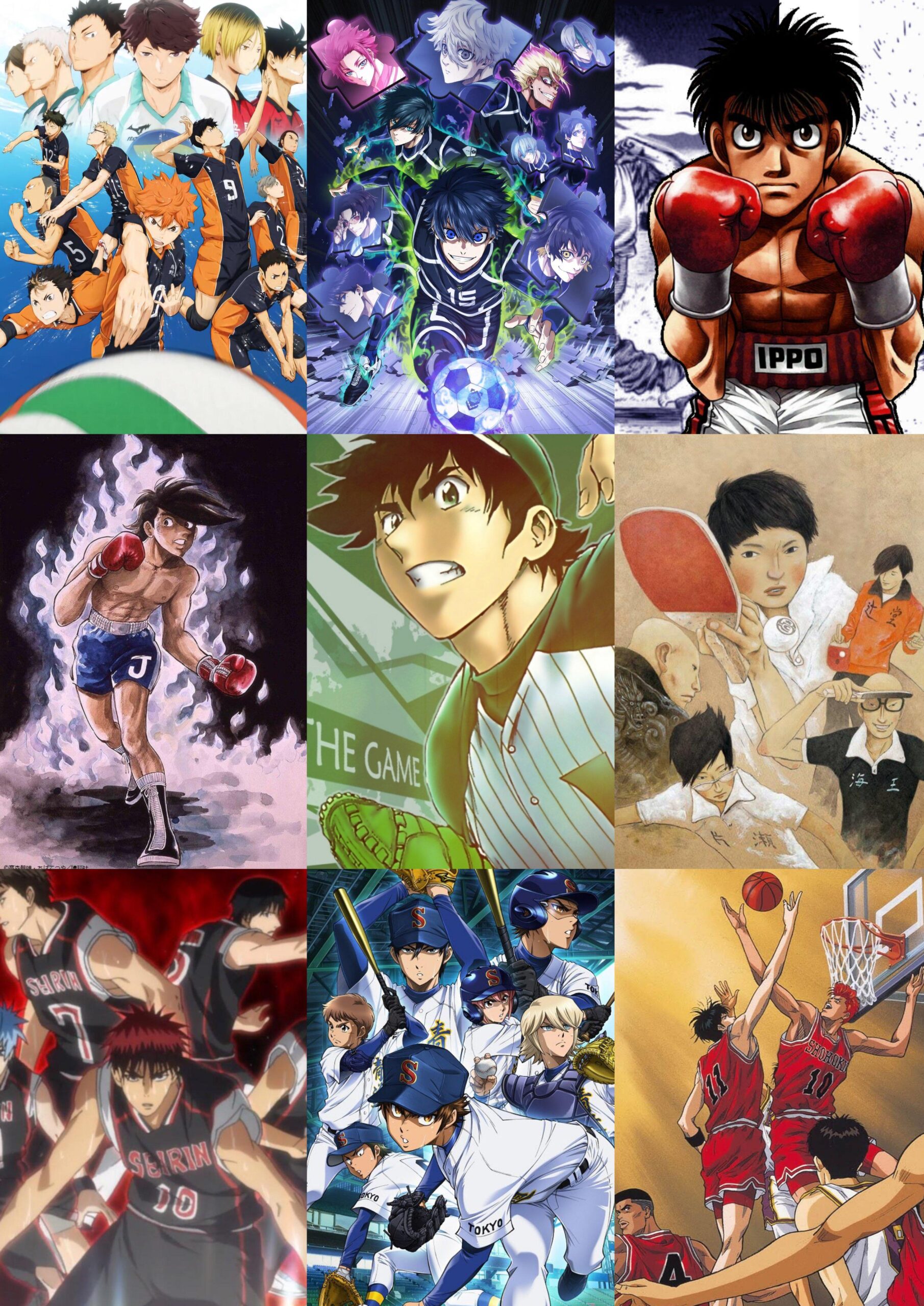
- Haikyuu!!
- Slam Dunk
- Blue Lock
- Hajime no Ippo
capture that energy perfectly.
They follow underdogs, prodigies, rivals, and teams chasing something just out of reach.
You already know the beats:
Training arcs.
Comebacks.
Rivalries that feel personal.
Win or lose… it matters.
But the game is never really the point.
At its core, sports anime is about identity under pressure.
In Haikyuu!!, it’s not just about volleyball. It’s about what it means to be “small” in a world that values height — and choosing to compete anyway.
In Slam Dunk, Hanamichi Sakuragi starts off chasing attention, not championships. Basketball becomes the place where he discovers discipline, pride, and purpose.
Then you step into the ring with Hajime no Ippo.
Ippo isn’t trying to be the best in the world — at least not at first.
He’s trying to answer a simple question:
What does it mean to be strong?
And that question drives everything. Every training session. Every fight. Every loss. Boxing becomes less about winning and more about self-discovery — about finding confidence in a version of yourself you didn’t know existed.
And then there’s Blue Lock, which flips the genre entirely. Instead of teamwork being the solution, it argues that ego — the desire to be the best — is what creates greatness.
That’s the spectrum of sports storytelling.
But here’s the part people don’t always notice:
Sports anime thrives on time.
Not just game time — life time.
Practices. Losses. Missed chances.
Moments where nothing happens… except growth.
The scoreboard shows the result.
But the story lives in everything leading up to it.
There’s also a cultural layer here. In Japan, school sports clubs — bukatsu — are intense, structured, and deeply formative. Sports anime reflects that reality but elevates it into something almost mythic.
It turns effort into spectacle.
Routine into ritual.
And effort… into identity.
Sports stories endure because they translate something universal:
The desire to prove something.
To yourself.
To others.
To the version of you that almost quit.
You don’t need to understand volleyball to feel a final rally.
You don’t need to box to understand stepping into a ring, unsure of who you are, and leaving with an answer.
Because it’s not about the sport.
It’s about:
- Showing up
- Failing publicly
- Trying again anyway
Sports anime reminds us that growth isn’t clean.
It’s repetition. Frustration. Small improvements no one sees.
Until suddenly…
Everyone does.
Look at how we talk about sports today.
Underdog stories dominate headlines.
“Legacy” debates live on every timeline.
Highlight moments go viral instantly.
Sports anime taps into that same energy — just stretched over time.
And beyond traditional sports?
You see it everywhere.
Esports. Competitive gaming. Content creation.
People are tracking improvement, chasing mastery, building rivalries.
The structure of sports storytelling has become the structure of modern competition.
We’re all keeping score in some way.
QUESTION
So, here’s the real question:
What hits harder for you…
The final win?
Or the moment a character finally understands
what they’ve been fighting for the whole time?