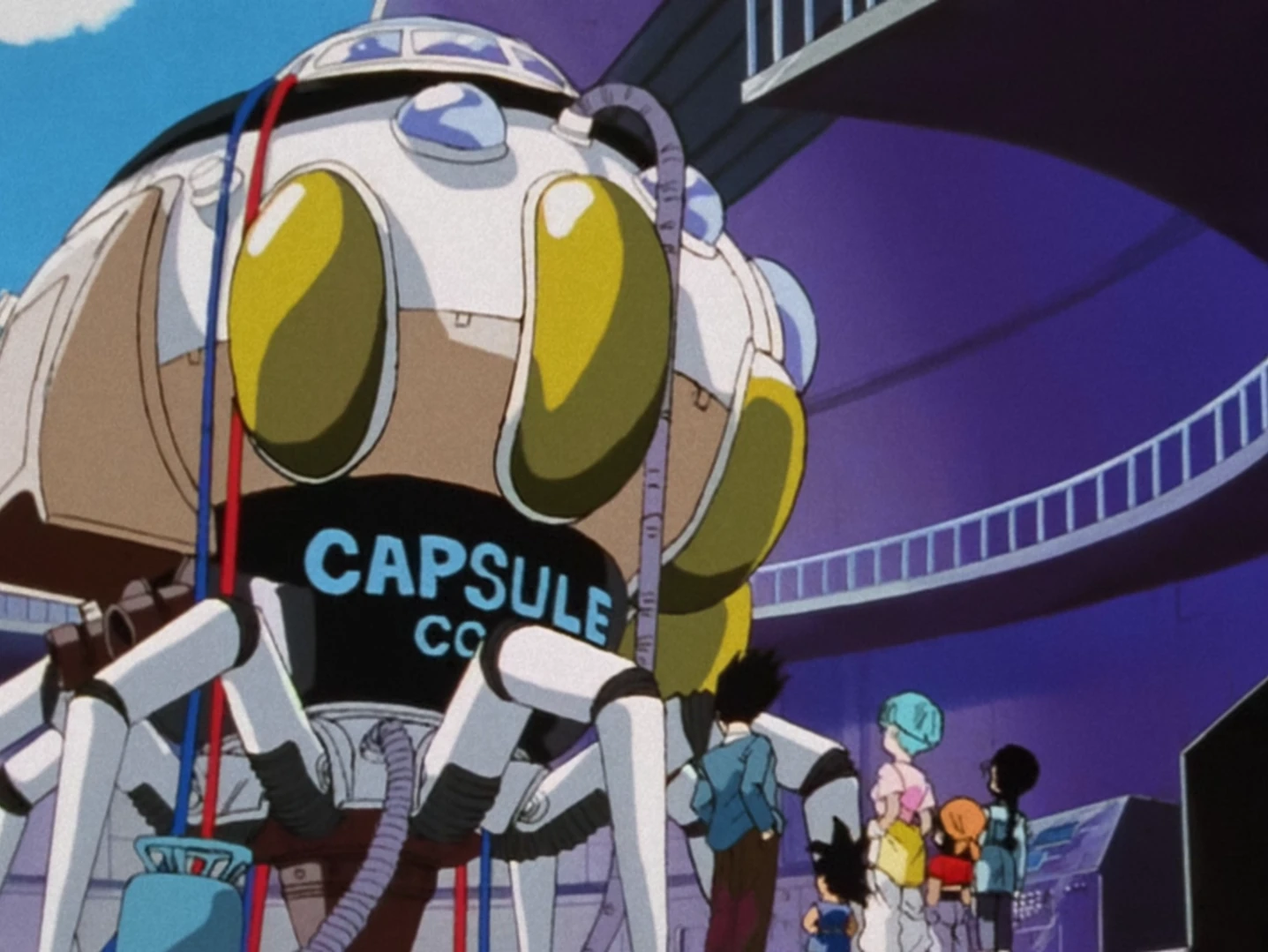
Every team looks different on the road. The crowd is not yours. The building is not yours. The rhythm is off. The routine is broken. The trip is long. The mistakes feel bigger. And suddenly, talent alone is not enough.
That is Dragon Ball GT.
For most of Dragon Ball and Dragon Ball Z, Earth is the home court. Even when the villains come from space, even when the fights leave the tournament floor, even when the stakes grow from “win the match” to “save the planet,” the emotional center is familiar.
Earth is home. The roster is deep. The Dragon Balls are nearby. The heroes know what they are defending. Then GT opens by taking all of that comfort away.
Goku is turned back into a child. The Black Star Dragon Balls scatter across the universe. Earth is suddenly on a clock. And instead of waiting for the next villain to arrive, a small lineup of Goku, Pan, and Trunks has to hit the road.
No home-field advantage. No full bench. No comfortable rhythm. Just three fighters trying to survive a hostile schedule across the galaxy.
That is why GT’s best sports angle is not power scaling. It is travel. Because Dragon Ball GT turns combat into an away game.
The easy version of GT is usually pretty simple.
- Kid Goku.
- Pan.
- Trunks.
- Space adventure.
- Baby.
- Super 17.
- Shadow Dragons.
- Super Saiyan 4.
And depending on who you ask, that list either sounds like a wild swing worth respecting or the beginning of a very long argument.
GT is one of the strangest eras of Dragon Ball. It is divisive. It is messy. It is ambitious. It tries to be a return to adventure while still carrying the weight of everything DBZ became.
That is not easy.
Because by the end of DBZ, the series had already gone cosmic. The heroes had fought Saiyans, androids, bio-engineered nightmares, demons, and universal threats. The question becomes:
Where do you go after that? GT’s answer is: Away. Not just away from Earth. Away from comfort. Away from the familiar formula. Away from the home crowd. And that is where the sports story starts.
GT is not just “Dragon Ball in space.” That is the oversimplified version. The better version is this: GT is Dragon Ball without home-field advantage.
That one idea makes the whole series more interesting. Because winning at home and winning on the road are not the same thing.
At home, a team has rhythm. Familiarity. Support. Routine. A sense of control. On the road, everything gets tested. Can you adjust? Can you communicate? Can your veterans lead? Can your young players grow up fast? Can your team survive bad matchups when the environment is not built for you?
That is GT. The fights are not just about who is stronger. They are about whether the team can keep winning when nothing feels normal.
The Road Trip Roster
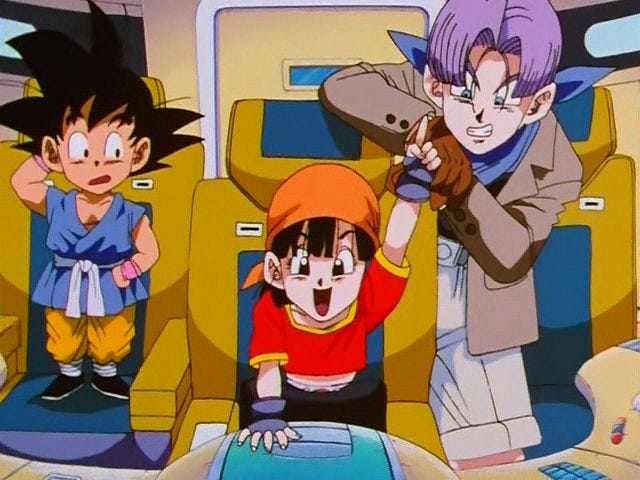
Every road team needs a lineup. GT gives us one of the weirdest and most interesting lineups in Dragon Ball:
- Goku.
- Pan.
- Trunks.
That is not the biggest roster in the franchise. It is not the strongest full lineup available. But it works for the kind of story GT is trying to tell.
Goku is the veteran superstar, but with a twist. He has all the experience, all the battle IQ, and all the instincts that made him Goku, but now he has been physically reset into a child’s body. He is still dangerous. He is still brilliant in a fight. But the body is different, and that matters.
That is a very sports thing. An aging superstar changing positions. A veteran adapting after injury. A former MVP learning how to win with a different version of himself.
GT Kid Goku is not inexperienced. He is overqualified and physically inconvenienced. That is hilarious. But it is also the point.
Then there is Pan.
Pan is the young player with fire. She is talented, emotional, fearless, and sometimes reckless. She wants to prove herself. She wants to be taken seriously. She has the bloodline, the attitude, and the courage, but not always the polish.
That makes her essential. Because road trips are where young players either get exposed or grow up.
Pan is not just along for the ride. She is part of what gives GT its identity. She brings the next-generation energy. She is not Goku. She is not Gohan. She is not Vegeta. She is Pan, and GT is often at its best when it remembers that her perspective matters.
Then there is Trunks.
Trunks is the stabilizer. He is not the loudest personality in the group. He is not the reckless rookie. He is not the unstoppable centerpiece. But he is the guy who has to keep the operation from completely falling apart.
Every road team needs that person. The one who manages the chaos. The one who keeps the locker room from catching fire.
The one who understands that winning away from home is not always pretty.
Goku is the star.
Pan is the spark.
Trunks is the balance.
That is the road trip roster.
No Home-Field Advantage
The biggest difference in GT is that the heroes are not defending familiar ground at first.
They are navigating strange worlds.
Different planets. Different cultures. Different enemies. Different rules. Different problems.
That makes the early GT adventure structure feel closer to a long road season than a standard DBZ saga.
In DBZ, the formula often becomes: A threat appears. The heroes train. The fight escalates. The strongest fighter breaks through.
GT is messier than that. Sometimes the problem is not just the opponent. Sometimes the problem is the environment. Sometimes the team does not fully understand what kind of game they are playing until they are already in it.
That is what road games do. They take away assumptions. The court feels different. The crowd feels different. The whistle feels different. The travel wears on you. And suddenly, the team has to win without the emotional safety net of home.
That is a strong idea for Dragon Ball. Because for once, the heroes are not just asking: Can we overpower this? They are asking: Can we adjust to this?
Baby: The Opponent Who Steals Your Team
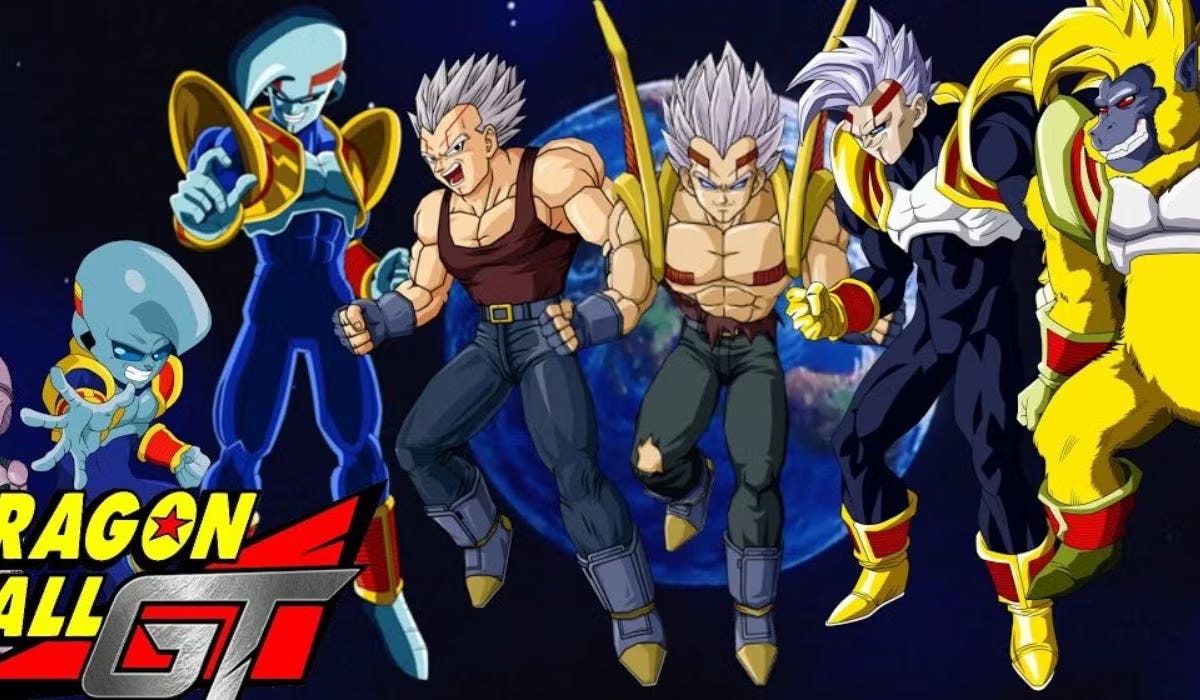
Baby is one of GT’s best ideas because he attacks something deeper than strength. He attacks identity.
In sports terms, Baby is not just a tough opponent. He is a team chemistry nightmare.
He does not simply show up and punch harder than everyone else. He infects. He possesses. He turns people against each other. He takes the familiar roster and makes it hostile.
That is terrifying.
Because the scariest road game is not just one where the crowd hates you. It is one where your own team stops feeling like your team.
Baby turns the idea of home-field advantage inside out. Earth is supposed to be the safe place. The familiar place. The place worth returning to. But when Baby takes control, home becomes hostile territory. That is a brutal twist.
The road team finally comes back, only to realize the home crowd has been stolen.
Baby is not just a villain because he is powerful. He is a villain because he understands that strength is not only physical. It is emotional. It is communal. It is about bonds, trust, and belonging.
And if he can hijack those things, he can make the heroes feel alone even on their own planet.
That is a great GT concept.
Super 17: The Bad Matchup
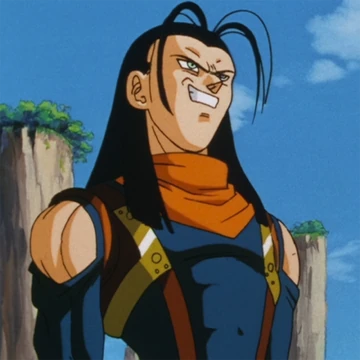
Every team eventually runs into a bad matchup. Not necessarily the best opponent. Not necessarily the most talented opponent. The one that makes your usual strategy dangerous.
That is Super 17.
In a franchise where energy attacks are practically part of the language, Super 17 creates a problem because he can absorb energy. That means the normal rhythm of combat becomes a trap.
You cannot just spam the usual offense. You cannot rely on the thing that usually works. You have to think.
That is what bad matchups do in sports. A defense that takes away your best receiver. A pitcher who owns your lineup. A goalie who sees everything. A fighter whose style makes your favorite weapon useless.
Super 17 is not just strong. He is inconvenient in the exact way that matters. He forces adjustment. And that is one of GT’s recurring road-game ideas. Winning is not just about being powerful. It is about recognizing when the game has changed.
The Shadow Dragons: The Final Gauntlet
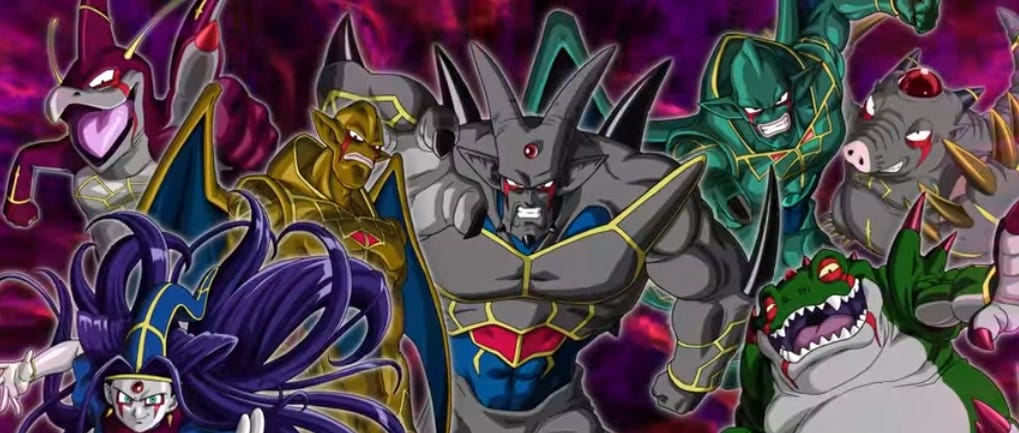
The Shadow Dragons are probably GT’s cleanest thematic idea.
For years, the Dragon Balls have been the great reset button.
- A miracle.
- A safety net.
- A way to undo catastrophe.
Heroes die? Wish them back. Planet in danger? Use the Dragon Balls. Disaster strikes? Find the orbs.
Make the wish. Set things right. But GT asks a very uncomfortable question: What if every miracle had a cost? That is what makes the Shadow Dragons work.
They are not just random final bosses. They are consequences made physical. Every old shortcut, every desperate wish, every saved day leaves something behind. That gives GT’s ending a weight that is easy to respect.
In sports terms, this is the brutal final stretch of the season where every bad habit comes due. The shortcuts. The over-reliance on one star. The sloppy defense. The poor conditioning.
The mistakes you survived in the regular season. Eventually, the playoffs find them. The Shadow Dragons are that idea in Dragon Ball form. They are the bill arriving at the end of the meal.
And suddenly, the heroes have to confront the cost of the very thing that has saved them so many times. That is not just a fight. That is accountability.
Why This Matters
GT matters because, even when it is uneven, its best ideas are trying to test Dragon Ball in a different way.
Not every idea lands perfectly. That is fair.
GT has pacing issues. It has strange choices. It has moments where you can feel the series wrestling with what it wants to be.
But the road-game structure is genuinely strong. Because it forces the heroes out of comfort. It takes away the normal support system. It shrinks the roster. It changes the environment.
It turns home into something that can be lost, stolen, or corrupted. And it asks whether these characters still work when they are not standing on familiar ground. That is a real test.
Sports fans understand this immediately. A team that only wins at home is dangerous. A team that wins on the road is real. Home gives you comfort.
The road reveals character. GT is the road.
Modern Connection
Great teams travel. That is one of those sports truths that sounds simple because it is.
Anybody can look good when everything is familiar. Your crowd. Your locker room. Your routine. Your building. Your weather. Your field. Your court. Your rhythm.
But the road strips some of that away. The best teams adjust. They communicate. They survive ugly stretches. They handle hostile environments. They find ways to win when the game does not feel comfortable.
That is exactly what GT is trying to do with Dragon Ball. It takes characters who have spent so much time defending Earth and asks: What happens when Earth is not enough?
What happens when the mission takes you somewhere strange? What happens when the roster is smaller? What happens when your veteran superstar has to adjust to a different body? What happens when your rookie has to learn under pressure? What happens when the home crowd gets turned against you? What happens when the miracles you depended on finally demand payment?
That is a sports season. That is a road trip. That is GT.
Final Whistle
Dragon Ball GT is remembered for a lot of things.
- Kid Goku.
- Pan.
- Trunks.
- Baby.
- Super 17.
- The Shadow Dragons.
- Super Saiyan 4.
- The ending.
The arguments. So many arguments. But underneath all of that is a sports story.
A road team. A brutal schedule. A small roster. Bad matchups. A young player learning fast. A veteran superstar forced to adjust. A stabilizer trying to keep the trip together. A home court that stops feeling safe. And a final gauntlet where every old victory comes with a cost.
GT may be the strangest era of Dragon Ball. It may not be the cleanest. It may not be everyone’s favorite. But sometimes the strangest seasons are the ones that test what a team is really made of. Because great teams do not just win at home.
Great teams travel.
Ctrl+Binge Question
What is harder in Dragon Ball? Defending Earth with the full roster? Or surviving the road with no home-field advantage?