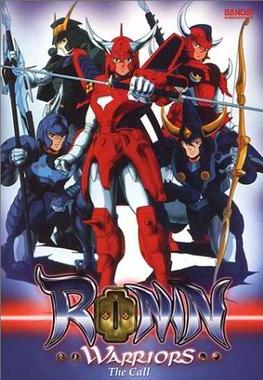
Before the Hidden Leaf.
Before Soul Reapers.
Before giant Saiyan screaming matches became an after-school religion.
Some of us had five teenagers in mystical samurai armor yelling attack names at demons.
And honestly?
That ruled.
At first glance, Ronin Warriors looks like pure late-80s anime chaos.
Color-coded heroes. Evil warlords. Magic armor. A kid sidekick. A tiger for some reason.
It feels like the exact kind of show a younger audience would inhale between cereal bowls and homework avoidance.
And for many Western anime fans?
That’s exactly what it was.
But here’s the thing about revisiting Ronin Warriors as an adult:
This wasn’t just “cool armor cartoon.”
This was part of a cultural handoff.
A localized adaptation of Samurai Troopers from Sunrise — the same legendary studio behind Gundam — arriving in an era when most Western kids had no vocabulary for anime at all.
We just knew this stuff felt different.
Sharper.
Weirder.
More dramatic.
Ronin Warriors wasn’t the biggest gateway anime.
But it was absolutely one of them.
And beneath the screaming attacks and demon generals?
There’s more here than nostalgia goggles might suggest.
So what is Ronin Warriors?
In plain English:
Five teenagers are chosen to wield mystical samurai armor tied to ancient virtues.
When the evil warlord Talpa attempts to conquer Earth from the Nether Realm, these armored warriors must unite to stop him.
That’s the show.
Your lead is Ryo of the Wildfire — the red-armored hot-blooded protagonist because of course he is.
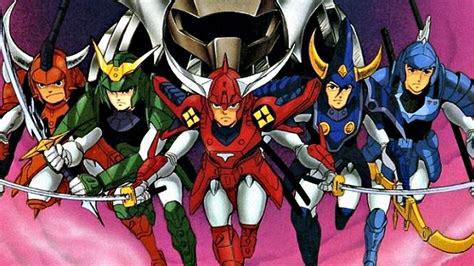
Joining him:
- Sage of Halo (the cool one) in Green
- Cye of Torrent (the calm one) in Light Blue
- Kento of Hardrock (the lovable tank) In Orange
- Rowen of Strata (the smart sniper) in Dark Blue
Alongside them:
- Mia, their grounded civilian ally
- Yuli, the kid who inevitably gets dragged into all this
- White Blaze, an armored tiger because anime was cooking
The hook?
Imagine Power Rangers, but samurai.
Imagine Saint Seiya with a fantasy-demon aesthetic.
Imagine if your toy line had emotional trauma.
It’s a supernatural action anime about friendship, courage, and magical armor.
But it’s also unmistakably anime in that deeply earnest, melodramatic way only that era could deliver.
Most people remember Ronin Warriors as:
“that samurai armor anime.”
And honestly?
That’s fair.
The memory goes something like this:
Five dudes in different colored armor fight increasingly bizarre villains while shouting attack names.
Bad guy wants world domination.
Heroes power up.
Friendship saves the day.
Repeat.
And visually?
That memory tracks.
Ronin Warriors absolutely embraces:
- transformation sequences
- named finishing moves
- dramatic villain monologues
- “my armor evolved!” escalation
- full-throttle anime sincerity
If you watched it as a kid, you probably remember: “Armor of Wildfire!” before you remember actual plot points.
And if you’re coming from modern anime?
It may initially feel primitive.
The pacing is slower.
Dialogue is dramatic.
Plot beats are direct.
This is pre-streaming anime.
Pre-“prestige anime.”
Pre-“everyone has trauma explained via flashback monologue every 3 episodes.”
It belongs to a different era.
And because of that?
A lot of people dismiss it as nostalgia bait.
Just another gateway action show that mattered because you were 10.
But that’s the shallow read.
Because Ronin Warriors wasn’t just another cartoon.
It was part of the moment anime started sneaking into Western childhoods.
And that matters.
CHARACTERS
The characters here are archetypal, but effective.
Ryo is your classic reluctant leader.
He’s brave, impulsive, deeply sincere, and emotionally burdened in exactly the way anime protagonists of the era needed to be.
Is he revolutionary?
No.
Does he work?
Absolutely.
But the supporting cast is where the charm lives.
Sage
Every team has that guy.
The cool one.
The composed one.
The fan favorite.
Sage was absolutely that dude.
If you watched this in the 90s, you knew someone whose favorite was Sage.
Guaranteed.
Kento
The heart.
Big appetite.
Big fists.
Big loyalty.
He could have been comic relief.
Instead, he feels like emotional glue.
Cye
Quiet strength.
Cye doesn’t scream for attention, but he gives the team stability.
The kind of character you appreciate more as an adult.
Rowen
The tactician.
Archery-based attacks.
Analytical mindset.
He gives the group needed variation.
Mia / Yuli
Mia grounds the show.
Yuli gives younger viewers a self-insert perspective.
Classic formula, but it works.
Talpa & the Villains
Talpa is wonderfully theatrical.
Pure old-school anime villain energy.
But the real standouts?
The Dark Warlords.
Anubis especially.
Because unlike disposable villain-of-the-week fodder, these antagonists actually evolve.
That matters.
It gives conflict emotional texture.
Why invest emotionally?
Because the team dynamic works.
You believe they need each other.
And in team-based anime?
That’s half the battle.
WORLDBUILDING
This is where adult-you might actually be pleasantly surprised.
Ronin Warriors has more worldbuilding than kid-you probably noticed.
The Nether Realm isn’t hyper-complex by modern standards.
But it feels mythic.
Talpa isn’t just a random evil overlord.
He’s part of an older supernatural struggle involving:
- virtue
- corruption
- spiritual inheritance
- ancient power
The armors themselves aren’t arbitrary power suits.
They represent virtues.
That’s important.
The heroes aren’t just “chosen because reasons.”
They embody ideals:
- courage
- wisdom
- justice
- trust
- strength
That adds thematic cohesion.
There’s also unmistakable Japanese cultural DNA here.
Samurai aesthetics.
Armor symbolism.
Honor-based conflict.
Even filtered through Western localization, the influence remains strong.
Does it feel alive?
Yes.
Not because of deep political complexity.
Because of tone.
The world feels ancient.
Cursed.
Layered.
And just coherent enough to keep your imagination doing the rest.
ACTION / POWER SYSTEM
This is absolutely where Ronin Warriors earns its keep.
The armor transformations still slap.
No apologies.
The power system is straightforward:
mystical armor grants specialized combat abilities.
Each warrior has a distinct combat identity.
Ryo = aggressive melee power.
Rowen = ranged precision.
Kento = brute force.
Cye = balance.
Sage = polished all-round dominance.
That clarity matters.
Fights aren’t ultra-strategic like Hunter x Hunter.
They’re emotional escalation machines.
And honestly? That’s fine.
Because the battles are storytelling.
Each power-up represents:
growth
trust
resolve
unity
This is proto-anime hype design.
And you can absolutely see DNA later echoed in:
- Power Rangers
- Saint Seiya
- shonen transformation systems
Spectacle?
Absolutely.
Substance?
Enough to matter.
EMOTIONAL CORE
This show is really about inheritance.
And burden.
And becoming worthy of what you’ve been given.
That’s more timeless than people realize.
Each warrior inherits power tied to virtue.
That means strength isn’t random.
It’s moral.
And that creates tension.
Can you live up to the armor?
Can you become what the role demands?
That resonates.
Especially in adolescence.
And revisiting it as an adult?
It hits differently.
Because suddenly it feels less like “cool chosen heroes” and more like:
“oh, this is about responsibility.”
There’s also found family here.
Classic anime truth:
the team becomes the emotional home.
Even the villains reflect this.
Anubis especially introduces the idea that people can change.
That loyalty isn’t fixed.
That identity evolves.
Pretty sophisticated for “armor cartoon.”
STYLE / PRESENTATION
Peak era anime aesthetic.
Sharp armor designs.
Memorable silhouettes.
Excellent color identity.
White Blaze still rules.
Animation?
Solid for its era.
Not fluid modern sakuga.
But energetic.
The dub?
A time capsule.
Sometimes cheesy.
Sometimes unintentionally hilarious.
But weirdly charming.
And culturally significant.
Because this dub is part of how Western audiences experienced the show.
Music?
Big.
Dramatic.
Earnest.
Exactly what this needed.
LET’S BE FAIR
Okay.
Truth time.
Ronin Warriors absolutely shows its age.
Pacing can drag.
Dialogue can feel repetitive.
Villains monologue A LOT.
Modern viewers may find certain arcs formulaic.
Character depth isn’t always evenly distributed.
Ryo occasionally falls into generic protagonist territory.
Animation consistency reflects late-80s production realities.
And yes.
Some of the dub choices are VERY of their time.
If you need ultra-modern pacing?
This may frustrate you.
If you need nuanced realism?
Definitely not your show.
But none of that erases what it does well.
WHO IS THIS FOR?
This is for people who love:
✔ nostalgic gateway anime
✔ team dynamics
✔ transformation sequences
✔ samurai aesthetics
✔ found family
✔ old-school anime sincerity
✔ magical armor hype
This may NOT be for you if:
✖ slow pacing annoys you
✖ older animation is a dealbreaker
✖ you need heavy complexity
✖ melodrama makes you roll your eyes
WHY IT MATTERS
Because Ronin Warriors sits in anime history’s fascinating middle ground.
Not as culturally dominant as DBZ.
Not as universally recognized as Pokémon.
But foundational.
For many Western fans?
This was anime.
Before we had words for:
- shonen
- anime dubs
- localization
- fandom discourse
Shows like this built the runway.
And historically?
It reflects anime’s export era beautifully.
Japanese storytelling.
Western adaptation.
A generation discovering something new without realizing it.
That matters.
Because gateway shows create lifelong fans.
And Ronin Warriors helped do that.
CTRL+BINGE FINAL TAKE
Ronin Warriors isn’t perfect.
It’s dated.
It’s melodramatic.
It occasionally gets gloriously ridiculous.
But that’s part of its charm.
This isn’t a perfect anime.
It’s an important one.
Because before anime became mainstream, before streaming libraries, before everyone knew what a shonen arc was…
some of us found giant emotions, ancient armor, and a tiger named White Blaze.
And that was enough.
14. QUESTION
What’s the forgotten gateway anime that pulled you in before you even knew what anime was?
Ronin Warriors?
Sailor Moon?
Yu Yu Hakusho?
Something even deeper cut?