What if catching Pokémon… wasn’t right?
What if the journey we’ve always celebrated had a cost we never questioned?
For the first time, Pokémon didn’t just challenge your team.
It challenged you.
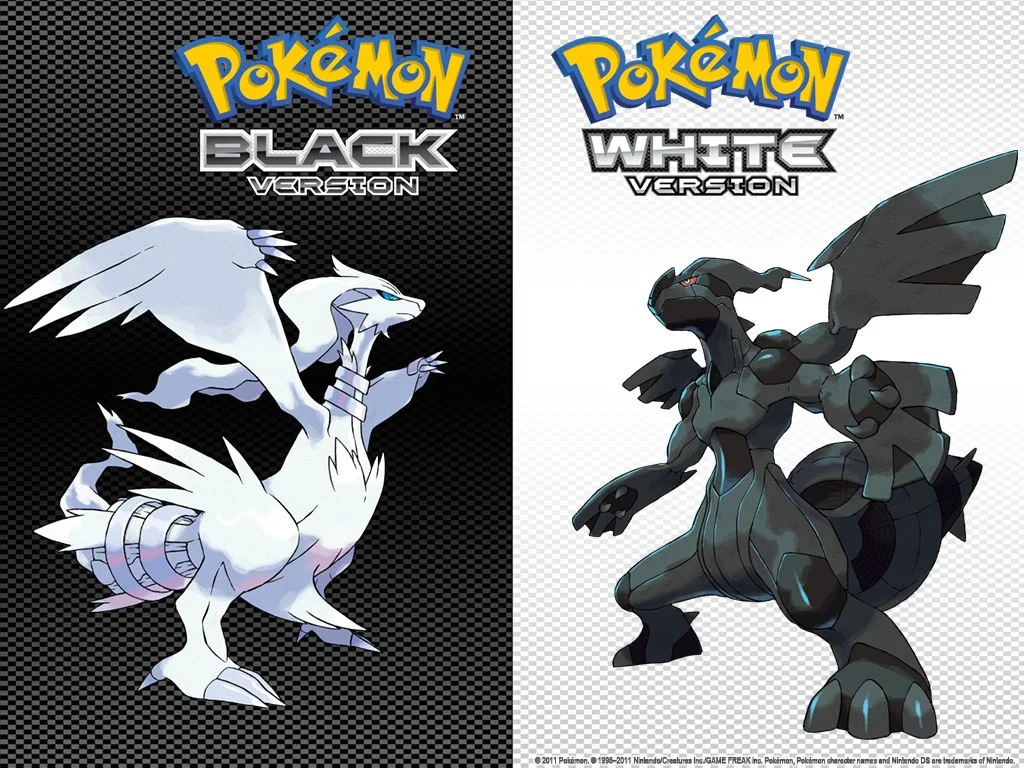
This week, we’re diving into Pokémon Black and White and their sequels Pokémon Black 2 and White 2 — the generation that didn’t just evolve the formula…
It questioned it.
Ask people about Gen V and you’ll get a split reaction.
Some will say:
“Best story in Pokémon. Easily.”
Others?
“Too many weird Pokémon designs.”
That was the conversation at the time.
Black and White introduced an entirely new Pokédex — no old Pokémon until postgame. For many players, that felt like a hard reset.
People remember:
- Ice cream cones and trash bags (the memes were ruthless)
- A more serious story
- Fully animated battle sprites
- And a region inspired by New York City instead of Japan
For some, it was bold and refreshing.
For others, it felt like Pokémon had strayed too far from what made it familiar.
But over time?
The narrative around Gen V changed.
A lot.
Mechanics — A Familiar Loop, Refined
At its core, the gameplay loop is still Pokémon:
Explore the Unova region, catch Pokémon, build a team, defeat Gym Leaders, and challenge the Pokémon League.
But Gen V refines the experience in subtle, important ways.
- Battles feel more alive with fully animated sprites
- Triple Battles and Rotation Battles experiment with positioning and strategy
- TMs become reusable, removing a long-standing limitation
- Experience scaling helps keep your team balanced
The biggest design choice, though?
You only encounter new Pokémon during the main story.
It recreates the feeling of Gen I — discovery, uncertainty, and learning everything from scratch.
You don’t rely on old favorites.
You adapt.
Story & Characters — Ideals vs Truth
This is where Gen V stands apart.
The central conflict isn’t about power or world domination.
It’s about philosophy.
Enter Team Plasma, a group claiming that Pokémon should be liberated from trainers.
Their figurehead is N — a mysterious, soft-spoken character who can communicate with Pokémon.
And here’s the twist:
He might be right.
N believes Pokémon suffer under human control. That battling and capturing them is exploitation disguised as partnership.
For the first time, the game doesn’t dismiss the villain’s argument.
It engages with it.
Opposing him is Ghetsis, a manipulative force hiding behind ideals for his own gain.
And you?
You’re caught between truth and ideals — literally represented by the legendary Pokémon Reshiram and Zekrom.
This isn’t just a journey to become Champion.
It’s a debate.
World, Visuals & Atmosphere — A New Kind of Region
Unova feels different immediately.
It’s urban. Modern. Expansive.
Inspired by New York, it features:
- Skyscraper cities
- Industrial areas
- Bridges stretching across massive waterways
But it also balances that with:
- Quiet routes
- Seasonal changes that alter the environment
- Hidden corners that reward exploration
The region feels alive — not just geographically, but culturally.
It’s a world in motion.
Sound & Music — Where Personality Shines
Once again, Junichi Masuda and the team elevate the experience.
Gen V’s soundtrack has personality.
- Gym themes that evolve mid-battle
- City music that changes depending on where you stand
- Emotional tracks tied to key story moments
And small details go a long way:
NPCs dancing to music.
Dynamic layering in battles.
It’s one of the first times Pokémon feels truly interactive on a sensory level.
Gen V did something no other Pokémon generation had done before.
It asked:
What if we’ve been wrong this whole time?
It challenged the core idea of the series — capturing and battling Pokémon — and trusted players to sit with that question.
That’s rare.
Especially in a franchise known for consistency.
At the time, it divided players.
But looking back?
It’s one of the boldest moves Pokémon has ever made.
It proved the series could tell stories that weren’t just about winning.
But about why we play at all.
You can see Gen V’s influence everywhere now.
Games today are more willing to:
- Question player actions
- Blur the line between hero and villain
- Build narratives around ideology instead of simple conflict
Even within Pokémon, Gen V is constantly referenced as a high point for storytelling.
And outside of it?
This is the same lane modern RPGs live in:
Where the real battle isn’t just against enemies…
It’s against ideas.
Gen V walked so narrative-driven RPGs could run.
QUESTION
Gen V asks a question Pokémon never had before:
Are trainers and Pokémon truly partners…
or is there something more complicated beneath it?
So here’s the question:
Do you think Pokémon battling is a bond…
or a system we’ve just learned to accept?