A boy lives on an island.
A storm rolls in.
A giant door opens somewhere in the darkness.
And suddenly Donald Duck and Goofy are helping save the universe.
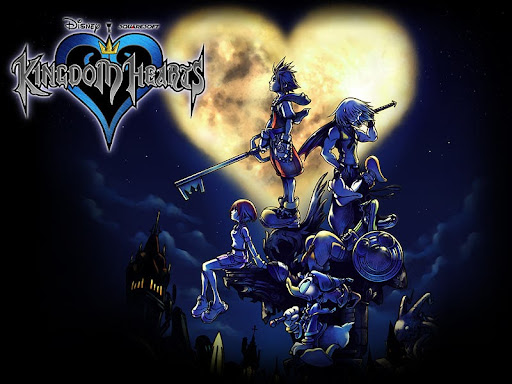
This week we’re revisiting Kingdom Hearts—the game that sounded impossible on paper, somehow became one of gaming’s most beloved franchises, and quietly planted the seeds for one of the most confusing and fascinating stories in video game history.
Ask people about Kingdom Hearts and you’ll usually get one of three reactions.
The first:
“Man, I loved that game.”
The second:
“I have absolutely no idea what’s happening anymore.”
And the third:
“Wait… that’s the one with Disney and Final Fantasy together?”
That’s the reputation Kingdom Hearts has carried for more than twenty years. A bizarre crossover. A nostalgia machine. An increasingly incomprehensible story involving hearts, darkness, memories, clones, alternate versions of people, and enough proper nouns to make a fantasy novelist nervous. For people who never played it, Kingdom Hearts often looks ridiculous.
Mickey Mouse standing next to anime protagonists.
Cloud Strife hanging out with Aladdin.
A kid fighting shadow monsters with an oversized key.
It sounds like fan fiction. Honestly? It kind of sounds a lot like fan fiction. But that’s also why people underestimate it. Because beneath the crossover gimmick is a surprisingly heartfelt adventure that understood something many games didn’t:
Wonder matters.
People remember Kingdom Hearts as the beginning of a convoluted franchise. They’re not wrong. But they forget that the first game is actually remarkably simple. Before the timelines, secret organizations, and twenty-page lore explanations…
Kingdom Hearts was just a story about friendship, growing up, and finding your way home.
Mechanics — A Disney Theme Park with a Giant Key
At its core, Kingdom Hearts is an action RPG. You play as Sora, exploring worlds, fighting enemies called the Heartless, solving puzzles, and helping the heroes of various Disney films. Combat feels surprisingly active for its era.
You’re:
- Swinging the Keyblade
- Dodging attacks
- Casting magic
- Summoning allies
- Managing party members
Donald serves as your mage and Goofy acts as your tank. Which remains one of the funniest sentences in gaming history. The progression loop is simple but addictive.
- Defeat enemies.
- Gain abilities.
- Unlock stronger magic.
- Visit new worlds.
- Learn new pieces of the mystery.
The game constantly rewards curiosity. And because every world feels distinct, exploration never grows stale.
Story & Characters — The Power of Connection
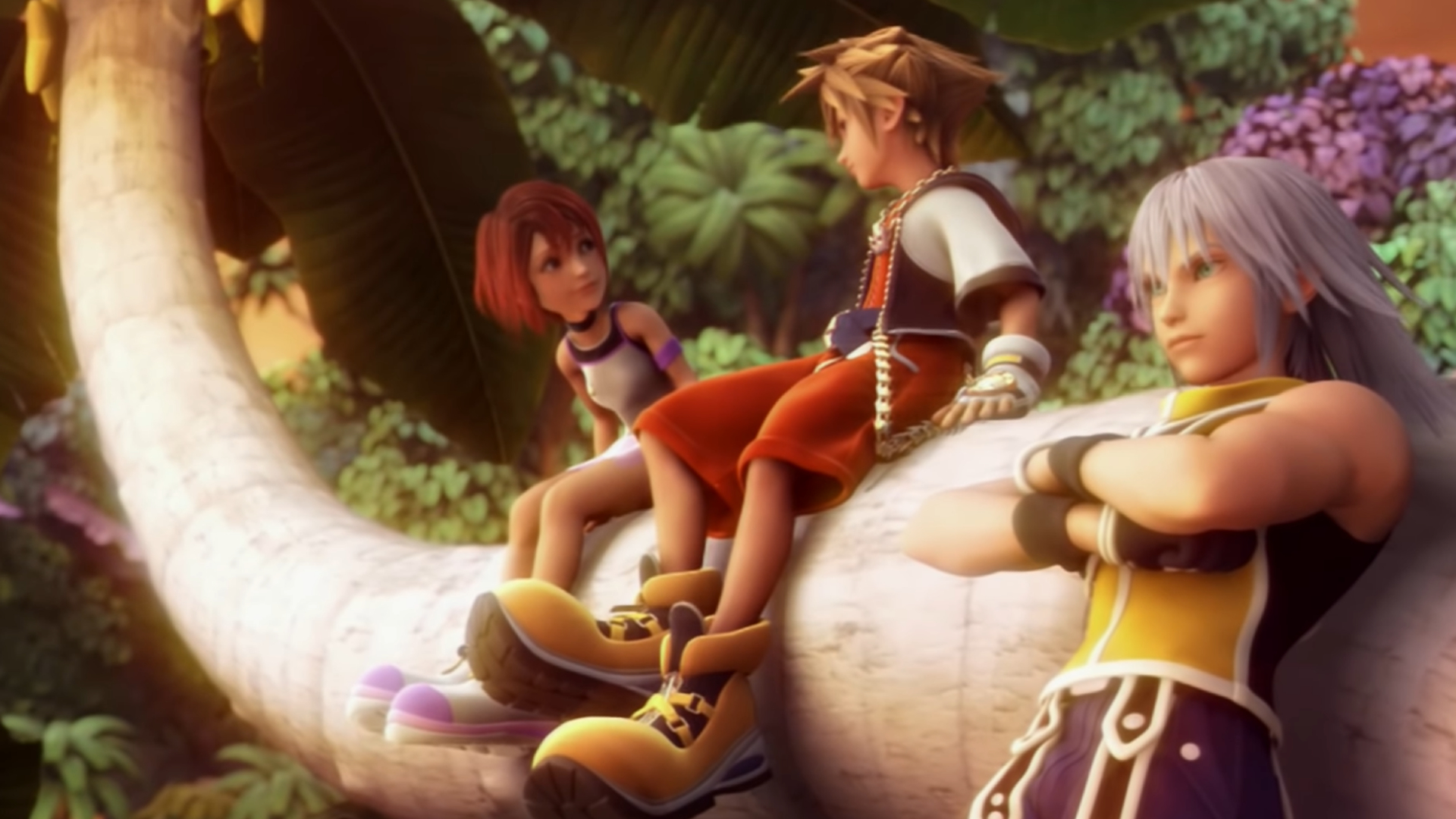
At first, Kingdom Hearts feels personal. Sora, Riku, and Kairi are kids dreaming about adventures beyond their island home. Then everything falls apart. A mysterious darkness consumes their world. Their friends disappear. And Sora is thrust into a journey across countless worlds searching for answers.
What makes the story resonate isn’t its complexity. It’s its sincerity. Sora isn’t a chosen hero because he’s the strongest. He’s the hero because he refuses to give up on people.
Riku serves as the perfect contrast. Ambitious. Jealous. Tempted by power. He’s not evil. He’s human.
And Kairi becomes the emotional anchor tying everything together.
Meanwhile, mysterious figures begin appearing at the edges of the story. Questions emerge. Who controls the Heartless? What’s behind the giant door? What exactly is Kingdom Hearts? The game answers enough to satisfy you… while quietly leaving breadcrumbs for something much larger. Something future games will absolutely run with.
And then run with some more.
And then keep running.
World / Visuals / Atmosphere — Pure Magic
This is where Kingdom Hearts shines. Every world feels like stepping into a different storybook. You’ll travel through:
- Wonderland
- Agrabah
- Halloween Town
- Neverland
- Olympus Coliseum
Each location carries its own visual identity, music, and mood. The transition between worlds shouldn’t work. But it does. Because Kingdom Hearts captures the feeling of childhood imagination. It’s the sensation of dumping every action figure you own onto the floor and deciding they’re all part of the same adventure. The result is surprisingly magical.
Sound & Music — Give Yoko Shimomura Her Flowers
If Kingdom Hearts has a secret weapon, it’s composer Yoko Shimomura. The soundtrack is phenomenal. Tracks like:
- Dearly Beloved
- Traverse Town
- Simple and Clean
aren’t just memorable.
They’re iconic.
Even today, hearing the opening notes of Dearly Beloved immediately transports fans back to the PlayStation 2 era.
And then there’s Simple and Clean.
A song that somehow became inseparable from Kingdom Hearts itself.
You hear it once.
Congratulations.
It’s living in your head forever.
Simplicity Matters
This is something people often forget. The first Kingdom Hearts isn’t trying to explain a dozen timelines. It’s asking a simple question:
What happens when people become separated from those they care about?
Everything stems from that. The Heartless. The journeys. The choices. The friendships. The mythology grows later. But the emotional core starts here. That’s why the first game remains so beloved. It remembers that before any grand cosmic mystery matters… the audience has to care about the people.
WHY IT MATTERS
Kingdom Hearts arrived at the perfect moment. Gaming was becoming bigger. More cinematic. More ambitious. And here came a game willing to combine two worlds nobody thought belonged together. Disney gave it wonder. Square gave it heart. Together they created something unique. Not just a crossover.
A genuine identity.
And perhaps most importantly: Kingdom Hearts trusted players to be earnest.
Not cynical.
Not detached.
Earnest.
It believed friendship mattered.
Hope mattered.
Connection mattered.
And twenty years later, those themes still resonate.
MODERN CONNECTION
You can see Kingdom Hearts’ influence everywhere. Modern crossover culture thrives on the same idea. Marvel team-ups. Fortnite collaborations. Multiverse stories. Shared universes. Kingdom Hearts was doing crossover storytelling long before it became mainstream. But more importantly, it proved audiences would embrace weird ideas if those ideas had emotional sincerity. Because at its best, Kingdom Hearts isn’t about Disney.
Or Final Fantasy.
Or giant keys.
It’s about finding light when the world gets dark. Which sounds cheesy. Until you realize that’s exactly why people still love it.
QUESTION
Let’s settle one of gaming’s oldest debates:
What’s the greatest Disney world in the original Kingdom Hearts?
And don’t say “all of them.”
Pick one.