Every sport has its legends.
The ones whose numbers feel impossible.
The ones whose stories get retold until they almost stop sounding real.
The ones who become larger than the game itself.
And then there’s Jesse Owens.
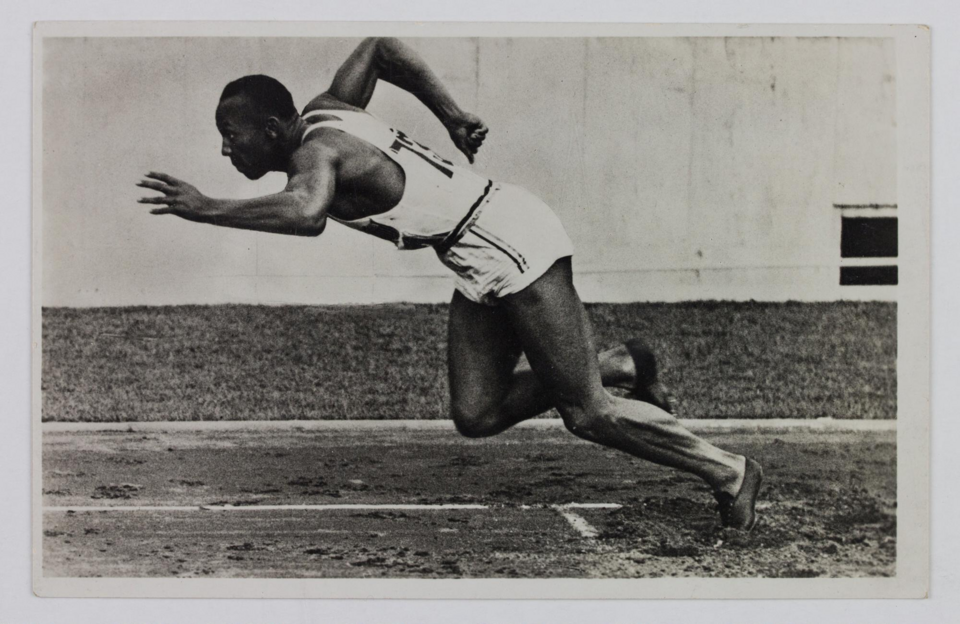
A man who delivered what might be the single greatest 45 minutes in sports history.
Then walked into Adolf Hitler’s Olympics and shattered the script.
That’s the version people remember.
But Jesse Owens was never just a sports story.
He was something bigger.
If you know Jesse Owens at all, it’s probably through one image.
Berlin. 1936.
A Black American sprinter dominating the Olympics while Nazi Germany tried to showcase Aryan supremacy to the world.
And to be clear?
That absolutely happened.
Owens won four gold medals:
- 100 meters
- 200 meters
- Long jump
- 4×100 relay
An all-time athletic performance.
A propaganda disaster for Hitler.
An American triumph.
That’s the story we tend to tell.
Clean.
Simple.
Hero defeats villain.
Roll credits.
But sports stories are almost never that tidy.
And Jesse Owens’ story gets way more interesting once you leave the highlight reel.
But Here’s The Thing
Olympic legends don’t begin at the Olympics.
And some of Jesse Owens’ most absurd feats happened before Berlin ever happened.
Jesse Owens wasn’t born Jesse Owens.
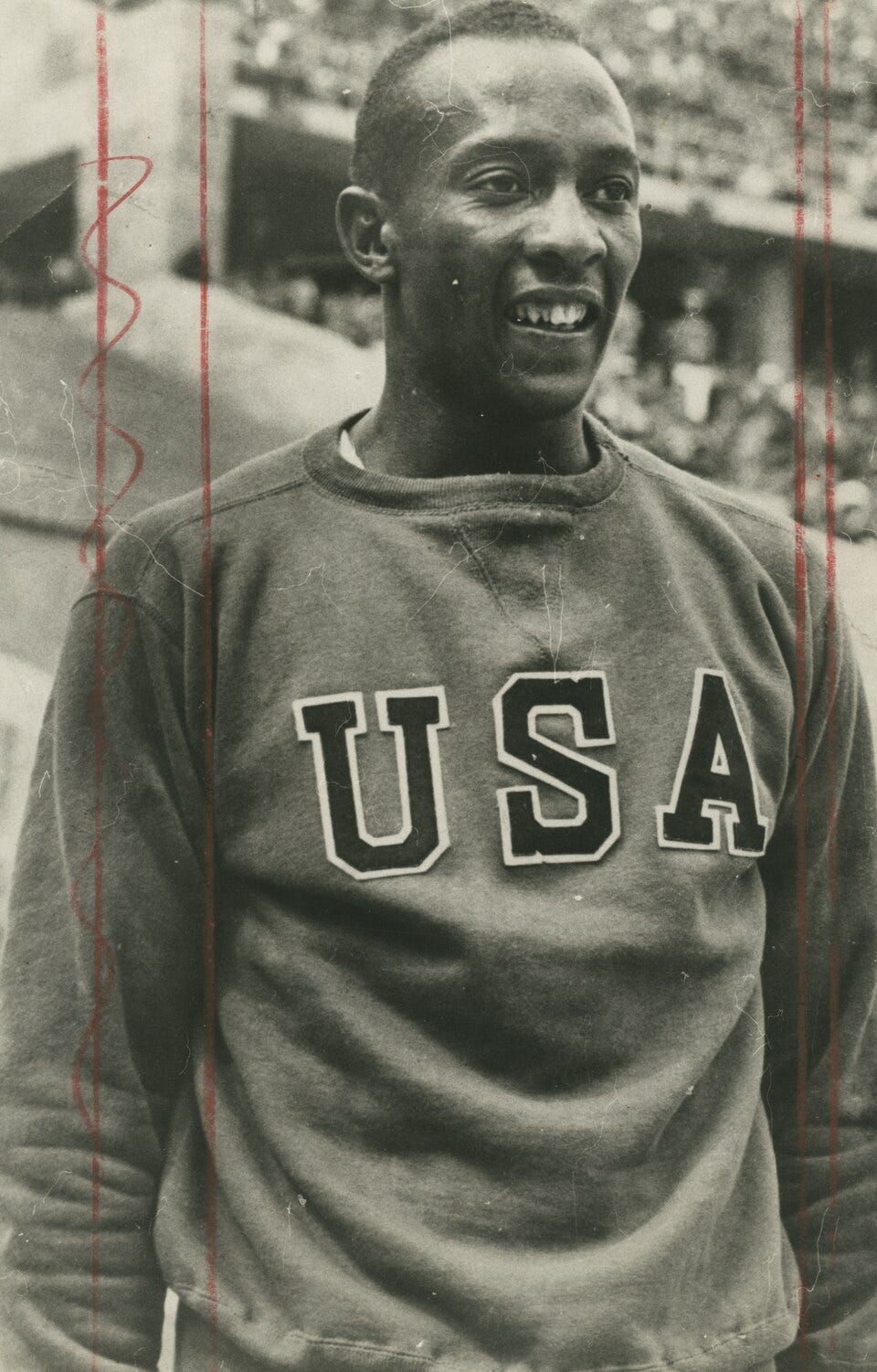
He was born James Cleveland Owens in Alabama in 1913, the son of sharecroppers and the grandson of enslaved people.
That matters.
Because this isn’t ancient history.
That’s one generation removed.
His family moved north to Ohio during the Great Migration, like countless Black families chasing opportunity, stability, and something resembling fairness.
Legend says when young J.C. introduced himself to a teacher, she misheard him and wrote down “Jesse.”
And that became the name history remembers.
He grew up poor.
Worked odd jobs.
Delivered groceries.
Loaded freight.
This was not the polished pipeline athlete era.
No sponsorships.
No elite youth academies.
No NIL deals.
Just talent.
And eventually, the realization that this kid could absolutely fly.
The Greatest 45 Minutes in Sports History
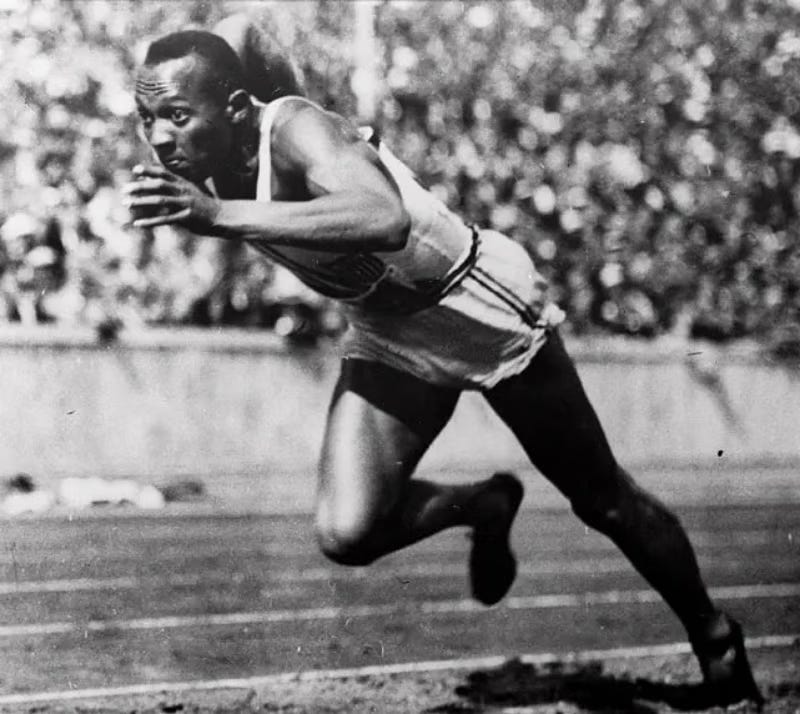
May 25, 1935.
Big Ten Championships.
University of Michigan.
Ann Arbor.
Jesse Owens had injured his back the day before.
Seriously injured.
The kind of injury where most coaches today would immediately shut an athlete down.
Instead?
He competed.
And then proceeded to do something that sounds fake.
In 45 minutes.
He:
- Tied the world record in the 100-yard dash
- Broke the world record in the long jump
- Broke the world record in the 220-yard dash
- Broke the world record in the 220-yard low hurdles
Let me say that another way.
Not across a season.
Not over multiple meets.
Not in a magical career year.
In 45 minutes.
The long jump record?
26 feet, 8¼ inches.
It stood for 25 years.
Twenty-five.
This is the sports equivalent of an anime character unlocking their final form three episodes too early.
It’s absurd.
If Wilt’s 100-point game is basketball mythology…
This belongs in that same room.
Berlin: When Sports Collided with History
Then came 1936.
Berlin.
The Olympic Games.
And this is where Jesse Owens became immortal.
Nazi Germany viewed the Olympics as a showcase.
Adolf Hitler wanted a global demonstration of Aryan superiority.
Strength.
Order.
Dominance.
Instead, Jesse Owens happened.
He won the 100m.
Then the 200m.
Then the long jump.
Then the relay.
Four gold medals.
One athlete.
One spectacular collapse of racist pseudoscience in real time.
But history gets flattened here.
The cartoon version says Hitler personally stormed off in fury because Owens won.
Reality’s a little messier.
Hitler had stopped publicly congratulating individual winners after being told he’d need to acknowledge everyone equally.
So no, the famous “Hitler snubbed Jesse Owens specifically” version is oversimplified.
But make no mistake:
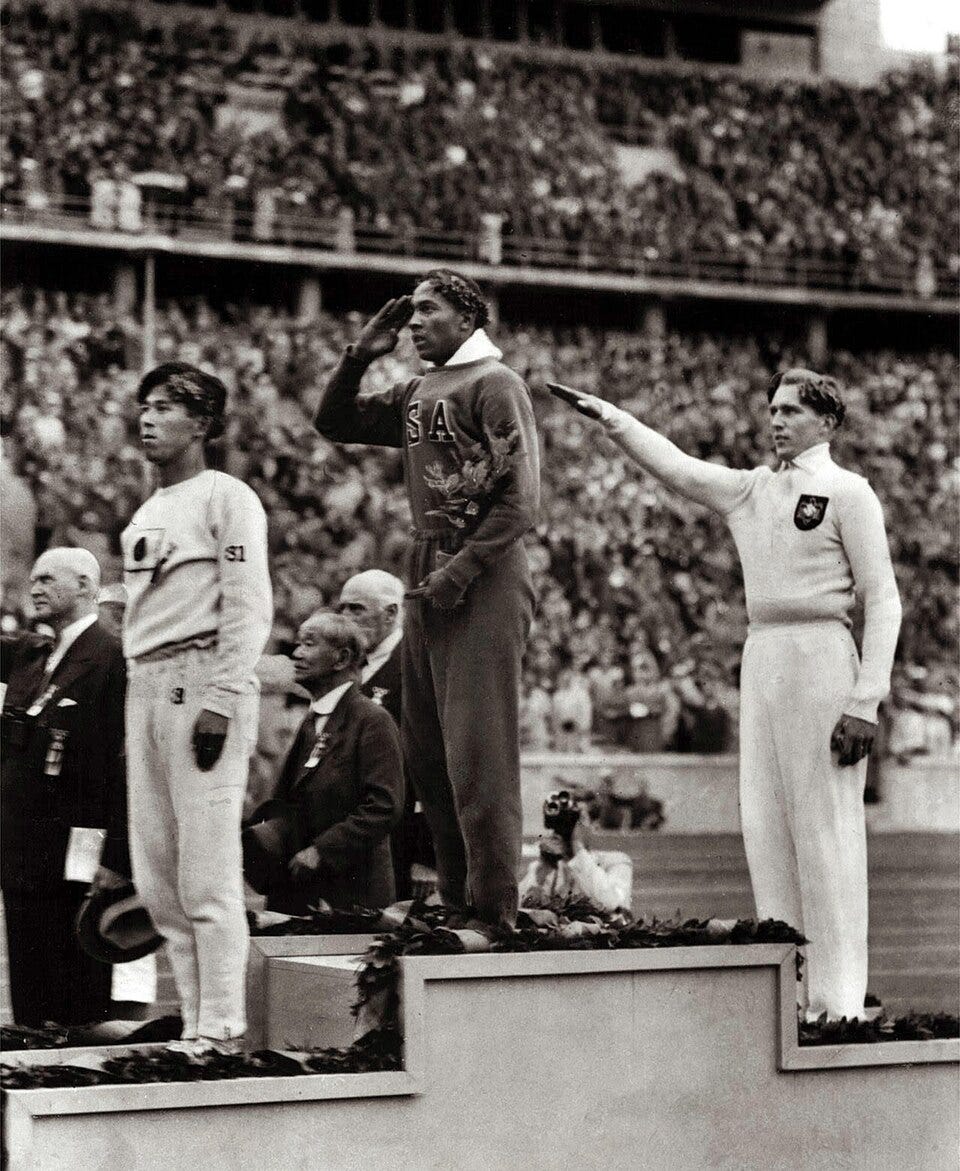
The symbolism was devastating.
The world saw exactly what happened.
And Nazi ideology absolutely took the hit.
The Humanity of Luz Long
And here’s the detail people should talk about more.
During the long jump competition, Owens nearly failed to qualify.
He’d fouled early attempts.
Pressure rising.
Disaster looming.
Then came Luz Long.
A German competitor.
The literal ideal Nazi athletic archetype.
Tall. Blonde. German.
And what did he do?
He helped Owens.
Reportedly advised him to move his takeoff mark back to ensure qualification.
Think about that.
At Hitler’s Olympics.
In Nazi Germany.
A German athlete helping the American competitor who represented everything Nazi ideology hated.
Owens qualified.
Won gold.
Long took silver.
The two walked arm-in-arm afterward.
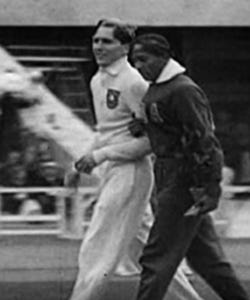
That image matters.
Because sports can create strange little rebellions.
The Part America Likes To Forget
And here’s where the story gets uncomfortable.
Jesse Owens came home a global icon.
And still got treated like Jesse Owens.
Segregation didn’t magically disappear because he won medals.
Racism didn’t evaporate.
Opportunity didn’t suddenly flood in.
He wasn’t invited to the White House by Roosevelt.
No presidential handshake.
No instant transformation into protected national treasure.
Owens later said:
“Hitler didn’t snub me. It was Roosevelt who snubbed me.”
That line lands like a hammer.
Because it exposes the contradiction perfectly.
America loved what Jesse Owens represented overseas.
It was less enthusiastic about what he represented at home.
And financially?
Things got rough.
He took speaking gigs.
Worked PR jobs.
At one point, literally raced horses for money.
Which sounds absurd until you realize elite Black athletes in that era didn’t exactly have endorsement pipelines waiting.
History remembers the medals.
It tends to skip the aftermath.
Why This Matters
Because Jesse Owens’ story isn’t just about speed.
It’s about contradiction.
Sports love simple morality plays.
Hero wins.
Villain loses.
Justice served.
But real life rarely gives us endings that neat.
Owens embarrassed Nazi ideology on the world stage…
Then returned to a country still deeply segregated.
That matters.
Because it reminds us sports can expose truth.
But they don’t automatically fix it.
Sometimes the most powerful moments are symbolic.
And symbolism is only the beginning.
Modern Connection
If this were anime?
Jesse Owens is pure protagonist energy.
Underdog background.
Impossible talent.
The “injured but still transcendent” episode.
Walks into enemy territory.
Defeats overwhelming ideological villains.
Forms unexpected respect with a rival.
Returns home to discover the fight isn’t actually over.
That’s not just sports storytelling.
That’s elite storytelling.
Honestly?
This is somewhere between:
Rock Lee
Captain America
and Jackie Robinson before Jackie Robinson.
Because Jesse’s greatest opponent wasn’t the stopwatch.
It was the world around him.
Final Whistle
Some athletes win games.
Some athletes win championships.
A rare few expose entire systems.
Jesse Owens didn’t just run fast.
He outran narratives.
He outran expectations.
For 45 impossible minutes in Michigan…
And four unforgettable gold-medal performances in Berlin…
He outran history itself.
Ctrl+Binge Question
What’s the greatest single athletic performance ever?
Jesse Owens’ 45 minutes?
Wilt’s 100?
Jordan’s Flu Game?
Secretariat at Belmont?
Miracle on Ice?
Let’s argue.