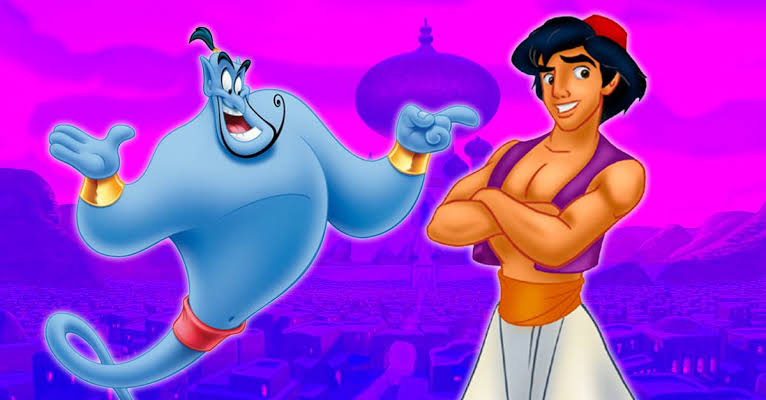
Everybody knows genies. Rub a lamp to get three wishes and try not to waste one on something ridiculous. Maybe the genie is funny. Maybe they’re sarcastic. Maybe they’re blue.
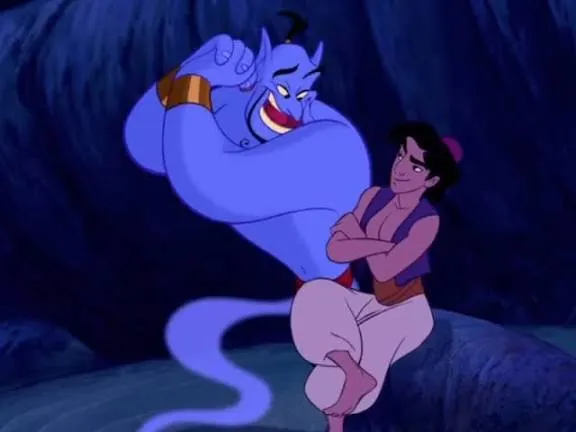
For most of us, that’s the story.
And truthfully, we can probably thank Disney (and Robin Williams) for that.
But here’s the strange thing: The original stories never promised three wishes. Most genies didn’t live in lamps. And the creatures that inspired them weren’t magical servants waiting to help humans.
They were something far stranger. Ancient spirits said to roam deserts, ruins, caves, storms, and lonely places beyond civilization. Some helped travelers. Some deceived them. Some were wise. Some were terrifying. And many stories treated them less like magical tools and more like an entirely separate civilization living alongside humanity.
Which raises a better question: What exactly was a genie before Hollywood got involved?
Because the answer is a lot older… and a lot weirder.
Ask someone what a genie is and you’ll probably get a version of the same answer.
A powerful magical being trapped inside an object that is usually a lamp or maybe a bottle. You rub it. It appears in a cloud of smoke. Then comes the offer:
- Three wishes.
- Choose carefully.
- The genie grants them.
- Chaos usually follows.
Eventually someone learns a lesson about greed, friendship, or appreciating what they already have.
That’s the version most of us know. It’s the version popularized by stories like Aladdin and reinforced by generations of cartoons, movies, television shows, and fantasy games. The genie became less of a mythological creature and more of a magical vending machine.
- Insert wish.
- Receive outcome.
- Try not to accidentally wish for something stupid.
It’s fun. It’s memorable. And it has become so dominant that many people assume that’s what genies always were.
But folklore has a funny habit of hiding the original version beneath the popular one. And when you dig back far enough, the genie starts looking less like a magical assistant… and more like one of mythology’s most fascinating supernatural races.
And this is where things get delightfully weird.
ORIGINS: MEET THE DJINN
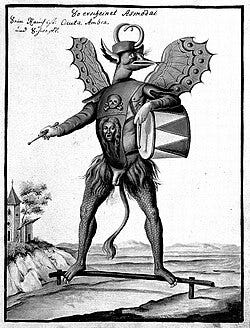
The word “genie” comes from the Arabic word djinn.
And right away, we’re dealing with something much bigger than a wish-granting spirit. The djinn appear in pre-Islamic Arabian folklore and later become an important part of Islamic tradition. What’s fascinating is that djinn weren’t considered gods. They weren’t humans. And they weren’t demons. They occupied an entirely separate category.
According to tradition, humans were created from clay. Angels were created from light. Djinn were created from smokeless fire.
Not fire as we understand it. Something stranger. Something spiritual. Something supernatural.
They existed alongside humanity but remained largely unseen. And unlike many supernatural beings from mythology, djinn weren’t inherently good or evil. They had free will. Just like people.
Some were kind. Some were cruel. Some were wise. Some were complete idiots. In other words: Djinn were less like monsters and more like another civilization. An invisible one.
THE WORLD OF THE DJINN
This is where the mythology gets surprisingly detailed. Many traditions describe djinn as living lives remarkably similar to humans. They marry. They have children. They form communities. They create societies.
Some stories even describe entire kingdoms ruled by powerful djinn leaders. Think about how different that is from the Disney version. The genie isn’t a magical servant. He’s a citizen of another world. A world that occasionally overlaps with ours.
In many stories, people accidentally encounter djinn in deserts, abandoned ruins, caves, graveyards, or isolated stretches of wilderness. Places where civilization ends and uncertainty begins. That overlap between worlds is important. Because the djinn often represented the unknown. The things waiting beyond the campfire’s light.
THE EVOLUTION OF THE LEGEND
As trade routes expanded and cultures exchanged stories, tales of the djinn spread beyond Arabia. Eventually these stories became part of the collection known as One Thousand and One Nights, often called The Arabian Nights.
That’s where many Western audiences first encountered them and that’s where the transformation begins. European translators adapted the stories. The Arabic word djinn gradually became “genie.” Over time, one specific type of story became more famous than the others: The trapped spirit. The wish granter. The magical being bound to an object. It made for great storytelling.
- Simple setup.
- Clear rules.
- Fun consequences.
But it was only one piece of a much larger mythology. Imagine if future historians assumed every vampire story was about Dracula. That’s basically what happened to the djinn. One popular version became the entire brand.
THE WEIRD STUFF THEY DON’T TELL YOU
This is the part I love, because djinn mythology gets wonderfully strange.
Some stories claim djinn can shape-shift. Others say they can appear as animals. Snakes are particularly common. So are dogs, cats and birds.
Sometimes they appear as ordinary humans. Sometimes they don’t appear at all. And then things get weirder. Some traditions claim djinn have their own religions. Their own laws. Their own cultures. Their own conflicts. There are stories about djinn scholars. Djinn kings. Djinn travelers. Djinn families.
At a certain point, you realize something. The mythology isn’t describing monsters. It’s describing neighbors. Very strange neighbors, but neighbors nonetheless.
That’s a lot more interesting than a magical wish machine.
THE LAMP PROBLEM
Here’s one of the biggest misconceptions. Djinn were never primarily associated with lamps. The famous lamp comes from the story of Aladdin.
That’s it.
One story became so culturally dominant that it redefined an entire category of mythology. It’s a little like assuming every wizard lives in a castle because of Harry Potter.
The lamp is iconic. But it isn’t foundational. The djinn existed long before Aladdin. And they’d continue existing even if the lamp never showed up.
POP CULTURE TAKEOVER
Modern pop culture absolutely loves genies. But it also simplifies them.
A lot.
The most famous version is probably Disney’s Aladdin. Robin Williams’ performance is legendary.
- Funny.
- Warm.
- Chaotic.
- Lovable.
But it also transformed the public image of genies forever. Today, most fictional genies are:
- wish granters
- comic relief
- magical side characters
- beings trapped by rules
Meanwhile, the original djinn were often mysterious, unpredictable, and difficult to categorize. You can still see traces of that older mythology in fantasy stories, anime, and RPGs.
Series like Magi draw much more directly from the Arabian folklore roots.
Tabletop games often portray djinn as powerful elemental beings with their own motivations.
And occasionally horror stories revisit the older idea: What if the creature granting your wish isn’t your friend? What if it’s something ancient?Something intelligent? Something that doesn’t think like a human at all? Now we’re back in folklore territory. The Witcher series, both the books and the live-action do a good job of portraying the djinn as a horror/ancient/intelligent entity.
WHY WE KEEP TELLING THIS STORY
Because at its heart, the genie story isn’t really about wishes. It’s about possibility. Human beings have always wondered if there’s something else out there. Something hidden. Something powerful. Something that exists just beyond what we can see.
The djinn gave form to that idea. Not as monsters. Not as gods. But as another people. Another civilization. A reminder that the world might be bigger and stranger than we realize. And maybe that’s why the stories endure. Not because we want three wishes. Because we want to believe there’s still mystery left in the world.
CTRL+BINGE CONNECTION
This is why the djinn feel so modern despite being ancient. They’re the blueprint for countless fantasy races. You can see their fingerprints everywhere.
- Spirit worlds.
- Yokai.
- Elemental beings.
- Magical civilizations hidden from humanity.
Even modern fantasy anime loves the concept. The idea that another world exists just beyond our own. Not good. Not evil. Just different. The djinn were doing that centuries before fantasy made it cool.
Maybe the strangest thing about genies isn’t that they grant wishes. It’s that we turned them into wish machines at all. For most of their history, they weren’t there to serve humanity. They had their own stories. They had their own lives. They lived in their own world. The lamp just happened to become more famous than the creature. And somewhere along the way, one of mythology’s most fascinating supernatural races got reduced to three wishes and a punchline.
The original version is much more interesting. (Sorry, Robin Williams)
THE QUESTION THAT LINGERS
If you encountered a djinn and were guaranteed one honest answer—not one wish—which question would you ask?
Because the older stories suggest they might know things humanity never will.