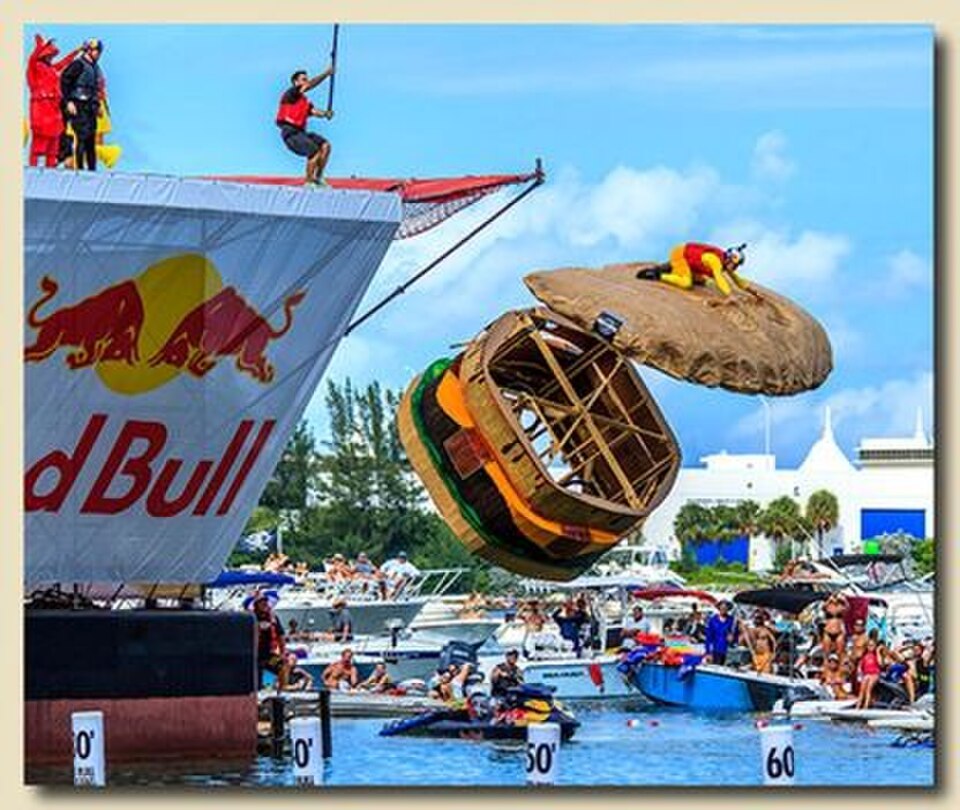
You’ve probably seen the videos. A giant flying hot dog. A pirate ship with wings. A Viking longboat hurtling toward the water. Something made entirely of cardboard, hope, and questionable engineering.
A crowd cheers. A team sprints. A homemade flying machine launches into the air. And then gravity reminds everyone who’s really in charge.
Welcome to Flugtag.
One of the strangest sporting events on Earth. Part engineering competition. Part costume contest. Part comedy show. Part aviation experiment. And somehow, it works.
At least for a few glorious seconds.
Most people think Flugtag is simple. People build ridiculous flying machines. They jump off a giant ramp. They crash into the water. Everyone laughs. End of story.
That’s not wrong.
The crashes are absolutely part of the appeal. If you’ve ever watched highlights online, you’ve probably seen a giant rubber duck fly twenty feet before immediately becoming a submarine. Or a flying taco that never actually achieved the “flying” part.
The event looks like controlled chaos. A celebration of bad ideas. A festival dedicated to making engineers nervous. From the outside, it feels less like a sport and more like a public prank.
But that’s the oversimplified version. Flugtag isn’t really about crashing. It’s about flying.
Or at least trying to.
And that puts it in a surprisingly ancient tradition. Because long before airplanes, long before rockets, and long before astronauts, humans were obsessed with one idea: What if we could leave the ground?
Flugtag just happens to be the funniest version of that dream.
How It Works
The rules are beautifully simple.
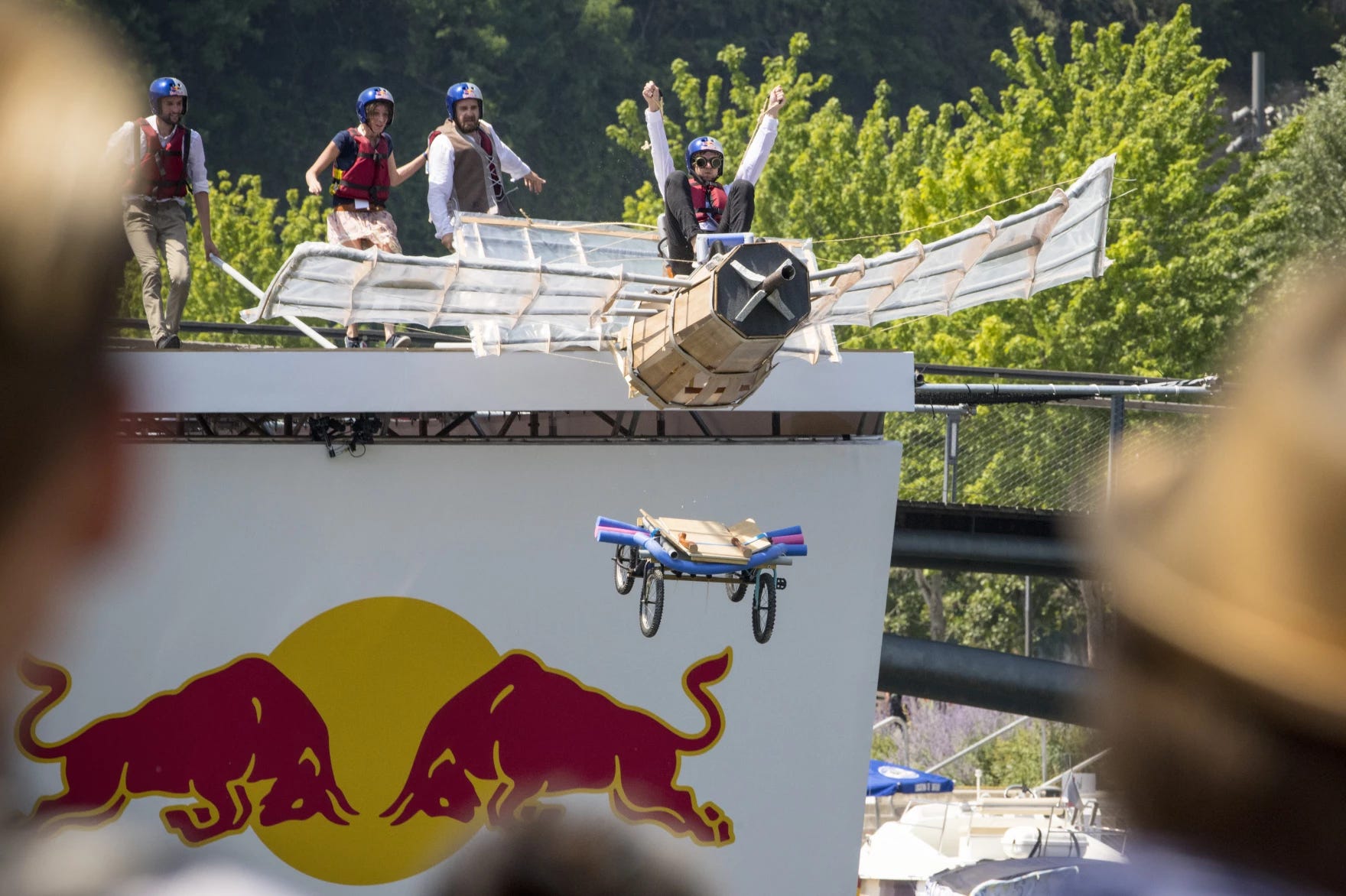
Teams design and build a human-powered flying machine. No engines. No rockets. No hidden motors. Just creativity, engineering, and a little bit of courage.
On event day, teams wheel their creation onto a launch platform that sits high above the water. Before launch, they perform a short skit for the crowd. This is important. Because Flugtag doesn’t just judge distance. It judges style.
Then comes the moment of truth.
The team pushes. The machine rolls. The crowd holds its breath. And for a few seconds, everyone finds out whether months of planning were brilliant or completely insane.
Judges typically score three categories:
- Distance flown
- Creativity
- Showmanship
Which means a machine doesn’t necessarily need to fly the furthest to win. Sometimes the crowd favorite is the team dressed as giant flamingos whose aircraft immediately explodes into cardboard confetti.
What Makes It Hard
The obvious challenge is flight.
Human-powered flight is absurdly difficult. The Wright Brothers changed history for a reason. Gravity is relentless. Aerodynamics are complicated. Physics doesn’t care how much effort you put into your project.
But Flugtag introduces another challenge. You have to make it entertaining. It’s not enough to build a machine that glides.
You need a concept. A theme. A performance. A personality. Imagine trying to combine:
- Engineering
- Theater
- Athletics
- Comedy
Into one event.
That’s Flugtag.
Success requires equal parts creativity and courage. And maybe a healthy disregard for embarrassment.
Who Dominates?
The funny thing about Flugtag is that there aren’t traditional dynasties.
- No Yankees.
- No Lakers.
- No Real Madrid.
Every event introduces new teams, new designs, and new disasters. The real stars are the machines themselves. Some become legends. Others become internet memes.
And a few manage the impossible: They actually fly.
Not far.
Not gracefully.
But enough to make everyone wonder: “Wait… did that thing just work?”
Why Fans Love It
Because Flugtag captures something that most sports lose over time.
Wonder.
Nobody shows up expecting perfection. They show up hoping for magic. Or catastrophe. Preferably both.
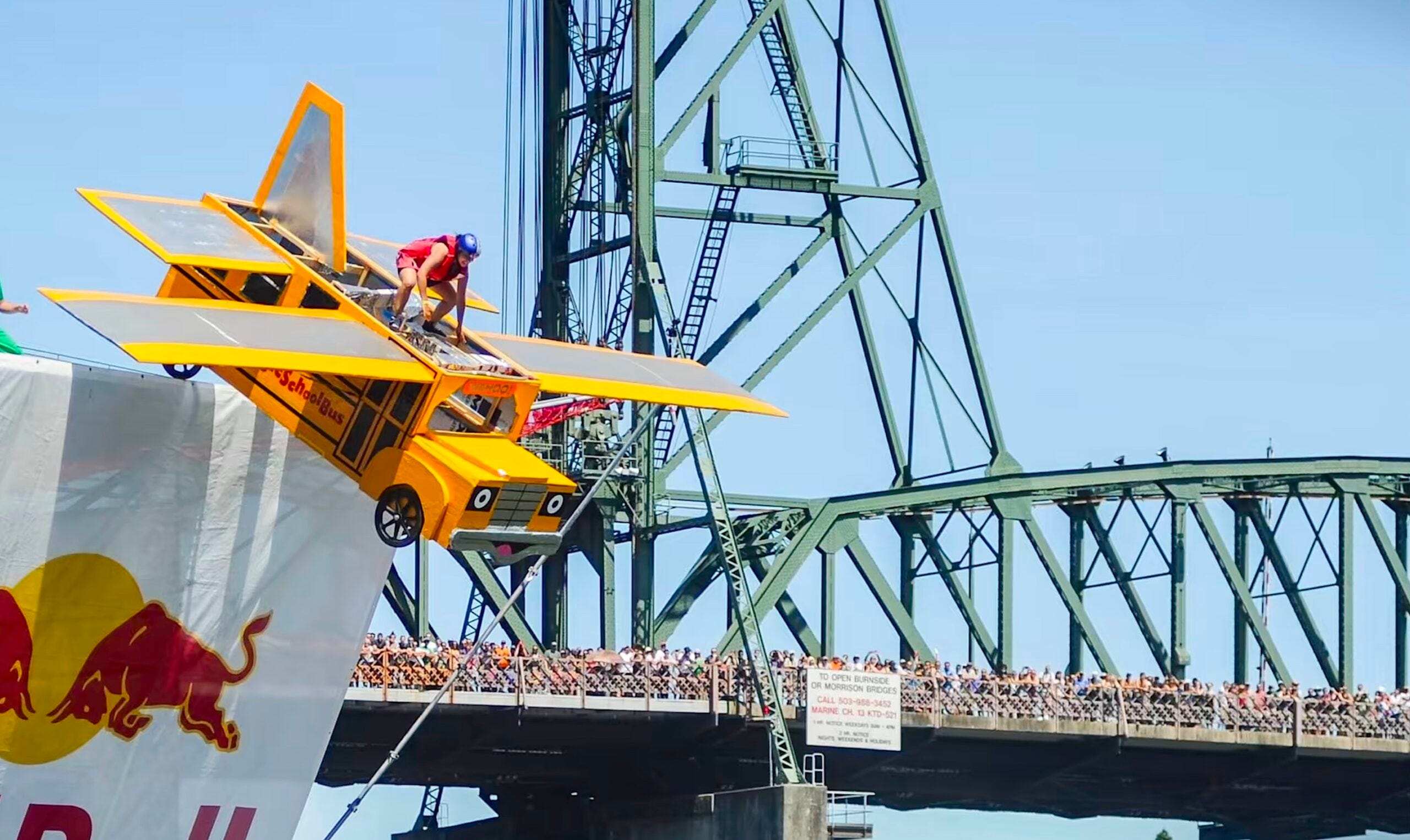
The crowd isn’t rooting against the teams. They’re rooting for the dream. Even when that dream immediately nose-dives into a harbor.
There’s something deeply human about watching someone spend months building a flying machine and then launching it anyway.
Success isn’t guaranteed. Failure is public. And they do it regardless. That’s admirable. And hilarious.
The Weird Fact
Here’s my favorite piece of Flugtag lore. The word “Flugtag” is German.
It literally translates to: “Flying Day.”
That’s it.
No elaborate title. No dramatic branding. Just: Flying Day.
Which somehow makes the event even funnier. Because for many teams, it quickly becomes: Falling Day.
Why This Matters
As ridiculous as Flugtag looks, it celebrates something important.
- Curiosity.
- Experimentation.
- The willingness to fail publicly.
Most people spend their lives avoiding embarrassment. Flugtag participants launch themselves toward it at full speed. And that’s kind of beautiful. Innovation has always required people willing to look foolish.
Every great inventor. Every explorer. Every pioneer. At some point, somebody looked at them and said: “That will never work.” Sometimes they were right. Sometimes they changed the world. Flugtag sits somewhere between those two outcomes.
And that’s why people love it.

Modern Connection
Honestly? Flugtag feels like an anime tournament arc for inventors. Every team arrives with a unique design. A unique philosophy. A unique level of confidence.
Some are geniuses. Some are completely delusional. Most are both. It’s basically MythBusters meets Wile E. Coyote. Tony Stark resources with Team Rocket results. A competition where engineering brilliance and spectacular failure exist side by side.
And somehow, that’s exactly the point.
Final Whistle
Flugtag isn’t really about winning. It’s about trying. Trying to fly. Trying to build something impossible. Trying to defeat gravity for just a few seconds.
Most teams fail. Some fail spectacularly. But every now and then, somebody leaves the platform, catches the wind, and reminds us why humans keep looking toward the sky. Even if they splash down a few moments later.
Ctrl+Binge Question
What’s the greatest “ridiculous” competition ever created?
Flugtag?
The Nathan’s Hot Dog Eating Contest?
Robot Wars?
The World Championship of Wife Carrying?
Or something even stranger?