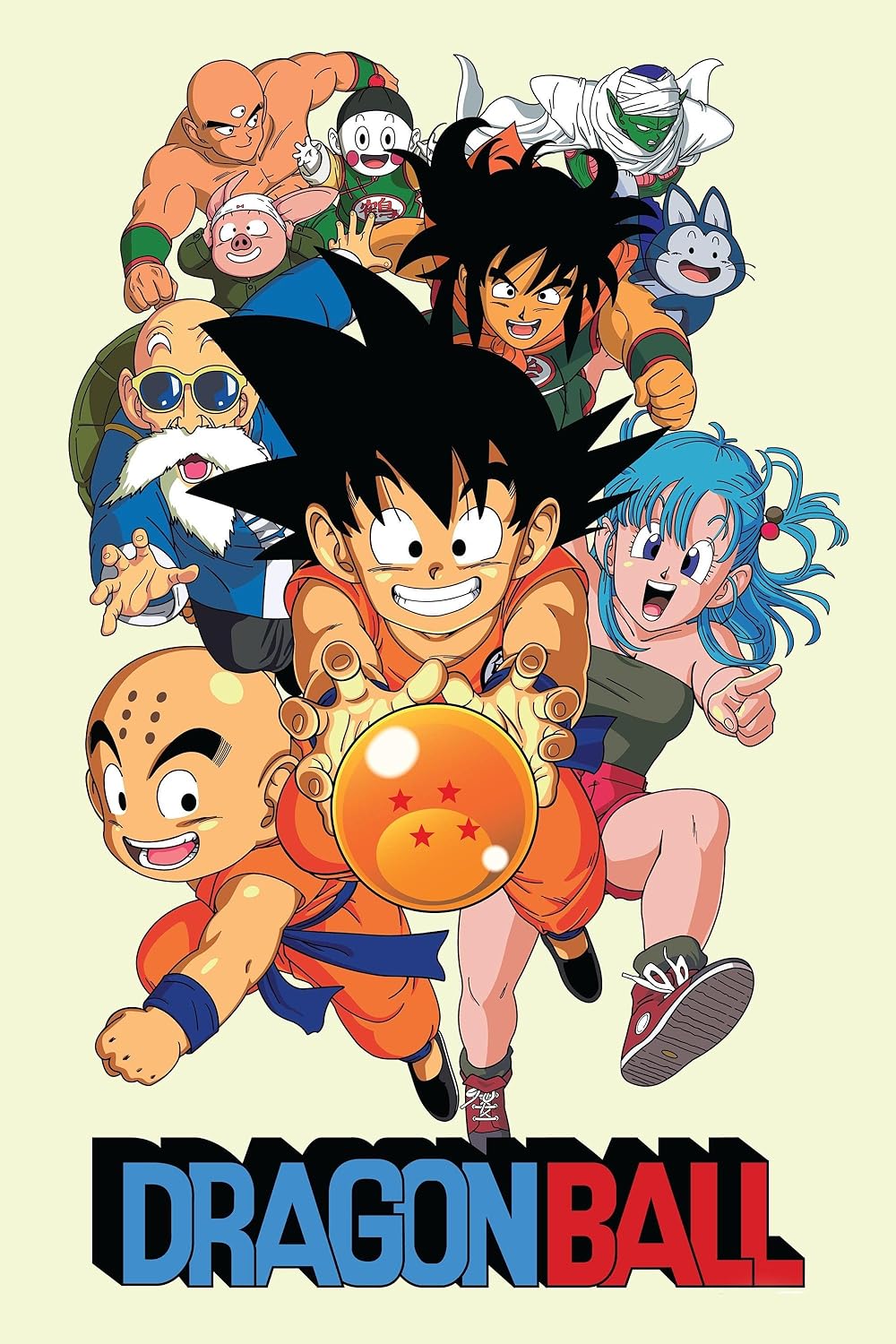
A monkey-tailed kid. A teenage inventor. Seven magical wish-granting orbs. A flying cloud. A talking pig. A perverted mentor. And somehow… One of the greatest gateways ever created.
If someone walked up to me tomorrow and asked: “Where should I start with anime?” There are a lot of good answers.
- Fullmetal Alchemist.
- Death Note.
- Naruto.
- Demon Slayer.
All fantastic choices. But if I could only pick one? I’m picking Dragon Ball.
Not because it’s the greatest anime ever made. Not because it’s the most influential manga ever published. Not even because it’s my favorite. I’m picking Dragon Ball because it grows exactly as fast as its audience does.
Most beginner anime recommendations start with what anime became.
Dragon Ball starts with what anime is.
- Adventure.
- Comedy.
- Friendship.
- Martial arts.
- Wonder.
- Discovery.
Before world-ending stakes. Before giant power systems. Before anime became a global phenomenon. There was a curious kid wandering into a world bigger than he could possibly imagine. And that may be exactly why Dragon Ball remains the perfect place to begin.
THE ELEVATOR PITCH
Dragon Ball follows Son Goku, a young boy with incredible strength, a monkey tail, and almost no understanding of the world beyond the forest where he grew up.
His life changes when he meets Bulma, a brilliant inventor searching for the seven Dragon Balls, magical artifacts that can summon a dragon capable of granting wishes.
Together they set off on an adventure that takes them across deserts, mountains, villages, oceans, and martial arts tournaments.
Along the way, Goku meets bandits, masters, rivals, emperors, monsters, and lifelong friends.
What begins as a simple treasure hunt gradually expands into something much larger.
But unlike many fantasy stories, Dragon Ball never overwhelms the audience. The world unfolds naturally. One location at a time. One challenge at a time. One friendship at a time.
The hook is simple: Dragon Ball isn’t about saving the world. It’s about discovering it. And because Goku is discovering everything for the first time, the audience gets to experience that sense of wonder right alongside him.
THE FAMILIAR VERSION
Most people think Dragon Ball is just the thing that came before Dragon Ball Z. The setup. The prologue. The origin story before the “real” action starts.
For many fans, the image of Dragon Ball is dominated by what came later. Which means the original series often gets reduced to a footnote. Something you watch for context. Something you read because you feel like you should. But that’s the wrong way to look at it.
Because original Dragon Ball isn’t homework. It’s the foundation. It’s where Akira Toriyama built the storytelling blueprint that would influence generations of manga and anime creators.
It’s where tournament arcs became legendary. It’s where rivalries became meaningful. It’s where martial arts training became character development. It’s where adventure and comedy blended together so naturally that you barely notice how much worldbuilding is happening.
The original Dragon Ball isn’t important because it came first. It’s important because it still works. And for newcomers, it might actually work better than anything that came after it.
But that’s the shallow read. Dragon Ball isn’t great because it’s the beginning. Dragon Ball is great because it teaches you how to fall in love with anime.
CHARACTERS
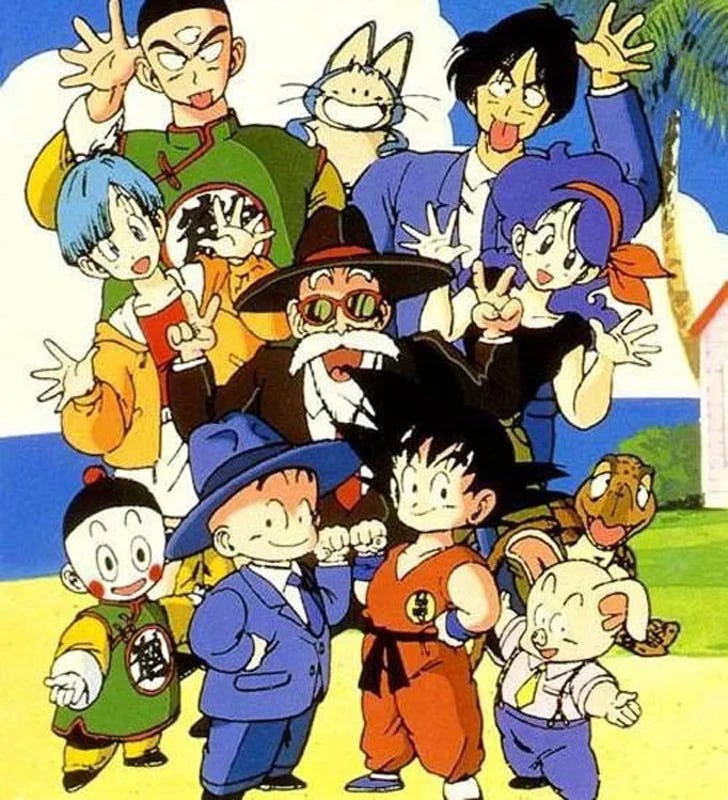
Son Goku
Goku may be the perfect beginner protagonist. Not because he’s the strongest. Not because he’s the most complicated. Because he’s learning.
He doesn’t understand the world. He asks questions. He makes mistakes. He trusts people he probably shouldn’t. He approaches every challenge with curiosity instead of fear.
And because Goku is discovering everything for the first time, new viewers never feel left behind. You learn alongside him. Every lesson. Every location. Every new friend. Every new rival.
That accessibility is one of Dragon Ball’s greatest strengths.
Bulma
Bulma is arguably the most important character in the entire story. Without her, there is no adventure. She is the spark that gets everything moving.
She’s intelligent, resourceful, stubborn, funny, and often the only person approaching situations with anything resembling common sense. More importantly, Bulma represents curiosity just as much as Goku does. She’s the first person determined to see what’s beyond the horizon.
And she drags Goku, and the audience, along for the ride.
Master Roshi
Every generation has its mentor. Dragon Ball gave us one of the best.
Roshi is funny. Roshi is ridiculous. Roshi is occasionally exhausting. But beneath the comedy is a philosophy that becomes central to the entire series.
- Train hard.
- Improve yourself.
- Keep learning.
In the Turtle Hermit school, life lessons matter just as much as the punches.
Krillin, Yamcha, Tien, and Beyond
One of Dragon Ball’s greatest strengths is how naturally it introduces rivalries and friendships.
Krillin begins as a competitor. Then becomes a best friend. Yamcha evolves from obstacle to ally. Tien transforms from rival to respected warrior.
Each relationship feels earned. Each character grows. And each new addition expands the world without making it feel crowded. That’s not easy. Dragon Ball makes it look effortless.
WORLDBUILDING
Dragon Ball may be the least intimidating fantasy world in anime. That’s a bigger compliment than it sounds. Many fantasy series throw dozens of kingdoms, power systems, factions, and lore dumps at the audience immediately.
Dragon Ball doesn’t. It starts with a forest. A house. A boy. A girl. And a quest. Then the world gets bigger.
One village at a time. One adventure at a time. One Dragon Ball at a time. The world feels alive because it constantly rewards curiosity. There’s always another mountain. Another strange character. Another hidden master. Another mysterious location.
The series blends mythology, science fiction, martial arts films, folklore, comedy, and pure imagination into something uniquely its own.
Flying clouds exist alongside futuristic capsules. Dinosaurs roam the same world as martial arts masters. Magic dragons coexist with advanced technology. And somehow it all feels natural.
The world isn’t built through exposition. It’s built through exploration. Which is exactly why it works so well for beginners.
ACTION / POWER SYSTEM
Dragon Ball teaches the language of battle anime.
- Training arcs.
- Tournament arcs.
- Special techniques.
- Rivals.
- Comebacks.
- Growth through hard work.
Nearly every major battle shonen series owes something to the structure Dragon Ball helped popularize. But what’s remarkable is how simple it all feels. The fights aren’t just spectacles. They’re lessons.
Every tournament teaches Goku something. Every rival exposes a weakness. Every defeat creates growth.
The Kamehameha isn’t memorable because it’s the strongest attack. It’s memorable because it symbolizes effort. Practice. Improvement. Determination.
The action works because every fight feels connected to character development. Victory is rarely about overwhelming power. It’s about becoming better than you were before. That’s a lesson anime fans still love decades later.
EMOTIONAL CORE
Dragon Ball is really about discovery. Not power. Not destiny. Not revenge. Discovery.
Goku discovers the world. Bulma discovers adventure. Krillin discovers confidence. Yamcha discovers friendship. Tien discovers humility. Piccolo starts his discovery into something resembling redemption.
Everyone is learning. Everyone is growing. Everyone is becoming something they weren’t when the story began. That’s what makes Dragon Ball feel welcoming.
The audience isn’t expected to know anything. You’re invited to explore. To laugh. To wonder. To learn. To get excited about what’s over the next hill. That sense of discovery becomes the emotional engine of the entire story.
It’s what keeps readers turning pages. It’s what keeps viewers watching episodes. And it’s why Dragon Ball remains such a powerful experience. Because the joy of discovery is universal.
STYLE / PRESENTATION
Akira Toriyama’s art remains one of the most approachable visual styles in manga history.
- Clean.
- Expressive.
- Readable.
Every panel flows effortlessly into the next. Characters are instantly recognizable. Action is easy to follow. Comedy lands because of incredible visual timing. Adventure feels exciting because Toriyama understands movement better than almost anyone.
The anime captures much of that same energy. The soundtrack is iconic. The voice performances are memorable. The sense of fun shines through nearly every episode. Most importantly, Dragon Ball never forgets to be entertaining.
Even during training. Even during travel. Even during exposition. There’s always a sense that something fun might happen around the next corner. That makes the series remarkably easy to recommend.
LET’S BE FAIR
Dragon Ball isn’t perfect. Some of its humor reflects a different era and won’t land the same way for modern audiences. Certain gags feel dated. Some early storylines move slower than contemporary anime fans may expect. And like many long-running series, there are stretches where the pacing occasionally wanders.
The anime can also feel repetitive during certain training and tournament segments. Not every side character receives equal attention. Not every joke ages gracefully. But these flaws rarely outweigh the strengths.
Because even when Dragon Ball stumbles, it’s almost always doing something interesting. Exploring. Experimenting. Building. The heart of the story remains intact. And that heart carries the series through its rough patches.
WHO IS THIS FOR?
This is for people who love:
✔ Adventure
✔ Martial arts
✔ Comedy
✔ Fantasy
✔ Tournament arcs
✔ Character growth
✔ Exploration
✔ Classic anime
✔ Beginner-friendly storytelling
This may NOT be for you if:
✖ You want darker stories
✖ You prefer complex political plots
✖ You dislike older animation styles
✖ You need immediate high stakes
✖ You want constant action
Dragon Ball rewards patience. The journey is the point.
WHY IT MATTERS
Dragon Ball matters because it became a gateway. Not just for anime. For imagination. Generations of fans discovered manga and anime through Dragon Ball. And the reason isn’t complicated.
The series understands something fundamental about storytelling: People fall in love with worlds before they fall in love with lore. Before anime became mainstream around the world, Dragon Ball showed audiences what made the medium special.
- Adventure.
- Heart.
- Humor.
- Action.
- Creativity.
- Wonder.
The series didn’t just influence future creators. It influenced future fans. That’s a different kind of legacy. And one very few stories can claim.
CTRL+BINGE FINAL TAKE
Dragon Ball isn’t the perfect beginner manga and anime because it’s the most influential. It’s the perfect beginner manga and anime because it remembers something many stories forget. Before heroes save the world… They have to discover it.
Dragon Ball captures that feeling better than almost any series ever created. The excitement of the unknown. The joy of exploration. The thrill of meeting new friends and facing new challenges. It’s not just where many anime journeys began. It’s still one of the best places for a new one to start.
QUESTION
What was the first anime that made you realize there was a bigger world beyond the shows you already knew?
And if you were introducing someone to anime today…Would you start with Dragon Ball?
FAQ
Is Dragon Ball beginner friendly?
Yes. In fact, it may be one of the most beginner-friendly manga and anime series ever created because it introduces its world gradually and naturally.
Should I start with Dragon Ball or Dragon Ball Z?
Start with Dragon Ball. It establishes the characters, relationships, themes, and sense of adventure that make everything else meaningful.
Is Dragon Ball a comedy or an action series?
Both. It begins as an adventure-comedy and gradually incorporates more martial arts and action elements as the story progresses.
Is the manga or anime better?
Both are excellent. The manga offers faster pacing, while the anime adds music, voice acting, and atmosphere.
Why is Dragon Ball so influential?
Because it helped define many of the storytelling conventions that later became staples of manga and anime, while remaining accessible to new audiences decades later.