Everyone knows Dracula.
The cape. The fangs. The castle perched high above a fog-covered landscape. The most famous vampire in history. Or at least… that’s the version we think we know.
Because long before Dracula became a creature of the night, there was a real man whose name would become attached to the legend.
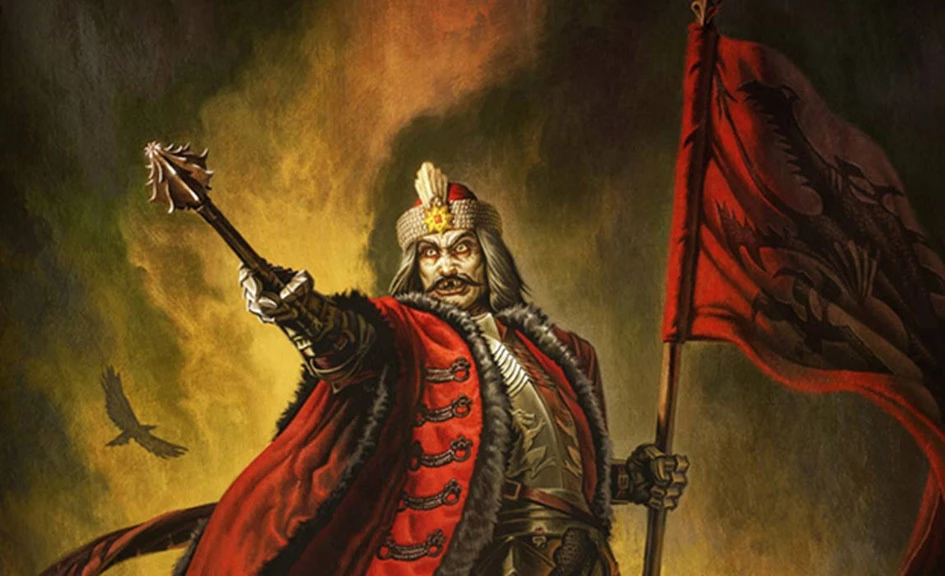
A prince. A warrior. A ruler trapped between empires. A man whose enemies described him as a monster and whose supporters remembered him as a hero. His name was Vlad III Dracula. Better known today as Vlad the Impaler.
And the strangest part of his story isn’t that he inspired a vampire. It’s that 500 years later, we’re still arguing over whether he was a villain, a patriot, or something far more complicated.
HISTORY CLASS VERSION
Here’s the version most people remember.
Vlad III was born in the early 1400s and ruled Wallachia, a small principality located in what is now Romania. He earned the nickname “The Impaler” because of his preferred method of execution. His enemies were often killed by being placed on wooden stakes and left on display. Not exactly subtle. Vlad spent much of his life fighting the expanding Ottoman Empire, one of the most powerful forces in the world at the time.
Centuries later, author Bram Stoker borrowed the name “Dracula” for his famous vampire novel, forever linking Vlad to the undead count that would dominate horror fiction.
That’s the version most people know.
Cruel ruler. Inspiration for Dracula. The end.
Except… history had other ideas. Because depending on who you ask, Vlad was either one of history’s greatest monsters… Or one of Romania’s greatest heroes. And somehow both versions survived.
That’s what makes Vlad fascinating. Most historical figures leave behind one legacy. Vlad left behind three: The man. The monster. And the myth.
BORN INTO A BAD SITUATION
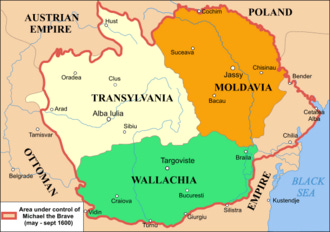
To understand Vlad, you have to understand Wallachia. Imagine being a small kingdom caught between giants. To the south stood the Ottoman Empire. To the north and west were powerful Christian kingdoms. Everyone wanted influence. Everyone wanted territory. Everyone wanted loyalty. Wallachia was stuck in the middle.
Vlad’s father, Vlad II Dracul, tried to navigate this dangerous political landscape by making alliances wherever he could. As part of those arrangements, young Vlad and his brother were sent to the Ottoman court as political hostages. Not prisoners exactly. But not exactly free either.
Growing up in that environment shaped Vlad for the rest of his life. He learned firsthand how power worked. And how quickly it could disappear.
WHY THE IMPALING?
Let’s address the giant wooden stake in the room. Yes. Vlad really did impale people. A lot of them. But here’s the important context: The 1400s were not a gentle era. Public executions were common throughout Europe. Rulers regularly used brutality to project authority. Vlad simply turned it up to eleven.
For him, impalement wasn’t just punishment. It was psychological warfare. The message was simple: Disobey me and this could happen to you. Invade my lands and this could happen to you. Challenge my authority and this could happen to you.
Was it horrifying? Absolutely. Was it effective? Unfortunately, yes. Fear became one of Vlad’s most powerful weapons.
THE FOREST OF THE IMPALED
Now for the lore drop. One of the most famous stories about Vlad involves Ottoman Sultan Mehmed II, the same ruler who conquered Constantinople.
When Mehmed advanced into Wallachia, accounts describe him encountering a massive field of impaled bodies outside the city of Târgoviște. Some reports claim there were as many as 20,000 corpses. The exact number is debated. The effect is not.
Imagine marching an army through the countryside and seeing an entire landscape transformed into a warning. Even hardened soldiers were reportedly shaken. Whether every detail is true almost doesn’t matter. The story spread. And that was the point.
Vlad understood something modern marketers, politicians, and influencers understand too: People don’t just remember events. They remember stories.
HISTORY’S FIRST VIRAL P.R. DISASTER
Here’s where things get really interesting. Much of what we know about Vlad comes from pamphlets written by his enemies.
German printers published sensational stories about his cruelty. Stories spread rapidly across Europe. Some were true. Some were exaggerated. Some were almost certainly propaganda. Sound familiar?
Long before newspapers. Long before radio. Long before social media. Vlad was being dragged through the medieval equivalent of a viral outrage cycle.
Meanwhile, Romanian traditions often painted a different picture. They remembered a ruler who punished corruption, defended his homeland, and stood against overwhelming odds.
Same man. Completely different reputation. History isn’t always about what happened. Sometimes it’s about who gets to tell the story afterward.
SO WHERE DOES DRACULA COME IN?
Ironically, the vampire part arrives centuries later.
Bram Stoker was researching Eastern European history when he came across the name “Dracula.” The name itself comes from Vlad’s father, Vlad II Dracul, whose title was connected to the Order of the Dragon. Dracula essentially meant “son of Dracul.” Stoker loved the name. So, he borrowed it.
The real Vlad never drank blood. Never transformed into a bat. Never slept in a coffin. But because one novelist liked the sound of his name, Vlad became permanently attached to the most famous vampire in history. Talk about a lasting rebrand.
WHY THIS MATTERED
Vlad’s reign was relatively short. His reputation was not. Five centuries later, people still know his name. That’s remarkable. Most rulers fade into history textbooks. Vlad became folklore.
He became a cautionary tale. A national symbol. A horror icon. Few historical figures have crossed over into popular culture as completely as he has.
His story also reminds us that history is rarely clean. Heroes can do terrible things. Villains can have understandable motives. Reality often refuses to fit neatly into the categories we’d prefer.
MODERN CONNECTION
Yesterday’s Wondrous Wednesday explored the history of vampires.
Today’s Throwback Thursday explores the man who accidentally became attached to the greatest vampire story ever told.
And to be fair? Vlad’s influence is everywhere.
- Dracula.
- Castlevania.
- Hellsing.
- Van Helsing.
- Hotel Transylvania.
Countless anime, games, movies, and books owe something to the legend that grew around his name. The funny part? The fictional Dracula conquered the world far more thoroughly than the real Vlad ever could.
One defended a small kingdom. The other became one of the most recognizable characters in human history. Not bad for a prince from Wallachia.
PARTING SHOT
The real Vlad the Impaler wasn’t a vampire. He wasn’t immortal. And he wasn’t a character in a horror novel.
He was a man trying to survive in a brutal world. A man whose enemies called him a monster. A man whose supporters called him a hero.
Maybe that’s why his story endured. Because somewhere between the man and the myth, we stopped arguing about what Vlad did… and started arguing about who Vlad really was.
History isn’t clean. That’s what makes it interesting.
CTRL+BINGE QUESTION
Hero.
Villain.
Or just a product of his time?
When you look at Vlad the Impaler, which version of the story do you find most convincing?