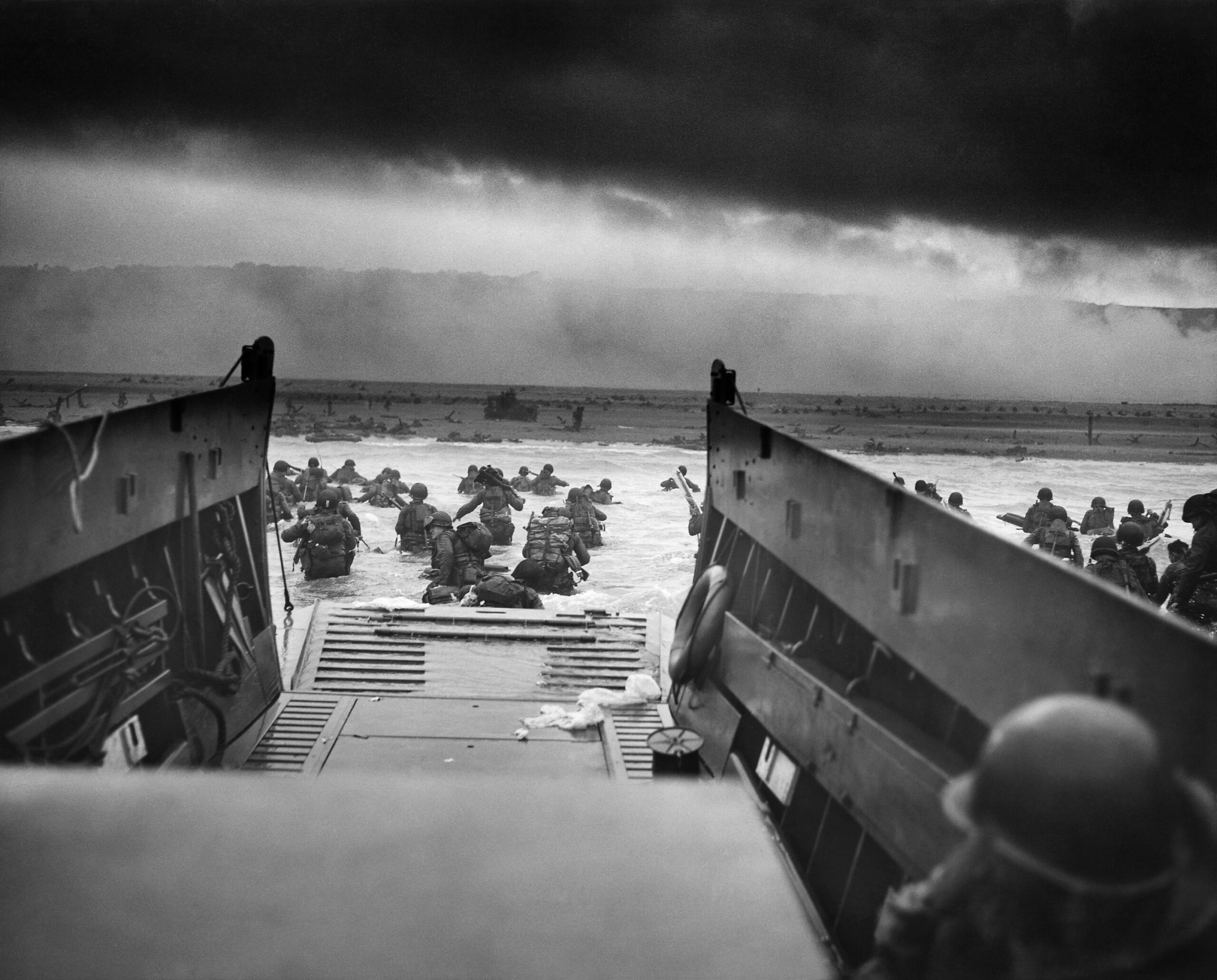
Everyone knows D-Day. Or at least, we recognize the images. Landing craft cutting through rough seas. Soldiers stepping into cold water under enemy fire. The cliffs. The beaches. The courage. It is one of the most studied and remembered days in modern history. And for good reason.
On June 6, 1944, 82 years ago this Saturday, Allied forces launched the largest amphibious invasion ever attempted, beginning the liberation of Western Europe from Nazi occupation.
But the story of D-Day is bigger than the beaches.
Because long before the first landing craft reached Normandy, thousands of people had spent years preparing for a day that might fail.
Entire armies had to be moved.
Entire nations had to cooperate.
And hundreds of thousands of young men were asked to take part in an operation where nobody—not even the commanders—could guarantee success.
The courage on the beaches deserves to be remembered.
So does everything that made those beaches possible.
THE HISTORY CLASS VERSION
Here’s the version most of us learn first.
By 1944, World War II had been raging for nearly five years. Nazi Germany controlled much of continental Europe. The Soviet Union was pushing west from the east. The United States, Britain, Canada, and other Allied nations needed a way to return to mainland Europe and begin the final push against Hitler’s regime. The answer became Operation Overlord.
On June 6, 1944, more than 150,000 Allied troops crossed the English Channel and landed in Normandy, France.
The invasion targeted five beaches:
- Utah
- Omaha
- Gold
- Juno
- Sword
At the same time, thousands of paratroopers landed behind enemy lines to secure roads, bridges, and key objectives.
Despite fierce resistance and heavy casualties, especially at Omaha Beach, the Allies established a foothold in France.
From there, they would continue the campaign that eventually liberated Paris and helped bring about the defeat of Nazi Germany. That’s the version most people remember. And it’s one of the most important military operations in history.
But that’s not the whole story.
Because D-Day wasn’t simply a battle.
It was a logistical challenge so enormous that many historians still consider it one of the greatest planning efforts ever undertaken.
The beaches were the visible part.
The preparation was the foundation beneath it.
WHY NORMANDY?
One of the most important decisions was choosing where to land. At first glance, Normandy seems obvious.
It wasn’t.
The shortest crossing from England to France was at Pas-de-Calais. It was closer, easier to reach, and offered a more direct route into Europe.
The Germans knew that too.
Which meant they heavily fortified it.
The Allies ultimately chose Normandy because it was unexpected enough to create opportunity while still being close enough to support a sustained invasion.
Success depended not only on military strength but also on convincing Germany to prepare for the wrong battlefield.
THE GREAT DECEPTION
To help make that happen, the Allies launched one of the most successful deception campaigns in military history.
Operation Fortitude was designed to convince German commanders that the real invasion would occur at Pas-de-Calais.
Fake radio traffic filled the air. Dummy vehicles appeared across southeastern England. False intelligence was carefully fed to German spies.
Even General George Patton—one of the Allies’ most respected commanders—was intentionally placed where German intelligence could observe him.
The deception worked.
Even after troops landed in Normandy, many German commanders remained convinced that a larger invasion would follow elsewhere. In war, information can be as powerful as weapons.
D-Day is one of history’s clearest examples.
WHO WENT FIRST?
This is the part that often gets overlooked.
Someone had to be in the first wave.
Paratroopers from the American 82nd and 101st Airborne Divisions boarded aircraft knowing they would jump into darkness behind enemy lines. (See HBO’s Band of Brothers for a great example of this and other stories from paratroopers)
British and Canadian airborne troops were given similarly dangerous assignments. Many became scattered after their drops. Some landed miles from their objectives. Some landed directly among German positions. Yet they adapted and continued the mission.
Meanwhile, the men assigned to the beaches boarded landing craft and waited. Some prayed. Some wrote letters. Some sat quietly with their thoughts.
Many understood exactly how dangerous the mission would be. History often remembers divisions and armies. But D-Day was ultimately experienced by individuals. Young men carrying equipment, fear, responsibility, and hope onto unfamiliar shores.
THE LOGISTICS OF THE IMPOSSIBLE
The invasion force itself was staggering.
- Thousands of ships.
- Thousands of aircraft.
- Hundreds of thousands of personnel.
But getting troops ashore was only the beginning. The Allies needed food. They needed fuel. Ammunition. Medical supplies. Replacement equipment. Vehicles.
Everything required to keep an army moving. And they needed it immediately.
One remarkable solution was the construction of artificial harbors known as Mulberries. Engineers literally built portable ports and transported them across the Channel.
Entire sections of harbor infrastructure were assembled off the coast of Normandy so supplies could continue flowing inland.
It’s easy to focus on the first day. But D-Day only mattered if the Allies could sustain what they started. Logistics made that possible.
THE WEIGHT OF DECISION
Perhaps the most revealing detail involves General Dwight Eisenhower.
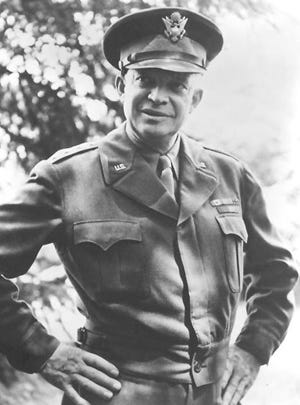
Before the invasion began, he prepared a statement accepting full responsibility if the operation failed. It was never delivered.
But it existed.
And that matters.
Because despite years of preparation, despite overwhelming resources, despite careful planning, nobody knew for certain what would happen when the first boats reached shore.
The commanders felt that uncertainty.
The soldiers felt it too.
The outcome that feels inevitable today was anything but inevitable on June 6, 1944.
WHY THIS MATTERED
D-Day did not end World War II, but it changed the course of it.
The successful landings established a Western Front that Germany could not ignore. The Nazi regime was now fighting major offensives from both east and west. The liberation of France became possible. The eventual defeat of Nazi Germany became far more likely.
Beyond military strategy, D-Day demonstrated something extraordinary: Large democracies with different priorities, cultures, and military traditions could work together toward a common objective.
The operation required trust, coordination, compromise and enormous sacrifice.
Many benefited from its success.
Many never lived to see it.
Both truths belong to the story.
MODERN CONNECTION
When people talk about D-Day today, they often focus on the battlefield. But modern audiences can also appreciate the scale of coordination involved.
Think about the largest projects humanity undertakes:
- International space missions.
- Global disaster relief efforts.
- Massive technological collaborations.
D-Day required that same level of planning, except failure carried immediate and devastating consequences. The operation also reminds us how much history depends on people whose names rarely appear in textbooks.
- Engineers.
- Weather forecasters.
- Shipbuilders.
- Radio operators.
- Logistics officers.
- Medics.
- Pilots.
The invasion succeeded because thousands of people performed their roles under extraordinary pressure. Not every contribution happened on the front line.
All of them mattered.
PARTING SHOT
When we remember D-Day, we remember courage. And we should. But courage was never the absence of fear. It was people doing what needed to be done despite fear.
- Pilots.
- Sailors.
- Paratroopers.
- Engineers.
- Medics.
- Infantrymen.
The beaches of Normandy became historic because ordinary people were asked to do something extraordinary.
Many never came home.
That’s why we still remember.
CTRL+BINGE QUESTION
D-Day required courage on the beaches, in the skies, and behind the scenes. What part of the operation impresses you most:
The soldiers who carried out the invasion… Or the planners, engineers, and logisticians who made such an invasion possible in the first place?