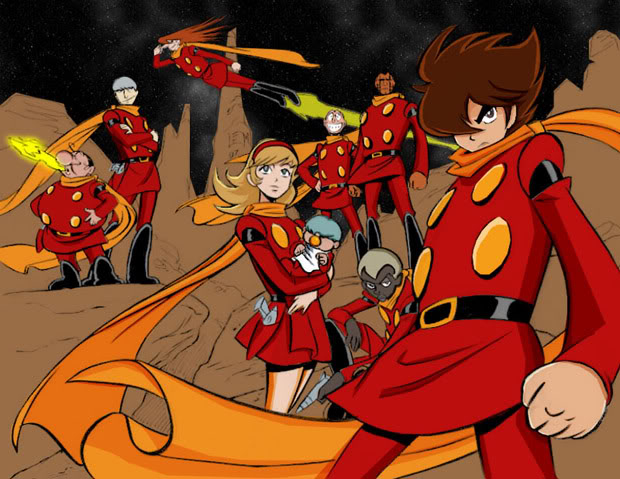
Nine strangers. Nine countries. Nine lives stolen from them. And one question that still feels relevant today: What happens when humanity becomes a weapon?
At first glance, Cyborg 009 looks like an old superhero manga or anime. Colorful costumes and science-fiction gadgets. A team of enhanced heroes battling an evil organization bent on world domination. The kind of premise you’ve seen a hundred times before. Except… There’s a very good chance those hundred stories exist because Cyborg 009 came first.
Long before superhero movies dominated theaters. Long before anime became a global phenomenon. Long before teams of uniquely powered heroes became one of pop culture’s favorite formulas. There was Cyborg 009.
Created by manga legend Shotaro Ishinomori, the series helped establish ideas that would echo throughout anime, manga, comics, and television for decades. At first glance, this looks like a superhero story. But the real story is about reclaiming your humanity after someone else tried to take it away.
Let’s keep this simple. Cyborg 009 follows Joe Shimamura, a young man kidnapped by the shadowy Black Ghost organization and transformed into a cyborg weapon. He’s not alone.
Eight other people from around the world have suffered the same fate. Each has been altered with advanced cybernetic enhancements. Each possesses unique abilities. And each was meant to become a tool for war. Instead, they rebel.
Together, the nine cyborgs unite to fight Black Ghost and prevent the organization from using technology to manipulate humanity and profit from conflict.
The setting blends science fiction, espionage, action, and political intrigue. One chapter or episode might feature secret laboratories. Others might explore international conflict. Others still might wrestle with questions of identity and morality.
The hook? Imagine X-Men, Kamen Rider, and Captain America thrown into a Cold War science-fiction thriller. Then realize this story was doing many of those ideas decades before they became mainstream.
Most people see Cyborg 009 as just an old superhero manga and anime. A precursor; A relic. One of those shows you acknowledge because it’s historically important. Not because it’s actually worth watching.
The perception makes sense. The designs feel rooted in a different era. The storytelling reflects the sensibilities of the 1960s and 1970s.
The premise sounds straightforward: Bad organization creates super-powered humans. Super-powered humans rebel. Heroes save the day. End of story. That’s the version many people remember.
- The powers.
- The action.
- The costumes.
- The team dynamics.
- The cool gadgets.
- The science-fiction spectacle.
It’s easy to look at Cyborg 009 and see only the DNA of future stories. To treat it like a historical stepping stone. A prototype. An early draft of ideas that later creators refined.
But that’s exactly where people undersell it. Because Cyborg 009 wasn’t merely predicting the future. It was actively helping create it.
But that’s not why it matters. And it’s not why people still talk about it. The real story lives somewhere deeper. Because Cyborg 009 isn’t really about becoming stronger. It’s about refusing to let someone else decide what you are.
CHARACTERS
Joe Shimamura (009)
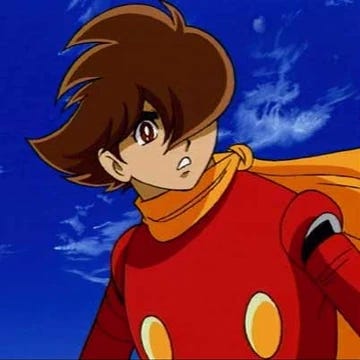
Joe remains one of anime’s most enduring protagonists because he’s constantly caught between two identities. Human and Machine. Neither fully fits.
Unlike many superheroes who embrace their abilities immediately, Joe often wrestles with what those abilities cost him. His greatest struggle isn’t defeating enemies. It’s preserving his humanity. That internal conflict gives him surprising depth. Especially for a series that debuted decades ago.
The Team
What makes Cyborg 009 special is that the cast feels genuinely international. Each cyborg comes from a different background. Different cultures with different experiences and differing motivations.
That diversity wasn’t just cosmetic. It reinforced one of the series’ core ideas: Humanity is larger than borders. Humanity is larger than politics. Larger than the systems trying to divide us. The team works because they’re all victims of the same injustice. Not because they were destined to become heroes.
Black Ghost
Black Ghost remains one of anime’s most fascinating villain organizations. Because their goal isn’t simply conquest. It’s profit.
War is their business. Conflict is their product. The cyborgs aren’t people to them. They’re assets. Weapons and investments. That makes Black Ghost feel disturbingly modern. Even decades after its creation.
WORLDBUILDING
One of the most impressive things about Cyborg 009 is how large the world feels.
The story constantly moves.
- Different countries.
- Different cultures.
- Different conflicts.
Unlike many superhero stories that stay rooted in a single city, Cyborg 009 embraces a global perspective. The team isn’t protecting one neighborhood. They’re confronting systems. Organizations. Wars. Political tensions. And because the series emerged during the Cold War era, many of those stories carry fascinating historical undertones.
Technology becomes both miracle and threat. Scientific progress becomes both salvation and danger. The world feels alive because it reflects real anxieties. Fear of war. Fear of exploitation. Fear of losing control over humanity’s future.
These concerns remain surprisingly relevant today. That’s one reason the setting still resonates.
ACTION / POWER SYSTEM
The powers are wonderfully varied. 009 possesses enhanced speed. Others gain superhuman strength. Flight. Shape-shifting. Specialized combat abilities. But unlike modern battle anime, the powers aren’t designed for power-scaling debates. They’re designed to showcase teamwork.
Every member contributes. Every ability matters. The fights often feel closer to superhero team stories than traditional shonen battles. And that’s a compliment.
Victory rarely comes from raw strength alone. It comes from cooperation. Strategy. Trust.
The action also serves a thematic purpose. Every time the cyborgs use their powers, they’re reminded of what was taken from them. Their abilities are both gifts and scars. That’s a fascinating tension. One the series never completely resolves.
EMOTIONAL CORE
This story is really about free will.
Not technology. Not science fiction. Not superheroes.
Free will.
Every member of the team was transformed against their will. Their bodies were altered. Their futures were stolen. Their identities were rewritten. The obvious story would be revenge. And revenge certainly plays a role. But Cyborg 009 aims higher than that.
The series asks: If someone changes you against your will… Do they own you? If your future is chosen for you… Can you still choose who you become? The answer is the beating heart of the series.
Again and again, the cyborgs reject the roles imposed upon them. They refuse to become weapons. They refuse to become tools. They refuse to become property. Instead, they become something else entirely. Heroes.
Not because they were built to be. Because they chose to be. That’s an incredibly powerful message. And one that continues to resonate in an age increasingly shaped by questions about technology, identity, and autonomy.
STYLE / PRESENTATION
Cyborg 009 wears its era proudly. The character designs remain iconic. Especially Joe’s scarf. The visual aesthetic blends classic science fiction with superhero influences in a way that still feels distinctive.
Different adaptations vary in quality, but the core identity remains strong. The action is energetic. The emotional moments land.
The soundtrack often emphasizes both wonder and melancholy.
Most importantly, the series has personality. It doesn’t feel like anything else. Even when modern viewers recognize ideas that later stories borrowed. You can still feel the originality underneath.
LET’S BE FAIR
Cyborg 009 isn’t flawless.
Modern audiences may find certain storytelling conventions dated. Some villains lack complexity. Certain chapters or episodes feel more episodic than contemporary viewers may prefer. The pacing varies depending on the adaptation. And newer anime fans accustomed to modern animation standards may struggle with older versions.
There’s also the challenge of legacy; When a series influences countless successors, later audiences sometimes encounter the descendants before the original. That can make foundational ideas feel familiar.
Not because Cyborg 009 lacks creativity. Because it succeeded. Its influence became part of the medium’s DNA.
WHO IS THIS FOR?
This is for people who love:
✔ Superhero teams
✔ Science fiction
✔ Manga and Anime history
✔ Found family
✔ Cold War intrigue
✔ Stories about identity
✔ Philosophical action stories
✔ Hidden Manga or Anime classics
This may NOT be for you if:
✖ Older storytelling styles frustrate you
✖ You need constant action
✖ You dislike episodic adventures
✖ You only watch modern anime
WHY IT MATTERS
Cyborg 009 matters because it occupies a unique place in history. It’s not merely an old series. It’s a foundational one. One that you can see influence everywhere.
- Team-based heroes.
- Enhanced humans.
- Found-family dynamics.
- Questions about identity.
- Conflicts between humanity and technology.
Modern audiences often celebrate these ideas without realizing how far back they go. And that’s part of the tragedy. Cyborg 009 helped shape the future. Yet it rarely receives the same recognition as some of the franchises that followed.
The series deserves more than respect. It deserves rediscovery. Not because it came first. Because it’s still worth experiencing today.
CTRL+BINGE FINAL TAKE
Cyborg 009 isn’t important because it was first. It’s important because so many stories came after it.
This isn’t anime archaeology. It’s not homework. It’s not something you watch solely because it’s historically significant. It’s a genuinely compelling story about identity, freedom, and what it means to remain human in a world determined to turn people into tools.
The fact that it helped inspire generations of creators is just a bonus.
QUESTION
If someone gave you extraordinary power but took away your freedom in the process…
Would it still be worth it?
Or is the ability to choose your own path the most important power of all?
FAQ
Is Cyborg 009 beginner friendly?
Yes. While some adaptations show their age, the core themes remain accessible and compelling.
Which version of Cyborg 009 should I watch?
The 2001 anime adaptation is often considered the best starting point for modern viewers.
Who created Cyborg 009?
Shotaro Ishinomori, one of the most influential manga creators in history and a key figure behind Kamen Rider and many other iconic Japanese franchises.
What makes Cyborg 009 important?
It helped establish many storytelling concepts that would later become staples of anime, manga, and superhero fiction.
Is Cyborg 009 still relevant today?
More than ever. Its themes of identity, technology, exploitation, and free will feel remarkably modern.