Nine Students. One spaceship. Five thousand light-years from home. And a mystery that should be impossible.
At first glance, Astra Lost in Space looks like a straightforward survival story. A group of teenagers on a school trip gets stranded in deep space and must work together to make it home. Simple enough. But then the questions start piling up.
- Who sent them there?
- Why were they targeted?
- Why does every answer seem to create an even bigger mystery?
And perhaps most importantly:
- What if your entire life was built on a lie?
What follows is part science-fiction adventure, part murder mystery, part coming-of-age story, and one of the most efficient pieces of storytelling anime has produced in years.
In just twelve episodes, Astra: Lost in Space manages to deliver more mystery, character development, emotional payoff, and thematic depth than some series accomplish in fifty.
At first glance, this looks like a survival anime.
But the real story is about whether we inherit our destiny—or choose it ourselves.
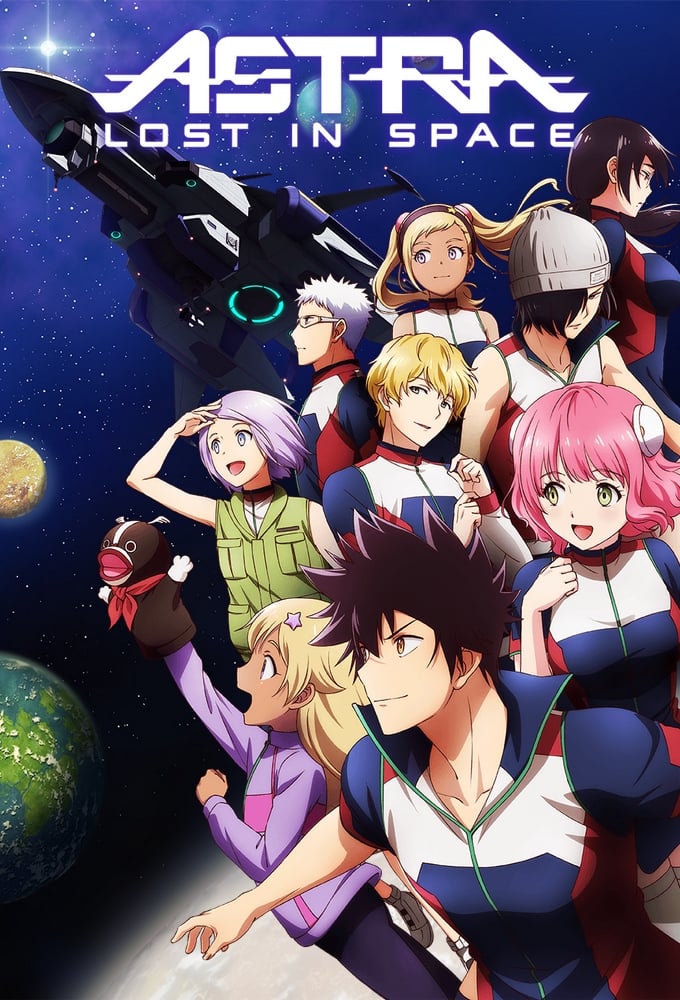
Let’s keep this spoiler-free. Astra: Lost in Space follows Kanata Hoshijima and eight other students who are sent on what should be a routine interplanetary camping excursion. Instead, a mysterious sphere of light appears, pulls them into deep space, and leaves them stranded thousands of light-years from home.
Their only chance of survival? An abandoned spaceship they discover nearby. Now they must travel from planet to planet gathering resources, repairing their ship, and slowly making their way back to civilization. But something doesn’t add up. The accident feels too convenient. The circumstances feel too precise. And before long, the students begin to suspect they weren’t stranded by chance.
The setting blends classic science fiction exploration with a mystery structure that constantly pushes the story forward. Every new planet offers adventure. Every new clue deepens the conspiracy. And every episode somehow finds room for both.
The hook is simple: Imagine if Star Trek, Lost, and a classic whodunit had a baby. Then give it one of the most satisfying endings in modern anime.
Most people think Astra: Lost in Space is just a survival anime. A group of kids gets trapped in space. They work together. They overcome challenges. They learn the power of friendship. Credits roll. Honestly? The series does contain all of those things. There are hostile environments. Resource shortages. Mechanical failures. Dangerous wildlife. The kind of obstacles you’d expect from any good survival story.
There are also plenty of lighter moments. Comedy. Team bonding. Found-family dynamics.
The characters genuinely enjoy being around one another, which gives the show a warmth that many survival stories intentionally avoid. And if that’s all Astra was? It would still be pretty good.
The space adventure is fun. The planets are creative. The cast is likable. The pacing is excellent. But that’s not what people remember.
When anime fans talk about Astra years later, they rarely talk about the survival aspects first. They talk about the mystery. The reveals. The way seemingly insignificant details suddenly become critical. The feeling that the show is always three steps ahead of you. Because beneath the survival premise is something much more ambitious.
But that’s not why it works… and it’s not why people keep recommending it.
The real story lives somewhere deeper. Because Astra isn’t really asking how these students survive. It’s asking whether they own their own futures.
CHARACTERS

Main Character: Kanata
Kanata is the kind of protagonist that works because he’s immediately understandable. He’s optimistic. He’s capable. He’s determined. The sort of person who sees a crisis and immediately starts solving problems. In lesser stories, that can feel boring. In Astra, it feels earned. Because leadership isn’t portrayed as effortless.
Kanata succeeds because he keeps moving forward even when the answers don’t exist yet. He’s not the smartest person on the ship. He’s not the strongest. He’s simply the one willing to carry responsibility. That makes him surprisingly compelling.
Supporting Cast
The real strength of Astra is the ensemble. Every member of the crew initially feels like a familiar archetype.
The broody one. The genius. The rich kid. The comic relief. The shy one. The overachiever. The child. The nice one.
The problem is that Astra knows you’re making those assumptions. And then it systematically dismantles them. Every character gets meaningful development. Every character matters. Every character contributes to the mystery. Perhaps most impressively, the show makes you care about all nine students in only twelve episodes. That’s an absurd accomplishment.
Antagonists
The villain isn’t really a person. At least not at first. It’s uncertainty, paranoia and distrust. The fear that someone among the group may know more than they’re admitting.
As the mystery unfolds, the true antagonists emerge. And when they do, they’re tied directly into the show’s central themes.
Not power.
Not conquest.
Identity.
Control.
Inheritance.
WORLDBUILDING
The universe of Astra feels surprisingly large despite the story’s limited runtime. Each planet the crew visits feels distinct. One resembles an endless ocean world. Another is covered in strange fungal ecosystems. Another seems beautiful until its dangers reveal themselves.
These locations aren’t just set dressing. They’re storytelling tools. Each planet introduces new challenges while revealing new aspects of the cast. And because the crew is constantly moving, the world never feels stagnant.
The science fiction elements strike a smart balance. They’re detailed enough to feel believable but yet simple enough to remain accessible.
Most importantly, the world serves the mystery. Every piece of technology. Every political detail. Every historical revelation. All of it eventually matters. That’s harder to pull off than it sounds.
Many mystery stories introduce details that exist solely to misdirect. Astra rarely wastes anything. The result is a universe that feels carefully constructed from beginning to end.
ACTION / POWER SYSTEM
This isn’t a battle anime. There are no power levels. The are no transformations or tournament arcs. And truthfully? That’s refreshing.
The tension comes from problem-solving the environmental hazards. The tension comes from investigation and survival.
When action scenes happen, they’re meaningful because failure carries consequences. Kanata diving through space to save a teammate matters because there are no magical do-overs. A mechanical failure matters because the crew depends on that equipment to survive.
The action is storytelling. Not spectacle. And that’s one reason Astra works so well for newcomers. You don’t need to learn an elaborate combat system. You simply need to care about whether these people make it home.
EMOTIONAL CORE
This is where Astra becomes special. Because beneath the mystery lies a deceptively powerful question:
Who gets to decide who you are?
The series repeatedly explores the conflict between inheritance and free will. Between what we are given and what we choose.
Many characters carry expectations imposed upon them by family, society, or circumstances beyond their control. Some inherit privilege. Some inherit trauma. Some inherit responsibilities they never asked for. And some inherit something even heavier:
A future that has already been decided for them.
Astra argues against all of it. The series consistently pushes back against the idea that identity is predetermined. That blood doesn’t matter more than choice. That origins matter more than actions. The found-family aspect of the crew reinforces this beautifully. None of these students chose the circumstances that brought them together. But they choose each other. Again and again.
By the time the final episode arrives, Astra has transformed from a mystery about survival into a statement about human agency. We are not merely what created us. We are what we choose to become. And somehow the show accomplishes all of that in twelve episodes.
That’s remarkable.
STYLE / PRESENTATION
Visually, Astra is gorgeous. The planets are imaginative. The character designs are distinct. The space environments feel expansive without becoming overwhelming. Most importantly, the pacing is phenomenal. There is almost no wasted motion.
Every episode advances:
- the mystery
- the character development
- the journey home
Often simultaneously.
The soundtrack complements the adventure perfectly, balancing wonder with tension.
The voice acting helps sell both the lighter moments and the heavier emotional reveals.
But the pacing deserves the highest praise. This show understands exactly how much story it wants to tell. And then tells it No filler. No unnecessary detours. No bloat. That’s increasingly rare.
LET’S BE FAIR
Astra isn’t perfect. Some viewers may find certain reveals arrive a bit quickly. A few emotional turns rely on coincidence more than realism. And because the show moves at such a brisk pace, some side characters don’t receive quite as much exploration as they might have in a longer series.
The science occasionally leans more toward narrative convenience than hard science fiction. If you’re expecting The Expanse, this isn’t that.
Additionally, some anime fans may find the optimism almost too sincere. Astra genuinely believes people can become better. That can feel unusual in a genre landscape often dominated by cynicism.
Still, these are relatively minor criticisms. Most stem from the show’s greatest strength: Its commitment to telling a complete story without overstaying its welcome.
WHO IS THIS FOR?
This is for people who love:
✔ Science fiction mysteries
✔ Found family stories
✔ Character-driven narratives
✔ Plot twists that actually pay off
✔ Fast pacing
✔ Emotional storytelling
✔ Beginner-friendly anime
✔ Stories with satisfying endings
This may NOT be for you if:
✖ You want constant action
✖ You prefer dark, grim storytelling
✖ You dislike ensemble casts
✖ You want sprawling multi-season epics
WHY IT MATTERS
Astra: Lost in Space deserves more attention because it solves a problem many anime recommendations create. It respects your time.
When people ask for beginner anime recommendations, they’re often handed massive commitments. Some have hundreds of episodes with decades of lore and entire franchise ecosystems.
Astra offers something different at only twelve episodes.
- One complete story.
- Beginning.
- Middle.
- End.
No homework required.
More importantly, it demonstrates what anime can do at its best. It blends genres effortlessly.
Science fiction with mystery. Adventure with drama. Coming-of-age storytelling without becoming cheesy or beating you over the head with it. And it never loses sight of its themes. In an era where many stories stretch endlessly, Astra proves the value of knowing exactly what you want to say. Then saying it well.
CTRL+BINGE FINAL TAKE
Astra: Lost in Space isn’t one of the best beginner anime because it explains anime. It’s one of the best beginner anime because it doesn’t need to.
Strip away the animation, and you’re still left with a fantastic science-fiction mystery about identity, family, and the freedom to choose your own path.
The fact that it accomplishes all of that in twelve episodes feels almost unfair. Some shows ask for months of your time. Astra asks for a weekend. And yet, somehow delivers a complete journey.
QUESTION
If someone had complete control over your future from the moment you were born, would you still become yourself or would you become who they intended you to be?
FAQ
Is Astra: Lost in Space beginner friendly?
Absolutely. It’s one of the easiest anime to recommend to newcomers because it tells a complete story in only twelve episodes.
How long is Astra: Lost in Space?
The anime runs for 12 episodes, making it an easy weekend binge.
Manga or anime first?
Both are excellent, but the anime adaptation is remarkably faithful and often serves as the easiest entry point.
What anime is Astra similar to?
If you enjoy mystery, science fiction, and ensemble casts, think of it as a blend of Lost, Star Trek, and a classic whodunit.
Does Astra have a satisfying ending?
Yes. One of its greatest strengths is that it fully commits to answering its mysteries and delivering a complete conclusion.