The American Revolution is one of the most celebrated stories in history. It’s a tale of liberty, independence, and the birth of a nation. At least, that’s the version most of us learn.
But what happens when you experience that story through the eyes of someone who doesn’t neatly fit into either side? That’s what Assassin’s Creed III set out to explore. And more than a decade later, it might be one of the franchise’s most misunderstood entries.
When people talk about Assassin’s Creed III, the conversation usually starts in the same place; It’s the game that came after Ezio.
For many players, that alone was a difficult hurdle to overcome.
Ezio Auditore had carried three games, become one of gaming’s most beloved protagonists, and helped define the identity of the Assassin’s Creed franchise. Replacing him was always going to be an impossible task.
Then there was Connor.
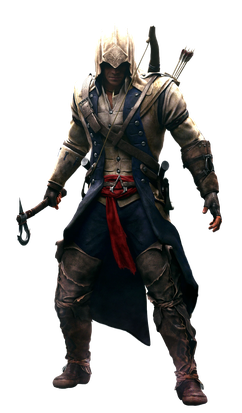
Compared to Ezio’s charm, wit, and swagger, Connor was quieter. More serious. More focused. Many players interpreted that as boring.
As a result, Assassin’s Creed III often found itself stuck with an unfortunate reputation. It became known as the game that followed Ezio, introduced naval combat, and happened to take place during the American Revolution.
Even among longtime fans, it often gets overshadowed by Assassin’s Creed II, Brotherhood, Black Flag, and later entries. But that reputation misses something important.
Because Assassin’s Creed III wasn’t trying to tell the same story as the Ezio trilogy. It was trying to ask a much harder question.
Most people remember Assassin’s Creed III as a Revolutionary War game. In reality, it’s a story about a man discovering that the people fighting for freedom don’t always agree on what freedom actually means.
Mechanics — Expanding the Assassin’s Playground
Assassin’s Creed III represented one of the biggest gameplay leaps the series had attempted up to that point.
For the first time, players could move through dense wilderness environments, sprint across tree branches, hunt wildlife, and navigate massive stretches of frontier between cities.
The parkour system became more fluid, allowing Connor to flow through forests just as naturally as earlier Assassins moved through rooftops.
Combat also received a dramatic overhaul.
Connor fought less like a graceful duelist and more like a force of nature. Tomahawk strikes, musket counters, rope dart executions, and brutal hand-to-hand combat gave encounters a weight that felt distinct from previous entries.
Then there was naval combat.
At the time, it felt like an interesting side activity. In hindsight, it was the prototype for what would later become one of the defining features of Assassin’s Creed IV: Black Flag.
Like many ambitious games, Assassin’s Creed III spent a lot of time experimenting with ideas that future entries would perfect.
Story & Characters — Connor’s Impossible Dream
At the center of the story is Ratonhnhaké:ton, better known to most players as Connor.
A member of the Kanien’kehá:ka (Mohawk) Nation, Connor grows up caught between worlds. He witnesses the destruction of his village, learns of the growing conflict between Assassins and Templars, and becomes convinced that he can build a better future. That’s where the tragedy begins.
Because Connor genuinely believes in the ideals being discussed during the Revolution.
- Liberty.
- Justice.
- Self-determination.
- Freedom.
Again and again, he risks everything to defend those ideals. The problem is that the people shouting those words often have different priorities than he does.
Throughout the story, Connor discovers that neither side is as simple as he hoped. Friends disappoint him. Allies use him. Leaders make compromises. History refuses to fit neatly into the categories of heroes and villains.
What makes Connor compelling isn’t that he changes the world. It’s that he keeps fighting for his principles even when the world refuses to live up to them.
World / Visuals / Atmosphere — A Nation Being Born
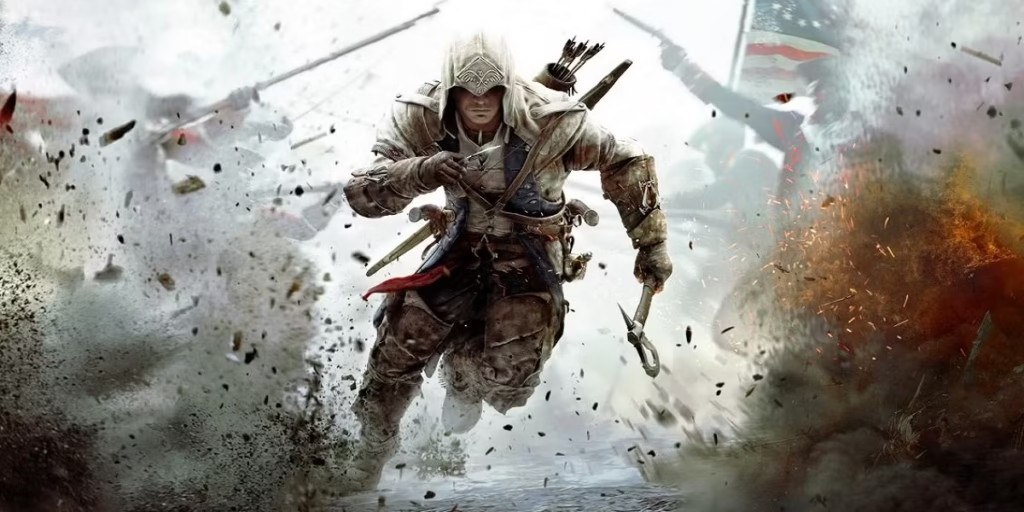
Few games have captured a moment of transformation quite like Assassin’s Creed III. Boston and New York feel alive with tension. Soldiers patrol the streets. Citizens debate politics. Crowds gather around speeches and protests. Everywhere you look, history is moving.
The frontier offers a completely different atmosphere. Dense forests, snow-covered trails, hunting grounds, and remote settlements create a sense of scale that was impressive when the game launched and remains impressive today.
What makes the world memorable isn’t simply its size. It’s the feeling that you’re watching an entire nation being built in real time.
The colonies are changing. The people are changing. And Connor is trying desperately to figure out where he belongs within all of it.
Sound & Music — The Weight of History
The soundtrack of Assassin’s Creed III deserves far more recognition than it usually receives. The music blends orchestral grandeur with emotional restraint, creating themes that feel both heroic and deeply melancholy.
Connor’s theme, in particular, perfectly captures the character. There’s determination in it. Hope. But also, sadness. A sense that victory may come with sacrifices no one fully understands.
The voice acting follows a similar path.
Connor’s quieter performance often drew criticism at launch, but it makes far more sense when viewed through the lens of the character’s journey. He isn’t trying to charm the room. He’s carrying the weight of impossible expectations. That seriousness becomes one of the game’s greatest strengths.
The Best Assassin’s Creed Story Nobody Talks About
What makes Assassin’s Creed III unique isn’t the Revolution. It’s perspective.
Most historical stories about this period focus on generals, politicians, and famous names. Connor sees history from the outside. He witnesses the promises being made. He watches who benefits from them. And he struggles with the gap between ideals and reality.
That perspective gives the game a maturity that feels increasingly rare in blockbuster action titles.
WHY IT MATTERS
The older Assassin’s Creed III gets, the more interesting it becomes. When it launched in 2012, many players wanted another Ezio adventure. What they received instead was a story about disappointment, compromise, and the uncomfortable reality that progress rarely arrives exactly as promised.
Connor believes in freedom. The game never mocks him for that. Instead, it asks what happens when someone believes in an ideal more deeply than the people claiming to fight for it. That’s a remarkably thoughtful idea for a game built around hidden blades and rooftop assassinations.
More than anything, Assassin’s Creed III reminds us that history isn’t just about victories. It’s about people.
- Their hopes.
- Their sacrifices.
- Their blind spots.
And the generations left to deal with the consequences.
MODERN CONNECTION
Today, conversations about history often revolve around perspective. Who gets remembered? Whose stories get told? Who benefits from the version of events that survives?
Assassin’s Creed III was wrestling with those questions years before they became common topics across movies, television, gaming, and online culture. That’s part of why the game feels surprisingly relevant today.
You can see its DNA in modern historical fiction, in prestige television dramas, and even in contemporary video games that focus on morally complex protagonists navigating imperfect systems.
The American Revolution remains one of history’s defining moments. Assassin’s Creed III reminds us that defining moments are rarely as simple as they appear from a distance.
QUESTION
More than a decade later, does Assassin’s Creed III deserve another look?
Or is there another Assassin’s Creed game that history has treated more unfairly?