You’ve definitely heard of the World Cup. Even if you’ve never watched a soccer match in your life.
Every four years, it seems to take over the planet. News broadcasts cover it. Social media explodes. Entire countries appear to shut down when their team plays.
People paint their faces. Cities erupt. Generations gather around televisions.
And if you’re an American sports fan, there’s a decent chance you’ve looked around and thought: “Okay… what exactly is happening here?”
Fair question. Because the FIFA World Cup isn’t just another championship. It’s arguably the biggest sporting event on Earth. And once you understand how it works, the obsession starts to make a lot more sense.
Most people understand the World Cup like this: It’s the Olympics, but for soccer.
- Countries send teams.
- Somebody wins.
- Everyone goes home.
Truthfully, that’s not a bad starting point, if you know nothing else.
The tournament brings together national teams from around the globe to compete for the most prestigious trophy in soccer. Not club teams. Not all-star teams. Countries. That’s important.
When Argentina wins, it’s Argentina.
When Brazil wins, it’s Brazil.
When England loses, an entire nation collectively experiences emotional damage.
The stakes feel different because national identity is involved. You’re not cheering for laundry. You’re cheering for home. At least, that’s how fans see it.
But here’s the thing… the World Cup isn’t just a tournament. It’s the closest thing sports has to a global holiday. And the structure is a lot simpler than people think.
How It Works
The World Cup takes place every four years. Countries spend years trying to qualify. Read that again.
Years.
Most nations don’t simply get invited. They have to earn their spot through qualification tournaments held within their regions. By the time the World Cup begins, thousands of matches have already been played around the world. Only the survivors remain.
Once teams arrive, they’re placed into groups. Think of this like March Madness meeting the NFL playoffs. Teams play several matches within their group. Win and you earn points. Tie and you earn fewer points. Lose and you earn nothing.
The best teams advance. The others go home.
After that? Single elimination. Lose once. You’re done. The pressure ramps up immediately. Because unlike a long season, there is very little room for mistakes.
- One bad bounce.
- One missed shot.
- One heroic save.
And four years of preparation can disappear.
What Makes It So Hard
Now imagine the Super Bowl. Except the players have spent their entire lives dreaming about it. And they only get a realistic chance every four years. That’s the World Cup. Most athletes get dozens of playoff opportunities. World Cup players might get three or four tournaments total. Maybe fewer. Some never get one at all. The physical demands are obvious. Ninety minutes of nonstop movement, constant pressure and massive expectations.
But the mental challenge is what separates it. You’re not representing a city. You’re representing millions of people. Sometimes tens of millions. Every touch matters. Every mistake becomes national news.
Who Dominates?
Historically, a few nations have become soccer royalty.
Brazil stands alone with five World Cup titles. They’re the Yankees, Lakers, and Canadiens rolled into one. Then you have traditional powers like:
- Germany
- Italy
- Argentina
- France
These countries don’t simply hope to compete. They expect to. And every tournament produces new stars.
- Pelé.
- Diego Maradona.
- Zinedine Zidane.
- Lionel Messi.
The World Cup has a habit of turning great players into immortals.
Why Fans Love It
Because the World Cup creates something modern sports rarely achieve: A truly shared experience.
Most championships belong to one country. The World Cup belongs to the planet. For one month, billions of people are watching the same event.
Billions.
Not millions.
Billions.
Underdogs can emerge and giants can fall. Heroes are born. And unlike many professional leagues, nobody can simply buy their way to the top. A small nation can shock the world. That’s part of the magic. Every tournament feels like it contains at least one fairy tale.
The Trophy
Here’s a fun one.
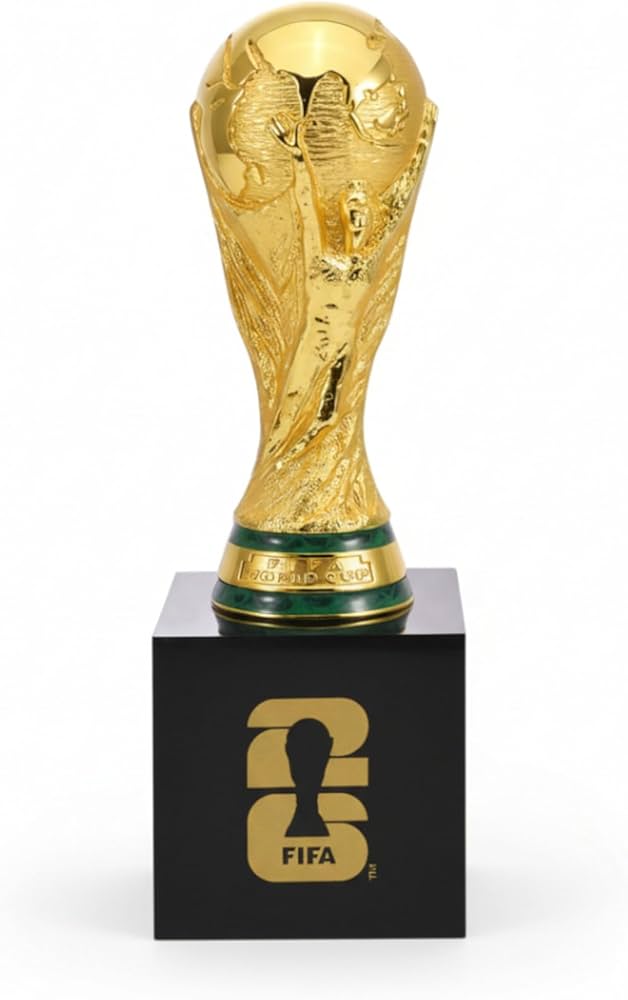
The World Cup trophy isn’t the original trophy. The first trophy, called the Jules Rimet Trophy, was permanently awarded to Brazil after they won their third championship in 1970. Then it was stolen.
Seriously.
Stolen.
Never recovered.
The trophy used today is an entirely different trophy. World Cup history is full of stories like that. Because when something matters this much, weird things tend to happen around it.
Why This Matters
The World Cup endures because it taps into something bigger than sports.
- Identity.
- Pride.
- Belonging.
Most of us spend our lives cheering for teams we choose. The World Cup is different. For many people, the team chooses you.
- It’s tied to family.
- Culture.
- Language.
- History.
And that’s why the emotions feel so intense. People aren’t just celebrating victories. They’re celebrating themselves.
Modern Connection
Think about your favorite anime tournament arc. Everybody arrives with different styles. Different strengths. Different philosophies. The giants enter expecting to win. The underdogs show up hoping to survive. Rivals settle old scores. Unexpected heroes emerge. And by the end, somebody becomes a legend. That’s the World Cup. It’s the biggest tournament arc humanity has ever created.
Final Whistle
You don’t need to understand every rule. You don’t need to know every player. You don’t even need to love soccer. The World Cup is one of those rare events where the scale alone becomes part of the story. Billions watching. Countries dreaming. One trophy. And every four years, the entire world agrees to care about the same thing at the same time. That’s pretty remarkable.
Ctrl+Binge Question
What’s the closest thing your favorite sport has to the World Cup?
The Super Bowl?
The Olympics?
March Madness?
Or is there really nothing else like it?