Before Dragon Ball became planets exploding, gods fighting, and hair colors changing the balance of the universe, it was a martial arts story. It was a sports story.
Fighters trained. Tournaments had brackets. Referees mattered. Ring-outs mattered. Technique mattered. Stamina mattered. A clever counter could beat raw power. A mistake could cost you the match. And sometimes, the strongest person in the arena was not the one with the biggest move, but the one who understood the fight better.
That early version of Dragon Ball is where the series feels the most grounded. Not realistic, exactly as this is still a world where a small child with a tail can throw cars and a turtle hermit can casually rewrite what “old man strength” means.
But compared to what comes later, early Dragon Ball is built around martial arts as competition. The World Martial Arts Tournament is not just background decoration. It is the proving ground. It is where characters show what they have learned, where rivalries sharpen, and where entire philosophies collide in front of a crowd.
And few rivalries show that better than the Turtle School and the Crane School.
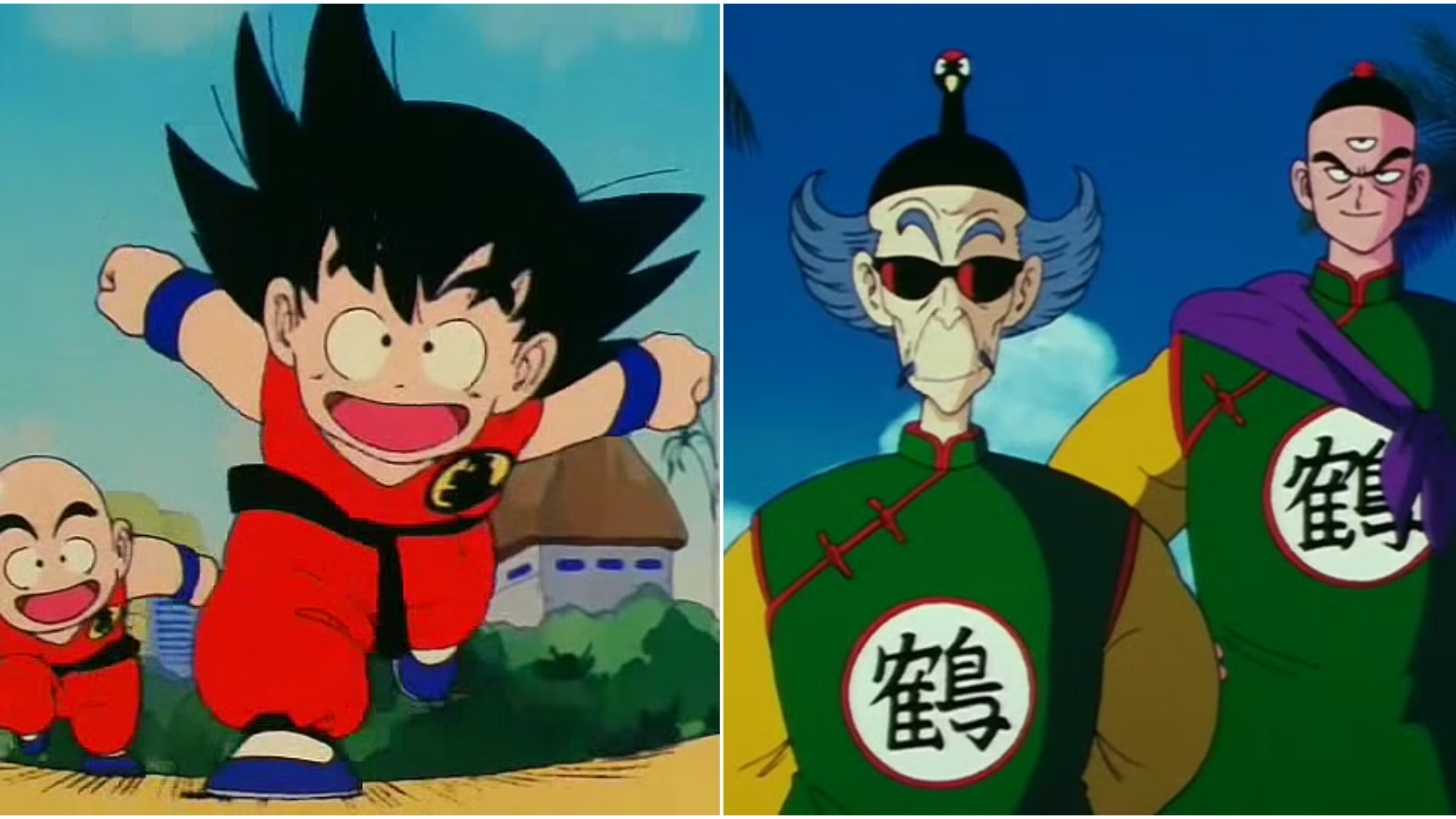
On the surface, it looks simple. Good dojo vs. bad dojo. Master Roshi vs. Master Shen. Goku and Krillin vs. Tien and Chiaotzu. The lovable old master vs. the bitter rival master. But that is the easy version.
The better version is this:
The Turtle School builds athletes.
The Crane School builds weapons.
And that difference is one of the most important ideas in early Dragon Ball.
The Surface Version
Most people remember the Turtle School as the “good guy” school and that certainly makes sense. Master Roshi trains Goku and Krillin. He gives them the orange gi. He becomes one of the great mentor figures in anime. He is goofy, strange, inappropriate, wise, ridiculous, and somehow still one of the most important martial artists in the entire franchise.
The Crane School, on the other hand, is framed as the rival school. Master Shen is cruel, arrogant, and resentful. His brother, Tao Pai Pai, is one of the first truly terrifying human villains in Dragon Ball. Tien and Chiaotzu arrive as dangerous opponents, trained under a philosophy that values domination over sportsmanship.
So yes, at first glance, it is easy to say: Turtle School good. Crane School bad. But that misses what makes the rivalry interesting. Because the Crane School is not weak. That is important.
Tien is not some joke opponent. Chiaotzu is not harmless. Their techniques are real. Their discipline is real. Their training clearly worked. The Crane School produces talented fighters. The question is not whether their methods can create strength. The question is what kind of strength they create.
Sports are never just about who wins. Not really. Every sport eventually becomes a conversation about how people are trained, what values they are taught, what they are rewarded for, and what they become along the way.
A coach can teach fundamentals. A coach can teach fear.
A program can build confidence. A program can build arrogance.
A gym can produce champions. A gym can also produce people who only know how to hurt someone.
That is what Turtle School vs. Crane School really is. It is not just a martial arts rivalry. It is a coaching philosophy rivalry. And Dragon Ball makes its answer pretty clear.
The Turtle School: Fundamentals, Joy, and the Long Game
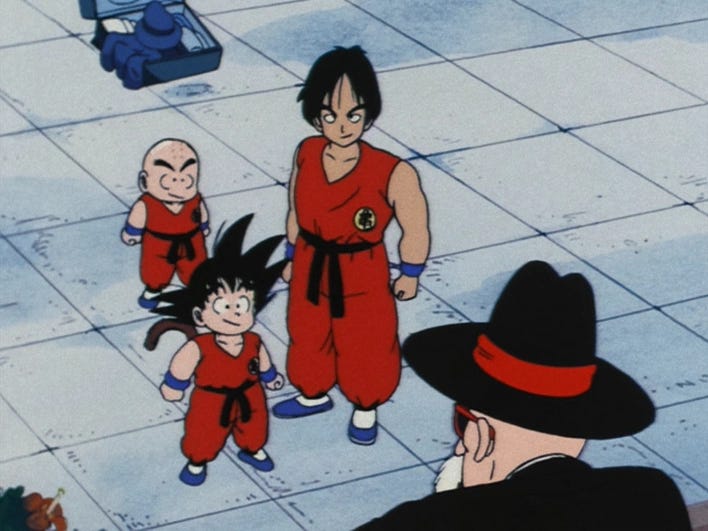
Master Roshi’s training is one of the funniest parts of early Dragon Ball because, from the outside, it barely looks like martial arts training at all.
Goku and Krillin do not begin by learning some secret ultimate technique. They deliver milk.
- They plow fields.
- They do construction work.
- They swim.
- They run.
- They study.
- They eat.
- They sleep.
- Then they do it all again.
It is absurd. It is also weirdly brilliant.
Because Roshi is not trying to rush them into looking impressive. He is building their bodies, their habits, their discipline, and their ability to endure work. Before they can chase the highlight reel, they need a foundation.
That is old-school sports development.
You do not become a great boxer by only practicing knockout punches. You do not become a great basketball player by only practicing dunks. You do not become a great football player by only practicing touchdown celebrations.
The flashy stuff is what people remember. The fundamentals are what make the flashy stuff possible. That is the Turtle School.
Roshi’s training is not glamorous, but it creates fighters who can keep growing. He understands that martial arts are not just about learning moves. It is about building a person who can handle pressure, adapt to challenges, and keep improving after failure.
That last part matters. Because Goku and Krillin lose. A lot. They do not just walk into the World Martial Arts Tournament and instantly dominate everyone. They struggle. They learn. They get humbled. They come back stronger.
That is the Turtle School philosophy in action. Losing is not proof that the training failed. Losing is part of the training.
Roshi’s approach teaches his students to love the work, respect the fight, and keep climbing. He does not just want them to win one tournament. He wants them to become martial artists. There is a difference.
The Crane School: Winning, Fear, and Control
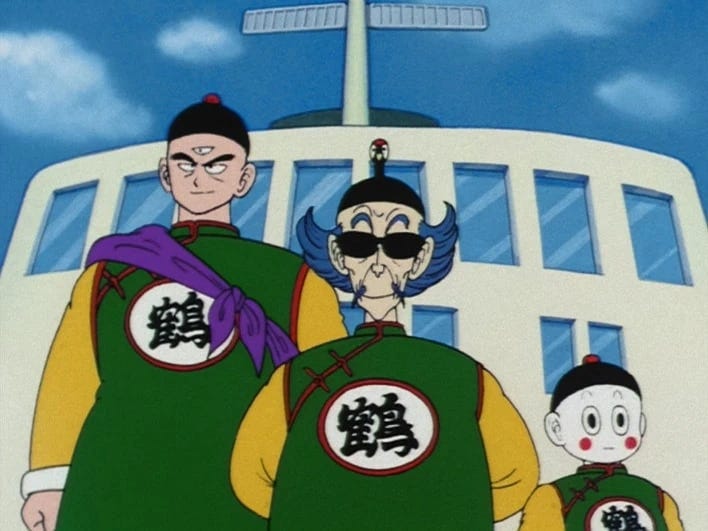
The Crane School sees martial arts differently. Where the Turtle School is about growth, the Crane School is about superiority. Where Roshi teaches discipline through humility, Shen teaches discipline through pride. Where Turtle School students are encouraged to improve, Crane School students are pushed to dominate.
Again, this does not mean the Crane School is ineffective. Actually, that is what makes it dangerous. The Crane School works. At least for a while.
Tien and Chiaotzu arrive with confidence, skill, and techniques that immediately make them stand out. They are not random fighters. They are products of a serious martial arts system. They are trained. They are focused. They are dangerous.
But they are also carrying the poison of that system. They do not just want to win. They want to prove they are above everyone else. That is where the sports comparison gets sharp. Every sport has programs like this.
Teams, gyms, coaches, or systems that produce results while slowly warping the people inside them. They teach athletes that compassion is weakness. That respect is optional. That opponents are not competitors, but obstacles. That winning excuses whatever it took to get there.
And for a while, that can look like strength. A ruthless fighter can be scary. An arrogant team can be dominant. A cruel coach can still produce winners. But eventually, the bill comes due.
Because if your entire identity is built on being superior, what happens when someone beats you? What happens when someone is stronger? What happens when the opponent you looked down on refuses to break?
That is the problem the Crane School cannot solve. It creates fighters who can win. But it does not create fighters who know what to do when winning is not enough.
Tien: The Fighter Caught Between Two Worlds
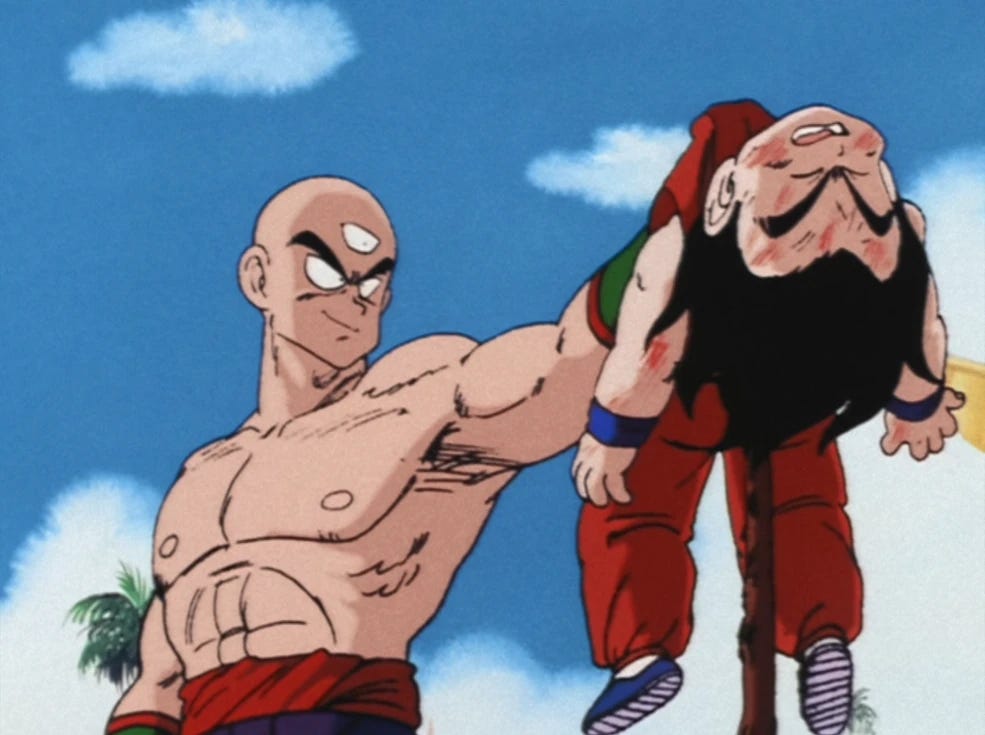
Tien is the heart of this whole story. He is the proof point.
When Tien first enters the story, he feels like the perfect Crane School athlete.
- Disciplined.
- Skilled.
- Cold.
- Confident.
- Mean.
He does not feel like someone who stumbled into strength. He feels like someone molded into it. And that is exactly what makes his arc so good.
Because Tien is not weak. He is not secretly a coward. He is not a fraud hiding behind his school’s reputation. He is legitimately great. The problem is that he has been taught the wrong purpose for greatness.
Tien has the tools. He has the work ethic. He has the talent. He has the competitive fire. What he lacks is the healthier philosophy that lets those gifts become something better.
That is why his encounters with Goku and the Turtle School matter so much. Goku does not challenge Tien only as a fighter. He challenges Tien’s worldview.
Goku fights hard, but he does not fight with cruelty. He wants to win, but not because he needs to humiliate people. He enjoys the challenge. He respects strong opponents. He gets excited by the chance to improve.
That is completely different from what Tien has been taught. And slowly, Tien starts to see it. He starts to recognize that strength does not have to mean looking down on people. Winning does not have to mean becoming cruel. A martial artist can be serious without being heartless.
That is the moment Tien truly begins to grow. Not when he learns a stronger technique. Not when he wins a match. When he realizes his coach gave him tools, but not values.
That is a sports story through and through. It is the athlete who leaves a toxic program and finally becomes himself.
Why Turtle School “Wins”
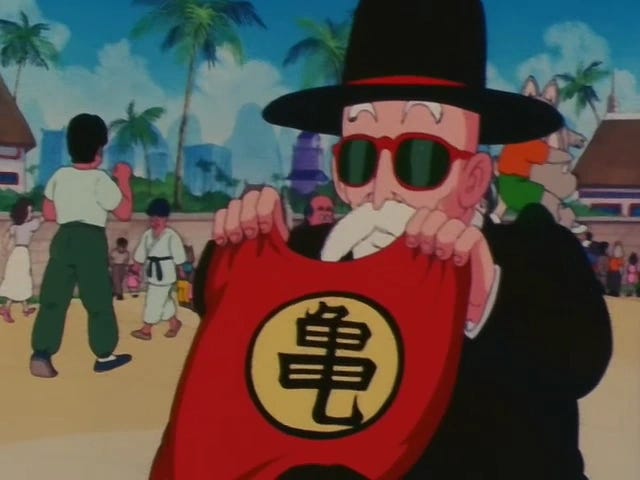
The Turtle School does not win because its fighters never lose. They lose plenty. The Turtle School wins because its fighters keep evolving. That is the real difference.
The Crane School teaches fighters to dominate what is in front of them. The Turtle School teaches fighters to grow beyond what is in front of them.
One is built around control. The other is built around development. And in sports, development wins the long game.
A fighter who only knows how to dominate can become lost when domination fails. A fighter who knows how to learn can survive almost anything.
That is why Goku keeps rising. That is why Krillin keeps improving. That’s why Yamcha truly begins to grow as a martial artist and person when he truly commits. That is why Tien’s growth truly begins when he steps away from the Crane School’s cruelty.
The Turtle School is not soft. That is the mistake. Roshi’s training is brutal. His standards are high. His students work constantly. The difference is that the hardship has a purpose beyond ego.
The Turtle School does not teach weakness. It teaches humility. And humility is not the opposite of confidence. It is what allows confidence to survive failure. That is the secret.
The Turtle School produces fighters who can lose without being destroyed by it. That is why they keep getting better.
Why This Matters
This rivalry matters because it gets at something sports fans understand instinctively. How you train shapes who you become. Not just as an athlete. As a person.
A great coach does more than teach technique. A great coach teaches values. They teach how to compete, how to handle pressure, how to respect opponents, how to recover from failure, and how to keep chasing improvement without losing yourself.
A bad coach can still teach you how to win. That is what makes them complicated. The Crane School is not useless. Shen clearly understands martial arts. His students are dangerous because they have been trained well in a technical sense.
But skill without character has a ceiling. Eventually, the fighter has to become more than a collection of techniques. That is the lesson Dragon Ball keeps returning to, even as the series gets bigger and louder.
- Power matters.
- Training matters.
- Technique matters.
But the reason you fight matters too. The Turtle School understands that better than anyone.
Modern Connection
Every great sports rivalry is also a philosophy rivalry. It is not always obvious, but it is there.
- Offense vs. defense.
- Flash vs. fundamentals.
- Old school vs. new school.
- Player development vs. win-now pressure.
- Discipline vs. creativity.
- Joy vs. fear.
The best rivalries are not just about two sides trying to beat each other. They are about two different answers to the same question. What is the right way to play?
That is Turtle School vs. Crane School. It is not just Goku vs. Tien. It is not just Roshi vs. Shen. It is not just orange gi vs. green robes. It is two visions of martial arts standing across from each other in the same tournament. One says strength is about proving you are above others. The other says strength is about becoming better than you were yesterday.
That is why this part of Dragon Ball still works so well. Before the planets explode, before the gods arrive, before the power levels become cosmic, the series already understands competition.
It understands that the best fights are not just physical. They are philosophical. They tell us what the characters believe. They tell us what their teachers valued. They tell us what kind of athletes they are becoming.
And in Tien’s case, they show us that sometimes the greatest victory is realizing you were trained to win the wrong way.
Final Whistle
Dragon Ball eventually became much bigger than the tournament floor. The fights left the ring. The stakes reached planets, galaxies, and gods. But the heart of the story was already there when two martial arts schools stepped into the arena with completely different ideas about strength.
The Crane School taught that power was something you used to stand above people. The Turtle School taught that power was something you developed through effort, humility, and the willingness to keep growing.
One school built weapons. The other built athletes. And in the long run, Dragon Ball made its answer clear: Bet on the Turtle School.
Because winning is great.
But growth is undefeated.
The Ctrl+Binge Question
Turtle School or Crane School? Which martial arts philosophy do you think produces the better fighter?