The Word Waiting for Him
On August 18, 1590, John White stepped onto Roanoke Island after nearly three years away. It was his granddaughter’s third birthday.
White and his men had spotted a fire through the trees the night before. They sounded a trumpet, played familiar English songs, and called into the darkness.
Nobody answered.
When daylight arrived, White walked toward the settlement where he had left 117 men, women, and children.
His daughter was among them. So was his granddaughter, Virginia Dare, the first English child born in an English colony in North America.
White found no survivors.
No bodies. No battlefield.
The houses had been carefully dismantled. A defensive palisade had been constructed around the settlement.
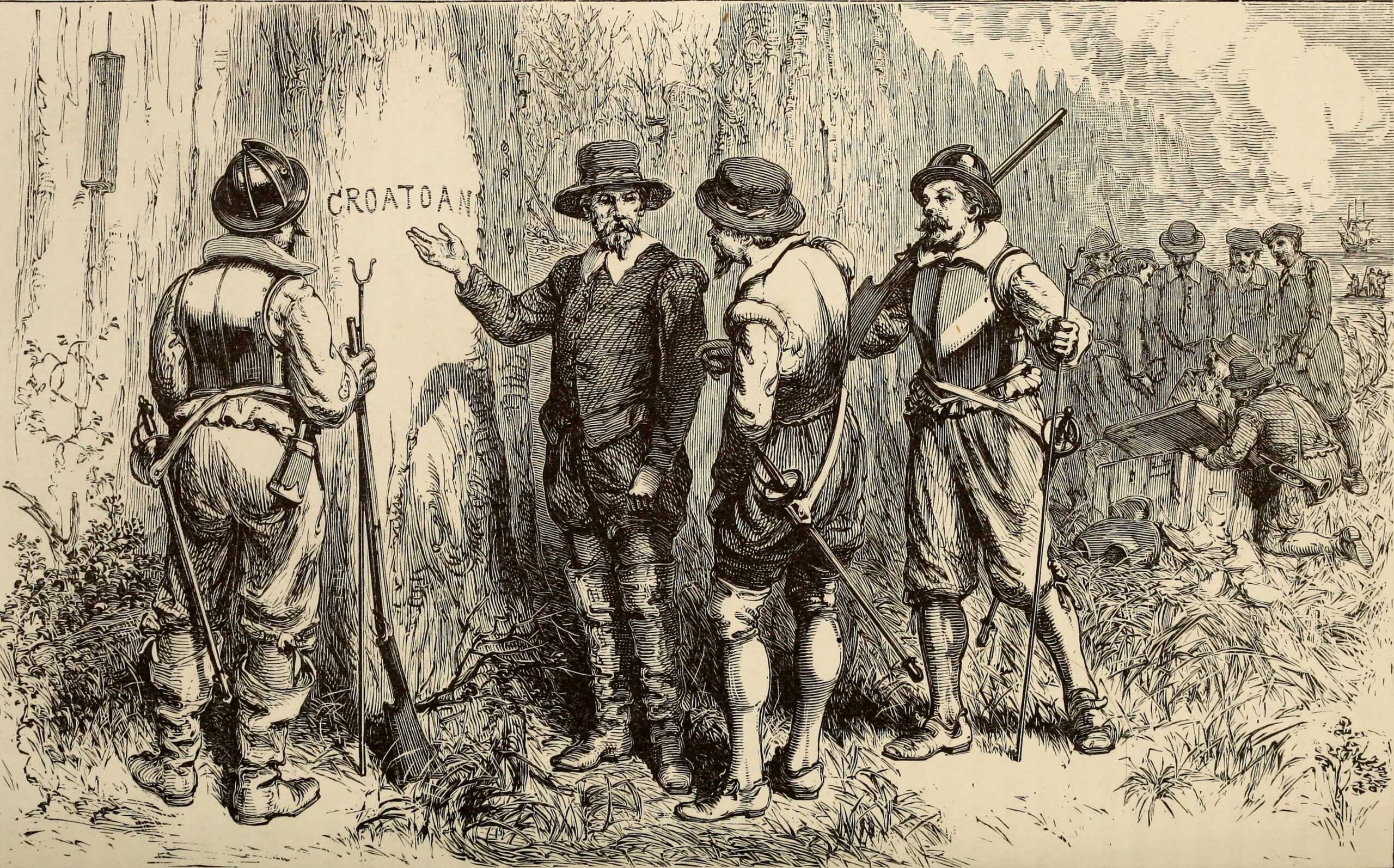
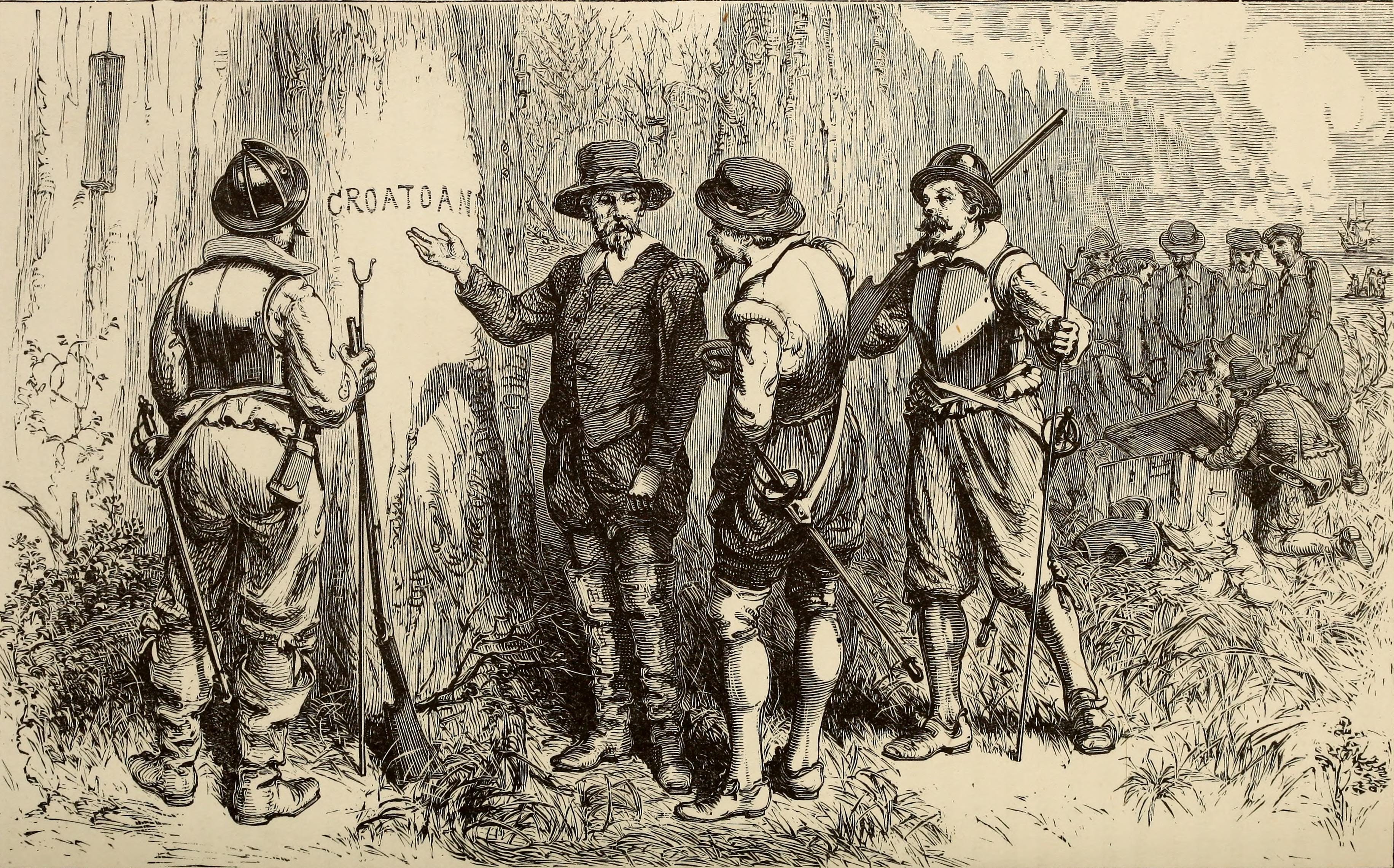
Carved into a tree were three letters: CRO. Carved into one of the palisade’s posts was a complete word: CROATOAN.
It has become one of the most famous mysteries in American history. An entire colony had disappeared.
Except…They left a destination.
The History-Class Version
The story most of us remember is wonderfully creepy.
In 1587, a group of English settlers established a colony on Roanoke Island, off the coast of present-day North Carolina. Their governor, John White, returned to England for supplies. War delayed his return.
When he finally reached Roanoke three years later, every colonist had vanished. The only clue was the word CROATOAN carved into a post. Nobody knows what happened next.
Roll credits.
It is a story perfectly designed for campfires, documentaries, conspiracy theories, and horror shows.
Were the colonists massacred? Did they starve? Did Spain secretly destroy the settlement? Were they killed by disease? Did something even stranger happen?
Roanoke became America’s oldest cold case: 117 people apparently swallowed by the wilderness without leaving a body behind.
But the familiar story usually begins too late.
To understand what happened at Roanoke, we need to leave the island, cross the Atlantic, and look at the world surrounding it.
Because England was not yet the empire we remember. It was trying to become one.
England Was the Underdog
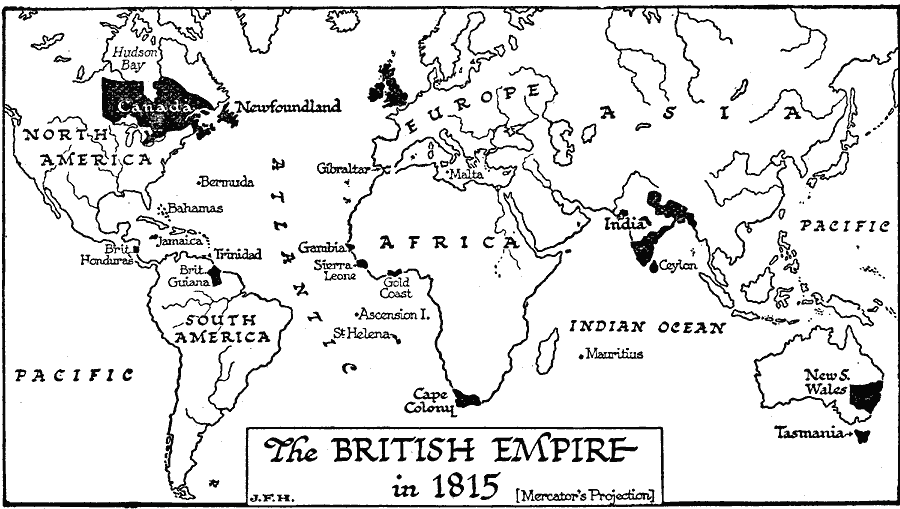
In 1587, there was no British Empire. England did not control colonies across the globe. It did not rule the seas.
It had not established Jamestown, landed at Plymouth Rock, or built the network of settlements that would eventually become thirteen American colonies.
Spain was the great European superpower.
King Philip II ruled Spain and, through a dynastic union, Portugal. Together, their overseas territories stretched through the Americas, Africa, and Asia.
Spanish ships carried enormous wealth across the Atlantic.
France was trapped in religious wars.
The Dutch were fighting to escape Spanish rule.
The Ottoman Empire remained a major power across the Mediterranean and Middle East.
Akbar ruled the expanding Mughal Empire.
Ming China governed one of the world’s largest and most sophisticated states.
England was an ambitious Protestant island kingdom trying to force its way into a world where other powers already controlled the most profitable routes.
Roanoke was not simply a group of families looking for a new home. It was one move in a global struggle involving territory, religion, trade, piracy, and war.
The First Roanoke Colony
The famous Lost Colony was not England’s first attempt at Roanoke.
In 1584, Queen Elizabeth I granted Sir Walter Raleigh permission to explore, claim, and colonize lands in North America not already controlled by another Christian ruler.
Raleigh did not personally sail to Roanoke. He financed and organized the project.
The first colony arrived in 1585 under Ralph Lane. It was primarily a military expedition composed of men who hoped to explore the region, claim land, find valuable resources, and establish a base near Spanish shipping routes.
From the beginning, almost everything went wrong.
One of the expedition’s largest ships ran aground, destroying much of the colony’s food supply. The settlers became heavily dependent upon the Carolina Algonquian communities already living in the region. Then drought reduced the food available to everyone.
Disease carried by the English killed Indigenous people.
Suspicion grew on both sides.
Lane eventually became convinced that Wingina, the leader of the Roanoke people, also known as Pemisapan, was plotting against the colony.
Rather than risk waiting for an attack, Lane struck first.
In June 1586, the English launched a surprise assault. Pemisapan was wounded, chased into the woods, and beheaded.
Approximately one week later, the English abandoned Roanoke and sailed home with Sir Francis Drake.
The first colony was gone. The damage it caused was not.
A Civilian Colony Inherits a War
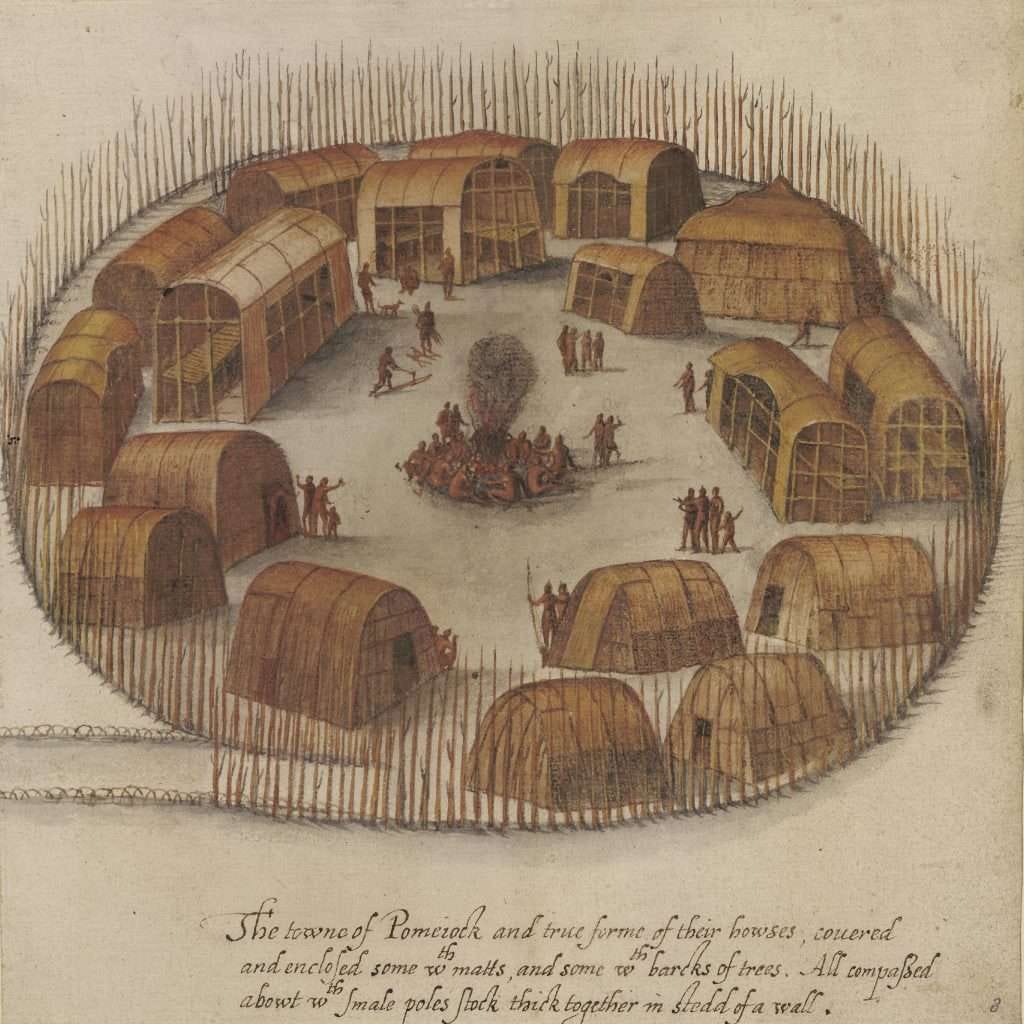
When another English expedition sailed for North America in 1587, its goals were different. This group included women and children.
It was intended to become a permanent agricultural community called the Cittie of Raleigh, located farther north near Chesapeake Bay. Roanoke Island was supposed to be a temporary stop.
The colonists wanted to check on fifteen English soldiers left there after the earlier settlement was abandoned.
Instead, they found one man’s bones.
The others had apparently been killed.
Then the expedition’s pilot, Simon Fernandes, refused to transport the settlers farther north. He left them at Roanoke—exactly where Lane’s colony had poisoned relations with the surrounding communities.
The new settlers were not responsible for every decision made by their predecessors. But they inherited the consequences.
Days after their arrival, colonist George Howe was found dead. He had been shot with arrows and beaten. The English attempted to retaliate against the community they believed responsible.
They attacked the wrong people.
Their intended targets had already fled. The English instead killed members of the friendly Croatoan community.
The new colony had barely unpacked before it found itself isolated, undersupplied, and surrounded by the wreckage of an earlier conflict.
Its most dependable Indigenous ally was Manteo, a Croatoan man who had traveled to England, learned English, and worked between the two cultures.
He understood the English. He also understood the world they had entered. Without relationships like his, the colony’s chances of surviving were almost nonexistent.
Virginia Dare and the Journey Home
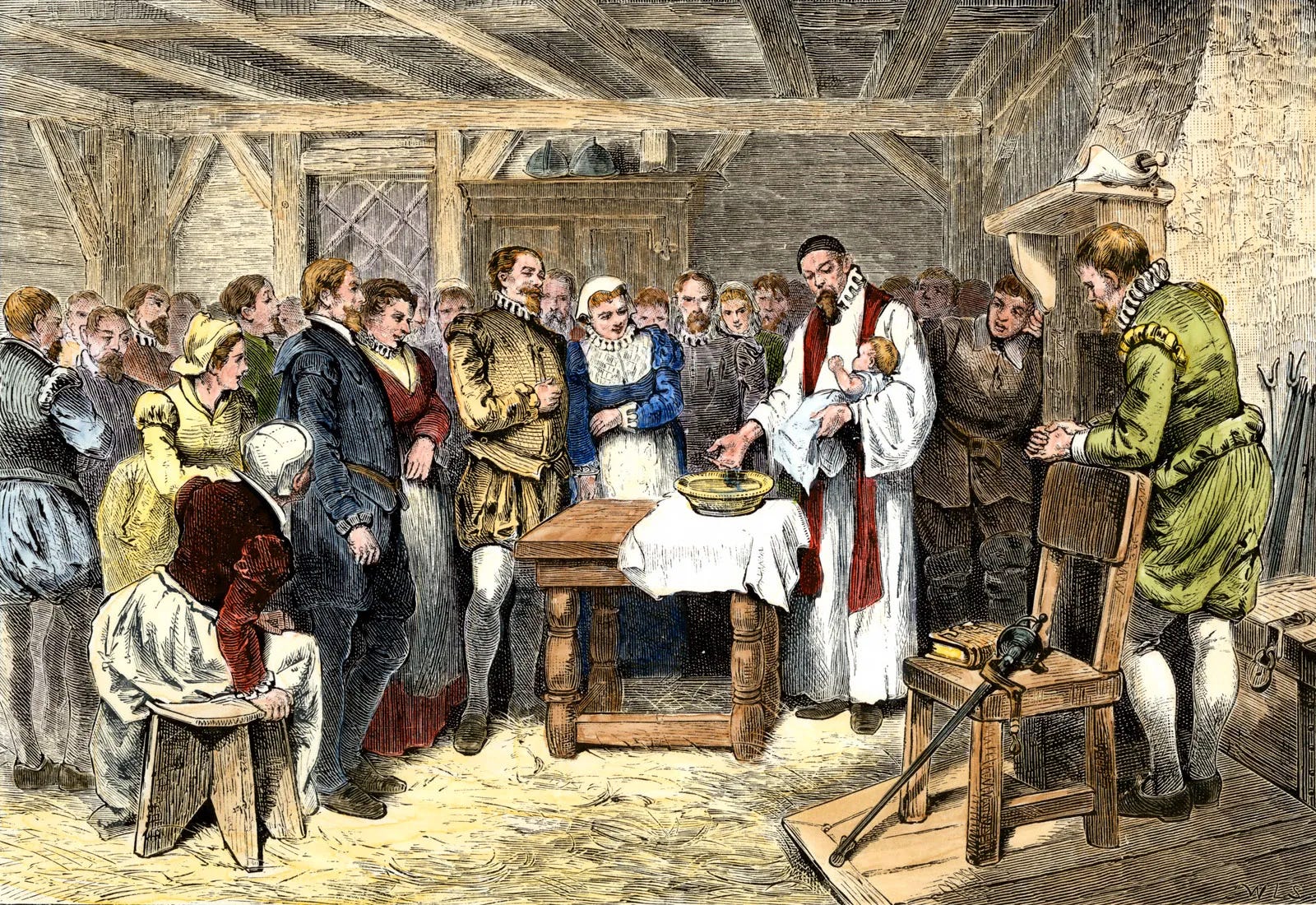
On August 18, 1587, John White’s daughter Elinor gave birth to Virginia Dare.
She represented exactly what Raleigh’s second colony was supposed to become.
Not a temporary military camp. Not merely a privateering base. A community. But the settlement needed help.
The colonists asked White to return to England, explain their situation, and bring back supplies. White resisted leaving, partly because his family would remain behind. The colonists insisted.
On August 27, he sailed for England. Before leaving, White and the settlers established a simple plan. If they relocated, they would carve the name of their destination into a tree or post. If they were forced to leave under attack or serious distress, they would carve a cross with the message.
White expected to return the following year. History had other plans.
The War That Left Them Behind
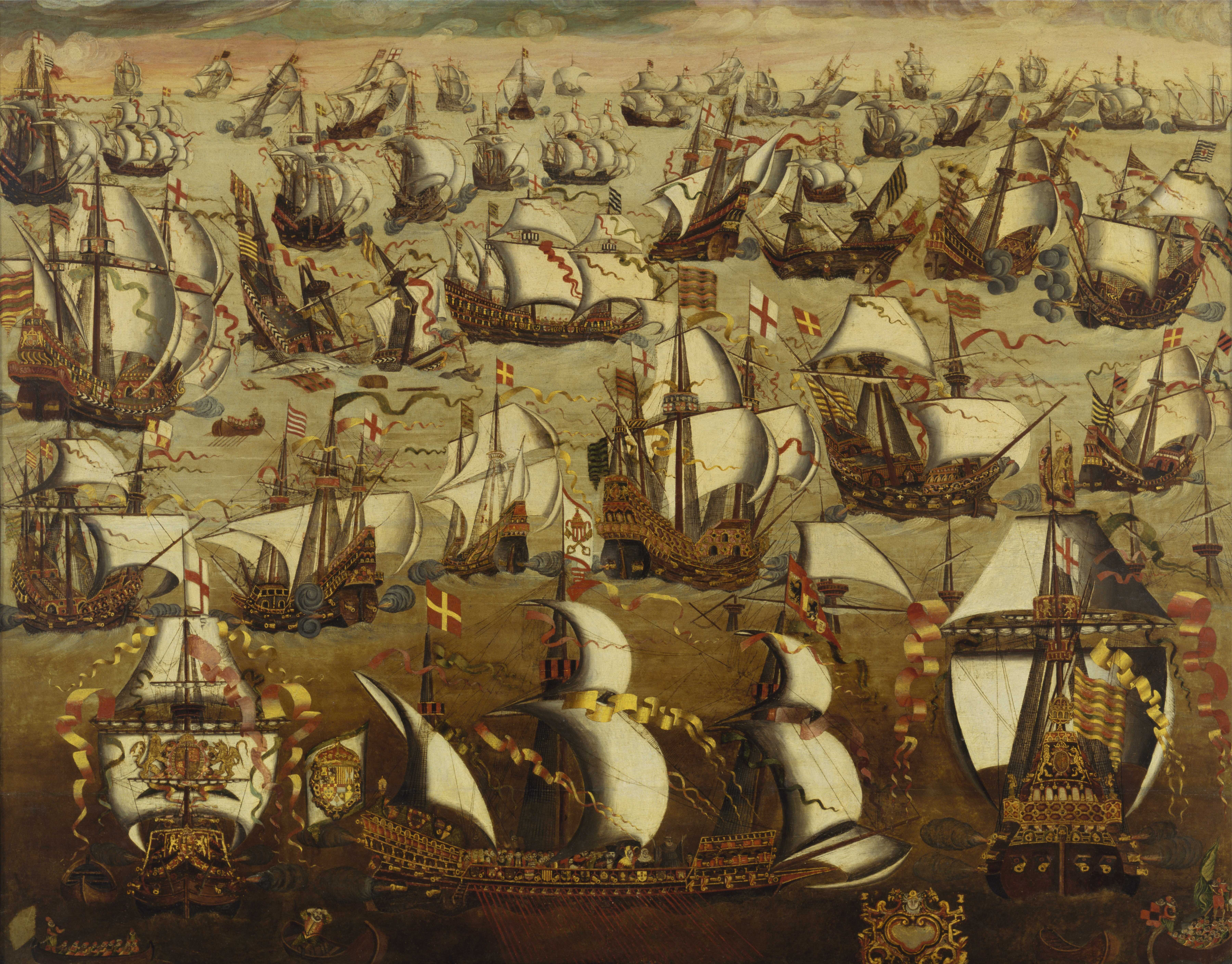
England and Spain were moving toward open war.
Philip II prepared an enormous fleet to invade England, overthrow Elizabeth, and restore Catholic rule. The Spanish Armada sailed in 1588.
England needed ships, sailors, weapons, and supplies for its own survival. A struggling colony across the Atlantic was not the priority.
White managed to join a small relief expedition, but the sailors became distracted by the opportunity to capture enemy vessels. They went privateering.
Their ships were damaged during a fight with the French, forcing them to return to England before reaching Roanoke.
The colonists were waiting for food and reinforcements. Their rescuers went looking for loot.
Although England defeated the Spanish Armada, the war did not immediately end. Walter Raleigh’s attention and money drifted elsewhere, leaving White to search for anyone willing to carry him back across the Atlantic. He finally secured passage in 1590 aboard another privateering expedition.
This was not a dedicated rescue fleet carrying families and enough supplies to restore the settlement. White was essentially catching a ride.
By the time he reached Roanoke, nearly three years had passed.
The Colony Was Gone
White arrived near Roanoke on August 16, 1590. The following day, a storm sank one of the expedition’s boats, killing its captain and several sailors.
On August 18, Virginia Dare’s third birthday, White finally went ashore. He found the settlement abandoned. But it had not been destroyed in a sudden attack.
The houses had been taken apart rather than burned. The colonists’ possessions had been moved or buried. A palisade had been built, suggesting they had remained long enough to improve the settlement’s defenses before leaving.
Then White found the carvings.
CRO.
CROATOAN.
There was no cross.
White did not interpret the word as a mysterious warning.
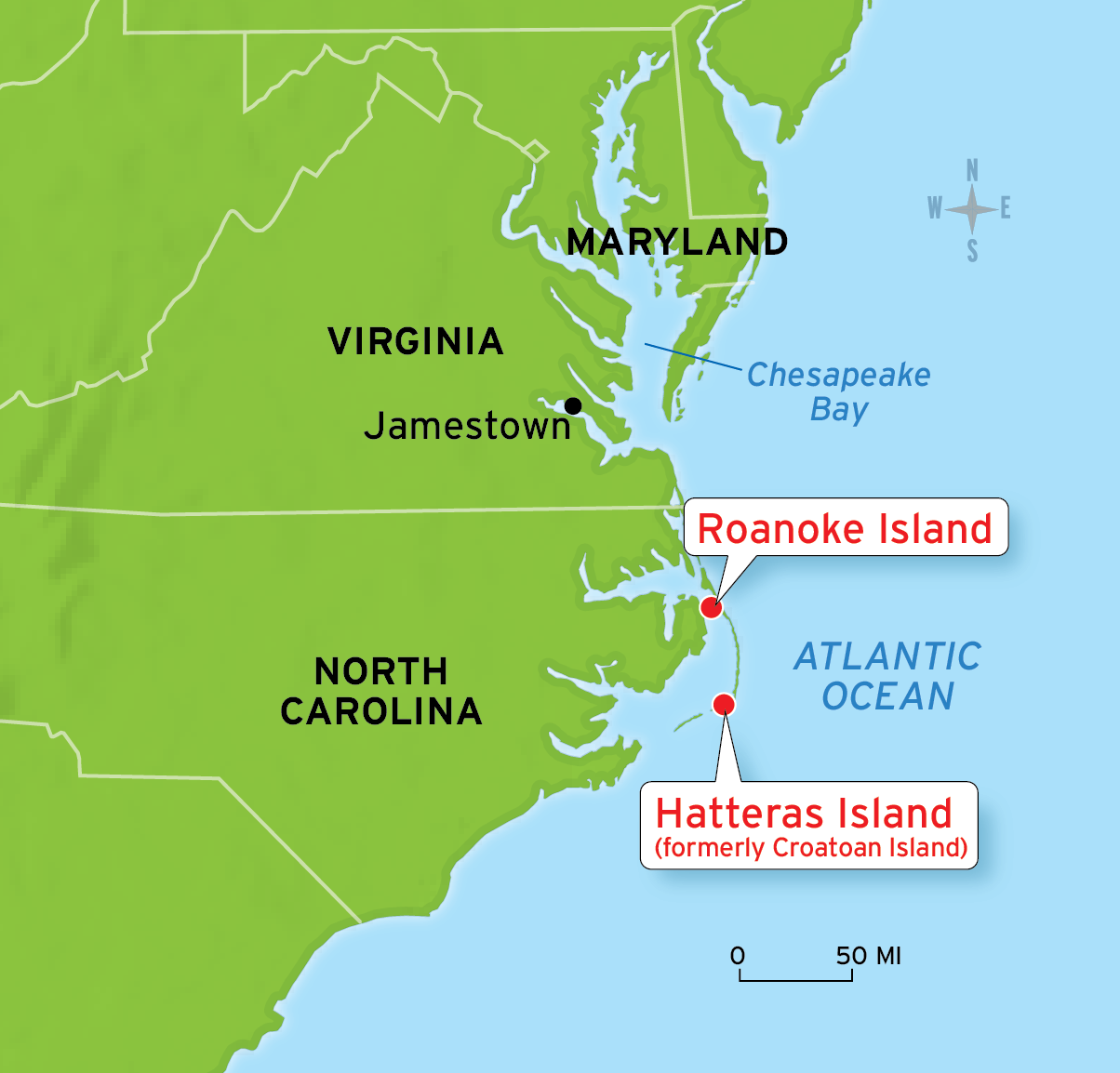
Croatoan was the name of both an Indigenous community and the island where many of its people lived, modern Hatteras Island. It was Manteo’s home.
White was relieved. The message appeared to tell him that the colonists had relocated to live near people they knew.
He attempted to sail there. Another storm intervened. The ship lost anchors, the weather deteriorated, and the crew refused to continue the search.
White left the region without reaching Croatoan. He would never see his daughter, his granddaughter, or any of the colonists again.
What Probably Happened
Nobody can produce a complete list explaining the fate of all 117 settlers. That uncertainty matters. However, the strongest explanation is not that every person vanished simultaneously.
The colony probably divided.
Before White left, the settlers had discussed moving approximately 50 miles toward the mainland. Some may have traveled west into the Albemarle Sound region. Others may have gone south to Croatoan.
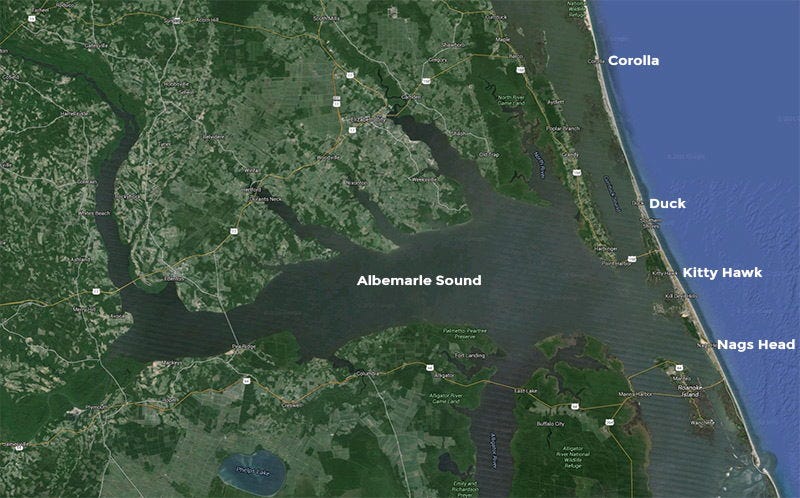
The word carved into the palisade strongly suggests that at least some colonists sought refuge among the Croatoan people. They would have needed help.
Tree-ring evidence indicates that the region experienced its most extreme drought in approximately 800 years between 1587 and 1589.
Roanoke was already struggling to produce enough food. The expected English supply ships never arrived. Relations with some surrounding communities had become violent. Joining an established Indigenous community may have offered the colonists their best chance to survive.
That does not mean all 117 lived happily ever after. Some may have died from disease, hunger, violence, or exposure. Some may have traveled elsewhere. Some may have been killed years later.
Others may have married into Indigenous communities, raised families, and gradually stopped existing as a separate English colony.
They would not have disappeared from the world. They would have disappeared from English records.
What the Archaeology Says
Modern archaeology has provided tantalizing clues, but no final roll call.
Researchers working on Hatteras Island have found European objects from the general period, alongside Indigenous artifacts. Recent discoveries—including evidence associated with European metalworking—have strengthened the argument that English settlers may have lived among the Croatoan people.
On the mainland, researchers studying a location known as Site X have uncovered fragments of Elizabethan-era pottery. The site is near a symbol hidden beneath a patch on one of John White’s maps.
Those finds may indicate that a small group of colonists moved west.
But European objects could travel through trade, and neither site can identify Virginia Dare, Elinor White, Ananias Dare, or any other individual settler.
The evidence allows us to say probably. It does not allow us to say case closed.
The most responsible conclusion is that the colony likely fragmented, with at least some settlers integrating into Indigenous communities.
The mystery is not necessarily where they went. The mystery is what happened to them afterward.
Why This Mattered
Roanoke was a failure. It was also a lesson.
England learned that permanent colonization required more than planting a flag and expecting supplies to appear.
Settlements needed dependable transportation. They needed continuous investment. They needed food production, planning, leadership, and relationships with the people already living there.
When Jamestown was founded in 1607, England returned with a corporate structure, a larger financial commitment, and a clearer supply system.
Jamestown still nearly collapsed. But it survived.
Roanoke also reveals something uncomfortable about how history is recorded. The English settlers receive names.
- John White.
- Virginia Dare.
- Elinor Dare.
- Ananias Dare.
The Indigenous communities often become background characters in a mystery supposedly happening on their own land. Yet Indigenous politics, food, knowledge, alliances, and decisions probably determined whether any colonist survived.
If members of the colony joined the Croatoan people, then the Lost Colony story is not simply about English disappearance. It is also about Indigenous survival absorbing a failed European project.
America’s Oldest Cold Case
Roanoke has everything modern audiences love.
- An abandoned settlement.
- A missing population.
- A desperate grandfather.
- A newborn child.
- A three-year delay.
- One word carved into wood.
It feels like the opening episode of a prestige mystery series. But mysteries become legends partly because uncertainty leaves room for whatever story we want to tell.
Massacre. Conspiracy. Secret escape. Supernatural disappearance.
The truth was probably more human.
Food ran low. Help never came. The settlers were trapped somewhere they had never intended to live.
So, they moved. Some likely died. Some may have survived by joining people who understood the land better than they did.
History kept calling them lost because England never found them again. That does not mean nobody else knew where they were.
The End of the Sentence
John White crossed an ocean looking for his family. They left him the name of the place they had gone. A storm stopped him from reaching it. He sailed away and never saw them again.
The Lost Colony did not leave us with silence. It left us with one word. We simply never reached the end of the sentence.
Ctrl+Binge Question
Do you believe the Roanoke colonists truly vanished—or did history lose track of them because they became part of another community?
The central facts were checked against John White’s surviving account of his 1590 return, the National Park Service, Encyclopedia Virginia’s Roanoke chronology, the published tree-ring drought study, and the First Colony Foundation’s Site X findings.