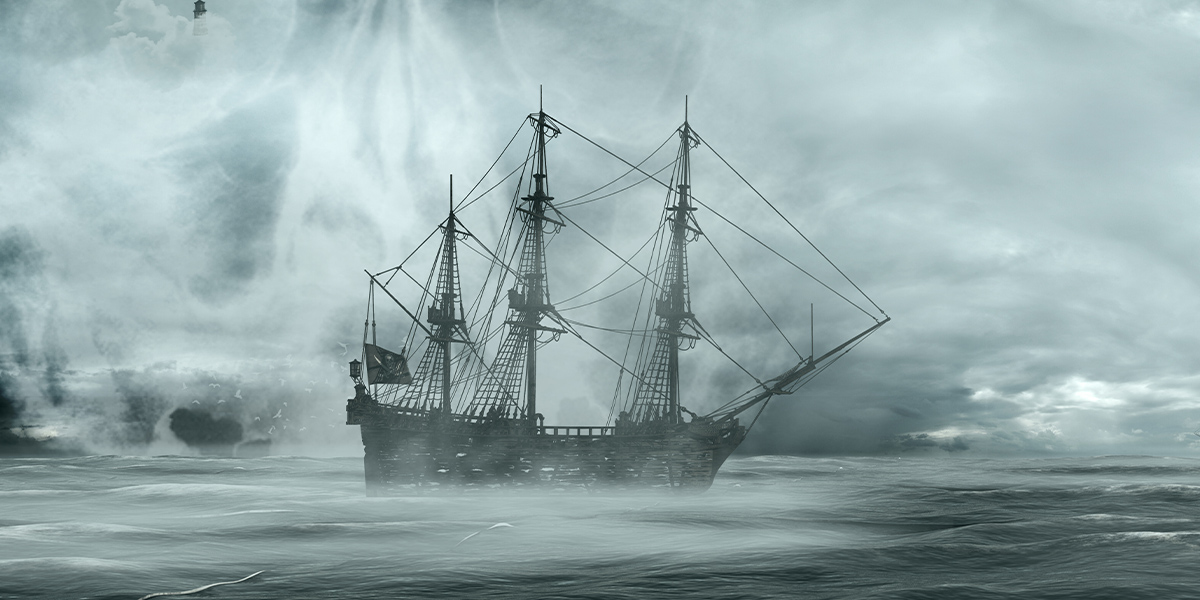
A ship appears on the horizon.
Its sails are raised, but the wind is still.
No lanterns burn in its windows. No voices carry across the water. No sailors move along the deck.
You call out. Nothing answers. Then the fog shifts…and the ship is gone. Did it even exist?
Everybody knows the image of a ghost ship: a rotting vessel drifting through black water, carrying either no crew at all or far too much of one. Its timbers groan. Its rigging moves by itself. Perhaps a bell rings somewhere aboard, even though the bell went down with the ship a hundred years ago.
But ghost ships were never simply haunted houses that learned how to float.
They were warnings. They were omens.
They were stories about sailors who broke sacred rules, captains whose pride challenged heaven, and crews who died so far from home that no grave could hold them.
On land, the dead can be buried. At sea, they can disappear completely.
And when there is no body, no wreckage, and no answer waiting on shore, a ship does not always become history.
Sometimes it becomes a ghost.
The Familiar Version
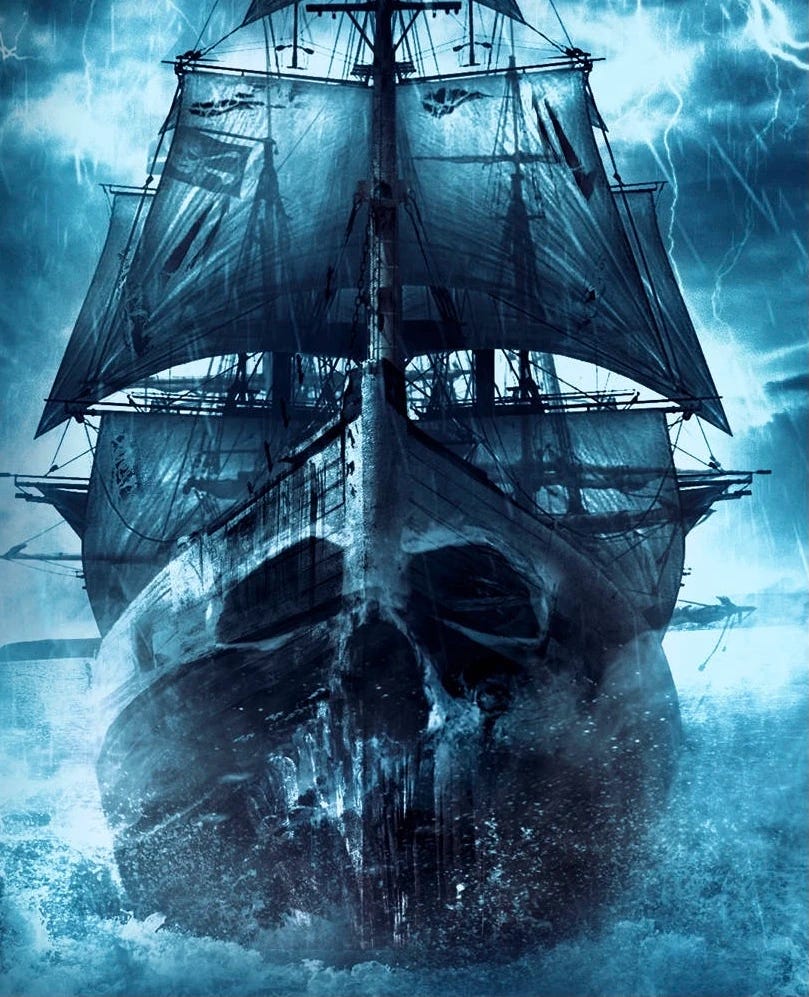
The modern ghost ship comes with a fairly standard set of equipment.
- Torn sails.
- Rotting wood.
- Green or blue supernatural lighting.
- A skeleton somewhere near the wheel.
There may be a ghostly captain stalking the deck, a cursed crew repeating its final voyage, or an abandoned ship drifting aimlessly after everyone aboard vanished.
Usually, seeing it is bad news.
In movies, television, comics, anime, and video games, ghost ships are often floating haunted houses. Someone climbs aboard, the fog closes in, and every sensible escape route immediately stops working. Doors slam below deck. Wet footprints appear where nobody is standing. Something in the captain’s cabin would very much like to remain unopened.
The most famous version is the Flying Dutchman, condemned to sail forever and never reach port. Even people who have never read the old stories know the name. It has belonged to cursed captains, spectral pirates, cartoon ghosts, theme-park nightmares, and at least one extremely angry squid-faced man.
That is the ghost ship we think we know: a vessel that cannot stop sailing because something terrible happened aboard it.
But that is only one kind.
In folklore, a ghost ship might be the spirit of a lost vessel. It might carry the souls of drowned sailors. It might appear before a disaster rather than after one. It might sail beneath the water, fly above it, transform itself, lure witnesses closer, or arrive carrying messages from people who have been dead for years.
Sometimes the ship itself is the ghost.
Sometimes the crew is.
And sometimes the ocean is simply returning something that should have stayed lost.
Because on the open sea, the difference between a ghost story and a warning can be one patch of fog.
A Monster Made of Absence
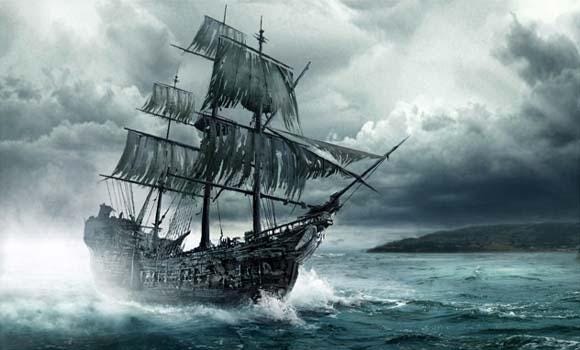
Ghost-ship folklore did not begin with one vessel, one captain, or one frightened storyteller. It grew from the experience of going to sea.
For most of human history, sailing meant leaving the dependable world behind. Once the shoreline disappeared, so did many of the protections people understood. There were no roads, no landmarks, and no guarantee that a missing person would ever be found.
A ship could leave port and simply never return.
Perhaps it met a storm. Perhaps it struck a reef, caught fire, lost its mast, or drifted beyond familiar routes. Perhaps disease moved through the cramped quarters. Perhaps the crew made a fatal mistake that nobody survived to explain.
Back home, families could wait for months or years without knowing what had happened.
That uncertainty mattered.
A confirmed death allows mourning to begin. A disappearance keeps the door open. Every unfamiliar sail becomes a possibility. Every rumor from another port offers hope. Every light seen offshore might be the missing ship finally coming home.
Or something wearing its shape.
Maritime folklore was not merely a collection of amusing superstitions. Omens and supernatural beliefs helped sailors organize a dangerous, unpredictable world where weather, illness, and mechanical failure could turn deadly without warning. Ghost ships became reminders that death at sea might leave neither a body nor an explanation.
That is what makes a ghost ship different from a haunted house.
A haunted house stays where tragedy happened.
A ghost ship keeps moving.
The Ship That Could Never Come Home
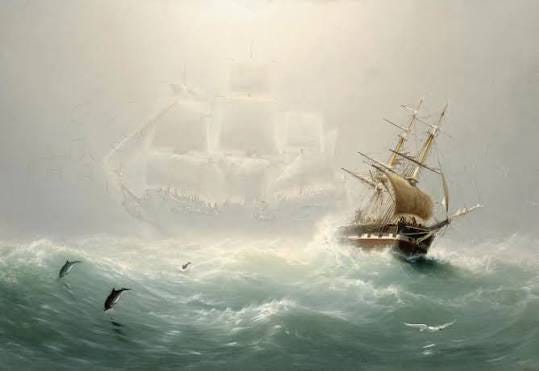
The Flying Dutchman became the blueprint for the Western ghost ship, but its familiar story was assembled over time.
The basic image is simple: a Dutch vessel is condemned to sail forever, unable to enter port. Seeing it is an omen of disaster.
The details are far less cooperative.
Depending on the version, its captain is Vanderdecken, Van der Decken, Ramhout van Dam, Bernard Fokke, or someone else entirely. He may be guilty of murder, piracy, blasphemy, cruelty, or simply the kind of pride that legends enjoy punishing.
In the most famous telling, the captain attempts to round the Cape of Good Hope during a terrible storm. When his crew begs him to turn back, he refuses. He swears that he will complete the voyage even if it takes until Judgment Day.
The universe takes him literally.
His determination becomes his sentence. The ship will sail, but it will never arrive. The captain will command, but he will never conquer the sea. His crew will survive, but only in the cruelest possible sense.
Interestingly, early printed references do not present one neat, complete origin story. A 1790 account already describes the Flying Dutchman as a tale sailors commonly told, while later nineteenth-century writers added the doomed captain, the terrible oath, the Cape of Good Hope, letters addressed to the dead, and other now-famous details.
That evolution is important. Folklore loves a blank space.
The earliest Dutchman was a frightening shape on the water. Later storytellers gave the shape a captain. Then they gave the captain a sin. Once he had a sin, he needed a punishment.
Eventually, the ship became more than an apparition. It became a prison built from one man’s refusal to turn back.
Not Every Ghost Ship Is Empty
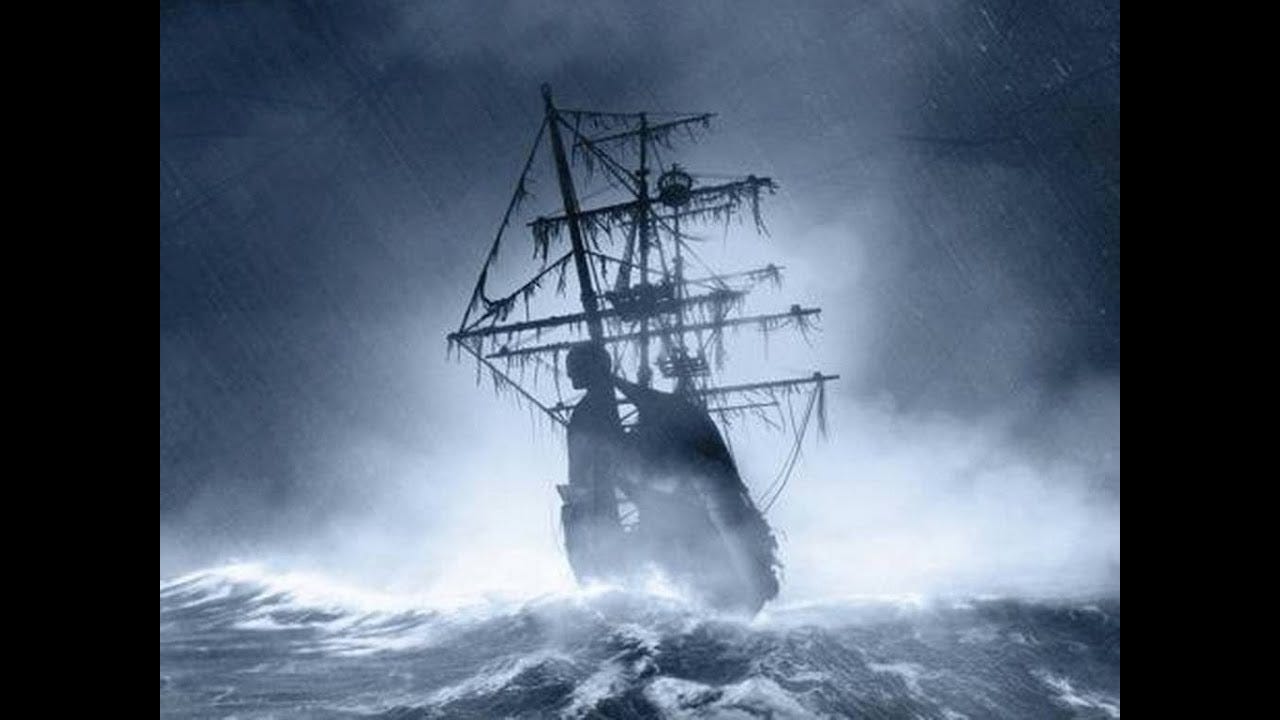
The Flying Dutchman may dominate Western pop culture, but it does not own the sea.
Around the Chiloé Archipelago in southern Chile, stories tell of the Caleuche, a supernatural ship that sails through the night surrounded by light, music, and fog.
This is no silent wreck.
The Caleuche may be crewed by sorcerers and the dead. In some versions, it gathers the souls of those lost at sea. It can vanish, travel beneath the water, or disguise itself to avoid discovery. Chiloé’s mythology developed through the meeting of Indigenous Huilliche traditions and Spanish influences, giving the ship a cultural world very different from that of the Dutchman.
The Dutchman is cursed isolation.
The Caleuche is movement between worlds.
One ship is denied a destination. The other carries the dead somewhere the living cannot follow.
Japanese folklore offers another frightening possibility through the funayūrei—the spirits of people who died at sea.
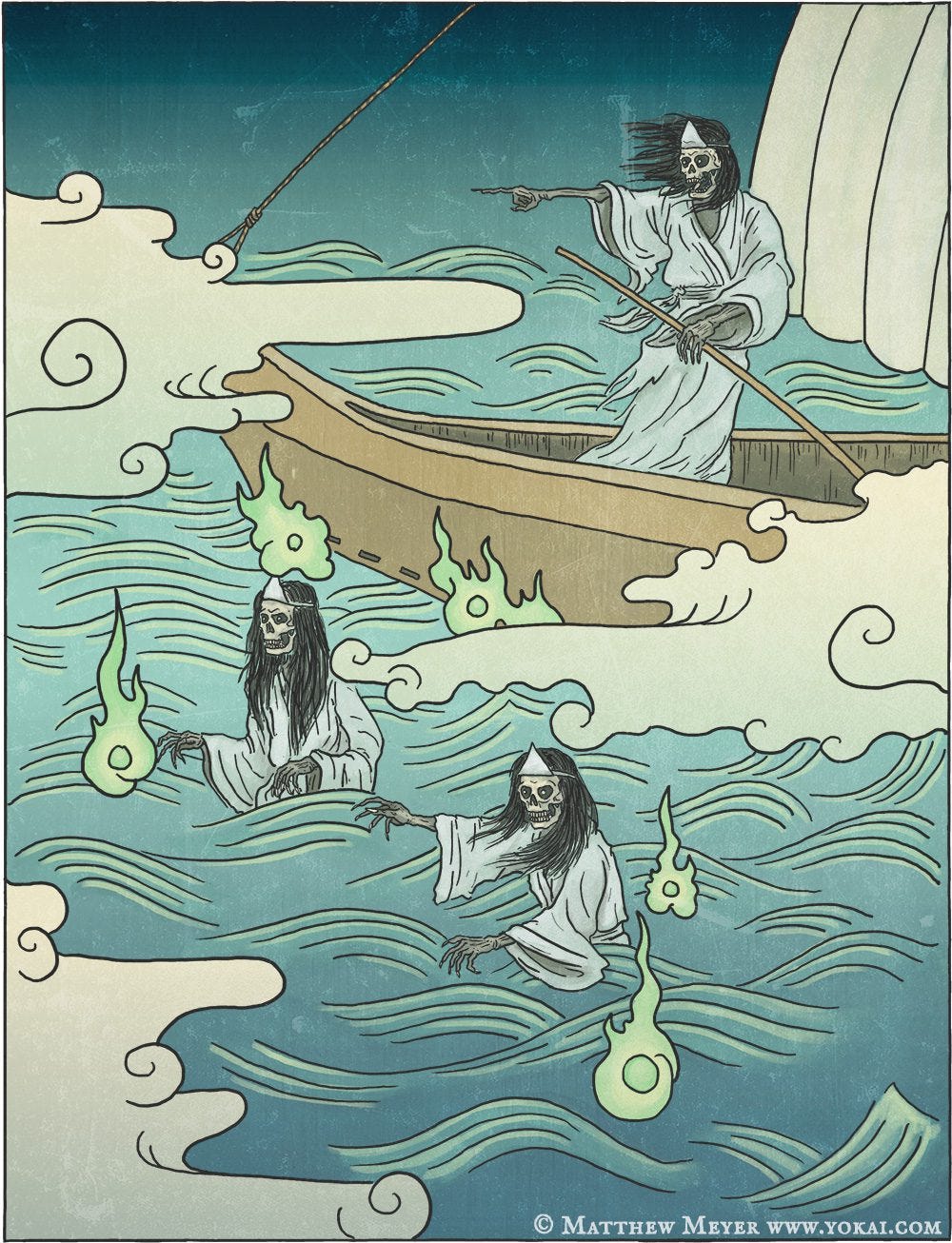
These spirits may approach living sailors from boats and ask for a ladle. If given one, they use it to pour seawater into the vessel until it sinks. The trick in some tellings is to offer them a ladle with its bottom removed, making it impossible to fill the boat.
It is an almost playful solution to a horrifying problem.
The dead are not merely haunting the place where they drowned. They are attempting to reproduce their fate. Their tragedy becomes a hunger for company.
Across these stories, the exact rules change, but the fear remains familiar:
The sea took someone.
Now they are coming back.
And they may not return alone.
A Ship Is Already Almost Alive
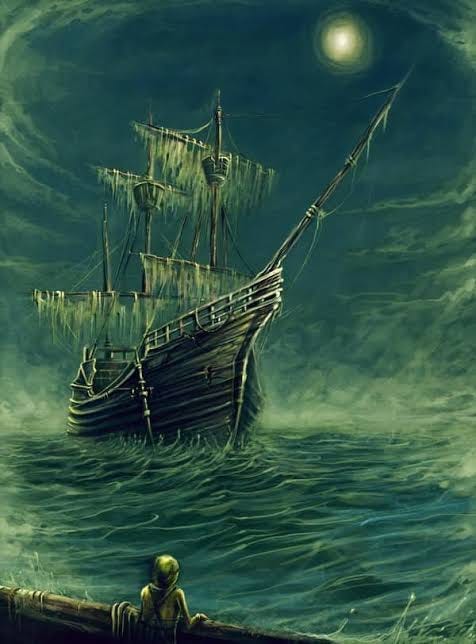
Sailors have long spoken about ships as though they were living beings.
A ship has a name. A body. Ribs. A heart of timber or steel. It groans under pressure, fights the weather, carries people inside itself, and can be wounded badly enough to die.
Its crew learns its moods.
They recognize every ordinary creak and vibration. They know how the deck feels beneath their feet when the vessel is moving correctly. A strange sound in the night is not merely spooky. It may mean that something is loose, strained, leaking, or about to fail.
That intimate relationship makes a ship unusually easy to haunt.
When a house is abandoned, nature begins reclaiming it.
When a ship is abandoned but remains afloat, it continues performing the one action for which it was built; It sails.
There is something deeply unsettling about a machine continuing its purpose after its human operators are gone. The wheel turns. The hull rises and falls. The sails fill. From a distance, everything may look normal.
Until nobody answers.
A ghost ship therefore occupies a strange space between object and creature. It is a body without a mind—or perhaps a body whose mind is no longer human.
When the Ocean Creates Its Own Special Effects
Not every phantom on the horizon requires a curse.
Fog can erase portions of a vessel, leaving only masts or sails visible. Darkness can turn an ordinary silhouette into something enormous. Sound carries unpredictably across water, allowing bells, voices, and knocking noises to seem much closer—or much farther away—than their source.
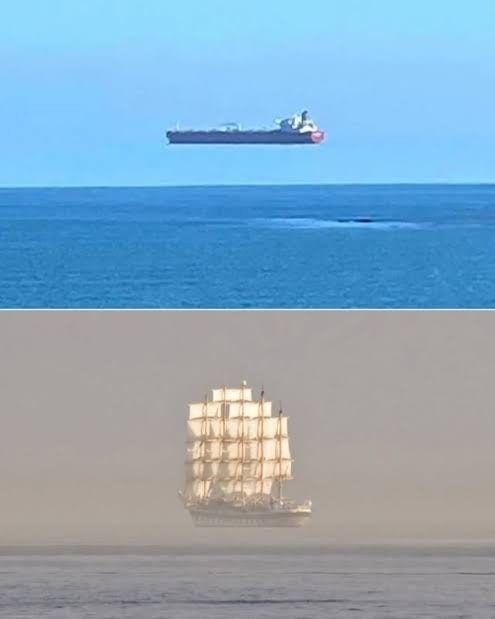
Then there is the Fata Morgana, a complex mirage caused when light bends through layers of air at different temperatures.
Under the right conditions, a distant ship can appear stretched, duplicated, inverted, or suspended above the horizon. The real vessel may be too far away to see while its distorted image seems to float in the sky. As the air shifts, the ship can change shape or disappear almost instantly.
Imagine witnessing that from the deck of a wooden vessel centuries ago. A ship appears where no ship should be.
It sails above the water. Then it folds into the horizon and vanishes.
You could call it atmospheric refraction. Or you could decide that everyone aboard is about to die. Either reaction feels reasonable in the moment.
But explaining an apparition does not explain away the legend.
Science can tell us how a ship appears in the sky. It cannot erase what that sight meant to people who already understood the sea as a place where the living vanished and the dead went unburied.
The mirage supplied the image.
Human fear supplied the crew.
The Weird Stuff: Ghost Ships Bring Mail
One of the strangest details in Flying Dutchman lore is not a skeleton, a storm, or a glowing sail.
It is the mail.
In several tellings, the Dutchman approaches another vessel and attempts to send letters home. The problem is that the letters are addressed to people who have been dead for years.
Accepting them brings disaster.
It is such a wonderfully specific piece of horror because it turns something ordinary into proof that the ghost ship exists outside normal time. The crew does not know that its loved ones are gone. The voyage has lasted so long that home has continued without them.
They are still trying to complete a simple sailor’s ritual:
“Carry this message back.”
“Tell them I am alive.”
Except they are not alive, and there may be nobody left to receive it.
That small detail may be more haunting than the curse itself. The worst part of sailing forever is not the storm.
It is discovering that there is no longer a home to return to.
Pop Culture Takeover
Modern entertainment did not invent the ghost ship.
It did, however, give it a much larger special-effects budget.
Samuel Taylor Coleridge’s The Rime of the Ancient Mariner helped shape the image of a doomed voyage stalked by supernatural judgment. Its spectral vessel carries Death and Life-in-Death, who gamble for the souls of the crew. Later maritime fiction and opera transformed the Flying Dutchman from a sailor’s omen into a tragic character: a cursed captain who might be saved, loved, or at least given a dramatic musical entrance.
Then movies, television, comics, and games got the keys.
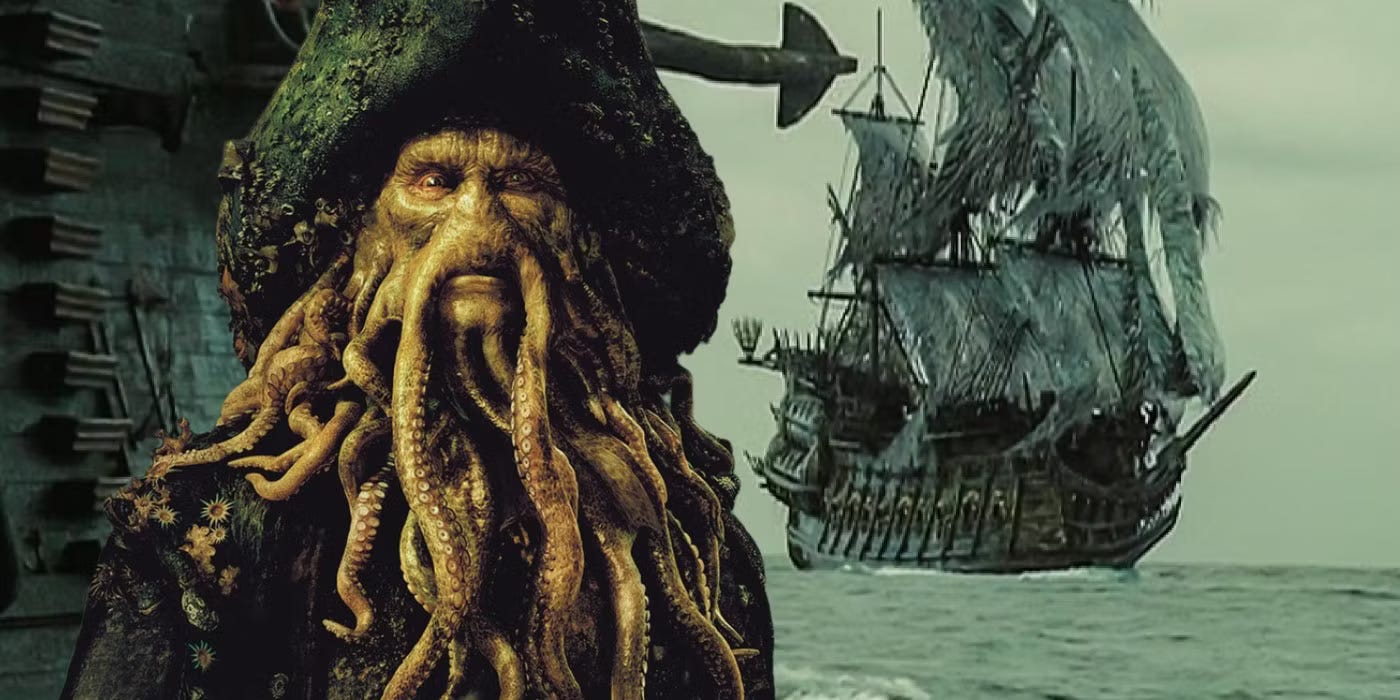
Pirates of the Caribbean turned the Flying Dutchman into a barnacle-covered warship that ferries souls lost at sea. Its crew slowly becomes part of the ocean itself, blurring the line between sailor, sea creature, and ship.
SpongeBob SquarePants took one of maritime folklore’s most terrifying omens and made him a green, short-tempered ghost with questionable management skills.
Scooby-Doo helped establish the ghost ship as the perfect setting for masked villains, hidden treasure, and insurance fraud.
Games such as Sea of Thieves turn spectral ships into moving boss battles. They rise from dark water glowing like wrecks that forgot to sink, transforming the old omen into something players actively chase for loot.
That may be the biggest modern change.
Sailors once hoped never to see a ghost ship. We see one in a game and immediately sail toward it.
Pop culture has converted the phantom vessel from warning into destination. It is now a dungeon, a battlefield, a pirate kingdom, or an unlockable cosmetic set.
Yet the best versions preserve the original fear.
A ghost ship should not merely look dead. It should feel like it has been sailing without the world.
Why We Keep Telling This Story
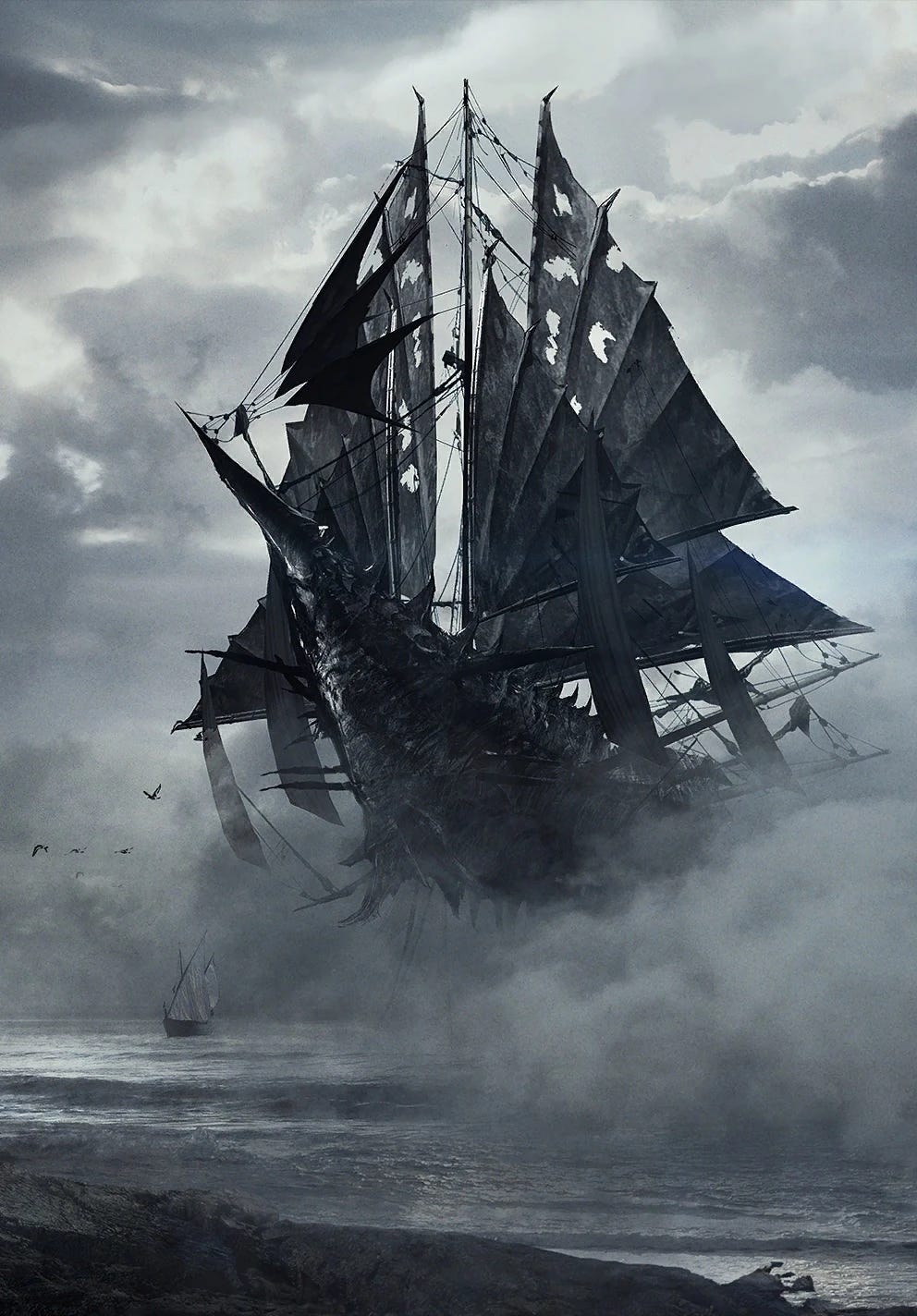
Ghost ships survive because they give shape to an especially cruel kind of loss.
When someone dies on land, there is usually a place connected to that death. There may be a grave, a memorial, a room, or a final moment that can be named.
The sea does not always offer that kindness.
It erases tracks. It moves evidence. It scatters wreckage. It can swallow hundreds of lives and look completely unchanged the next morning.
Ghost-ship stories refuse to accept that disappearance as an ending.
They imagine that lost sailors are still somewhere. Their ship continues beyond the horizon, trapped in the moment between leaving and arriving. The dead have not vanished. They have simply entered waters the living cannot chart.
That idea is terrifying.
It is also strangely comforting.
The ghost ship says that nothing is ever completely lost. The voyage continues. The vessel remembers. Somewhere beyond the fog, the missing are still together beneath the same torn sails.
But the legend also carries a warning about pride.
Again and again, ghost-ship captains refuse to listen. They challenge storms, ignore their crews, break promises, violate taboos, or believe determination can conquer forces larger than themselves.
On land, stubbornness can look heroic.
At sea, refusing to turn around can kill everyone who trusted you.
That is why the Flying Dutchman remains powerful. Its captain receives exactly what he demanded: an endless opportunity to keep sailing forward.
He wins the argument.
Forever.
Final Push
A ghost ship is not frightening because it is empty.
It is frightening because it is still going.
Long after the crew should have reached home, long after the people waiting for them have grown old, and long after the voyage itself has passed from tragedy into legend, the sails remain on the horizon.
Tomorrow, we will leave the purely wondrous waters and board a real vessel whose missing crew created one of history’s greatest maritime mysteries.
But tonight, let the fog keep its secrets.
Some ships sink.
Some ships return.
And some never finish leaving.
The Question That Lingers
If a ship keeps sailing after everyone who remembered it is gone, is it still searching for home—or has the sea become the only home it has left?