You Already Know Their Names
Kami stands high above the world in Dragon Ball, watching over Earth from a palace in the sky.
Sasuke Uchiha releases black flames called Amaterasu. Itachi traps enemies inside Tsukuyomi. Members of the Uchiha clan summon towering warriors called Susanoo and gamble with forbidden techniques named Izanagi and Izanami.
Even if you have never watched either series, the pattern is hard to miss. These names are meant to sound ancient, powerful, and a little dangerous.
They arrive with gods, dragons, impossible fire, broken reality, and eyes capable of changing fate.
What international audiences may not realize is that Japanese viewers are hearing another layer of the story. Kami is not merely the name of a green alien in a robe. Amaterasu, Tsukuyomi, Susanoo, Izanagi, and Izanami were not invented for a manga battle. They belong to stories recorded more than thirteen centuries ago and to a religious tradition that remains alive today.
Anime has been introducing the rest of the world to Japan’s kami for decades. It just has not always stopped to explain the introductions.
God Is His Job Description
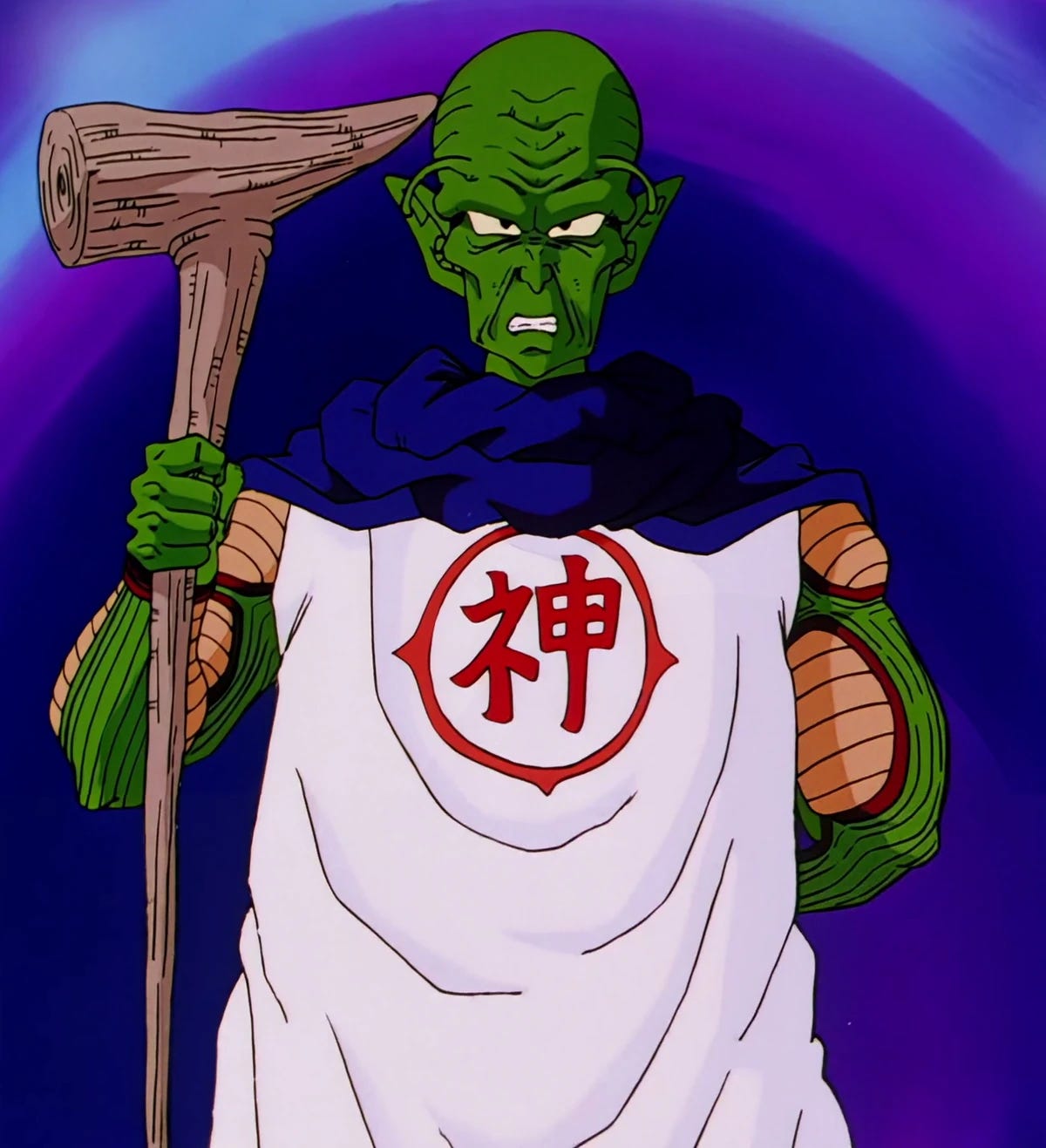
For anyone unfamiliar with Dragon Ball, Kami is the guardian of Earth and the creator of its Dragon Balls. He occupies the position before Dende eventually succeeds him. English-speaking audiences naturally hear Kami as a personal name. In Japanese, it is closer to hearing everyone address him as God or the deity.
The joke runs even deeper during the World Martial Arts Tournament. Kami disguises himself in a human body and enters under the name Shen. The same written character associated with kami can be read shen in Chinese. Goku recognizes the wordplay and realizes who is standing in front of him.
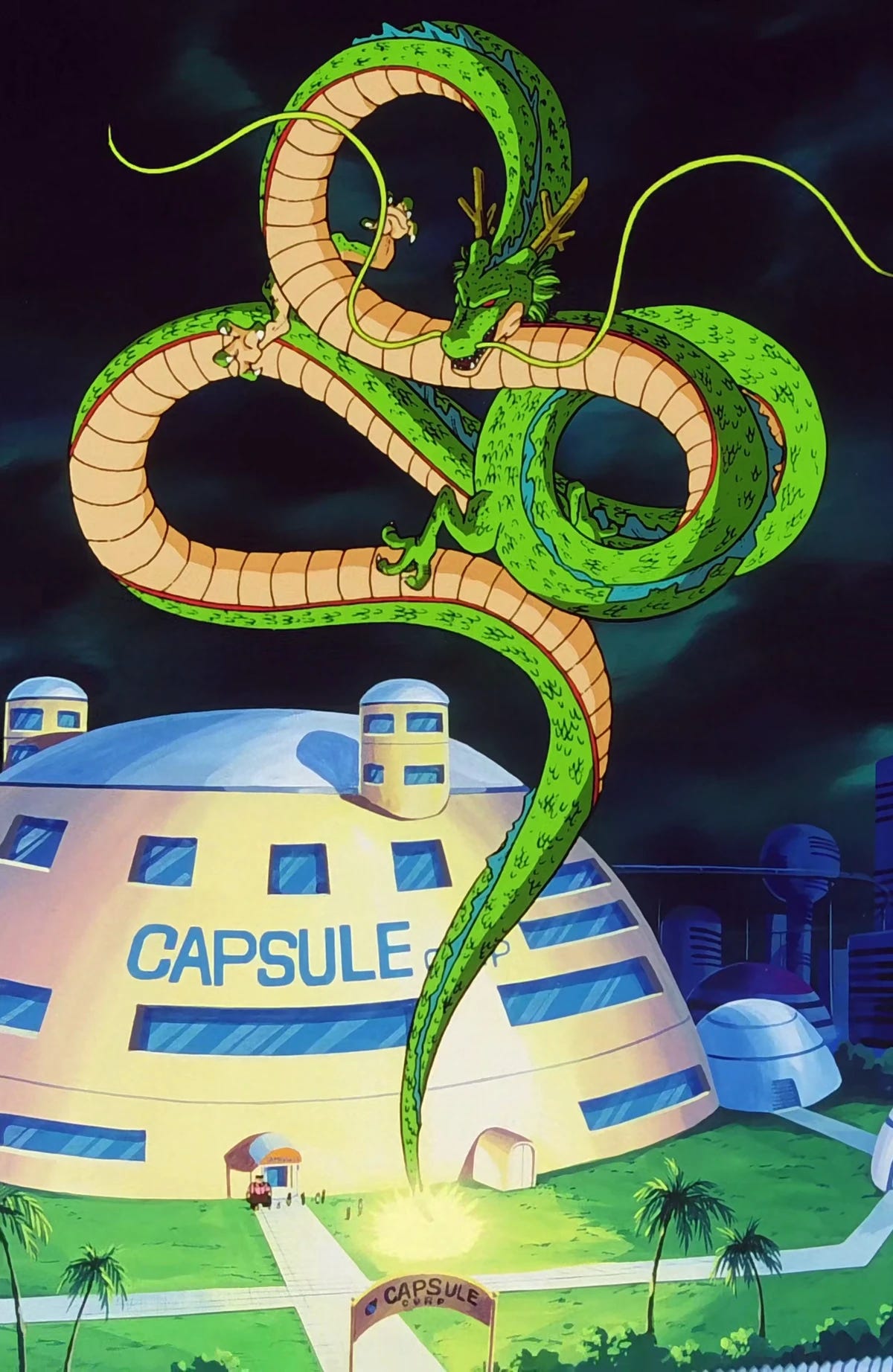
Then there is Shenron, the dragon summoned when the seven Dragon Balls are gathered. His name is written with characters carrying the sense of divine dragon or god dragon and follows the Chinese shenlong, rendered as Shenron in Japanese.
In other words, Dragon Ball begins with a god called God creating a divine dragon called Divine Dragon. Much of that joke disappears the moment the names cross into English.
Shenron also gives us an important warning before we go any further. He comes through Chinese language and dragon tradition, not directly from the Shinto family of kami. Japanese popular culture freely combines Shinto, Buddhism, Chinese mythology, local folklore, and modern invention. If we throw everything into one box marked Japanese gods, we lose the very history we came to find.
Manga and anime did not invent these names. It inherited them.
A World Filled with Kami
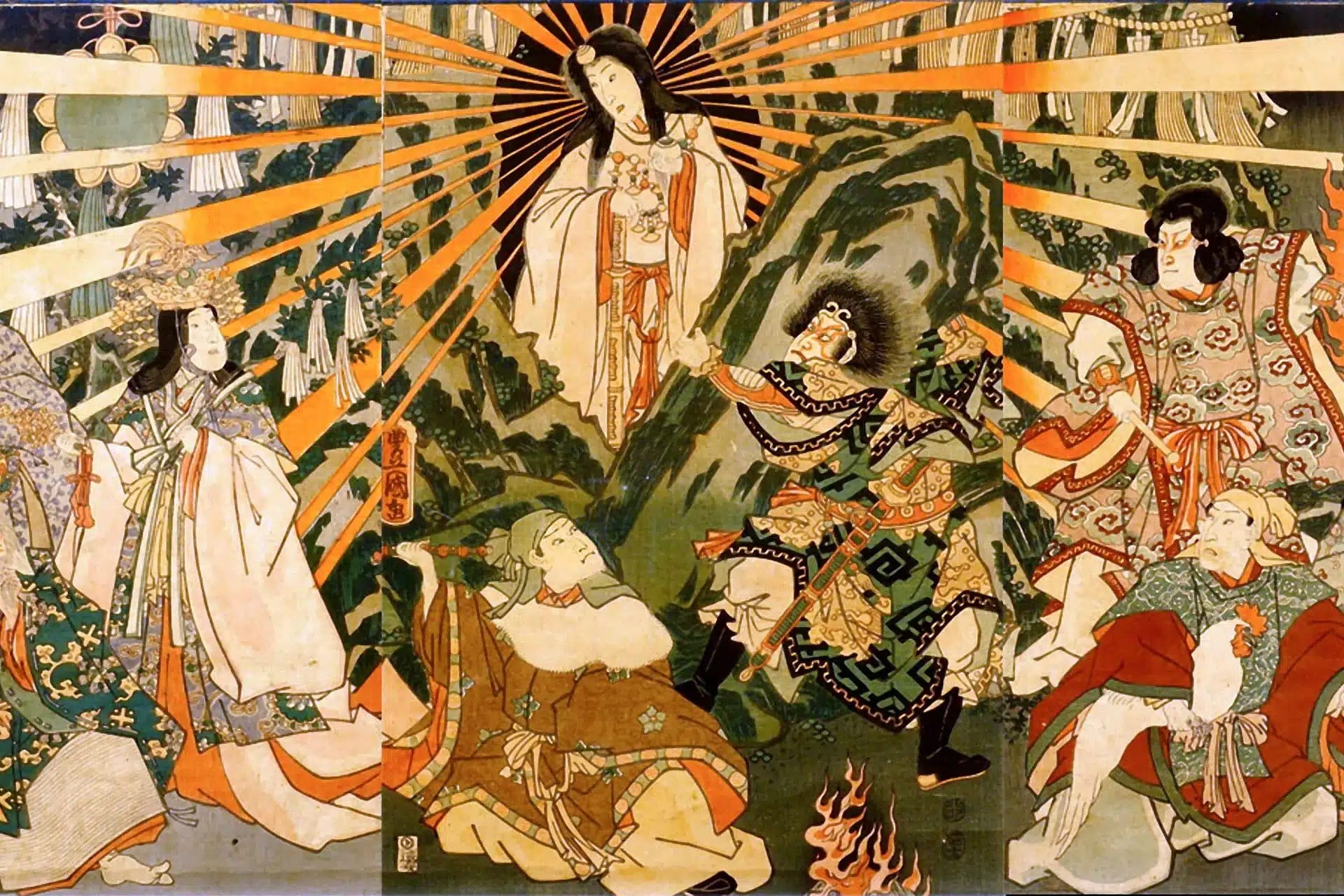
Translating kami as god is useful, but incomplete.
A kami may be a named figure from an ancient myth, an ancestral spirit, a natural force, a remarkable person remembered after death, or a sacred presence connected to a mountain, river, tree, stone, community, or place.
Some look comfortably familiar to anyone raised on Greek or Norse mythology. Others do not fit the Western idea of a god at all.
That is why the phrase eight million kami should not be read as a census. In this expression, eight million means something closer to countless.
The point is abundance: the sacred world cannot be reduced to a short character-select screen.
The two great written sources for many of the best-known myths are the Kojiki, completed in 712, and the Nihon Shoki, completed in 720. They preserved older traditions while also serving the political and religious needs of the early Japanese court.
They sometimes disagree about who was born when, who ruled what, or how an event unfolded. Japanese mythology does not have one perfectly tidy canon, and those contradictions are part of the story.
The Couple Who Created Japan
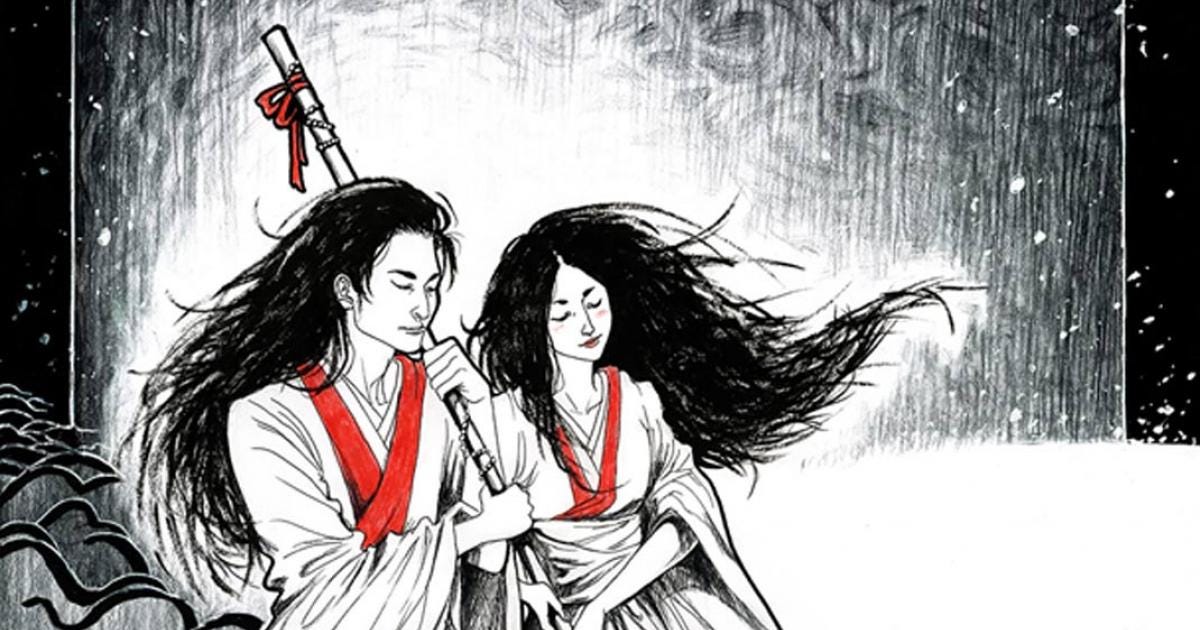
Izanagi and Izanami are among the divine pair charged with shaping the unformed world. Standing upon the Floating Bridge of Heaven, they stir the sea below with a jeweled spear. Drops fall from its tip and become the island of Onogoro. From there, the pair produce the islands of Japan and a growing family of kami.
Then Izanami gives birth to Kagutsuchi, the kami of fire. The birth burns her so badly that she dies. A grieving and furious Izanagi kills the newborn fire kami, and more divine beings emerge from Kagutsuchi’s blood and body.
Creation does not arrive cleanly in these stories. Land, fire, life, and death spill into one another.
Izanagi refuses to accept the loss and follows Izanami into Yomi, the land of the dead. She tells him that he has come too late and forbids him from looking at her.
Naturally, this is a myth, so he looks.
What he sees is no rescued bride waiting in the dark. Izanami’s body has decayed, and thunder kami inhabit her remains. Izanagi flees while Izanami and the beings of Yomi pursue him. He finally blocks the passage between the worlds with a massive boulder.
From opposite sides, Izanami threatens to take one thousand lives each day. Izanagi answers that he will cause fifteen hundred people to be born.
That exchange turns a shattered marriage into an explanation for mortality itself. Death will always come, but life will continue to answer it.
Creation Death and the Uchiha
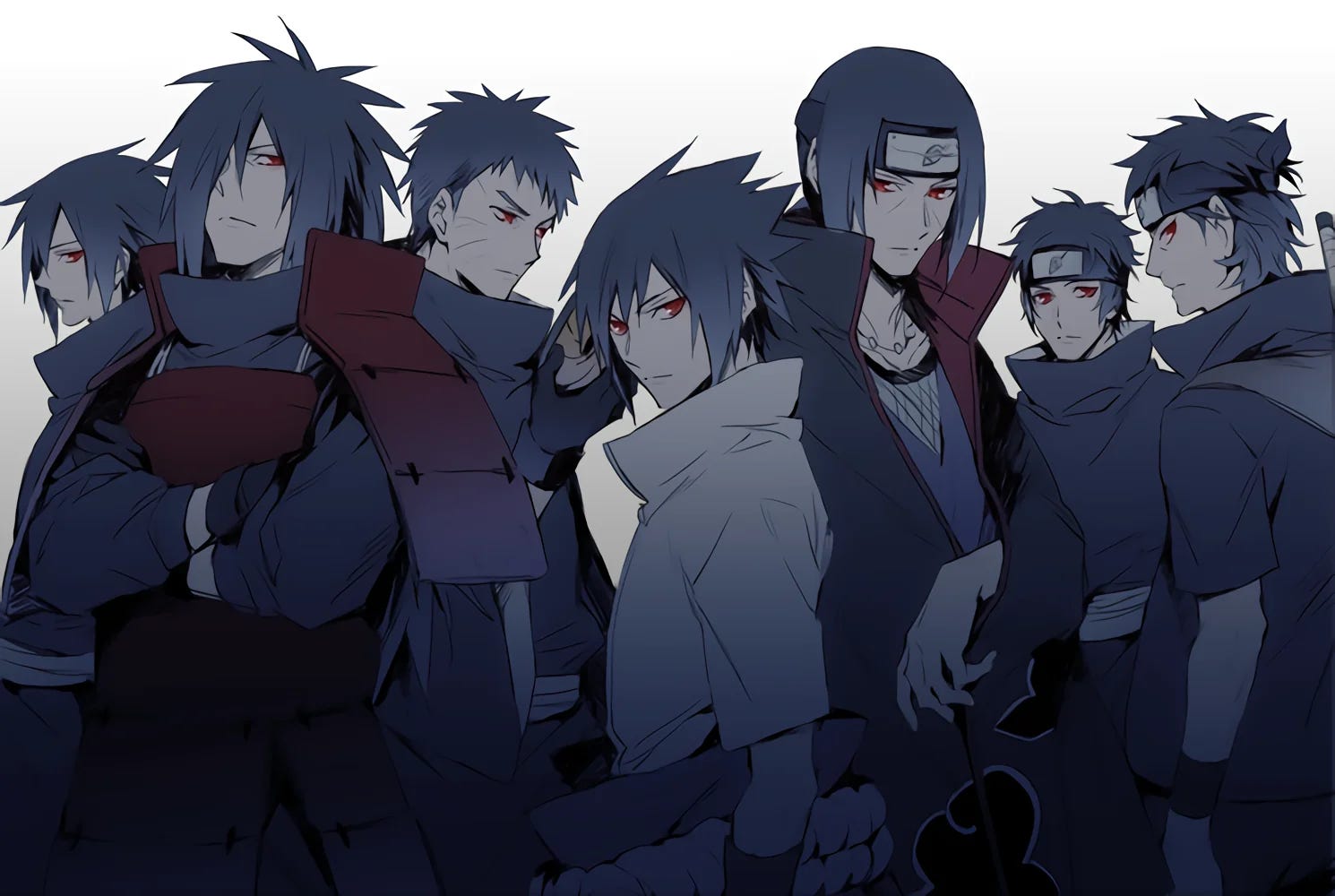
Now the Naruto names begin to carry more weight.
In the series, Izanagi is a forbidden eye technique that allows its user to reject an unwanted outcome, treating injury or even death as illusion and replacing it with a reality the user prefers.
Izanami is its counterpart, trapping a target inside a repeating sequence until that person stops running from the truth and accepts the result.
Neither technique retells the old myth scene by scene. The connection is thematic. Izanagi becomes the power to create a new result and refuse death. Izanami becomes the inescapable answer that forces acceptance. Their ancient conflict over creation, mortality, denial, and consequence has been rebuilt as a pair of supernatural abilities.
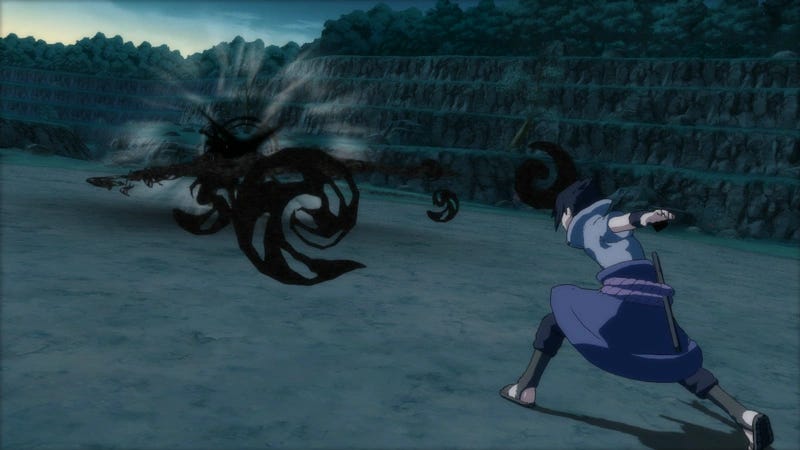
Sasuke’s Blaze Release technique Kagutsuchi adds another layer. It shapes the black flames of Amaterasu, borrowing the name of the fire kami whose birth killed Izanami.
A viewer can enjoy the ability without knowing any of that. Knowing it makes the name feel far less random.
Three Children Born from Purification
After escaping Yomi, Izanagi washes away the pollution of the land of the dead. In the Kojiki account, this act of purification produces three of the most famous kami in Japan.
Amaterasu emerges when he washes his left eye. Tsukuyomi comes from his right eye. Susanoo is born when he cleanses his nose. They are often called the Three Precious or Three Noble Children.
Purification is doing more than cleaning Izanagi’s body. Contact with death has left spiritual pollution behind, and washing restores order. The story is commonly connected with misogi, the Shinto practice of ritual purification.
Gods are born from the act of removing death’s stain.
Amaterasu is the kami of the sun and ruler of Takamagahara, the Plain of High Heaven. Her light is not simply a weapon. It sustains order.
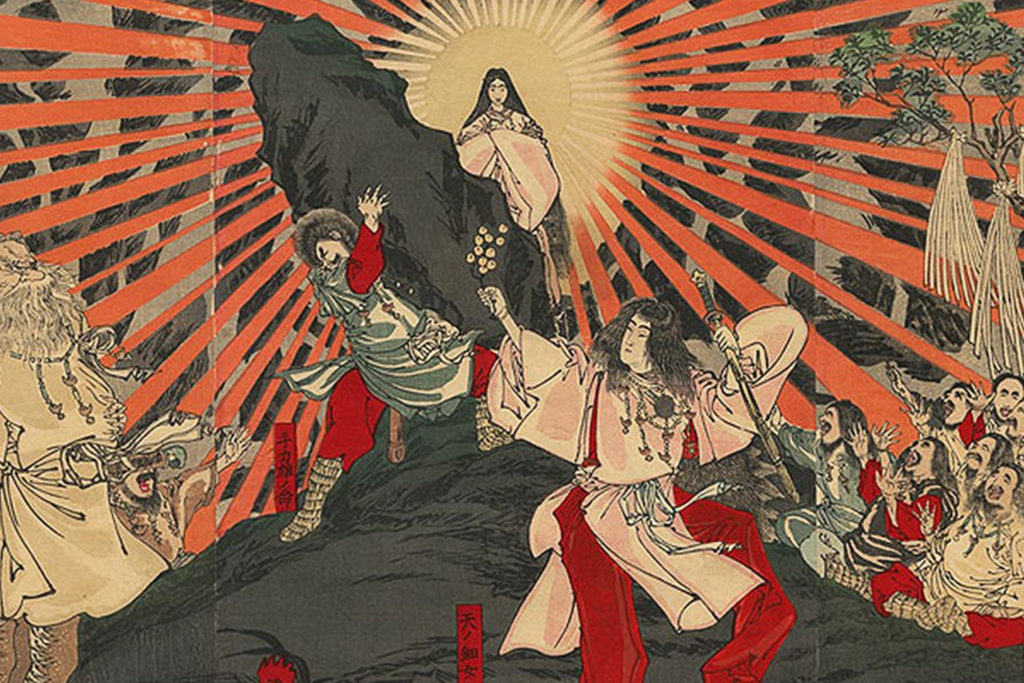
When Susanoo’s violent behavior drives her into a heavenly rock cave, the world falls into darkness. The other kami gather outside, stage a noisy celebration, and draw her curiosity. The goddess Ame no Uzume dances, laughter erupts, and Amaterasu finally peers outside. A mirror helps lure her from hiding and returns sunlight to the world.
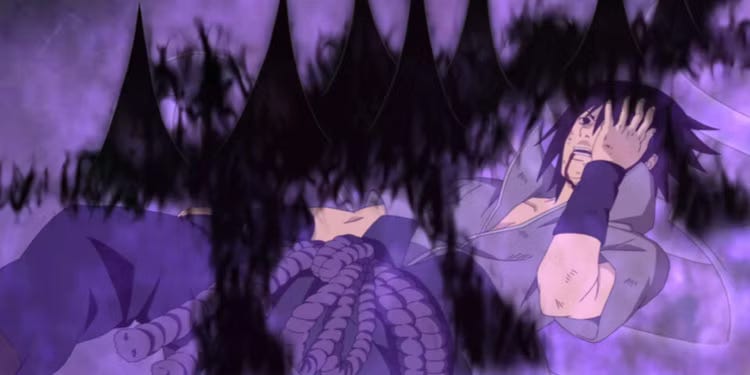
Naruto’s Amaterasu is an inextinguishable black fire produced through the eye. The ancient goddess did not throw black flames, so this is not a literal adaptation. The technique borrows her connection to the sun, light, and overwhelming divine power, then turns that symbolism into something terrifying.
Tsukuyomi is associated with the moon and the realm of night. Compared with Amaterasu and Susanoo, the surviving stories give Tsukuyomi much less time onstage.
One account has Tsukuyomi kill the food deity Ukemochi after being disgusted by the way she produces a feast. Amaterasu then refuses to see Tsukuyomi again, explaining why the sun and moon remain apart.
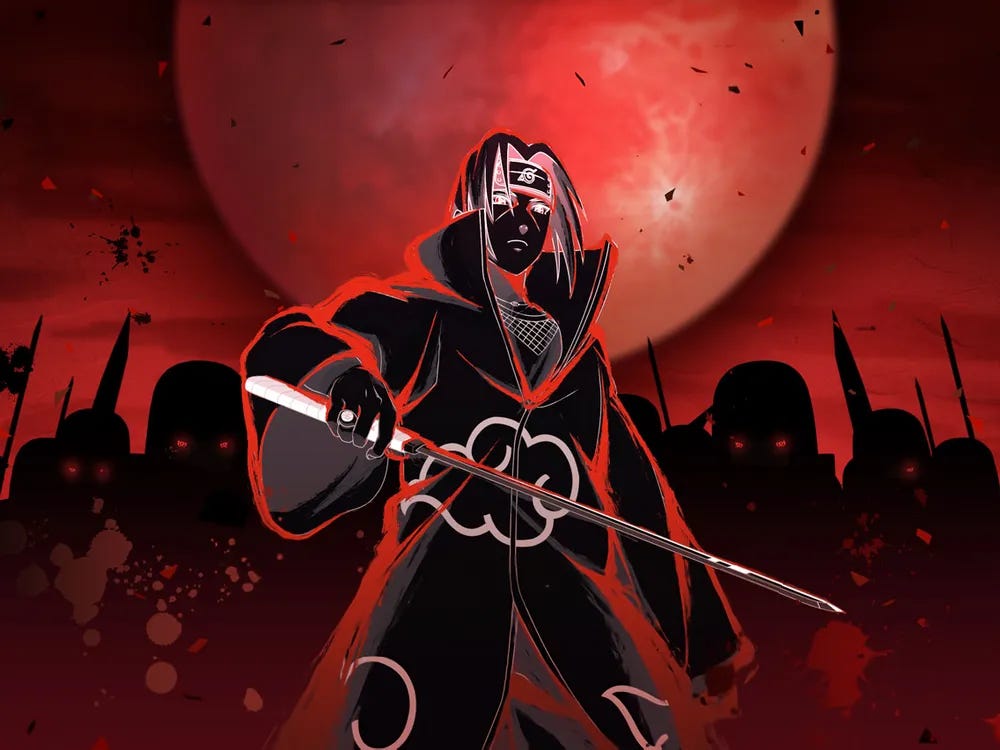
In Naruto, Tsukuyomi becomes an illusion powerful enough to control a victim’s experience of time and suffering. Again, the manga is not reenacting a specific ancient episode. It uses the moon kami’s name to give a dark, enclosed mental world the weight of night itself.
Susanoo begins as the dangerous sibling. He weeps, rages, and disrupts the heavenly order. His rampage helps send Amaterasu into the cave, and he is banished from heaven.
Yet exile does not end his story.
On Earth, he encounters a family whose daughters are being devoured by Yamata no Orochi, an enormous serpent with eight heads and eight tails.
Susanoo prepares vats of strong sake, lets the serpent drink itself helpless, and cuts it apart. Inside one of its tails he discovers the sword later known as Kusanagi, which becomes one of Japan’s Imperial Regalia.
The chaotic god has become a monster-slayer.
When Naruto Restaged the Serpent Myth
That brings us to one of the finest mythological references in Naruto.
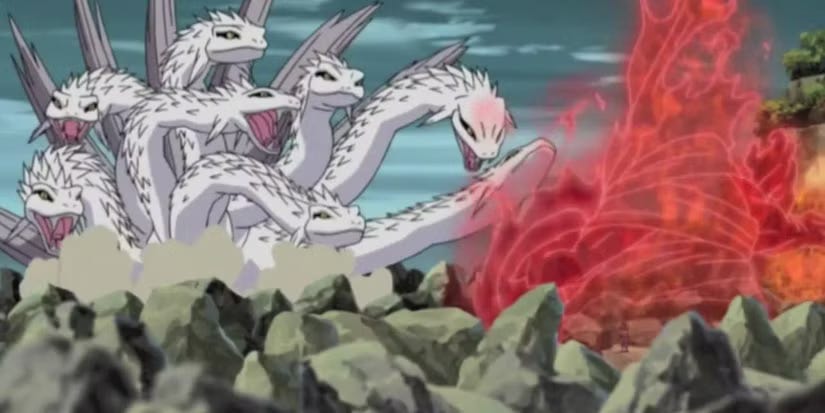
During Itachi’s confrontation with Orochimaru, the snake-obsessed villain emerges as a gigantic eight-headed white serpent. Itachi meets him with the towering spiritual warrior Susanoo and seals him with the Sword of Totsuka.
Even a newcomer only needs three facts: Orochimaru becomes an eight-headed serpent, Itachi summons Susanoo, and the serpent loses.
The scene is not a frame-for-frame adaptation, but it unmistakably rhymes with Susanoo defeating Yamata no Orochi. Kishimoto did more than paste an old name onto a cool attack. He rebuilt an ancient dragon-slaying story as the end of a ninja battle.
The Rest of the Divine Neighborhood
The Uchiha references can guide us into the mythology, but they cannot be allowed to define all of it. Japan’s sacred world extends far beyond one divine family.
Inari is associated with rice, agriculture, prosperity, and successful livelihoods. Foxes are Inari’s messengers, although modern stories often blur the distinction and treat Inari as a fox deity.
Hachiman developed into a powerful protector associated with warriors, communities, and the nation.
Ryujin belongs to the sea and the dragon palace beneath it.
Okuninushi is tied to building and ordering the land, medicine, agriculture, and relationships.
Then there are Raijin and Fujin, the thunder and wind kami. Their traditional imagery remains instantly readable: Raijin surrounded by drums, Fujin carrying a great bag of wind.
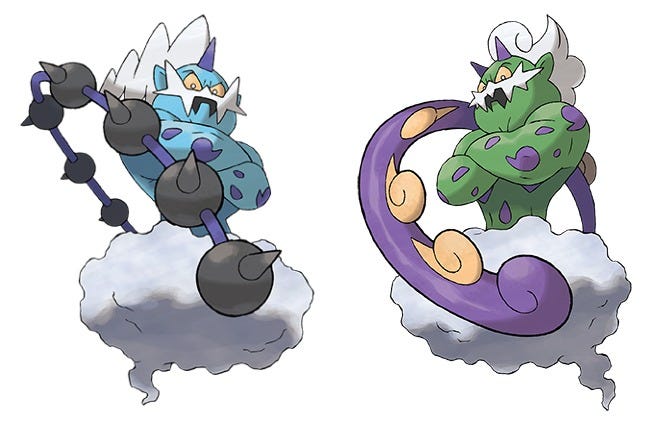
Pokémon turned those silhouettes into Thundurus and Tornadus. The reference works even if a viewer knows neither the kami nor the Pokémon. One controls thunder. One controls wind. Their bodies preserve the old visual vocabulary.
Ancient Gods on Modern Screens
Some modern works borrow a name. Others borrow an entire way of seeing the world.
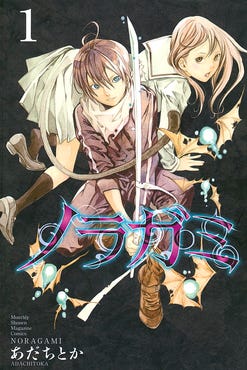
Noragami places gods, shrines, worship, and human remembrance at the center of its story. Its hero Yato is fictional, but figures such as Tenjin, Bishamon, and Ebisu come from real religious and folkloric traditions.
The series takes enormous creative liberties, yet it gives newcomers a useful question: what happens to a god when people stop saying the name?
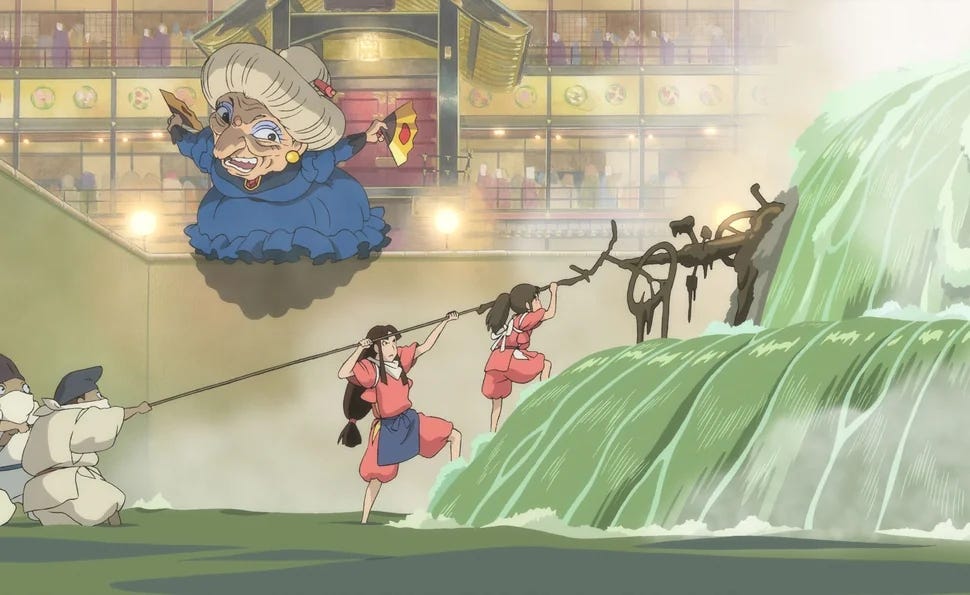
Spirited Away does something quieter. Chihiro works in a bathhouse visited by strange divine beings and spirits. One foul-smelling customer is revealed to be a river kami clogged with human garbage.
Cleaning the river spirit becomes both a spectacular gross-out sequence and a story about pollution, purification, and the sacred life of a damaged place.
Princess Mononoke similarly presents forests and animals as powers that cannot be sorted into simple heroes and villains.
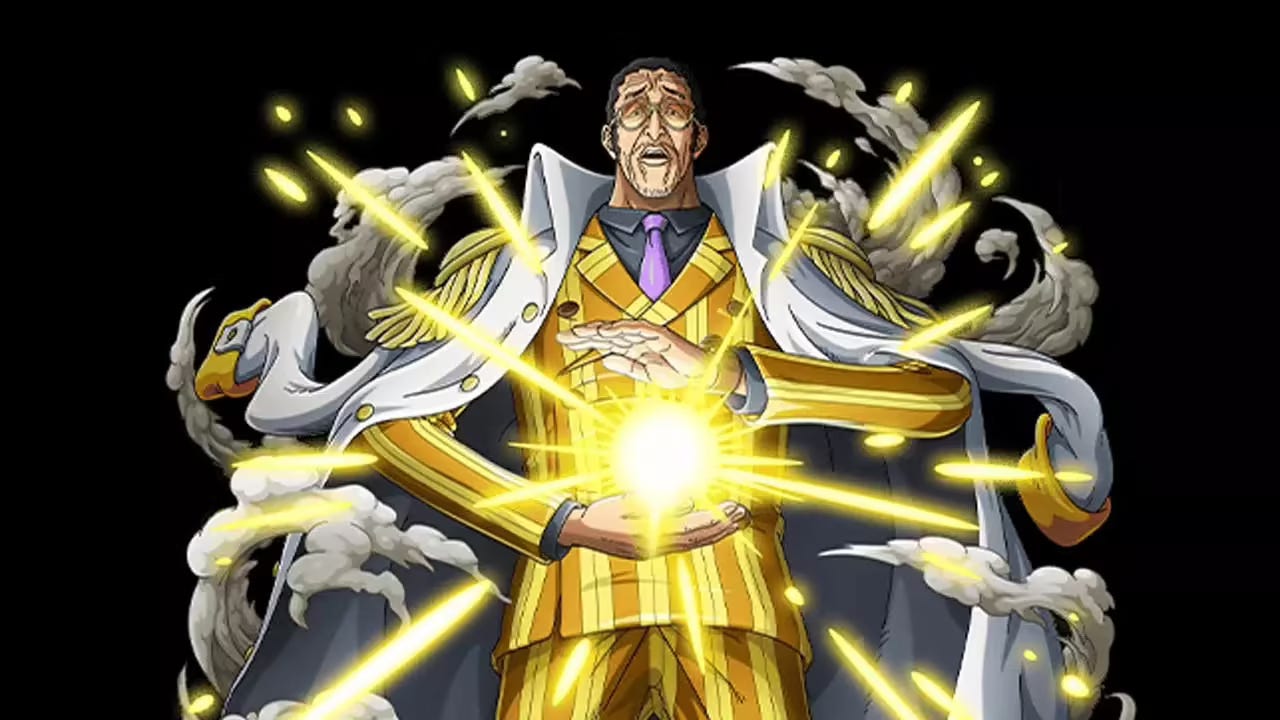
One Piece hides pieces of the Imperial Regalia inside Admiral Kizaru’s attacks: the Yata Mirror, the Yasakani Jewel, and the sword Ama no Murakumo.
Sailor Moon echoes the same sacred trio through the Deep Aqua Mirror, Garnet Orb, and Space Sword.
Two completely different series reach back toward the mirror, jewel, and sword connected with Japan’s divine and imperial mythology.
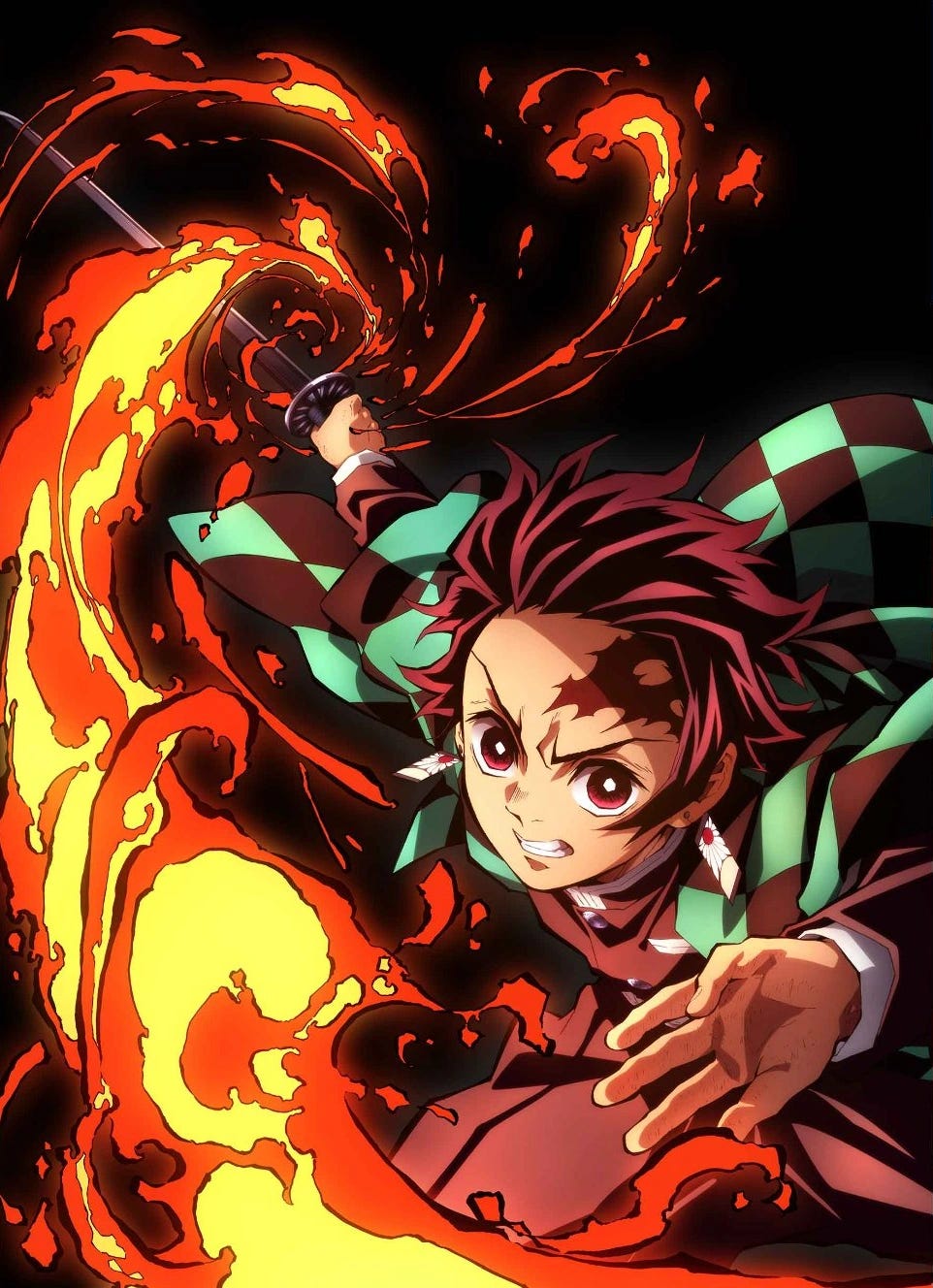
Demon Slayer offers another kind of reference with Hinokami Kagura, usually translated as the Dance of the Fire God. It uses the language of kami and sacred dance, but we should not automatically declare its fire god to be Kagutsuchi. Similar language can create resonance without naming one specific ancient figure.
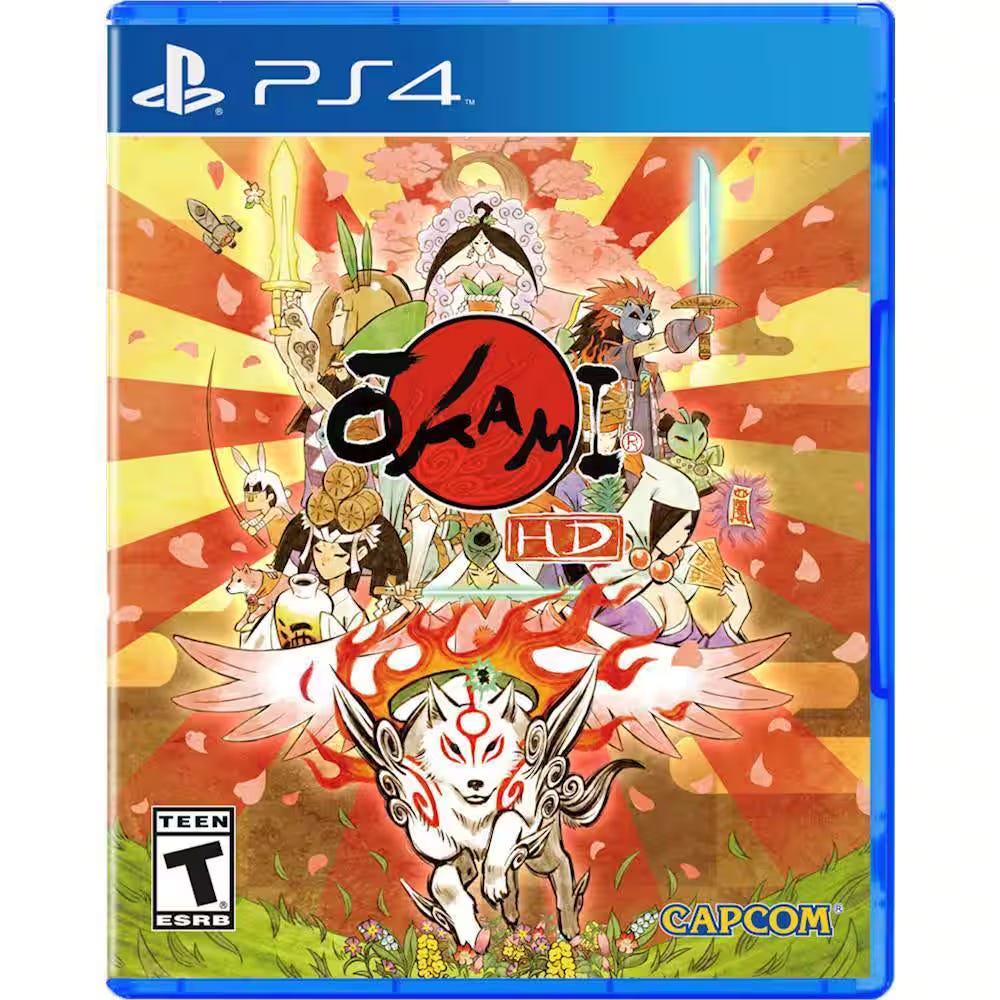
And then there is Okami, the video game that transforms Amaterasu into a white wolf carrying sunlight and creation across a world drained of color. It is a radical redesign and still one of the clearest examples of an old kami becoming a modern hero.
Why These Names Keep Returning
These references work because a mythological name can carry more than a translation.
Amaterasu suggests sunlight, authority, withdrawal, and restoration. Susanoo can be a storm, a destroyer, an exile, or a hero standing over a defeated serpent. Izanagi and Izanami hold creation and death inside the same marriage.
Creators can take one part of that meaning, reverse it, weaponize it, or place it in an entirely new story. Readers who recognize the source receive an extra layer. Readers who do not can still understand the scene, provided the story does its job.
That matters for us too. These are not fossils recovered solely for anime trivia. Kami continue to be venerated at shrines, encountered through festivals and local traditions, and understood through relationships with nature, community, memory, and place.
Manga, anime, and games are not keeping a dead mythology on life support. They are adding new stories beside a living tradition.
A New Myth Made from Old Pieces
The next time an anime character calls upon Amaterasu, Susanoo, or Izanagi, the name may feel different.
Behind the attack is a sun hidden inside a cave, a husband fleeing the land of death, a fire born through tragedy, or a storm god raising his sword against an eight-headed serpent.
You may have met these kami through manga first. That does not make the introduction less real. It only means the old stories found another doorway.
The Question That Lingers
When a modern story borrows the name of an ancient god, is it keeping that mythology alive, or creating an entirely new mythology from its pieces?