The Beginning or the Middle?
On September 21, 1792, France abolished its monarchy.
The following day, it restarted time.
September 22 became the first day of Year One of the French Republic. No more king. No more subjects. No more government claiming its authority had been handed down through a royal bloodline.
France would now belong to its citizens.
At least, that was the idea.
The Revolution had spent three years answering one question: Why should the old system no longer rule?
Now came the considerably harder question: How do you build a new government while foreign armies are approaching, food is scarce, money is collapsing, rebellions are spreading, and everyone suspects everyone else of treason?
France had overthrown the Old Regime. Now the Revolution had to govern.
The History Class Version
The familiar version of the French Revolution moves quickly.
In 1789, an angry population storms the Bastille. The people demand liberty, equality, and fraternity. King Louis XVI and Marie Antoinette are sent to the guillotine. Robespierre takes control, the streets run with blood during the Reign of Terror, and Napoleon eventually arrives to restore order.
That version is not entirely wrong. It is just moving so quickly that it skips most of the actual story.
The French Revolution was not one continuous uprising with a single group of revolutionaries following a shared plan. It lasted for years, passed through multiple governments, and repeatedly turned former allies into enemies.
France did not immediately replace its king with a republic in 1789. For three years, revolutionaries attempted to preserve a constitutional monarchy with Louis XVI still on the throne.
Nor was the Revolution merely a prelude to the guillotine.
It dismantled hereditary privilege, challenged centuries of feudal power, declared that citizens were equal before the law, secularized parts of civil life, expanded political participation, and introduced ideas that would reshape governments far beyond France.
Those victories were real. So were the bodies.
Record Scratch
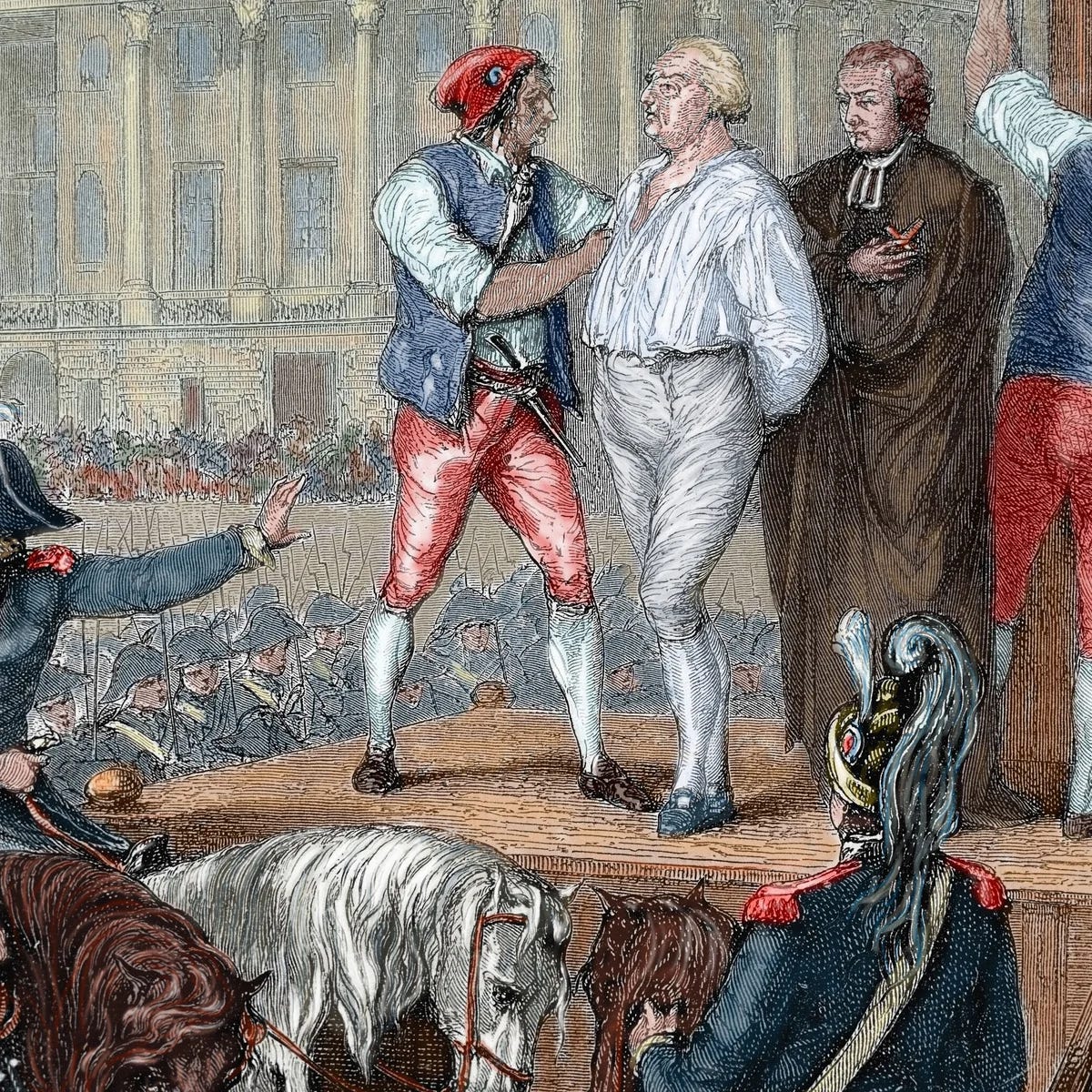
The First Republic was not born during the optimistic opening act of the Revolution.
It arrived after that optimism had begun to collapse.
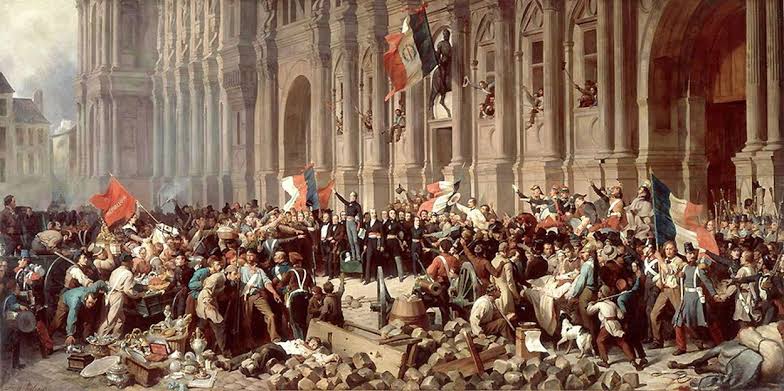
Louis XVI’s attempted escape from France in 1791 shattered what remained of public trust in the king. War with Austria and Prussia intensified fears that royalists at home were working with monarchies abroad. On August 10, 1792, revolutionaries attacked the Tuileries Palace, and the king was suspended and imprisoned with his family.
In early September, terrified crowds entered Parisian prisons and killed hundreds of prisoners they suspected might join an invading army.
Then, on September 20, French forces stopped the Prussians at the Battle of Valmy.
The next day, the National Convention assembled and abolished the monarchy.
The Republic was born between a massacre and a battlefield victory.
That should tell us something about the world it inherited.
The Real Story
The Revolution That Worked
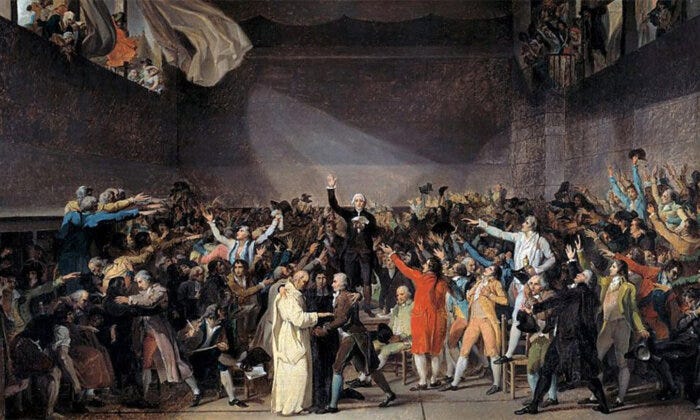
Before we discuss where the Revolution failed, we should be clear about what it accomplished.
France entered 1789 with a government buried beneath debt, an unequal tax system, recurring food crises, and a society legally divided into estates. Nobles and clergy possessed privileges unavailable to most of the population, while the people carrying much of the tax burden had little meaningful political power.
When Louis XVI summoned the Estates-General, he intended to solve a financial crisis.
Instead, he opened a door that the monarchy could not close.
Representatives of the Third Estate declared themselves the National Assembly. Feudal privileges were attacked. The Declaration of the Rights of Man and of the Citizen proclaimed that people were born free and equal in rights and that political authority came from the nation rather than a king.
Revolutionary France established civil marriage and transferred official records of births, marriages, and deaths from churches to local governments. Departments and communes replaced the tangled administrative divisions of the Old Regime. Public office was increasingly presented as something earned through ability rather than inherited through birth.
Not every reform happened immediately. Not every promise applied equally. Some feudal obligations survived until they were abolished without compensation in 1793.
But the Revolution permanently changed what French people believed government owed them, and where government received its authority.
A king could be restored.
The belief that he ruled because God had selected his family was much harder to resurrect.
A Republic Born Under Fire
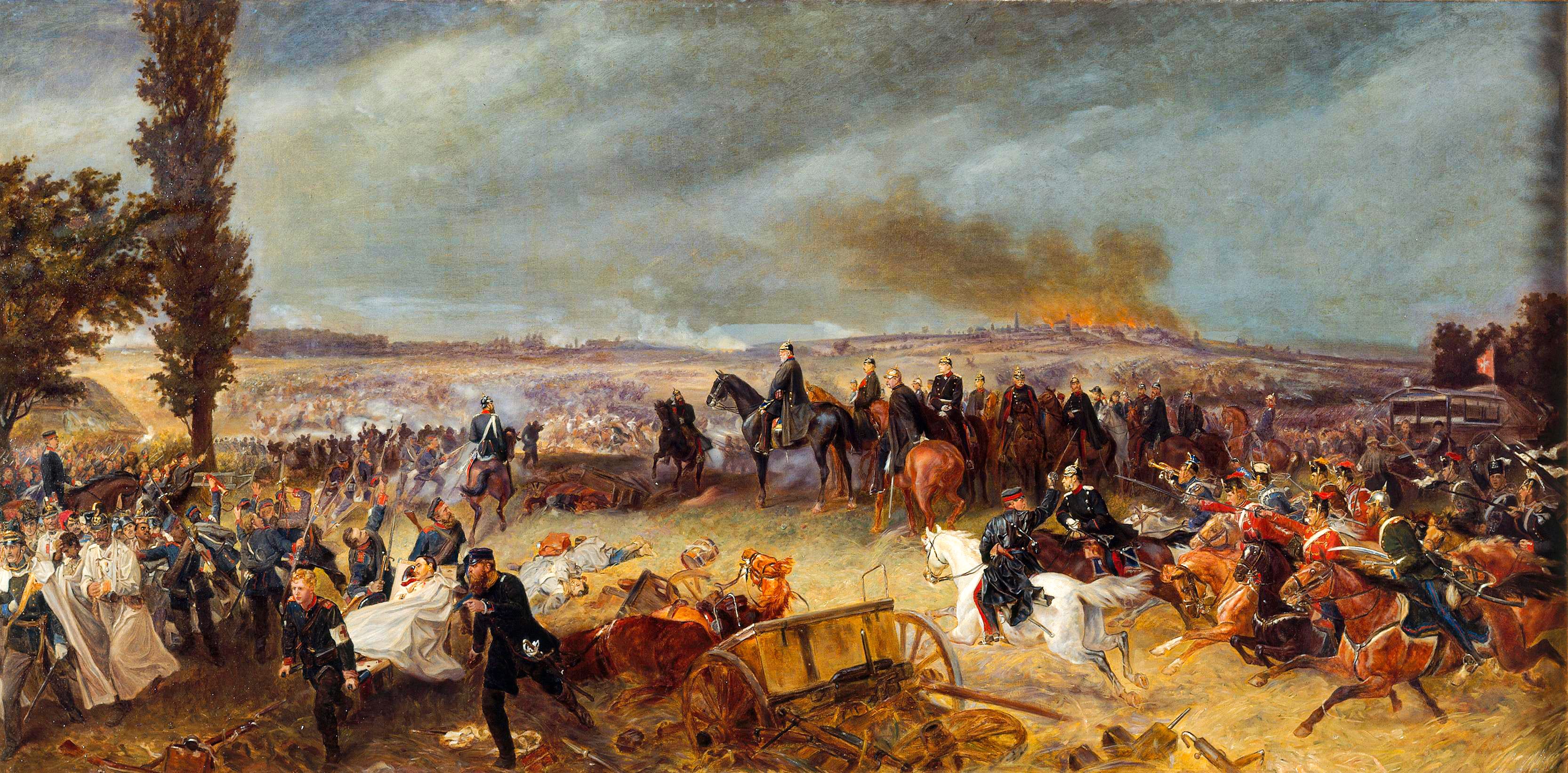
The new Republic inherited almost every crisis imaginable.
France was fighting Austria and Prussia, and more European powers would soon join the war. Royalists wanted the monarchy restored. Revolutionary factions disagreed over how much power should belong to Paris, the Convention, and the people themselves.
Food remained expensive. Revolutionary paper money lost value. Rural rebellion erupted in the Vendée. Revolts against the increasingly radical government appeared in several cities.
Some fears of conspiracy were exaggerated.
Others were not.
Louis XVI had attempted to flee the country. Émigré nobles were lobbying foreign rulers. European monarchies genuinely feared the Revolution spreading across their borders. France genuinely was invaded.
The Republic was not inventing every enemy it claimed to see.
The danger came from what happened next.
Every military defeat became evidence of betrayal. Every political disagreement began to resemble sabotage. Every opponent could be accused of helping the enemy.
France had abolished the idea that one king embodied the nation.
It had not yet learned how to accept that two citizens could disagree without one becoming an enemy of the people.
When Emergency Became Government
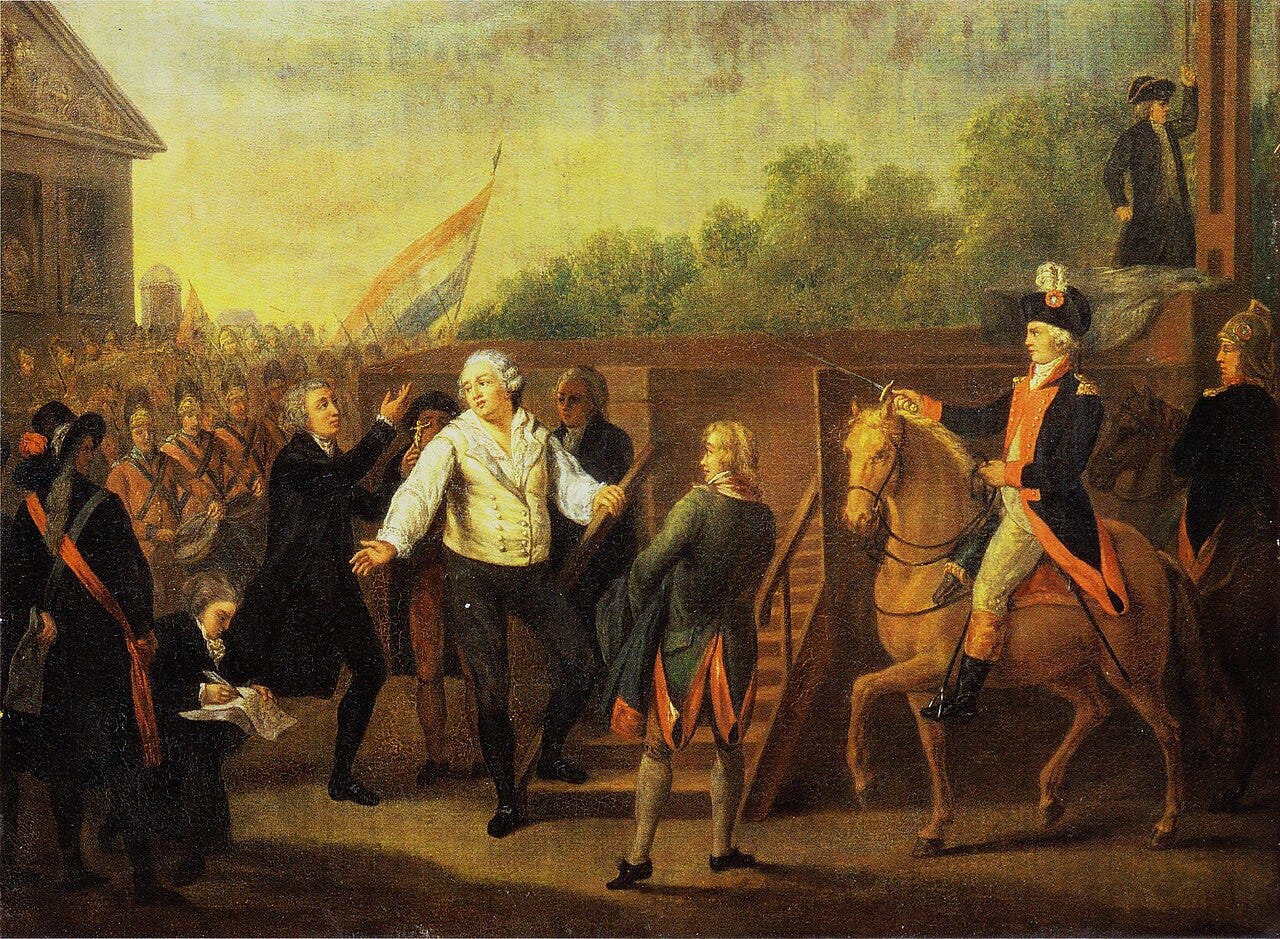
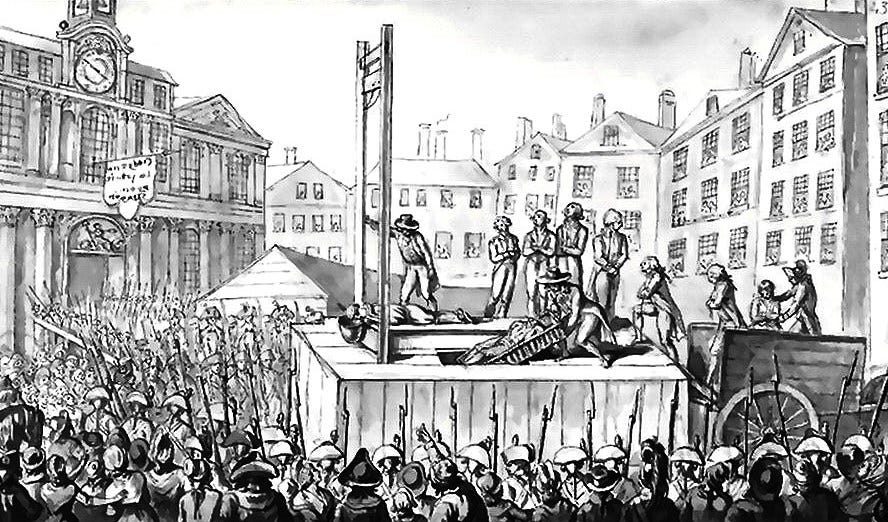
Louis XVI was executed in January 1793.
His death made compromise with Europe’s monarchies even less likely and raised the stakes inside France. If the Republic fell, its leaders could not expect retirement. They could expect prison, exile, or execution.
The Convention created emergency institutions, including the Committee of Public Safety, to defend the Revolution. France mobilized an enormous citizen army, stabilized its military position, and eventually pushed invading forces back.
That was a genuine achievement.
The Republic survived.
But survival became the justification for nearly anything done in its name.
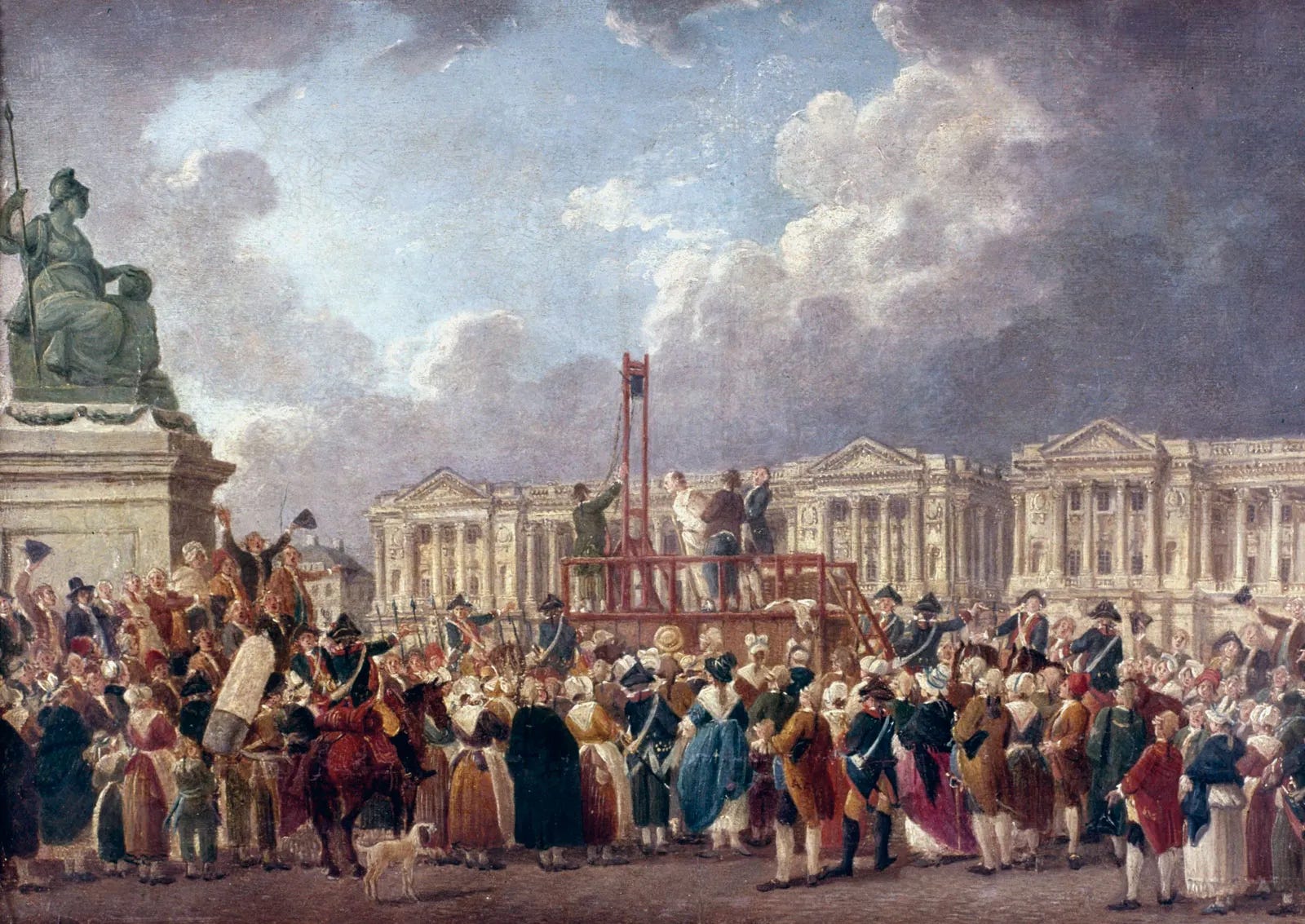
The Law of Suspects broadened the government’s ability to arrest supposed enemies. Revolutionary tribunals processed accusations of treason. Political factions that had helped create the Republic were expelled, arrested, and executed when they lost their struggles for power.
Robespierre became the most famous face of the Terror, but he was not a solitary dictator controlling France from a throne. Power was divided among the Convention, committees, representatives on mission, local authorities, political clubs, and crowds demanding action.
That arguably made the system more frightening.
The Terror did not depend upon one madman.
It grew from a political culture in which fear, ideological certainty, war, and personal survival reinforced one another. Thousands were officially sentenced to death, while many more died in prisons, civil conflicts, and killings conducted without formal trials.
The Revolution had declared protections against arbitrary imprisonment and punishment.
The Republic suspended those protections in order to save itself.
Rights for Whom
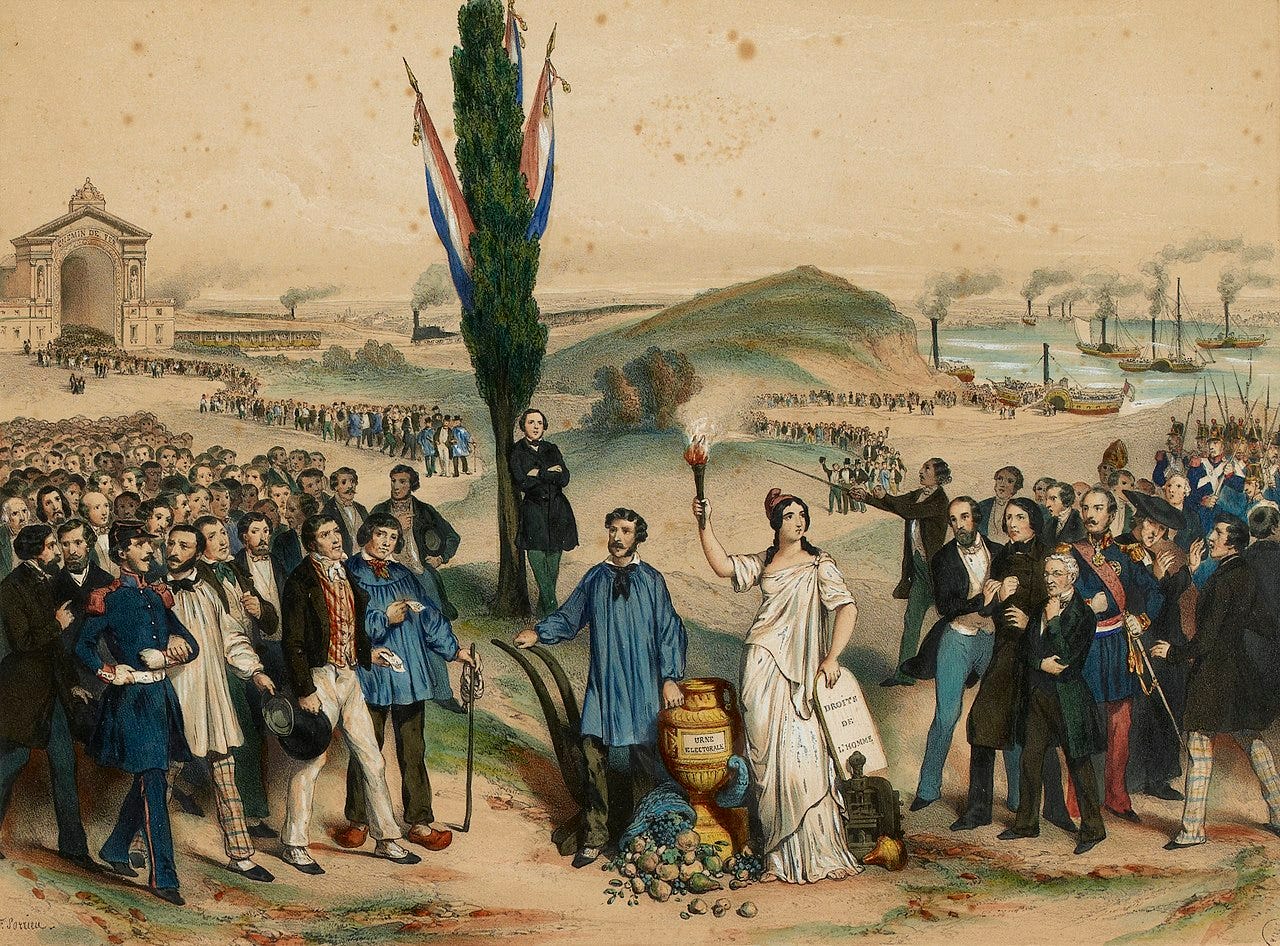
The Revolution spoke in the language of universal rights. Its definition of “universal” remained remarkably selective.
The National Convention was elected through universal male suffrage, a dramatic expansion of political participation. Yet nearly 90 percent of eligible voters abstained from that historic election.
Women marched, organized, petitioned, attended political meetings, and helped force the royal family from Versailles to Paris. Olympe de Gouges responded to the Declaration of the Rights of Man with her own Declaration of the Rights of Woman and of the Female Citizen.
Women still could not vote. In 1793, women’s political clubs were closed, and de Gouges was executed during the Terror after publicly challenging the revolutionary government.
The contradiction extended across the Atlantic.
An enormous uprising by enslaved people in Saint-Domingue forced revolutionary France to confront whether its declarations of liberty applied in its colonies. In 1794, the Convention abolished slavery throughout the French Empire.
It was one of the Revolution’s greatest achievements.
Napoleon Bonaparte restored slavery in 1802.
The rights were described as natural and universal.
Their protection remained political and temporary.
The Constitution Locked Away
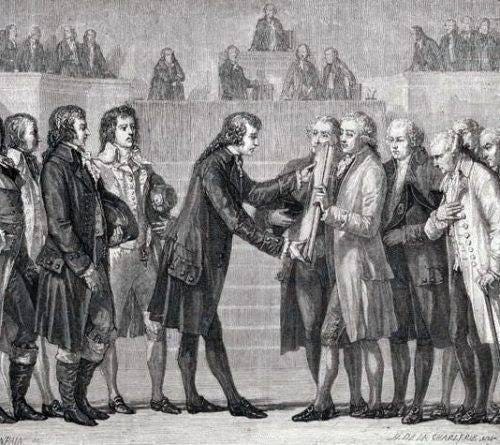
Perhaps nothing captures the Republic’s contradiction better than the Constitution of 1793.
It promised an extraordinarily democratic political system for its time. It expanded male suffrage, emphasized popular sovereignty, protected freedom of expression and assembly, recognized public assistance and education as responsibilities of society, and declared resistance to oppression a right.
The French people approved it.
Then the government suspended it.
France was at war. Rebellion was spreading. The Convention declared that the government would remain revolutionary until peace returned.
Peace did not arrive in time for the Constitution.
It was placed in a cedar chest and never implemented.
The Republic’s most democratic constitution became an artifact while an emergency government ruled without it.
The Revolution Restarts Time
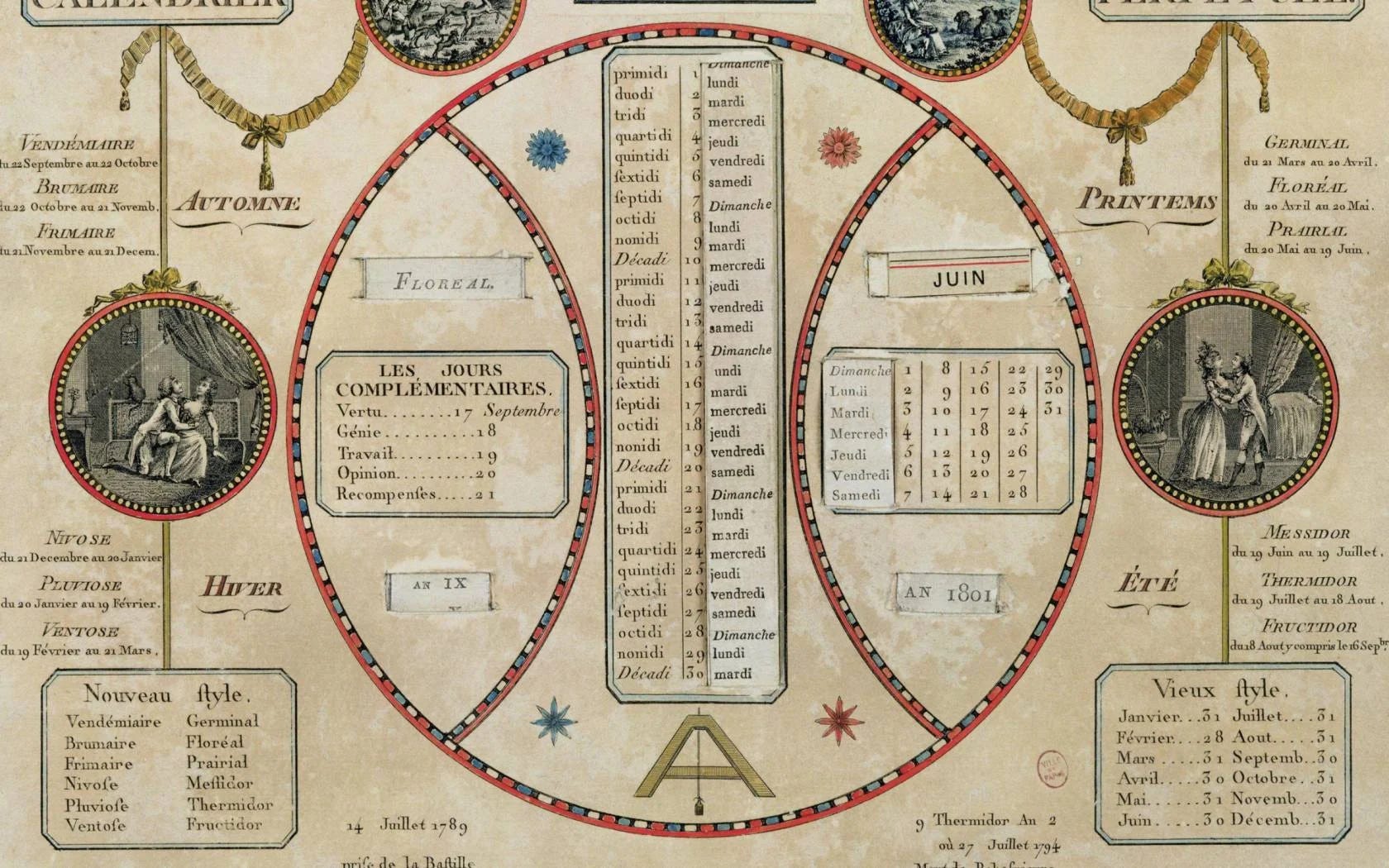
The revolutionaries did not stop at replacing a government.
They attempted to replace the calendar.
The Republican calendar counted September 22, 1792, as the beginning of Year One. Traditional months were replaced with names inspired by seasons, weather, and agriculture. Weeks became ten-day periods. Religious feast days and royal anniversaries gave way to a supposedly rational measurement of republican time.
The Revolution had not merely abolished a monarchy. It was trying to separate France from its own past.
There is something inspiring about that ambition.
There is also something deeply revealing about believing history can be restarted by decree.
Why This Mattered
The First Republic did not create a stable democratic government.
After the fall and execution of Robespierre in 1794, the Terror receded. The Directory replaced the Convention in 1795 but struggled with corruption, economic problems, public unrest, and repeated attempts to manipulate political outcomes.
In 1799, Napoleon Bonaparte helped overthrow the Directory and established the Consulate. France technically remained a republic for several more years, but political power increasingly belonged to one man.
In 1804, Napoleon became emperor.
The Revolution had abolished hereditary monarchy only to end beneath another hereditary ruler.
Yet calling the Revolution a complete failure misses what survived it.
Legal privilege could no longer be defended as the natural structure of society. Citizenship, equality before the law, secular civil government, national sovereignty, and written constitutional rights had entered political life permanently.
The monarchy eventually returned, but the Old Regime did not.
France’s revolutionaries failed to build a republic capable of protecting all the principles they proclaimed. They still changed the expectations against which every government that followed would be judged.
Modern Connection
Popular culture usually knows how to end a revolution.
The palace falls. The flag rises. The villain is defeated. The crowd cheers. Roll credits.
Real revolutions begin when the movie ends.
Someone still has to feed the cities, control the army, collect taxes, write laws, hold elections, and decide what happens when millions of liberated people do not agree about what liberation should look like.
The French revolutionaries defeated the final boss and discovered they had only completed the tutorial.
Their greatest danger was not simply that they faced an emergency. The emergency was real.
The danger was deciding that rights, constitutions, and political opposition could wait until the emergency ended.
Once exceptional power becomes normal, the people holding it rarely agree that the danger has passed.
Final Button
The French Revolution was neither the uncomplicated triumph celebrated by its admirers nor the meaningless bloodbath described by its enemies.
It succeeded at destroying a system built upon hereditary privilege.
It failed to build a republic that could consistently defend itself without violating the rights it existed to protect.
France abolished its king in a day.
It spent the next twelve years discovering how easily new rulers could claim that they alone represented the people.
The calendar called it Year One.
History knew nothing truly begins from zero.
The Ctrl Binge Question
Can a revolution be called successful if its ideas survive—but the republic it creates does not?