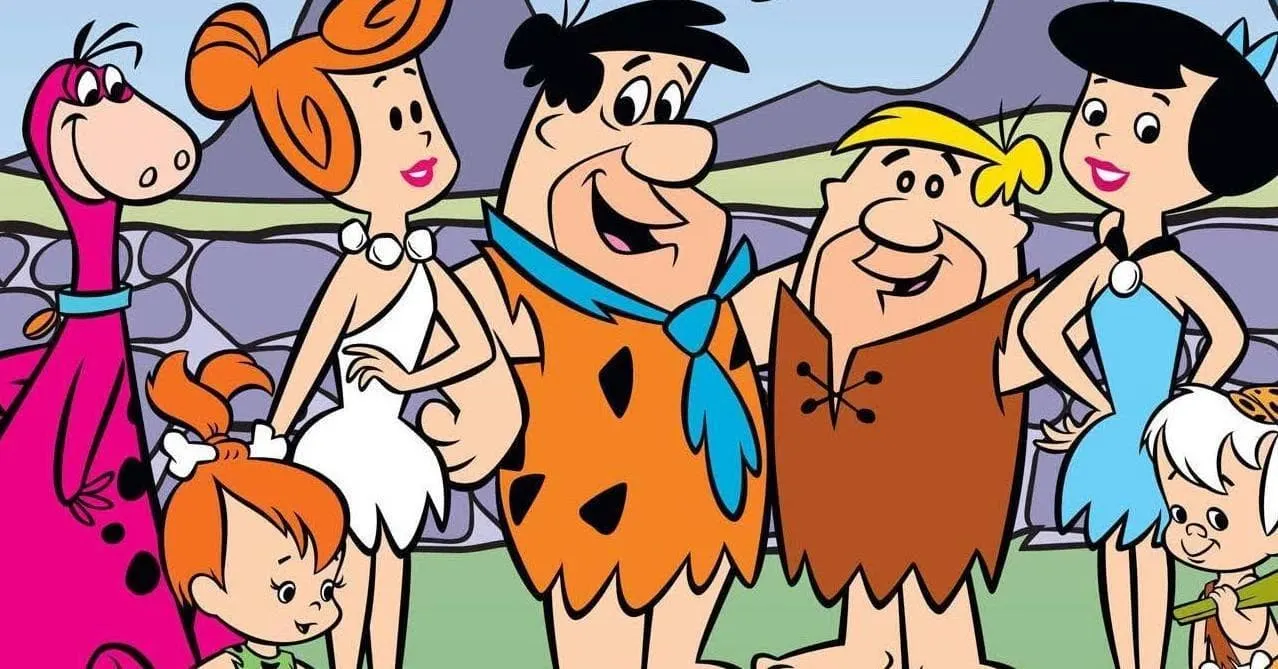
When I watched The Flintstones in reruns as a child, I had no idea I was watching television history.
I only knew that Bedrock felt safe.
Fred could lose his temper. One of his schemes could collapse spectacularly. A prehistoric appliance could destroy half the house. But Wilma would still be there. Barney and Betty would still be next door. Dino would still greet Fred at the door, usually with enough enthusiasm to knock him flat.
Whatever went wrong, everyone would eventually come home.
That may be the strangest part of The Flintstones’ legacy. The series was created as a prime-time comedy for adults, built around the pressures and expectations of American life in 1960.
Yet generations of children discovered it in reruns and experienced something else entirely:
Comfort.
Meet the Modern Stone Age Family
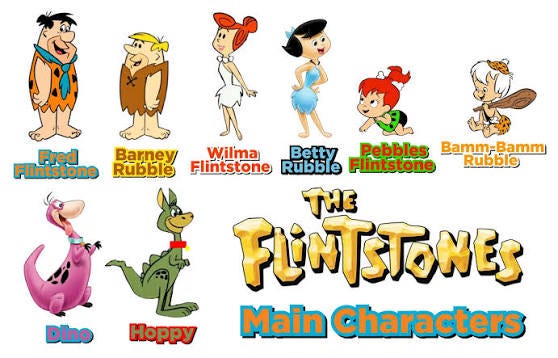
On September 30, 1960, ABC introduced American television audiences to Fred and Wilma Flintstone and their neighbors, Barney and Betty Rubble.
They lived in the prehistoric city of Bedrock, drove cars powered by their own feet, and used household appliances operated by increasingly exhausted animals.
But the Stone Age setting was camouflage.
The Flintstones was really about 1960 America wearing animal skins.
Fred worked a blue-collar job at the Slate Rock and Gravel Company. He argued with his boss. He worried about money. He bowled with his buddies, attended lodge meetings, attempted ridiculous shortcuts, and frequently created problems that Wilma had to help him solve.
The Flintstones owned a suburban home. The Rubbles lived next door. The two couples shared dinners, vacations, disagreements, celebrations, and the sort of casual everyday intimacy that comes from having best friends within shouting distance.
Remove the dinosaurs and stone furniture, and Bedrock starts looking remarkably familiar.
That was the joke.
It was also the reason the series worked.
This Wasn’t Saturday-Morning Television
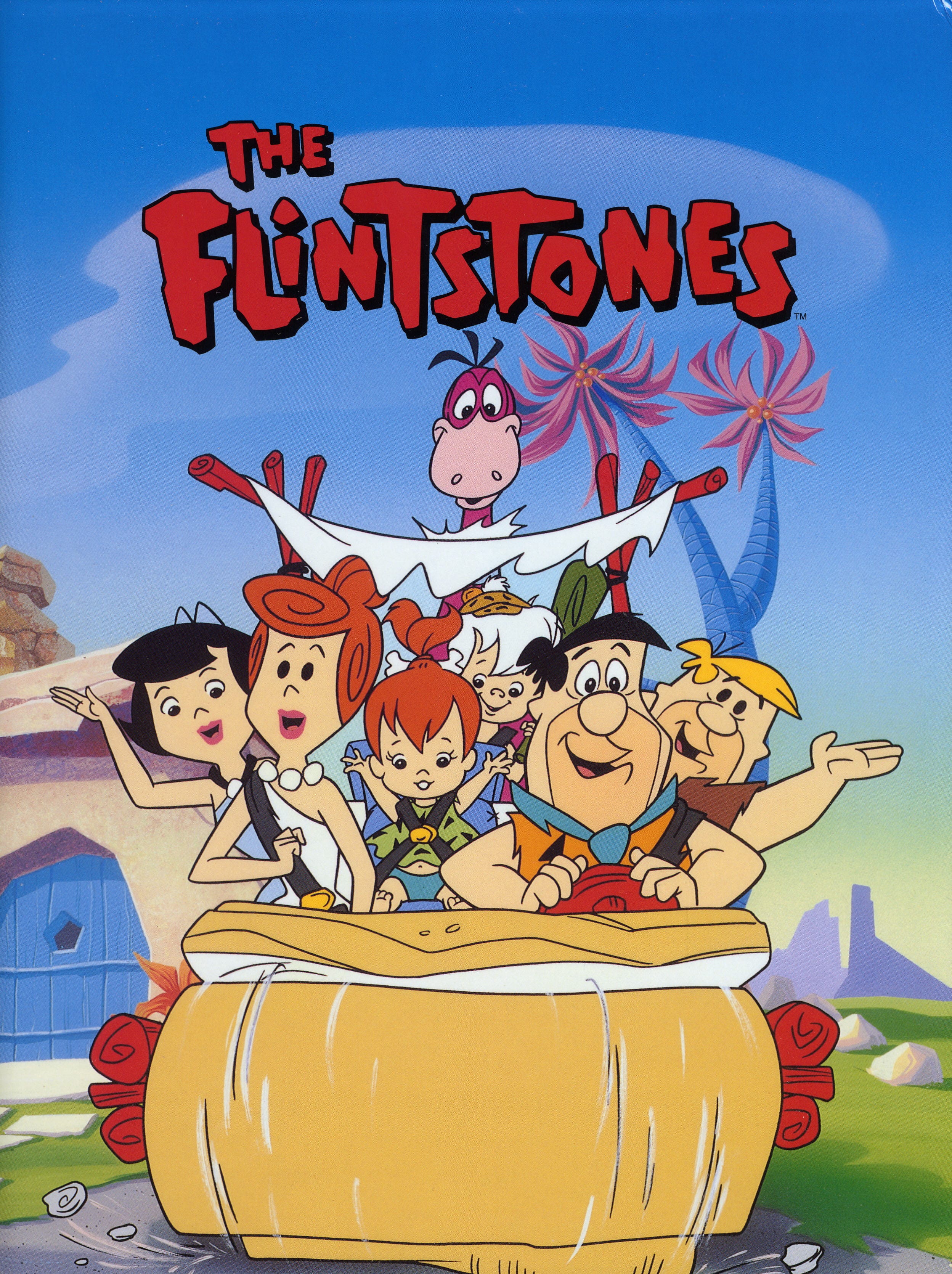
Today, The Flintstones is remembered primarily as a children’s cartoon.
That is not what it was designed to be.
It premiered on Friday nights in prime time, competing for the same adult audience watching live-action situation comedies. It used domestic arguments, workplace frustrations, money problems, marriage, friendship, and social ambition as the foundation of its stories.
Its clearest ancestor was The Honeymooners.
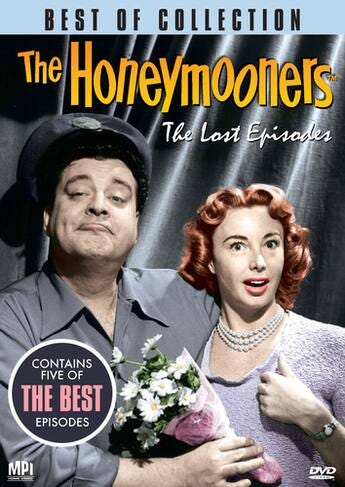
Fred Flintstone had Ralph Kramden’s temper, bluster, working-class frustrations, and talent for dragging his best friend into poorly conceived plans. Barney Rubble brought the patience and loyalty of Ed Norton. Wilma and Betty were frequently the most sensible people in the room.
The prehistoric setting allowed Hanna-Barbera to exaggerate the familiar.
A record player used a bird’s beak as a needle. A garbage disposal might be a creature living beneath the sink. A camera contained a small bird carving the picture into stone.
The animal would occasionally look directly at the audience and complain about its job.
It was not an ancient world reconstructed with any seriousness.
It was modern consumer culture rendered in limestone.
Building Bedrock on a Television Budget
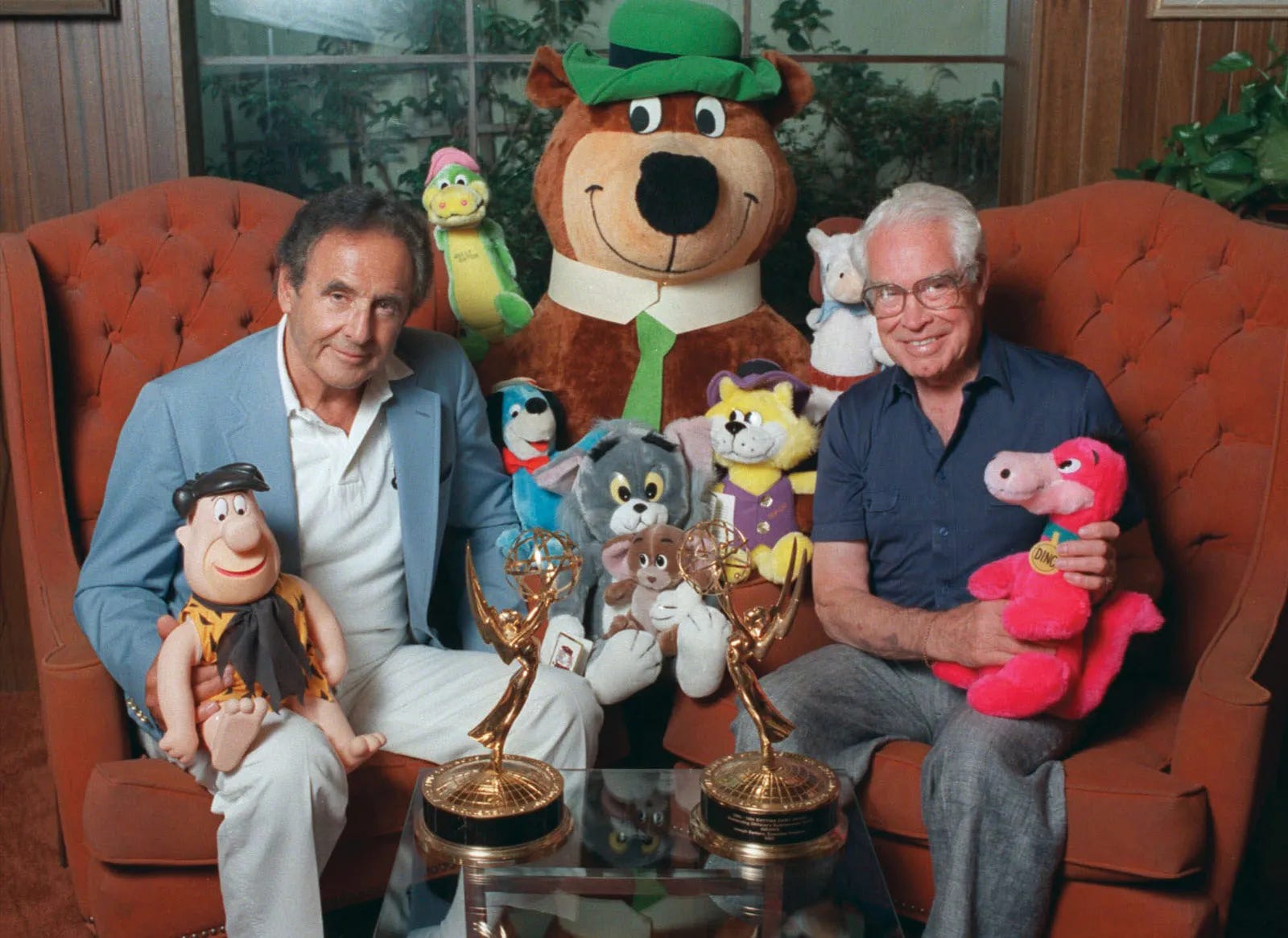
William Hanna and Joseph Barbera already understood successful animation.
At MGM, the pair had created the enormously popular Tom and Jerry theatrical shorts. But when the studio closed its animation department in the 1950s, Hanna and Barbera had to rethink how cartoons could be produced.
Theatrical animation was expensive. Television budgets were smaller, and television schedules were relentless.
Their solution became known as limited animation.
Instead of redrawing every part of a character for every frame, artists could keep most of the image still while moving only what was necessary. Backgrounds, poses, and movement cycles could be reused. Clever staging and strong voice performances carried scenes that could not rely on constant motion.
The style was partly an economic necessity, but it also changed what television animation could do.
A theatrical cartoon usually needed to deliver a short burst of movement, slapstick, and visual spectacle. The Flintstones told one complete half-hour story. It needed dialogue, pacing, recognizable characters, and conflicts that could hold an audience through commercial breaks.
The animation might have been limited. The ambition was not.
Even the show’s name went through development. The family was initially known as the Flagstones before eventually becoming the Flintstones—a name that sounded both prehistoric and instantly American.
The final result looked unlike the polished theatrical cartoons audiences already knew. But it sounded and moved like a television sitcom.
That distinction mattered.
A Cartoon for Grown-Ups
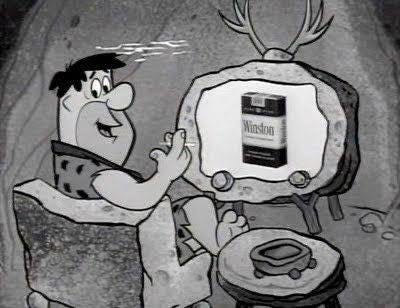
Nothing reveals the show’s original audience more clearly than its early advertising.
Fred and Barney appeared in sponsor spots for Winston cigarettes.
That feels astonishing now because the Flintstones have spent decades appearing on children’s pajamas, lunch boxes, cereal boxes, vitamins, and toy shelves. Seeing Fred Flintstone relaxing with a cigarette creates a kind of cultural whiplash.
But in 1960, it made perfect sense to advertisers.
Fred was not being marketed as a children’s character. He was a prime-time sitcom husband whose audience included millions of adults.
The show also featured the standard architecture of grown-up television comedy: a laugh track, marital misunderstandings, workplace misery, social embarrassment, and jokes about the exhaustion of keeping up with suburban expectations.
Fred wanted what many sitcom husbands wanted.
More money. More respect. A better position at work. An evening out with the guys. An easier way to get what he wanted without admitting that Wilma’s original suggestion was probably correct.
He was loud, impatient, stubborn, and frequently wrong.
He was also recognizable.
Then Bedrock Became a Childhood
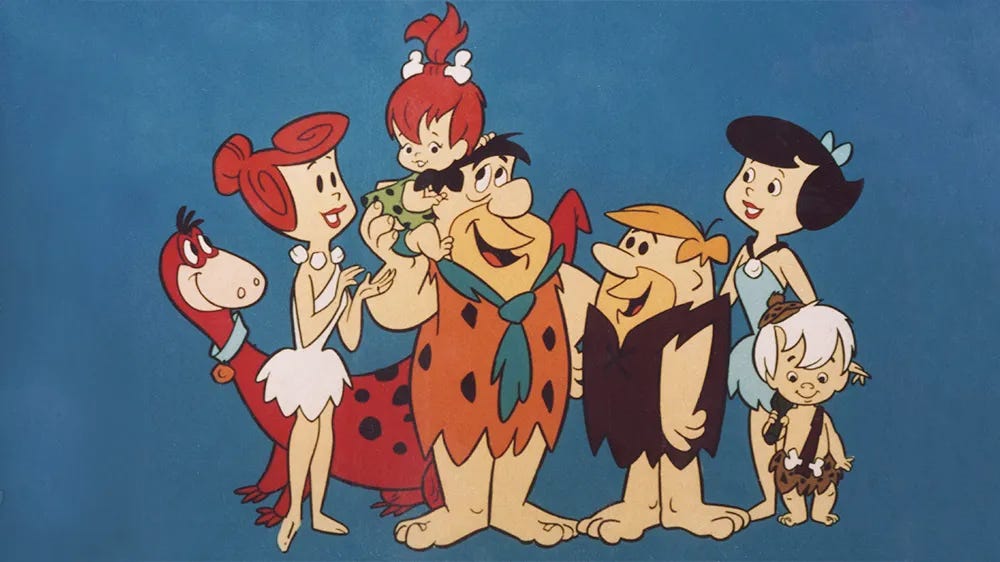
The show’s identity gradually changed.
When Pebbles Flintstone arrived during the third season, the family at the center of the series became more visibly a family with children. Bamm-Bamm soon joined the Rubbles. The babies created new stories, new emotional stakes, and—certainly not by accident—new merchandising opportunities.
Then came syndication.
Once The Flintstones left its original prime-time run, local television stations could place the reruns almost anywhere. Children watched the episodes in the afternoon, before school, during summer vacation, and alongside other cartoons.
The original adult context began to fade.
Children did not need to understand Fred’s anxiety about his job, his bills, his marriage, or his social status. They saw dinosaurs, bowling balls, strange machines, and a world in which nearly every modern convenience was powered by an animal with a sarcastic personality.
More importantly, they saw a dependable home.
That is where the feeling of safety comes from.
The Flintstones is chaos with guardrails.
Fred gets angry, but he is not going anywhere. A scheme causes trouble, but it will not destroy the family. Wilma may be frustrated, but love is never truly in doubt. Barney and Betty remain next door. Bedrock resets itself before the next episode begins.
The problems are real enough to feel familiar, but rarely powerful enough to change the foundation beneath the characters.
The show was built like home.
Why The Flintstones Mattered
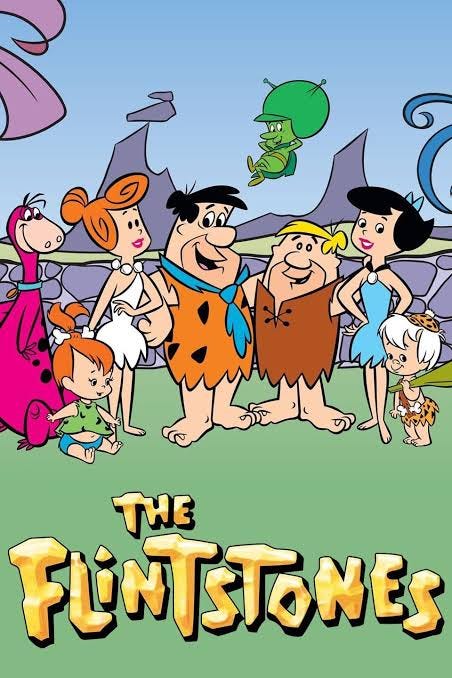
The Flintstones ran for six seasons and produced 166 episodes during its original network run.
It also became the first animated television series nominated for a prime-time Emmy—recognition that placed it alongside live-action programming rather than treating it as a separate novelty for children.
Its greatest achievement may have been proving something American television would repeatedly forget and rediscover:
Animation is a medium, not a genre.
A cartoon can be made for children. It can also be a workplace comedy, a domestic sitcom, a political satire, a family drama, or something intended entirely for adults.
The Flintstones demonstrated that an animated family could anchor a prime-time series long before the Simpsons, Hills, Griffins, or Belchers moved into their respective neighborhoods.
The Simpsons would eventually surpass it as television’s longest-running prime-time animated series, but Springfield was built on ground first broken in Bedrock.
The formula remains remarkably familiar:
A flawed father. A more grounded mother. Loyal neighbors. Money problems. Workplace frustrations. Cultural satire. Children who gradually take on larger roles. A world exaggerated just enough to make ordinary life look ridiculous.
The Flintstones did not invent the American family sitcom.
It proved that the family did not have to be real.
The Comfort of Knowing Everyone Comes Home
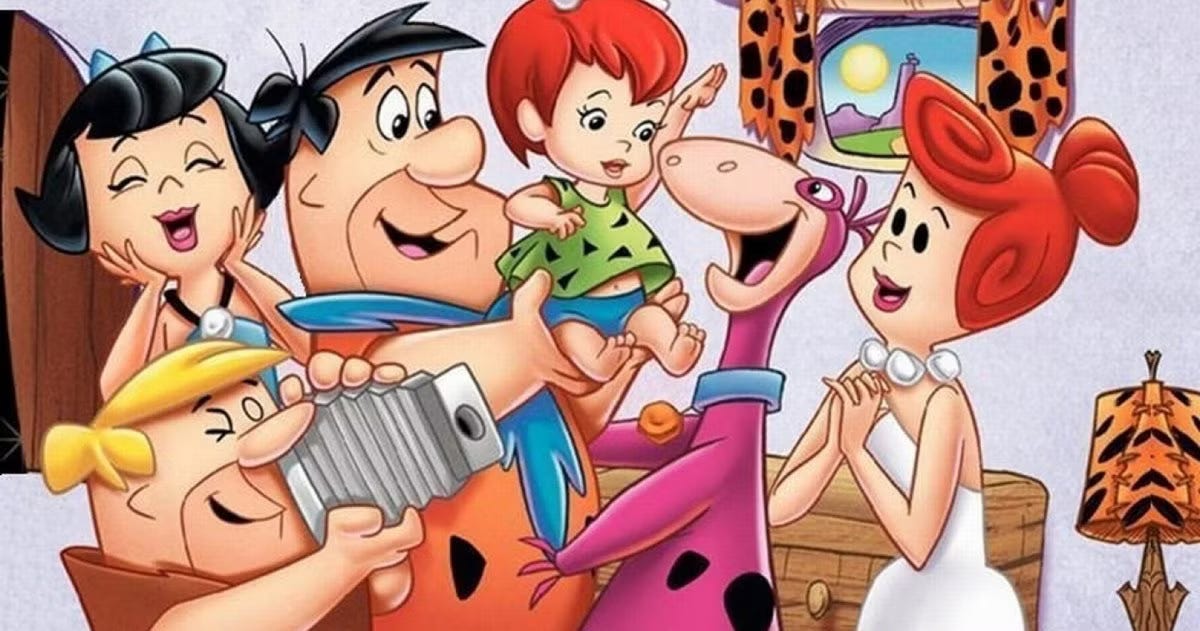
There is something fitting about the journey The Flintstones made.
It began as a comedy for adults worried about work, marriage, money, status, and the pressures of modern life.
Then their children watched it.
Then their grandchildren watched it.
The jokes changed depending on who was sitting in front of the television. Adults recognized Fred’s frustration with his boss or his attempts to escape responsibility. Children saw a dinosaur crane lifting stones at a construction site.
Both audiences understood the most important part.
The Flintstones and the Rubbles belonged to one another.
Maybe that is why the show could survive changing tastes, television schedules, and generations of viewers. Beneath the prehistoric puns and stone furniture was a world that felt stable.
Fred could make a mess of everything.
But Wilma was still there.
Barney was still next door.
And when the working day was over, everyone came home.
A television show about prehistoric people became timeless because people never really changed.
Ctrl+Binge Question
Which animated family carried the Flintstones blueprint best: the Simpsons, the Hills, the Griffins, the Belchers—or someone else entirely?