The horse snorted. The machine hissed.
On one set of rails stood thousands of years of dependable transportation: four legs, trained muscle, and a technology humanity understood perfectly well.
Beside it sat something new. Something small. Something noisy. Something that looked less like the future of transportation and more like an inventor had built a steam-powered coffee pot in the back of a carriage shop.
According to the story that became American folklore, the two raced along the Baltimore & Ohio Railroad in August 1830.
At first, the machine pulled ahead. Then a belt slipped. Its steam pressure dropped. The horse caught it, passed it, and crossed the finish ahead of the mechanical challenger.
The horse had won.
Which would have been much more impressive if the locomotive had not already proven that horses were about to lose everything else.
America Before the Railroad
The United States of 1830 was growing, ambitious, and difficult to cross.
People and goods moved by horse, wagon, stagecoach, riverboat, or canal. Roads could become muddy, rutted disasters. Rivers did not always travel where merchants needed them to go. Canals could move enormous amounts of cargo, but digging one through the countryside required years of labor and a great deal of money.
Then New York changed the equation.
The Erie Canal opened in 1825, linking the Great Lakes with the Hudson River and giving western farmers and merchants a powerful new route to New York City.
That was wonderful news for New York. It was considerably less wonderful for Baltimore.
Baltimore’s merchants could see what was happening. As settlement and commerce pushed westward, the cities capable of reaching that growing interior would control more of the nation’s trade.
New York had its canal. Philadelphia was pursuing its own transportation network. Baltimore needed an answer.
That answer became the Baltimore & Ohio Railroad, chartered in 1827 as the country’s first common-carrier railroad. Its supporters imagined tracks stretching west from Baltimore toward the Ohio River, allowing goods and passengers to move across terrain where constructing a canal would have been enormously difficult.
There was only one small question. What, exactly, was supposed to pull the cars?
Yes, Early Trains Had Horses
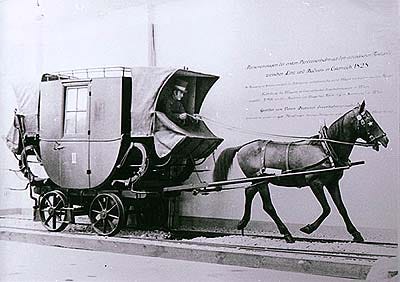
When we picture a railroad, we naturally picture a locomotive. Steam. Smoke. Whistles. Wheels pounding against steel.
But a railroad is technically the road beneath the vehicle. The earliest American railroad cars did not necessarily need locomotives because they could still be pulled by horses.
Rails made it easier for a horse to move a heavier load than it could pull along an ordinary road. The system was familiar, understandable, and already available.
Steam locomotives existed, particularly in Britain, but they were still experimental technology. They could be expensive, unreliable, dangerous, and too heavy for poorly constructed tracks.
An imported British locomotive called the Stourbridge Lion had already operated in Pennsylvania in 1829, but it proved too heavy for the track it was supposed to use.
That did not exactly inspire confidence.
The Baltimore & Ohio therefore began operating with horsepower of the literal variety.
It worked. But Peter Cooper believed the railroad could do much more.
Record Scratch: This Was Not Quite the First American Locomotive
The Tom Thumb is frequently introduced as “the first American locomotive.” The real distinction is a little more complicated.
It was not the first steam locomotive to operate in the United States. British-built machines arrived before it.
It was also not the first American-built locomotive placed into regular passenger service. That honor is generally given to the Best Friend of Charleston, which began carrying paying passengers in South Carolina in December 1830.
The Tom Thumb was an experimental demonstration engine.
It was built in America. It successfully pulled passengers along a common-carrier railroad. It showed that a small steam locomotive could handle the Baltimore & Ohio’s curves and grades.
But it was never intended to become the B&O’s permanent workhorse. It was a prototype.
And like many prototypes, it was less interested in looking impressive than in proving that an idea could work.
Peter Cooper Builds the Future
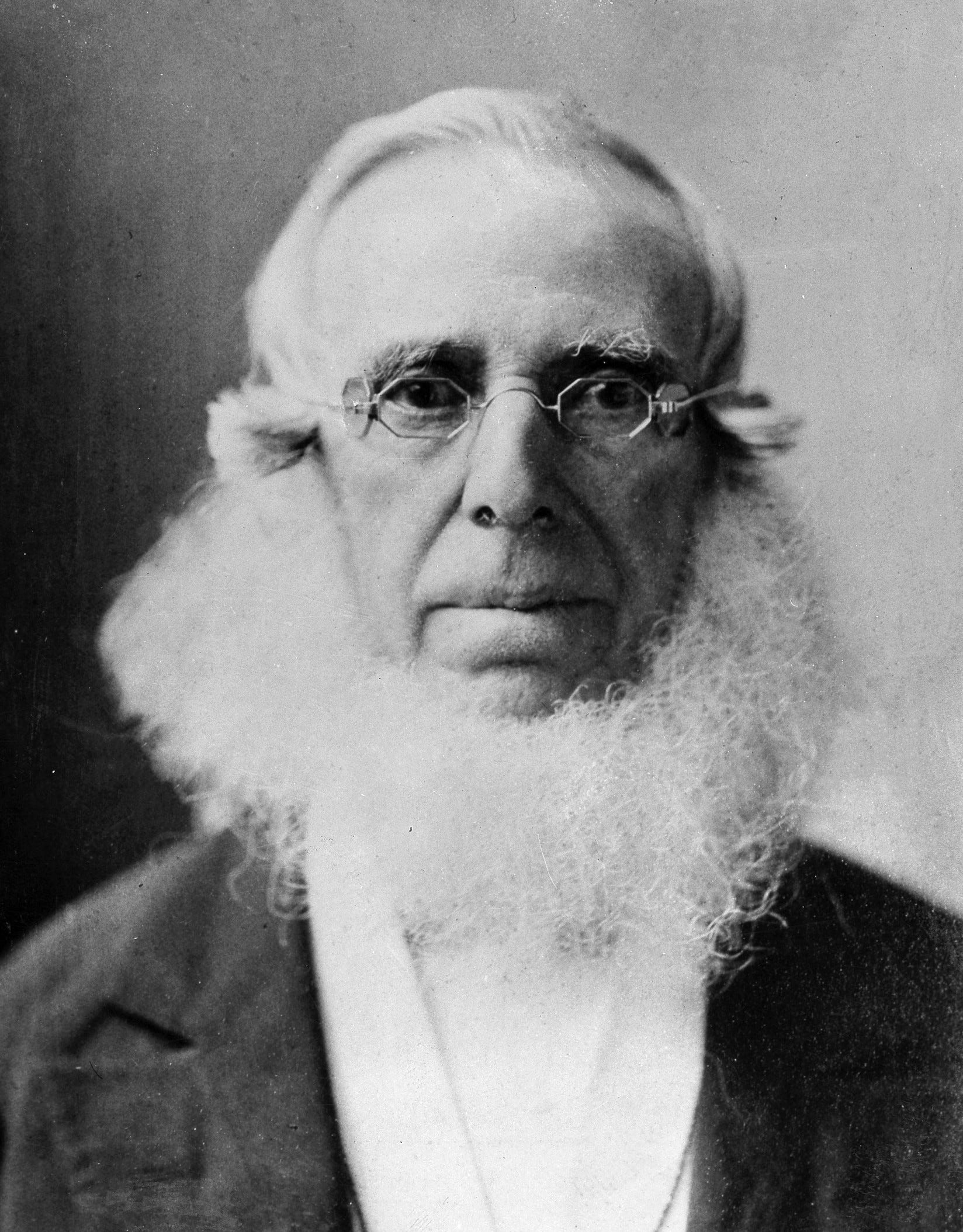
Peter Cooper was an inventor, manufacturer, businessman, and relentless tinkerer.
He also had a financial interest in land near the Baltimore & Ohio’s planned route, which gave him an excellent reason to want the railroad to succeed.
Cooper believed steam power could make that happen.
The B&O’s track presented a challenge. It had sharp curves that larger British-style locomotives might struggle to negotiate. Cooper needed to demonstrate that an engine could be made small and flexible enough for the railroad that already existed.
So, he built one.
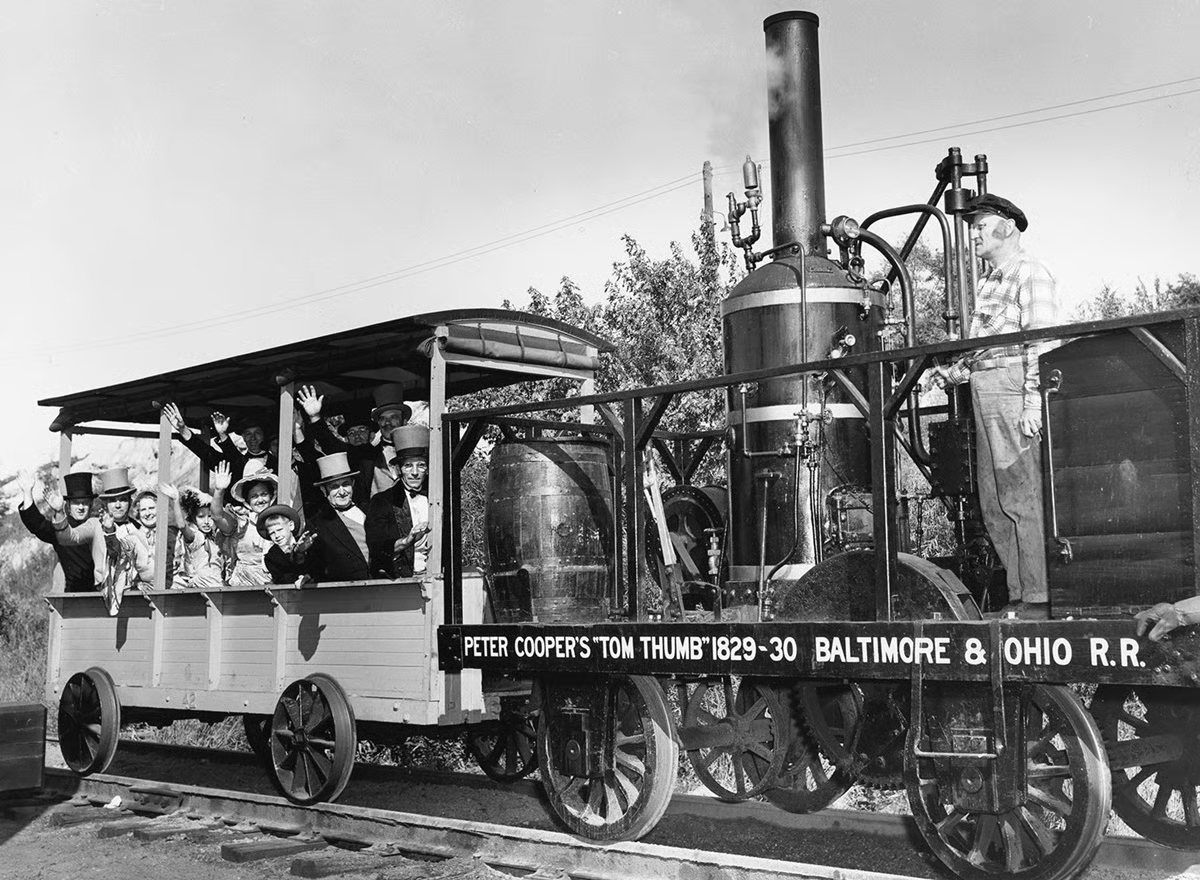
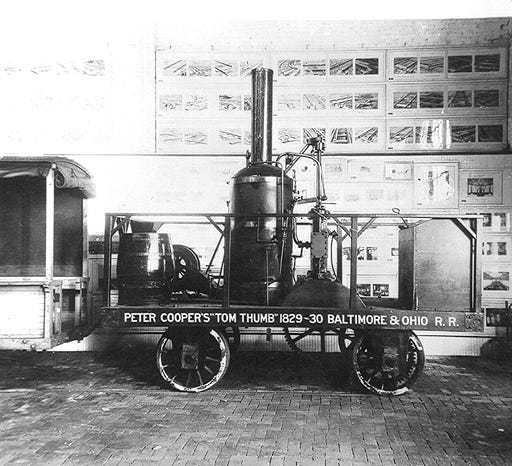
The engine later remembered as the Tom Thumb had an upright boiler, a short wheelbase, and a geared drive. It was tiny compared with the locomotives that would eventually thunder across the continent.
Its exact original appearance is uncertain because no complete contemporary plans survive. The working replica people recognize today was constructed for the B&O’s 1927 Fair of the Iron Horse, nearly a century after Cooper’s experiment.
Even the name Tom Thumb appears to have become attached to the engine later, inspired by its remarkably small size.
According to Cooper’s much later recollections, he had difficulty finding suitable iron tubing while building it. His solution was pure garage-inventor chaos: he reportedly removed the wooden stocks from two muskets and used their barrels as tubing for the boiler.
Is that detail documented from the moment he built it? No.
Is it exactly the kind of story an old inventor would remember telling about the tiny locomotive that helped change American transportation? Absolutely.
Whatever materials Cooper used, the machine worked.
On August 28, 1830, it carried Baltimore & Ohio officials from Baltimore to Ellicott’s Mills, now Ellicott City, along approximately thirteen miles of track.
The Tom Thumb reportedly traveled around 10 to 14 miles per hour while pulling passengers.
That does not sound particularly fast now.
In 1830, sitting behind a homemade boiler while the Maryland countryside moved past at a speed normally associated with a galloping horse probably felt like being launched into tomorrow.
The locomotive handled the railroad’s curves. It climbed its grades. It carried its passengers.
Peter Cooper had proven his point. Then, according to legend, someone brought out a horse.
The Race That History Remembers
The famous story unfolds during the return trip to Baltimore.
A horse-drawn railroad car associated with the Stockton & Stokes stagecoach company appeared on the parallel track. A challenge was issued. Cooper accepted.
On one track: the established system. On the other: the mechanical intruder coming to replace it. It was practically too perfect as a symbol.
The horse started quickly, but the Tom Thumb gathered speed and pulled ahead. Steam appeared ready to humiliate its living competitor.
Then the locomotive’s blower belt slipped from its pulley.
The blower helped maintain the fire needed to generate steam. Without it, the engine began losing pressure and slowing down.
Cooper reportedly attempted to repair the belt while the horse regained the lead.
By the time he got the locomotive moving properly again, it was too late. The horse won.
There is, however, a problem with this wonderfully cinematic story. We cannot prove that it happened exactly this way.
The detailed version entered the historical record decades later, particularly through an 1868 speech by John H. B. Latrobe, who had been involved with the early Baltimore & Ohio Railroad. No known newspaper report, diary entry, letter, or other surviving document from 1830 provides contemporary confirmation of the race.
Even the B&O Railroad Museum describes it as an unsubstantiated legend.
That does not necessarily mean the race never happened. Latrobe may have been recalling a real event witnessed in his youth. Cooper himself later acknowledged that a small race had occurred, although he treated it as an amusing incident that did not amount to much.
Memory is complicated. Corporate legend is even more complicated.
A horse defeating the railroad’s shiny new technology was probably not the story the B&O would have rushed to advertise.
Over time, the race became something better than a company press release. It became folklore.
The Horse Won the Race. The Locomotive Won the Argument.
If the race happened, its result barely mattered.
The Tom Thumb’s purpose was not to establish an undefeated racing record against every horse in Maryland. It was built to demonstrate that steam locomotion could work on the Baltimore & Ohio Railroad.
It had already done that.
The engine carried railroad officials to Ellicott’s Mills. It negotiated the route. It reached speeds that demonstrated the enormous potential of mechanical power.
A horse could sprint past one malfunctioning prototype. A horse could not be manufactured by the hundreds, coupled to increasingly enormous trains, and used to carry entire industries across a continent.
Steam locomotives could become larger. They could become faster. They could become more reliable.
The potential of a horse was already understood. The potential of the locomotive had barely been touched.
The Tom Thumb itself never entered regular service. It continued appearing in experimental use for a short time before eventually being dismantled for parts.
But the Baltimore & Ohio moved toward steam power. Other railroads did the same. Within a generation, tracks stretched across the country, carrying passengers, mail, raw materials, manufactured goods, and ideas at speeds that would have seemed absurd when the B&O began with horse-drawn cars.
Railroads helped cities grow. They changed where businesses could operate. They altered how Americans understood distance and time.
Eventually, they helped bind the continent together—for better, for worse, and often at an enormous human cost to the people and communities standing in the path of expansion.
The Tom Thumb did not accomplish all of that by itself. It simply showed what was coming.
The Original Failed Product Demonstration
The Tom Thumb feels surprisingly modern.
Imagine a company unveiling a revolutionary new product during a live presentation. The prototype works. The audience begins to understand its possibilities. Then something breaks in front of everyone.
The competitor wins the demonstration. The internet laughs. The clip circulates everywhere.
But the investors leave convinced that, once the technical problems are fixed, the new product will change the industry.
That was the Tom Thumb.
Its mechanical failure did not disprove the technology. It exposed a problem engineers could solve.
The horse’s advantage was reliability. The locomotive’s advantage was potential.
History is filled with inventions that initially looked impractical, unnecessary, or ridiculous. New technology rarely arrives in its final form. It sputters. It breaks. It loses races it should have won.
Then someone repairs the belt.
The Future Does Not Have to Win the First Race
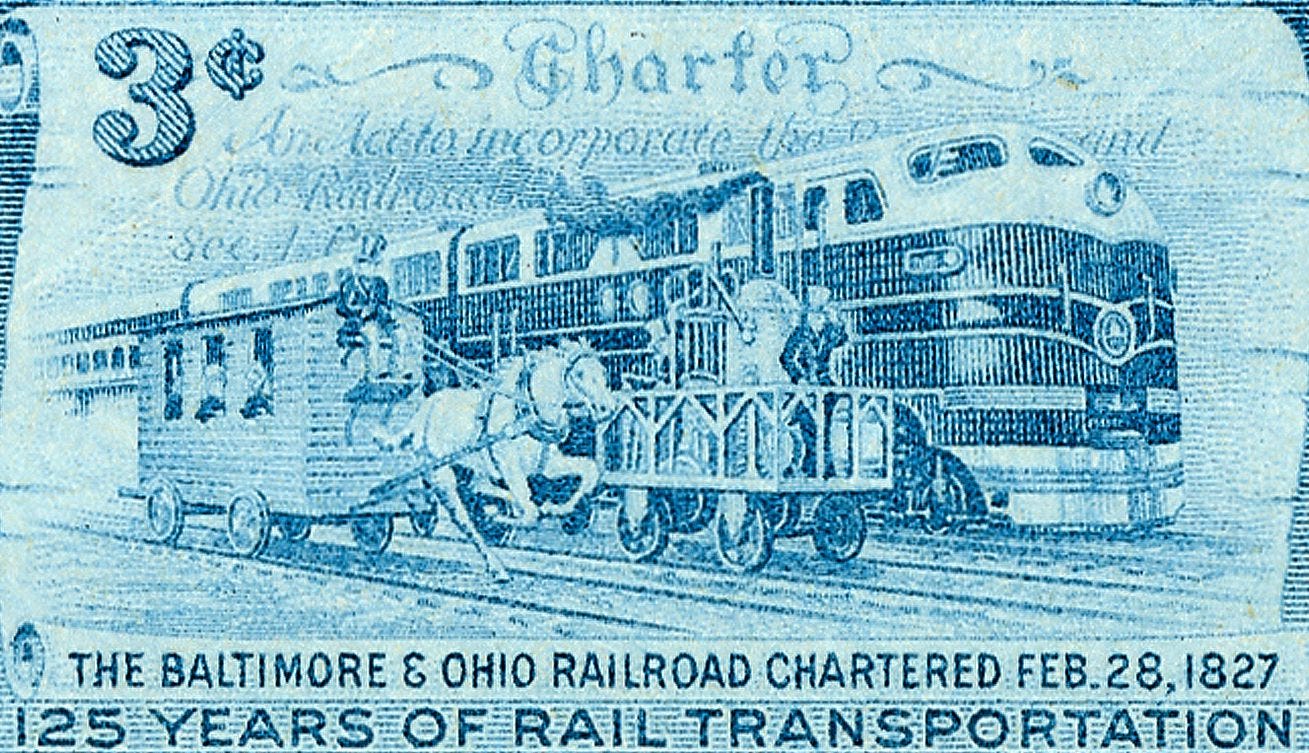
Maybe the Tom Thumb never raced a horse exactly as the legend remembers it. Maybe the two vehicles really did line up on parallel tracks. Maybe the locomotive surged ahead, its blower belt slipped, and a very confused but extremely victorious horse trotted past the stalled machine.
Either way, history already knows which one ultimately won.
The horse took the race. The locomotive took the continent.
The Ctrl+Binge Question
You’re standing beside the tracks in 1830, and someone asks you to place a bet.
Are you trusting the horse—or betting everything on the machine?