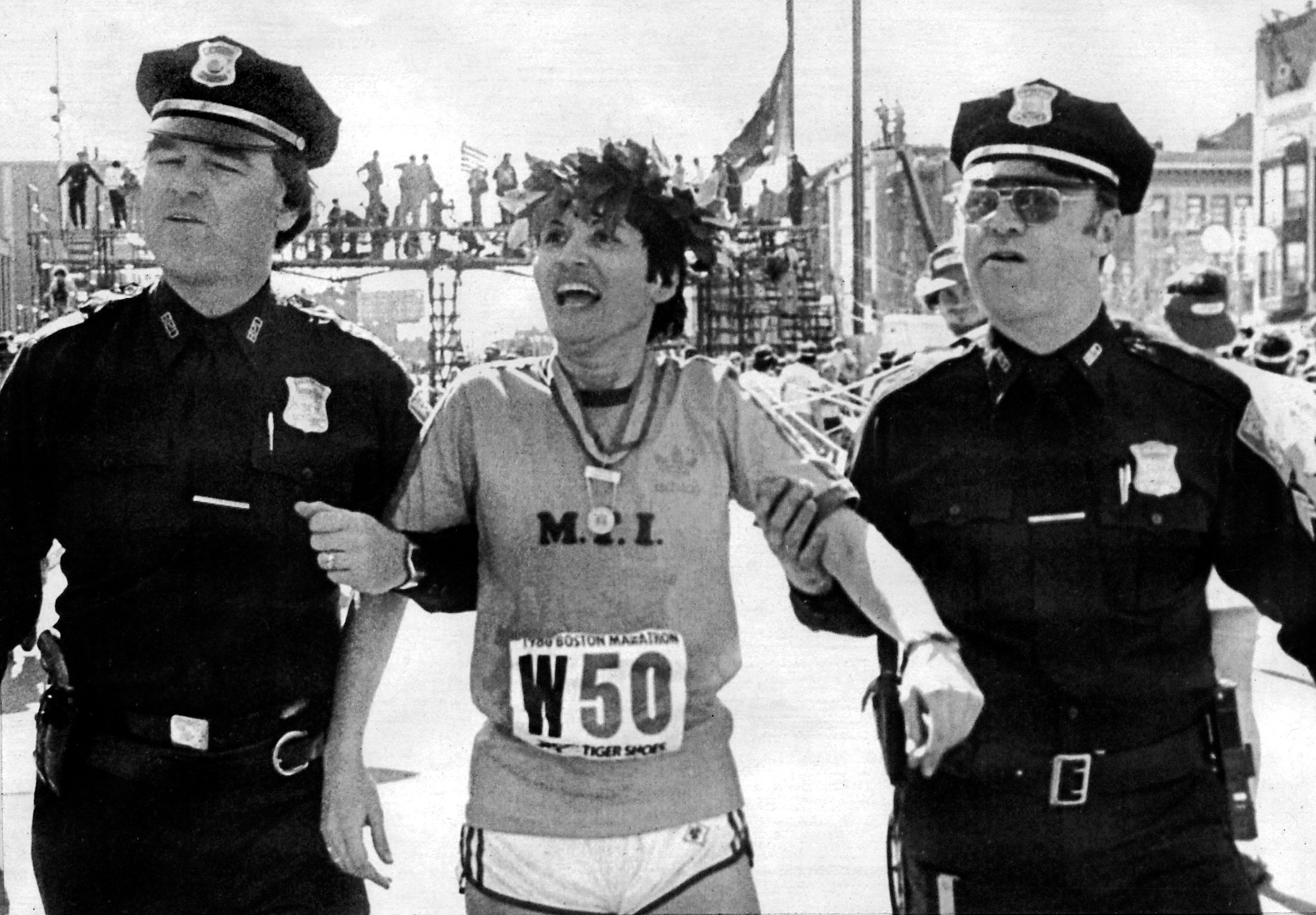
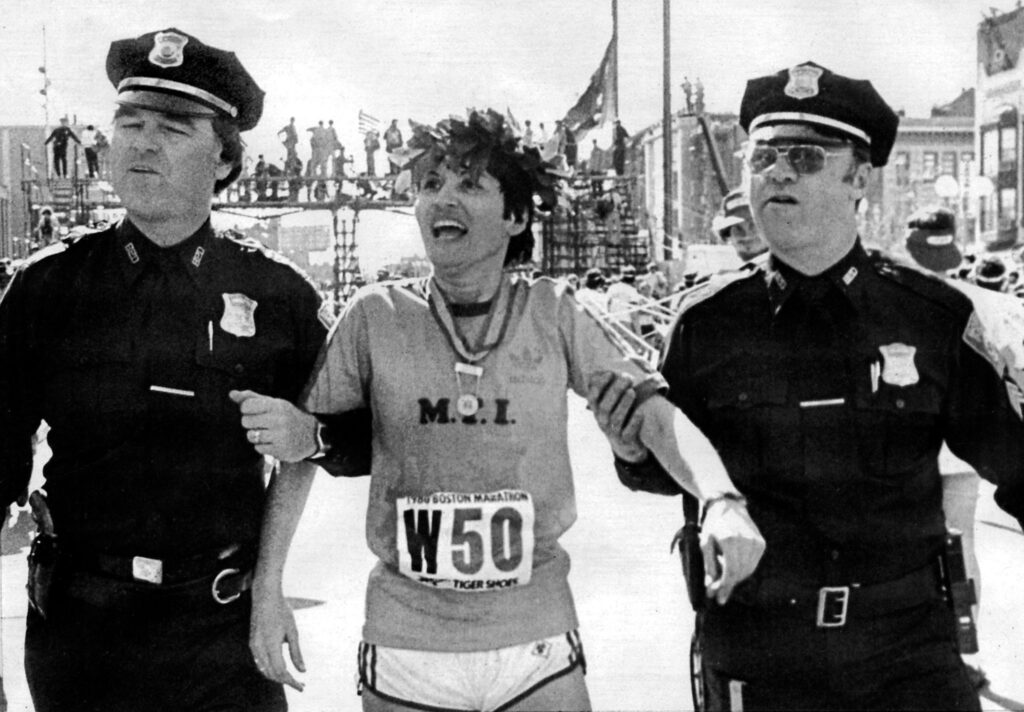
She crossed the finish line smiling.
Barely sweating.
Arms raised.
A winning time.
Something felt off.
On this day, April 21st, 1980, Rosie Ruiz appeared to do something incredible.
She won the women’s division of the Boston Marathon with a time of 2:31 — one of the fastest ever recorded at the time.
It should have been a historic moment.
A breakthrough performance.
Instead, within minutes, people started asking questions.
Because she didn’t look like someone who had just run 26.2 miles.
No exhaustion.
No heavy breathing.
No collapse at the line.
Just… fine.
And that’s where things unraveled.
The Boston Marathon isn’t just a race.
It’s one of the most grueling endurance events in the world — 26.2 miles of pacing, suffering, and mental warfare. You don’t fake that. Not at the elite level. Not convincingly.
Almost immediately, other runners began to speak up.
They hadn’t seen her.
Not on the course. Not in the pack. Not anywhere.
Officials started digging.
Witnesses came forward saying Ruiz had been spotted entering the race late — possibly jumping in from the crowd near the end of the course. There were even accounts suggesting she may have used public transportation for part of it.
And then came the final blow.
Ruiz had previously claimed a qualifying time at the New York Marathon… that also couldn’t be verified.
Within days, she was disqualified.
The real winner, Jacqueline Gareau, who had actually run the entire race, was rightfully awarded the title.
This story isn’t just about cheating.
It’s about how quickly we believe something that looks like success.
Ruiz didn’t win because she ran the best race.
She won because, for a moment, nobody questioned the result.
And that’s the unsettling part.
Because in sports — and in life — we often trust the finish line without asking how someone got there.
The marathon is supposed to be about endurance.
Time. Pain. Effort.
She skipped all of that.
And still almost got away with it.
If this happened today?
It wouldn’t last five minutes.
Phones everywhere.
GPS tracking.
Social media timelines.
Someone would have posted:
“Who is this?? She wasn’t here at mile 20.”
It’s the same reason we fact-check everything now.
The same reason “highlight culture” gets questioned.
Because we’ve learned:
Not every viral moment is real.
Not every “win” tells the full story.
It’s almost like an anime reveal — when the character who looks unbeatable suddenly gets exposed.
The illusion breaks.
And the truth hits harder.
QUESTION
What’s more impressive to you:
The person who wins…
Or the person who actually did the work to get there?