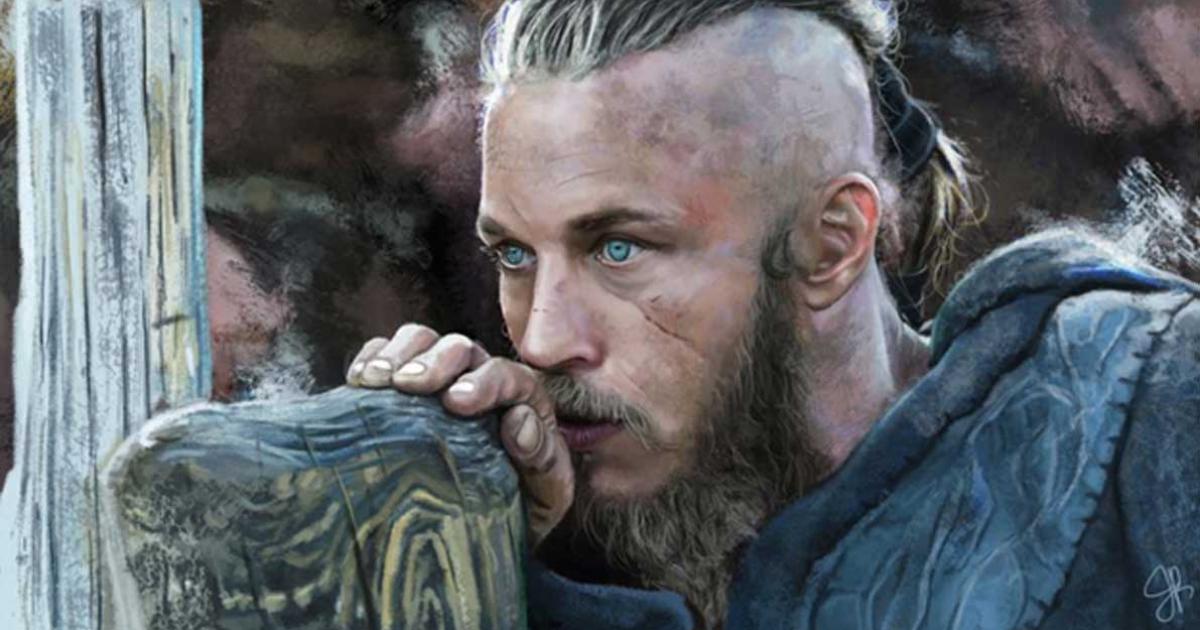
Every culture has a king waiting somewhere in the fog.
Britain has Arthur.
Scandinavia has Ragnar Lothbrok.
Arthur has Excalibur, Camelot, and the Knights of the Round Table.
Ragnar has shaggy trousers, a slain serpent, legendary wives, sons with names carved from iron, and a final appointment with a pit of venomous snakes.
He is remembered as a raider, explorer, conqueror, king, father, and the sort of man who could stare down death because he believed Valhalla was already preparing his seat.
Perhaps some of it happened. Perhaps none of it did. But that is tomorrow’s question.
Wednesday, Ragnar belongs to the wondrous.
The Ragnar Everybody Knows
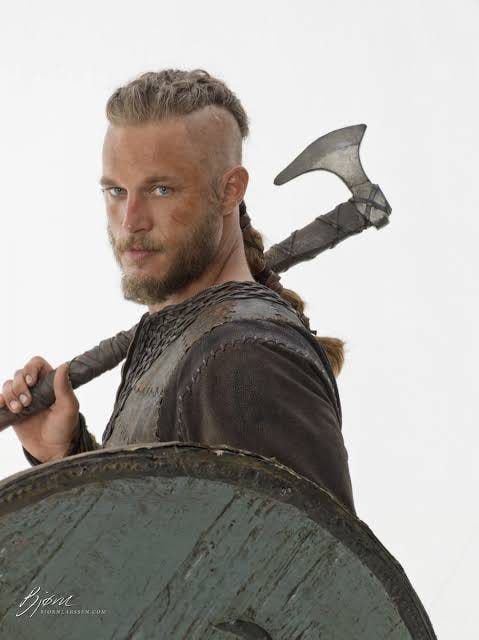
Most modern audiences know exactly what Ragnar Lothbrok looks like.
He has Travis Fimmel’s face.
The television series Vikings introduced millions of viewers to a restless farmer who looked toward the western horizon and wondered what might be waiting beyond it. He became a raider, an explorer, a king, and eventually a father forced to watch his sons grow into legends of their own.
That Ragnar feels complete.
He has motivations, relationships, private doubts, religious questions, and an identifiable path from obscurity to immortality. Even if you have never watched the series, that version has helped define what a Viking looks and sounds like in modern popular culture.
But Vikings did not invent Ragnar. It inherited him.
The show gathered pieces from different medieval stories, added new ideas, rearranged relationships, and built one emotionally coherent man from centuries of conflicting traditions.
In other words…
It did exactly what storytellers had already been doing to Ragnar for generations.
Because the further we follow Ragnar into the fog, the less he resembles one ordinary man.
And the more he resembles a myth.
The Name Earned in Monster Blood
Ragnar’s legend does not begin with a raid.
It begins with a serpent.
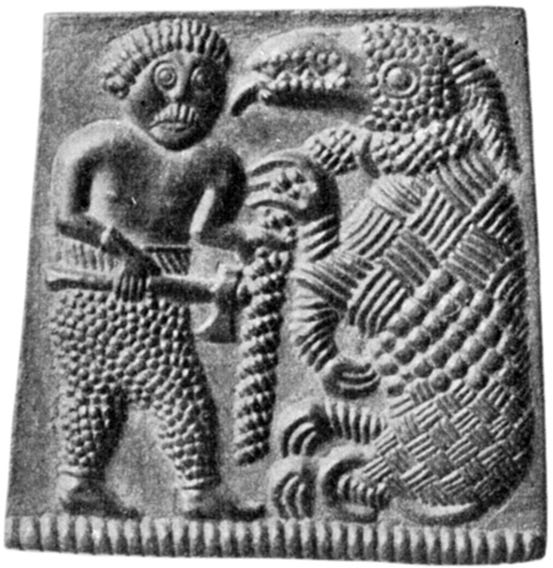
According to the saga, a young woman named Thora received a small snake from her father. She placed it near a piece of gold, and the creature began to grow. Soon it had become enormous, coiling around her home and trapping her inside.
Her father promised Thora’s hand to whoever could kill it.
Enter Ragnar.
He prepared an unusual set of protective clothing: shaggy trousers and a fur coat boiled in pitch. He rolled in sand, took up a heavy spear, and approached the serpent alone.
Ragnar drove the spear into the creature. Its blood or venom struck him, but his strange clothing protected him. The serpent died, Thora was freed, and Ragnar won his bride.
The deed also supposedly gave him the name by which the world would remember him.
Loðbrók.
The exact translation varies, but “Shaggy Breeches” or “Hairy Trousers” gets us close.
Yes, one of the most intimidating names in Viking legend may essentially mean Ragnar Fuzzy Pants.
But that ridiculous little detail contains something important.
Ragnar does not inherit his famous name. He earns it by killing a monster.
Before legend allows him to challenge kingdoms, it makes him a dragon slayer.
Women Who Refuse to Be Supporting Characters
The women surrounding Ragnar do not behave like background characters in someone else’s adventure.
They arrive carrying legends of their own.
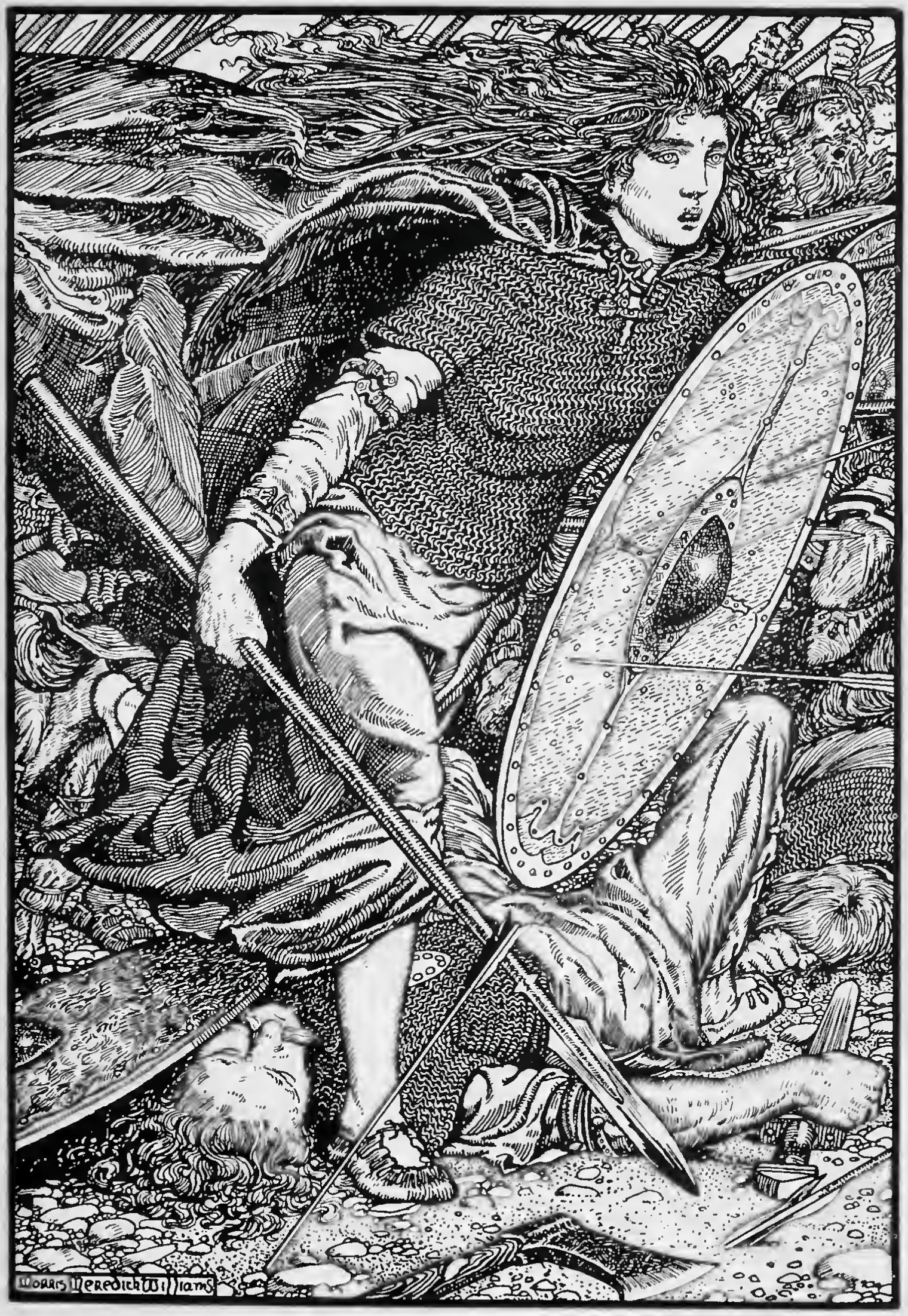
One medieval telling gives us Lagertha, the warrior woman who fights in the front rank with her hair flowing behind her. Modern audiences know her as Ragnar’s wife, fellow ruler, and one of the defining characters of Vikings. In the older story, she is already dangerous enough to sound like the hero of a completely different saga.
Thora gives Ragnar his serpent, his strange armor, and the name that survives him.
Then there is Aslaug, also known as Kráka or Randalín. Even her collection of names tells us we have entered folklore.
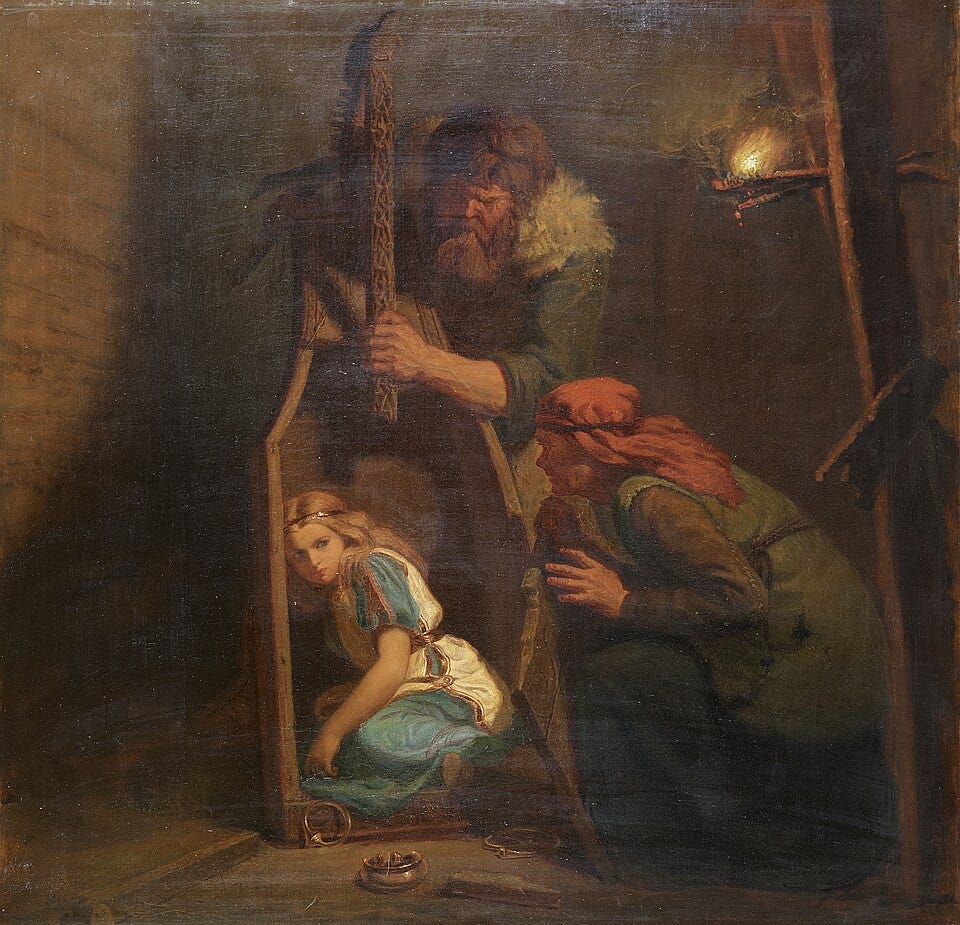
Aslaug is said to be the daughter of Sigurd the dragon slayer and the legendary Brynhild. After her parents die, she is hidden inside an enormous harp and carried away for protection. Eventually, she is raised in disguise and given the name Kráka, concealing the heroic bloodline beneath her apparently ordinary life.
Ragnar hears about her beauty and intelligence, but he does not simply invite her to meet him.
He gives her a riddle.
She must arrive neither dressed nor undressed, neither fasting nor fed, and neither alone nor accompanied.
Kráka appears wrapped in a fishing net with her long hair covering her body. She has tasted a leek without eating a meal, and a dog walks beside her…company, but not another person.
Ragnar is impressed.
He should be. She just defeated a Viking king with malicious compliance.
Kráka eventually reveals herself as Aslaug, the daughter of heroes. Ragnar does not merely marry into royalty. He marries directly into another mythology.
That is the kind of world Ragnar inhabits. Serpents grow into dragons. princesses hide inside musical instruments, and riddles determine who is worthy to stand beside a king.
Sons With Names Built for Sagas
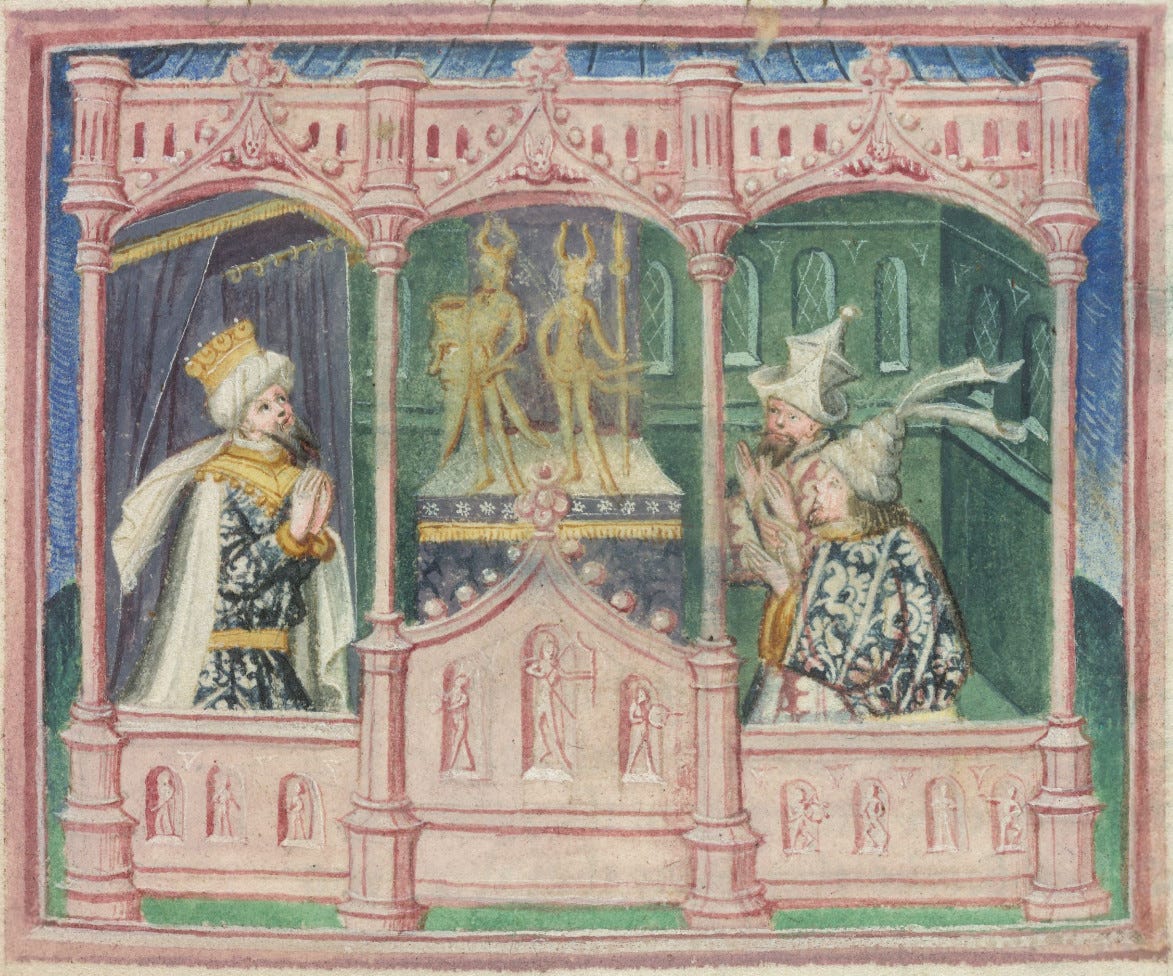
Then come the sons.
Ivar the Boneless.
Bjorn Ironside.
Sigurd Snake-in-the-Eye.
Hvitserk.
Ubba.
That does not sound like a family tree. It sounds like a character-select screen.
Different stories disagree about exactly which sons belonged to which mother, but agreement was never necessary for the legend. What mattered was that Ragnar became the father of an entire generation of warriors.
His children extend his story beyond the limits of his own lifetime.
They also become his greatest challenge.
As Ragnar’s sons win battles and gather reputations of their own, their fame begins to rival their father’s. Ragnar had spent his life building a name large enough to survive him. Now his sons were becoming large enough to cast shadows over it.
In the saga, this helps push Ragnar toward one final act of impossible ambition.
He decides to conquer England.
With two ships.
Two Ships Against a Kingdom
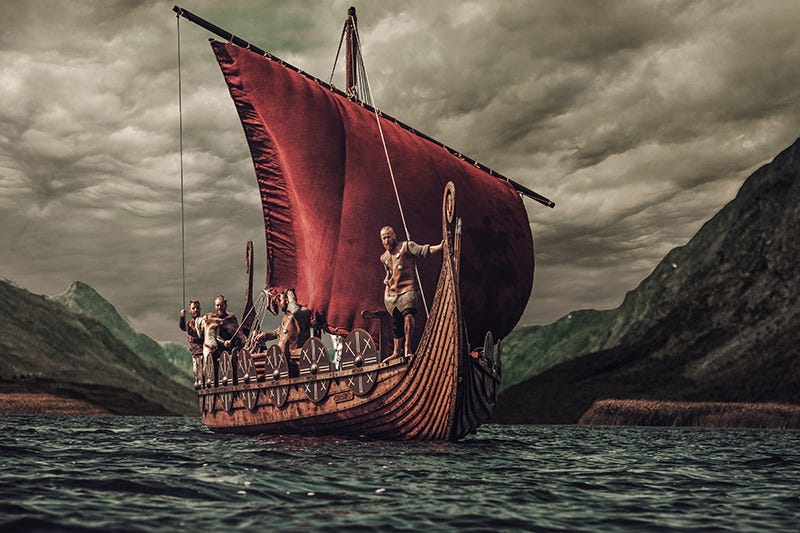
Aslaug warns him.
She tells Ragnar that the expedition is reckless. Two enormous merchant vessels are poor choices for the English coast. Smaller ships of greater number would give him a better chance.
Ragnar refuses.
Conquering a kingdom with a great fleet would bring him no special glory. No one had conquered England with only two ships. If he succeeded, the story would belong to him alone.
And if he failed?
Then he would not have wasted many ships.
That is funny, stubborn, and completely doomed.
Aslaug still gives him a protective shirt, woven without seams and blessed so that weapons cannot harm him.
Ragnar sails.
The ships are wrecked against the English coast, although Ragnar and his warriors make it ashore. They fight their way inland until King Ælla gathers an army large enough to stop them.
Ragnar’s men fall.
Weapons cannot pierce the enchanted shirt, so Ælla’s soldiers overwhelm him beneath their shields and take him alive.
The conqueror has finally reached the end of the world he believed he could bend around himself.
The Old Boar in the Snake Pit
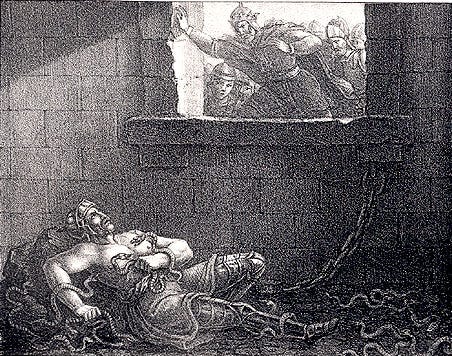
Ælla asks his prisoner to identify himself.
Ragnar refuses.
So the king orders him thrown into a pit filled with snakes.
At first, nothing happens.
The snakes cannot bite through Aslaug’s enchanted shirt. Ælla’s men remove it, and only then do the creatures begin sinking their fangs into Ragnar.
Still, Ragnar does not beg.
Instead, he warns that the young pigs will squeal when they learn what has happened to the old boar.
The pigs are his sons.
Ælla does not fully understand the warning until it is too late.
Later tradition transforms Ragnar’s final moments into a complete death song called the Krákumál. As venom moves through him, Ragnar remembers his battles and looks toward Odin’s hall. Death is no defeat because the Valkyries are already coming.
The poem leaves him ready to die laughing.
That is the perfect ending for Ragnar Lothbrok. Not because he survives, but because he controls how the story will remember his death.
A lesser hero escapes the snake pit.
Ragnar turns it into a throne.
When the Little Pigs Heard
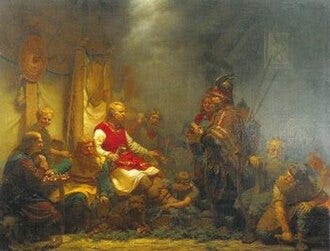
Ælla sends messengers to Ragnar’s sons and commands them to watch each brother carefully as the news is delivered.
The scene plays like a myth revealing character through grief.
- Hvitserk and Sigurd let their game pieces fall.
- Bjorn grips the spear he is carving so tightly that his fingers leave impressions in the wood. When the story is finished, he breaks it in two.
- Sigurd is holding a knife and cuts into his own hand without noticing.
- Ivar remains outwardly controlled, asking for every detail while his face changes color with the fury building inside him.
One son wants the messengers killed immediately.
Ivar lets them leave unharmed. His revenge will require more than rage.
The brothers gather their warriors and sail for England. Their father’s private death becomes the cause of a legendary invasion. Ragnar has become more powerful dead than he ever was alive.
Later tradition gives Ælla an equally terrible ending. Ragnar’s sons capture him and carve the shape of an eagle into his back, repaying the snake pit with an execution designed to become its own nightmare.
Tomorrow, we can ask how much of that vengeance story belongs to history.
Today, what matters is what the story accomplishes.
Ragnar’s death does not end his saga.
It unleashes it.
The King Arthur of the Viking Age
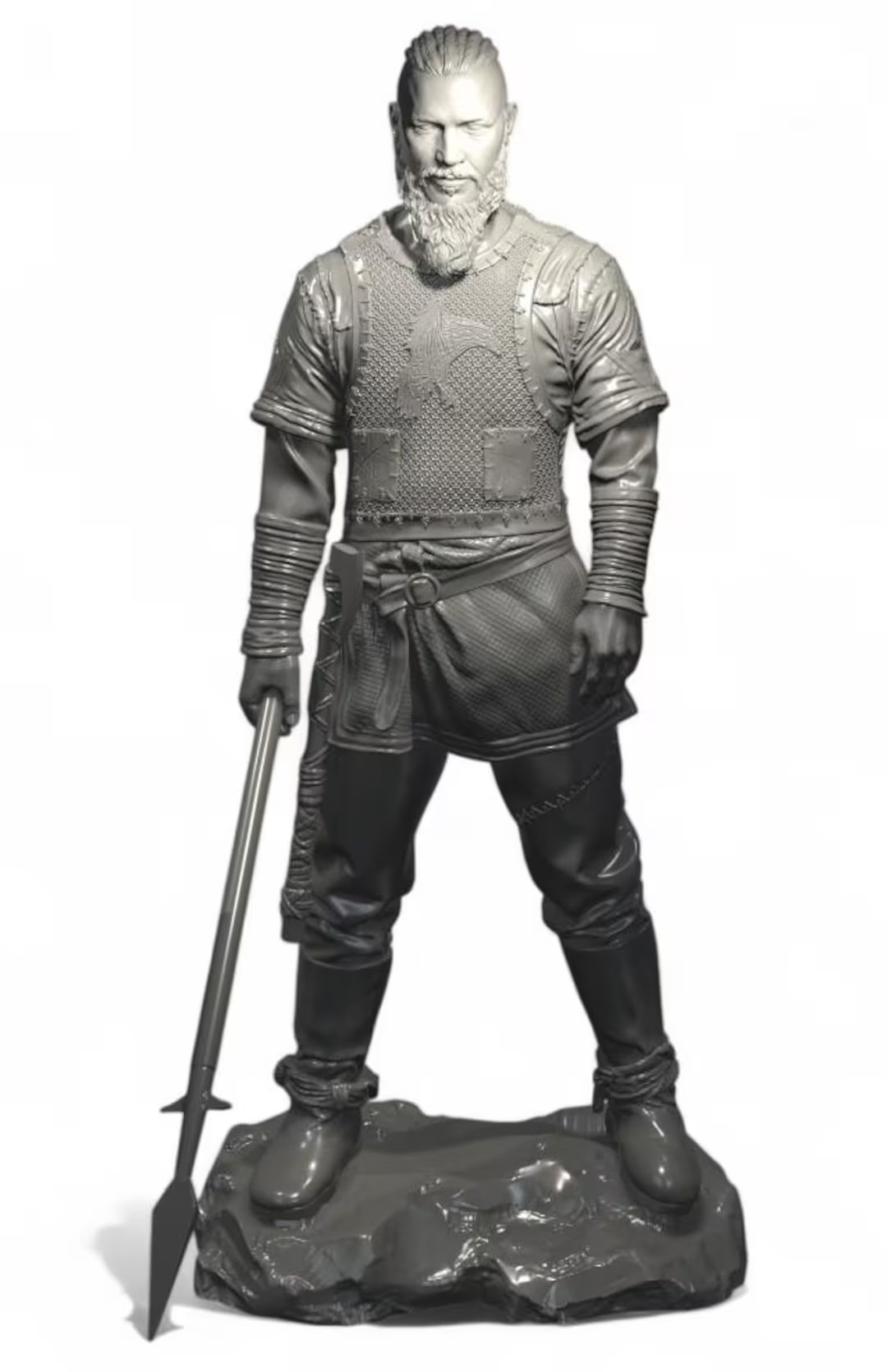
Ragnar Lothbrok and King Arthur are not the same character.
But they perform similar work.
Both stand in the uncertain space where scattered memories become national mythology. Their stories grow as each generation inherits them. New companions appear. New battles are added. Contradictions multiply. The king slowly becomes too large for any one lifetime.
Arthur receives Excalibur, Merlin, Camelot, Lancelot, and the Round Table.
Ragnar receives the serpent, the shaggy breeches, Lagertha, Aslaug, the extraordinary sons, the snake pit, and Valhalla.
The uncertainty does not weaken either legend. It gives storytellers room to keep building.
History asks which Ragnar existed. Mythology asks why one Ragnar was never enough.
Perhaps later generations needed a single king who could carry the entire Viking Age on his shoulders. Instead of disconnected raids, rival rulers, and warriors scattered across different lands, Ragnar gave them a family.
A father.
A fallen king.
A reason for the sons to cross the sea.
Every Generation Gets Its Ragnar
The television series Vikings did not uncover the final, historically correct Ragnar Lothbrok.
It created our generation’s Ragnar.
Its version is a restless explorer, questioning believer, ambitious ruler, imperfect husband, complicated father, and man who cannot stop reaching beyond the world he knows.
Assassin’s Creed Valhalla carries players into Ragnar’s afterlife, where his children, warriors, and reputation still shape the world after he is gone.
That is not separate from the old tradition.
It is the continuation of it.
Medieval storytellers transformed Ragnar into a serpent slayer, royal ancestor, doomed king, and father of conquerors. Modern storytellers transform him into a recognizable human being caught between ambition, family, faith, and legacy.
Different century.
Different audience.
Same fog.
The Name That Escaped the Pit
Ragnar loses his final battle.
His ships break.
His army falls.
He dies helpless at the bottom of a pit.
Yet the name escapes.
That may be the real heart of the legend.
Death comes for every warrior, king, farmer, and raider. Ragnar cannot defeat that enemy. What he can defeat is obscurity.
His sons carry his name across the sea. Storytellers carry it across centuries. Actors, writers, game developers, and audiences continue carrying it now.
The most Viking thing about Ragnar may be that his reputation kept raiding the future.
Tonight, Ragnar Lothbrok remains where legends are strongest: somewhere between the firelight and the fog.
He is serpent slayer, doomed king, father of conquerors, and the laughing warrior who refused to let death have the final word.
Tomorrow, we put down the saga, pick up the chronicle, and ask what actually happened when the Great Heathen Army reached England.
The Question That Lingers
If Ragnar Lothbrok was created from the lives of many men, does that make him less real—or does it make him the perfect hero for an entire age?