For years, Pokémon followed a familiar road.
New region.
New badges.
New Champion.
Then Gen VIII showed up, threw open the gates, made Pokémon battles feel like championship football, and later asked an even stranger question:
What if Pokémon were actually terrifying?
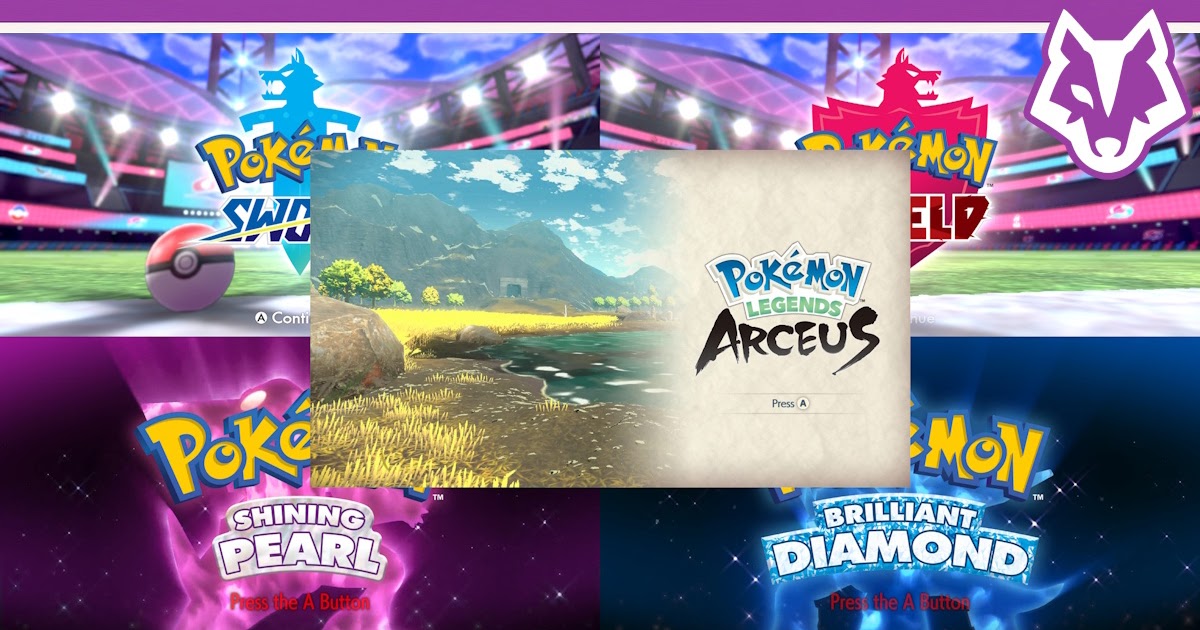
This week, we’re tackling Pokémon Sword and Shield and Pokémon Legends: Arceus — the era where Pokémon stopped carefully evolving… and started mutating in public.
Ask people about Sword and Shield and the conversation usually starts in one place:
Dexit.
The National Dex controversy dominated the lead-up. Fans were furious that not every Pokémon would make the jump to Switch. For a franchise built on Catch ‘Em All, that felt borderline sacrilegious.
Then the memes arrived:
“Charizard got preferential treatment again.”
“Hop won’t stop talking.”
“British Pokémon be like ☕🇬🇧”
“Pokémon but BIG.”
And honestly?
Some of that stuck.

Sword and Shield became “the controversial Pokémon game” for a lot of people. The one with flashy stadium battles, giant monsters, and a story many felt played too safely.
Then came Legends: Arceus.
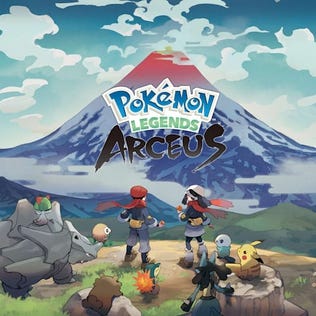
And suddenly the conversation changed.
Now the memes were:
“WHY IS THAT POKÉMON CHARGING ME?”
“Pokémon Dark Souls?”
“Alpha Garchomp is not a Pokémon. That is a felony.”
For people who never played it, Arceus gets described as Pokémon finally discovering open-world exploration.
For longtime fans, it felt closer to:
“Oh. They actually changed the formula.”
And both reputations are kind of true.
But they’re also incomplete.
Gen VIII wasn’t Pokémon losing its identity.
It was Pokémon trying to figure out what its next identity should be.
Messy? Absolutely.
Necessary? Probably.
Mechanics — Spectacle vs Survival
Sword and Shield feel immediately familiar.
You travel across the Galar region, catch Pokémon, battle rivals, defeat Gym Leaders, and work your way toward the Champion.
Classic Pokémon.
But the presentation changes everything.
Gym battles aren’t quiet little matches in small rooms anymore.
They’re sporting events.
Packed stadiums. Roaring crowds. Massive production energy.
Dynamax and Gigantamax take Pokémon battles and crank them into anime absurdity — your creatures literally growing skyscraper-sized while special music swells like the final round of a title fight.
It’s ridiculous.
And honestly?
Kind of awesome.
Then Legends: Arceus takes a flamethrower to the old formula.
Now you’re:
- Sneaking through grass
- Throwing Poké Balls in real time
- Crafting supplies manually
- Dodging incoming attacks yourself
- Researching Pokémon behavior instead of simply collecting them
And perhaps most importantly:
Wild Pokémon can absolutely ruin your day.
For the first time in the series, Pokémon don’t feel like collectible battle pets.
They feel like actual wildlife.
Dangerous wildlife.
That shift changes everything.
Story & Characters — Fame vs Fear
Sword and Shield tells a story about celebrity.
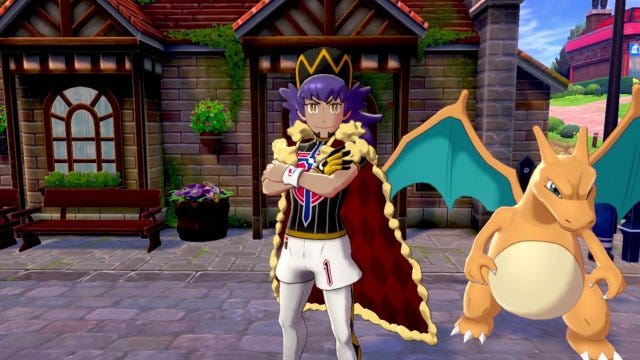
You’re climbing through Galar’s league system while the reigning Champion, Leon, hangs over everything like the undefeated face of the sport.
And yes.
He has a Charizard.
Yes, he mentions it.
A lot.
But underneath the memes, there’s something interesting here.
Galar treats Pokémon battling like professional athletics.
Gym Leaders are celebrities. Fans wear uniforms. Rivalries matter.
It feels closer to Premier League football than classic JRPG adventuring.
Hop — often unfairly clowned online — becomes surprisingly human because of that.

He isn’t just “your rival.”
He’s the younger brother of Leon (a legend) trying to figure out who he is outside that shadow.
That lands harder than people give it credit for.
Then Arceus flips the emotional tone entirely.
This is Pokémon in the distant past — Hisui, the ancient version of Sinnoh.
Humans and Pokémon don’t coexist comfortably yet.
People are scared.
And honestly?
Fair.
If a giant angry electric horse could vaporize me while I gather apricorns, I’d be cautious too.
Instead of becoming Champion, your job is understanding this world.
Cataloging Pokémon.
Studying behavior.
Building trust where none exists.
That changes the emotional hook from ambition to discovery.
World / Visuals / Atmosphere — Arena Lights vs Ancient Wilderness
Sword and Shield feel theatrical.
Galar is colorful, polished, and heavily stylized around British inspiration.
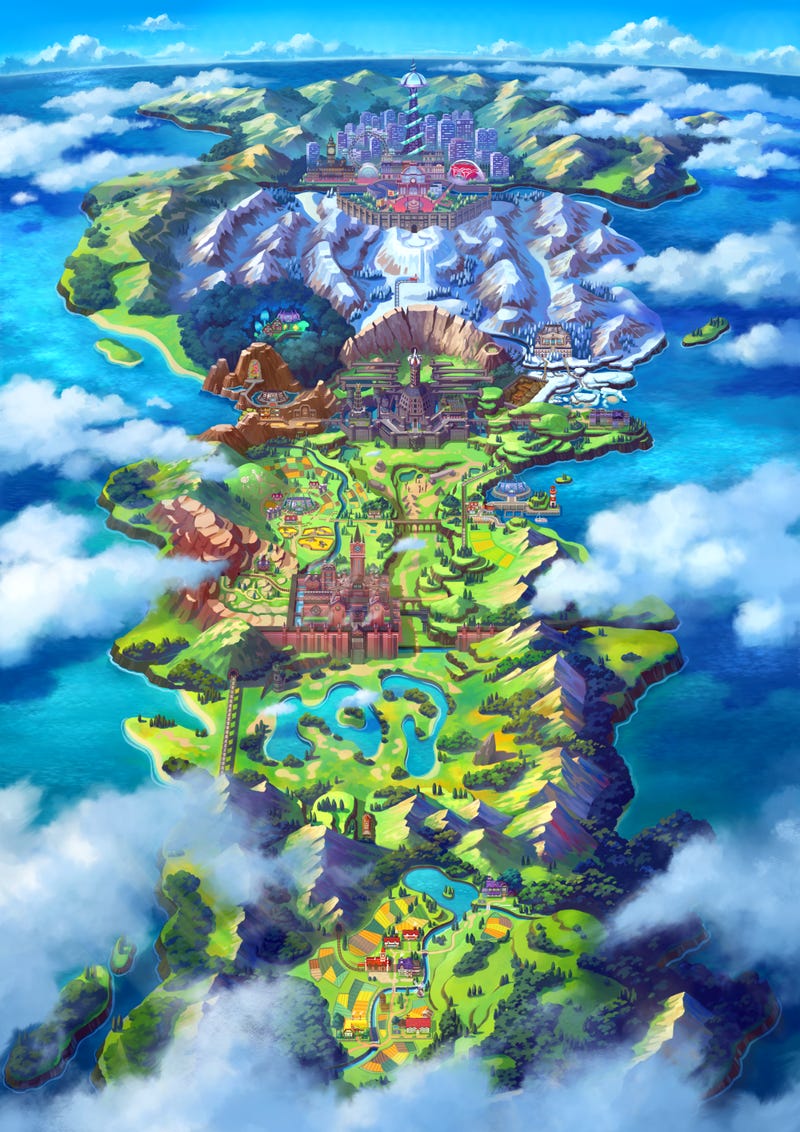
Rolling countryside. Industrial cities. Foggy routes. Massive stadiums.
The Wild Area is the real turning point.
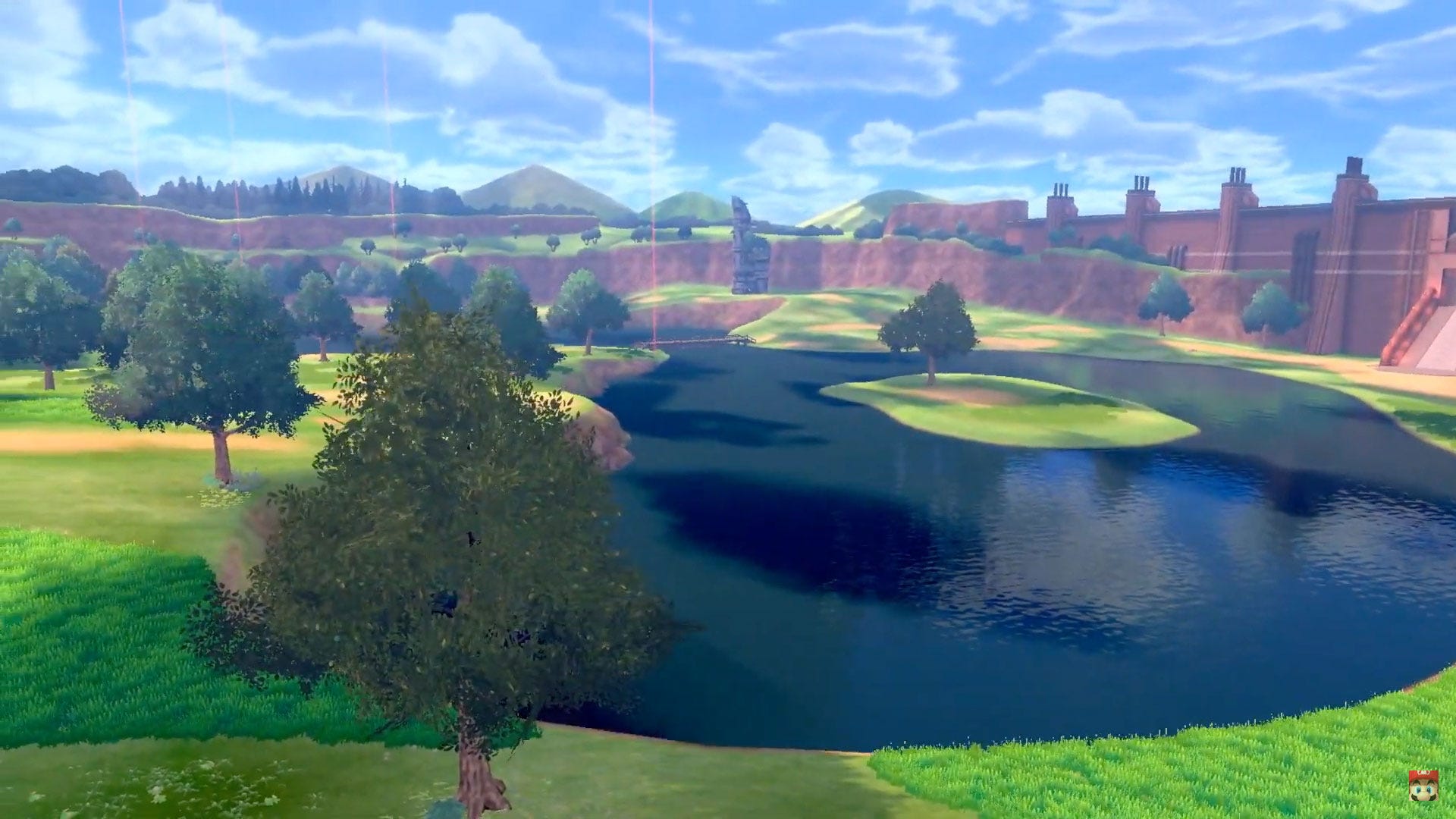
For the first time, players could freely move through a larger shared Pokémon space with dynamic weather and visible overworld encounters.
It was Pokémon dipping its toes into openness.
Arceus cannonballs into it.
Hisui feels wild.
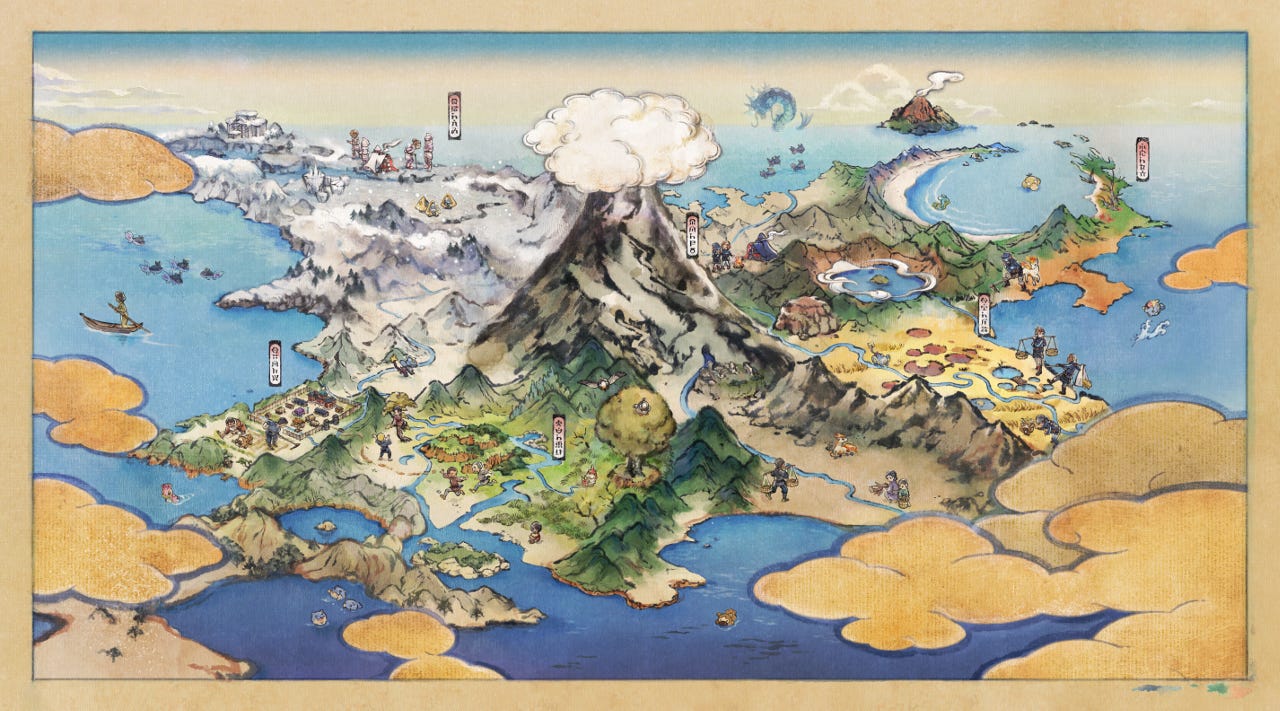
Lonely.
Ancient.
The music is quieter. The environments feel less curated.
Pokémon roam naturally instead of waiting politely in designated battle grass.
There’s a tension to exploration because you aren’t always safe.
Sword and Shield say:
Look at the spectacle.
Arceus says:
Survive the wilderness.
That contrast is fascinating.
Sound & Music — Pokémon Learns Scale
Sword and Shield’s soundtrack understands hype.
Gym battle themes are absolutely built for crowd energy.
The moment the chanting kicks in?
Chef’s kiss.
It’s one of the smartest musical choices in modern Pokémon because it reinforces the sports atmosphere completely.
You feel like you’re under lights.
Arceus goes the opposite direction.
Its soundtrack is moodier. More restrained.
The quieter instrumentation makes Hisui feel older and more mysterious.
And when major battles arrive?
That calm gives way to genuine tension.
Together, these games show Pokémon’s music evolving from catchy adventure themes into full atmospheric storytelling tools.
Gen VIII matters because Pokémon finally stopped pretending the old formula alone would carry it forever.
Sword and Shield experiment with spectacle.
Arceus experiments with immersion.
Neither is perfect.
But perfection wasn’t the point.
The point was movement.
For years, Pokémon had refined.
Now it was reinventing.
That matters because long-running franchises eventually face the same choice every sports dynasty, anime franchise, and blockbuster series faces:
Do you preserve tradition?
Or evolve and risk upsetting everyone?
Gen VIII chose evolution.
Messy, loud, controversial evolution.
And honestly?
That’s better than stagnation.
You can see Gen VIII’s fingerprints everywhere.
Sword and Shield embrace the same spectacle-first energy we see in modern sports broadcasts, anime tournament arcs, and live-service game events.
Arceus taps directly into what players increasingly want:
Freedom.
Exploration.
Emergent discovery.
Games like Breath of the Wild changed player expectations.
Arceus is Pokémon answering that pressure.
Sword and Shield walked so Scarlet and Violet could run.
Arceus kicked the door off the hinges while everyone else was still looking for the key.
QUESTION
Gen VIII gave us two wildly different futures for Pokémon:
Big, flashy stadium spectacle…
or dangerous, immersive wilderness exploration.
So here’s the question:
If Pokémon had to fully commit to one direction going forward… which future are you choosing?