Fantasy loves heroes. Chosen ones. Legendary swords. Ancient prophecies. Demon Lords threatening the entire world. Heroes destined to stand against them.
Goblin Slayer isn’t really about those people.
Somewhere in this universe, somebody else can worry about saving the world. Our hero has goblins to kill.
That might sound like a joke. Sometimes, it is.
But underneath the armor, brutality and dark fantasy is one of the more interesting interpretations of adventuring you’ll find in anime.
Because Goblin Slayer asks a surprisingly adult question: How dangerous does something have to be before helping someone becomes heroic?
A goblin isn’t particularly powerful. One experienced adventurer against one goblin? Probably not much of a fight.
But ten?
Twenty?
A nest of them underground, attacking from darkness, setting traps, exploiting terrain and overwhelming inexperienced adventurers who walked into the cave believing they were accepting an easy beginner quest?
That’s different.
Goblin Slayer understands something important. Something doesn’t need to be powerful to be dangerous.
And it doesn’t need to threaten the entire world to destroy yours.
The Elevator Pitch
In a fantasy world of adventurers, guilds, quests, magic and monsters, one particular adventurer has dedicated his life to exterminating a threat most experienced heroes consider beneath them: Goblins.
He doesn’t care about fame. He doesn’t care about glory. He isn’t searching for legendary treasure. If the quest doesn’t involve goblins, he’s probably not interested.
People simply call him Goblin Slayer.
Years earlier, goblins destroyed his village and murdered his family. He survived. Technically.
Because while Goblin Slayer escaped the attack, much of his life remains trapped inside it.
He’s obsessive. Emotionally withdrawn. Hypervigilant. Methodical to an almost frightening degree.
Every goblin nest is studied. Every entrance matters. Every weapon has a purpose. Every possibility gets considered.
Because somewhere underneath that armor is still someone who learned what happens when nobody is prepared.
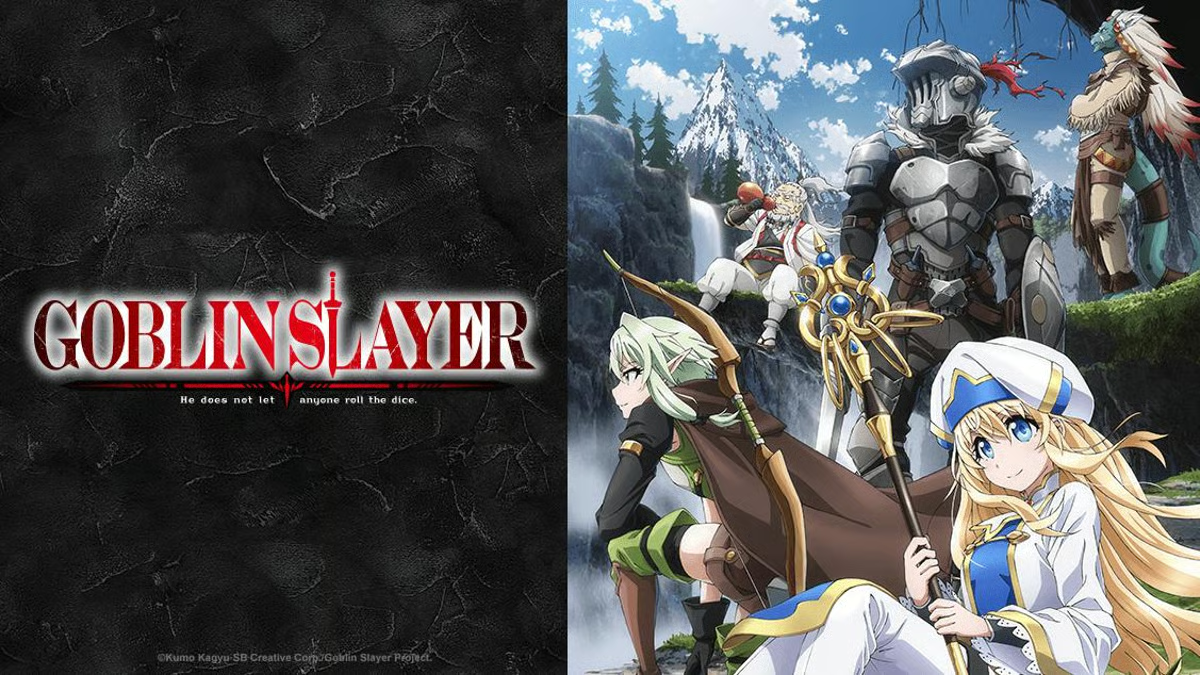
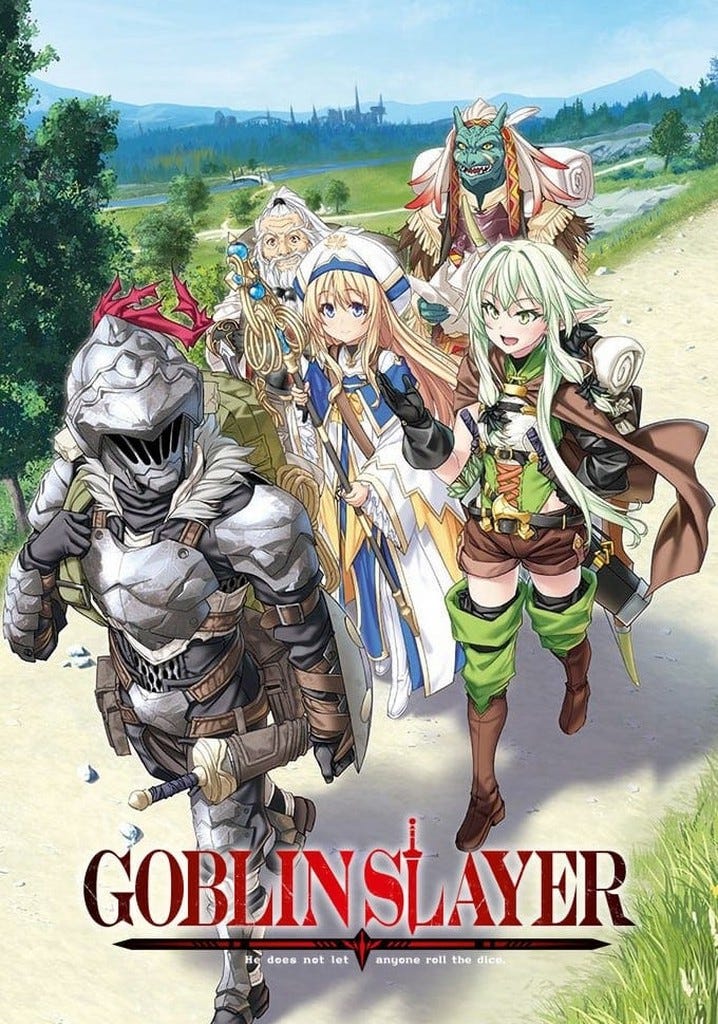
Then Goblin Slayer meets Priestess. And High Elf Archer. And Dwarf Shaman. And Lizard Priest.
Slowly, this man who built his entire existence around preventing one particular horror begins building something he never planned for.
A life.
Let’s Talk About That First Episode
Before recommending Goblin Slayer, we need to be clear about what kind of series this is. This is mature dark fantasy.
The series contains graphic violence, sexual violence, death and depictions of trauma. Its opening episode in particular is deliberately upsetting.
For some viewers, that material will understandably make Goblin Slayer a nonstarter. That’s okay. A “Should You Watch?” review isn’t much good if we don’t tell you what you’re signing up for.
But it’s also unfortunate that Goblin Slayer is sometimes reduced entirely to the shock surrounding its premiere.
Because while that episode establishes how horrifying goblins can be, the story that follows increasingly becomes interested in something else: What happens to the people who survive?
The wounds don’t necessarily disappear when the quest ends.
Some survivors carry fear. Some carry grief. Some carry guilt. Some carry trauma into whatever comes next. And nobody demonstrates that more clearly than Goblin Slayer himself.
He survived. That doesn’t mean he escaped.
The Familiar Version
The meme version of Goblin Slayer is wonderfully simple.
- Are there goblins?
- No?
- Not interested.
- Are there goblins?
- Yes?
- Souka. Let’s go.
And to be fair, that’s part of the fun.
Goblin Slayer’s absolute refusal to become distracted from his singular mission creates some of the series’ funniest moments.
But beneath the joke is a man who has constructed his entire identity around making sure what happened to him doesn’t happen to somebody else.
He’s not trying to defeat the Demon Lord. Other adventurers can handle that.
There’s a farmer somewhere whose daughter hasn’t come home. There’s a village that heard something moving outside last night. There’s a cave near somebody’s home that wasn’t there before. There’s a goblin quest sitting on the Guild board that experienced adventurers keep walking past because the reward isn’t worth their time.
That’s his quest.
And that’s where Goblin Slayer gets interesting.
Goblin Slayer — The Professional
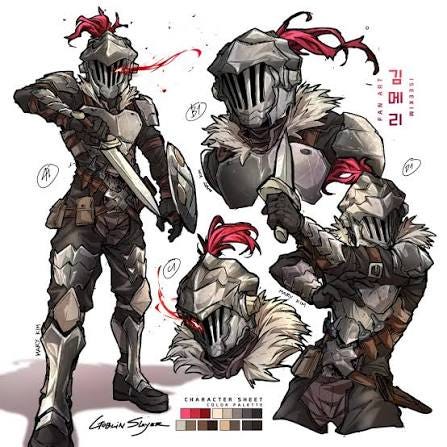
Goblin Slayer doesn’t fight like a legendary anime hero. He fights like somebody doing a dangerous job.
That’s one of my favorite things about him.
His equipment is practical. His weapons are expendable. His methods aren’t glamorous. If something works, he uses it.
- Fire.
- Smoke.
- Poison.
- Water.
- Terrain.
- Traps.
- Architecture.
- Psychology.
- Information.
Whatever gives him the advantage. Goblin Slayer’s greatest weapon isn’t his sword. It’s preparation.
He studies how goblins behave. He asks questions. He checks entrances. He considers escape routes. He thinks about what happens if the obvious plan fails.
And then he thinks about what happens if the backup plan fails too.
Because Goblin Slayer prepares for every possible outcome like someone who has already attended the funeral caused by insufficient preparation.
There’s an uncomfortable truth behind his competence. His expertise comes from trauma.
The same hypervigilance that makes him incredibly good at his job is also evidence of just how much of himself remains trapped in the past.
Goblin Slayer knows how to survive. The question is whether he knows how to live.
Priestess — Learning What Being an Adventurer Actually Means

Priestess may quietly have one of the most important journeys in the entire series.
When we meet her, she’s inexperienced. Hopeful. Unprepared for what adventuring can actually mean.
Then everything goes horribly wrong.
What follows isn’t simply a story about becoming stronger.
Priestess learns. She observes. She asks questions. She becomes more capable. More confident. More decisive.
Eventually, she isn’t simply the rookie Goblin Slayer has to protect. She becomes someone whose judgment he trusts. And importantly, Priestess doesn’t become Goblin Slayer.
She learns caution without surrendering all of herself to fear. She demonstrates that understanding how dangerous the world can be doesn’t require allowing that danger to define your entire existence.
That’s something Goblin Slayer needs to see.
High Elf Archer — We’re Supposed to Be Having an Adventure

High Elf Archer might be one of the most important people Goblin Slayer could possibly meet. Because she looks at his definition of adventuring and basically says: That sounds miserable.
Where’s the exploration? The discovery? The wonder?
Where are the incredible sights? The stories? The actual adventure?
Goblin Slayer sees adventuring primarily as work. High Elf Archer reminds him that it can also be life.
She’s not naive about danger. She knows monsters are real. She knows people can die. But she refuses to accept that surviving those dangers means surrendering everything joyful about the journey.
Goblin Slayer teaches her to take goblins seriously.
She teaches him that taking danger seriously and allowing danger to consume your entire life are not the same thing.
That’s a pretty damn good trade.
Dwarf Shaman — The Veteran

Dwarf Shaman brings the wonderfully grounded energy of someone who has been around long enough to understand that a successful adventure involves more than surviving the battle.
Magic matters. Experience matters. Preparation matters.
But so do food, drinks, jokes and the people sitting beside you afterward.
He’s capable without needing to constantly prove it.
And his easy relationship with the rest of the party helps turn what begins as a collection of adventurers into something resembling a genuine group of friends.
Goblin Slayer knows how to assemble a party for a mission. Dwarf Shaman understands how to enjoy having one.
Lizard Priest — Perspective, Faith and Cheese
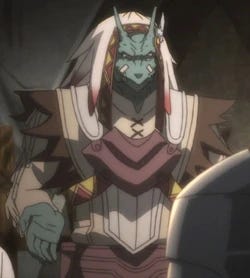
Lizard Priest is one of those characters who immediately makes a fantasy world feel larger.
He comes from a different culture. A different spiritual tradition. A different way of understanding the world.
He’s powerful, intelligent and frequently brings a perspective nobody else in the group would naturally have.
And then he discovers cheese. Glorious cheese.
For all the darkness surrounding Goblin Slayer, details like Lizard Priest’s absolute delight over food matter.
These people aren’t simply collections of RPG abilities waiting for combat.
They eat. Drink. Argue. Laugh. Develop inside jokes. Enjoy each other’s company.
They live.
And slowly, Goblin Slayer begins participating.
Cow Girl — Someone Is Waiting at Home
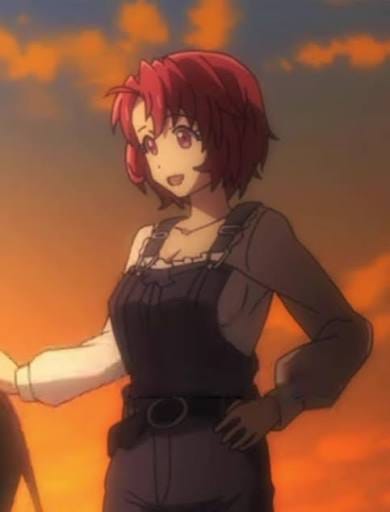
Cow Girl represents something completely different.
Home. Routine. Normalcy. Someone waiting for Goblin Slayer to return.
Their shared history connects her to the person he was before goblins consumed his existence.
And her presence raises a possibility Goblin Slayer barely seems capable of imagining early on: Maybe there could someday be something after the mission.
Maybe he could come home. Eat dinner. Sleep. Wake up. Have responsibilities that don’t involve killing something. Live an ordinary day. Then another.
Cow Girl represents the possibility that Goblin Slayer could eventually become something other than the armor.
Guild Girl — The Work Still Matters
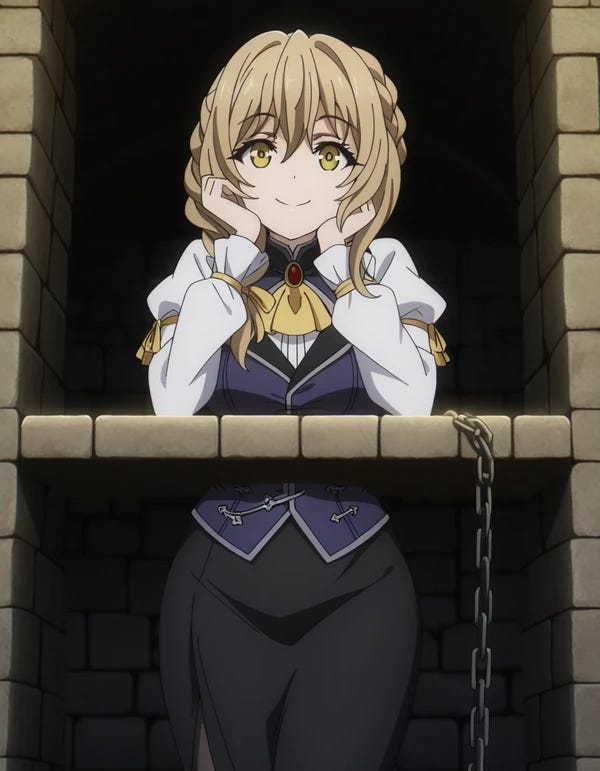
Guild Girl gives us another important perspective.
The Guild understands the problem. Goblin quests aren’t glamorous. The rewards frequently aren’t impressive. Experienced adventurers have bigger ambitions.
- Dragons.
- Demons.
- Ancient ruins.
- Treasure.
- Prestige.
Nobody becomes legendary because they protected Farmer Steve’s goats from six goblins. Farmer Steve probably cares quite a bit.
Guild Girl recognizes the value of work other adventurers overlook. And that feeds directly into one of Goblin Slayer’s strongest ideas: A problem doesn’t become unimportant simply because important people aren’t interested in solving it.
Adventuring Is a Job
This may be my favorite part of Goblin Slayer’s universe.
Adventurers aren’t superheroes. They’re workers in an extraordinarily dangerous profession.
- There are ranks.
- Contracts.
- Rewards.
- Specialties.
- Equipment costs.
- Information.
- Experience.
- Training.
- Mistakes.
Some adventurers are incredibly capable. Some are beginners. Some overestimate themselves. Some underestimate the assignment. Some get hurt. Some retire. Some don’t come home. And some come home carrying things nobody else can see.
That gives the Guild more weight than a simple video-game quest dispenser.
These people are accepting contracts to deal with genuinely dangerous situations. And the danger doesn’t politely scale itself to whoever accepted the quest. That’s the mistake inexperienced adventurers can make with goblins.
They’re low-level monsters. That doesn’t make them safe.
Goblins Aren’t Powerful. They’re Dangerous.
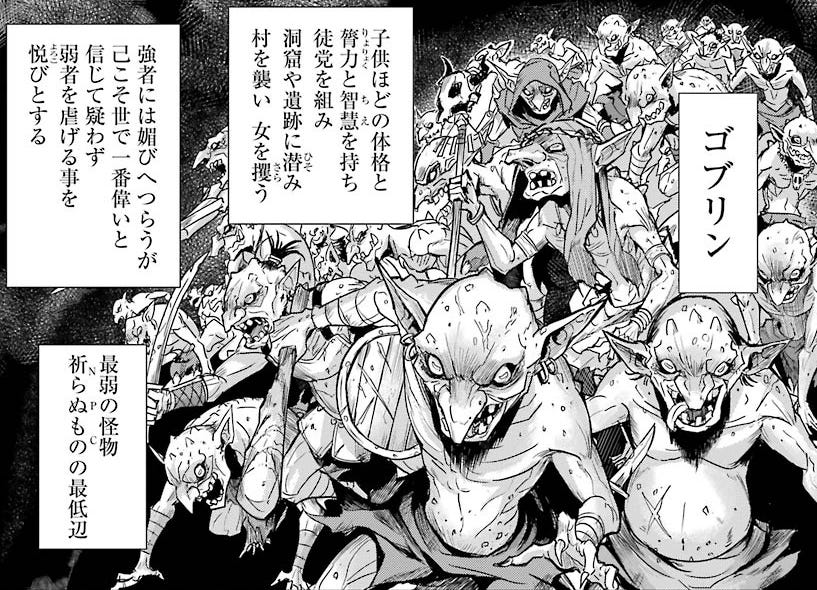
One goblin? A competent adventurer can probably handle it.
A handful in an open field? Things are getting more complicated.
A horde? Different conversation.
A nest underground? Now you’re entering their environment.
They know the tunnels. They know the exits. They can hide. Ambush. Surround. Set traps. Call reinforcements.
And suddenly the adventurer who confidently accepted an “easy goblin quest” is discovering the difference between being capable of killing a goblin and being capable of surviving goblins.
That’s where Goblin Slayer finds an unusual amount of realism.
Danger scales. Numbers matter. Terrain matters. Information matters. Preparation matters. Experience matters. Fear matters. Fatigue matters.
One weak opponent can still kill you. Enough weak opponents absolutely can. And sometimes the most dangerous sentence an adventurer can say is: “They’re only goblins.”
Combat — Preparation Beats Power
That philosophy makes Goblin Slayer’s fights incredibly satisfying. Combat frequently becomes a problem to solve.
What’s the terrain? How many entrances are there? How many enemies? What weapons are available? What spells remain? Can the goblins escape? Can they surround us? What happens if Plan A fails?
Goblin Slayer isn’t simply waiting for his power level to exceed his opponent’s. He’s trying to control as many variables as possible before the fight begins.
And because goblins can learn and adapt too, experience never becomes an excuse for complacency. He respects the threat. Not because goblins are individually mighty. Because he’s seen what happens when people don’t.
The Cost of Surviving
And Goblin Slayer doesn’t always treat survival like the end of the story. That’s important.
Fantasy adventures can make trauma remarkably temporary. Fight monster. Survive. Collect reward. Gain experience. Next quest.
This universe is willing to acknowledge that someone can physically survive an attack and still carry it afterward.
Fear doesn’t necessarily disappear because you’re safe now. Memories don’t vanish because the monster is dead. And Goblin Slayer himself is the ultimate example.
His village was destroyed when he was a child. Years later, that night still dictates enormous portions of his behavior.
His preparation. His isolation. His obsession. His inability to imagine much of a future beyond exterminating goblins.
He survived the attack. But surviving something and recovering from it aren’t the same thing. That makes his growing relationships with the others more meaningful.
They’re not magically curing him. They’re giving him experiences that aren’t defined by what happened.
New memories. New relationships. New reasons to come home.
The Emotional Core: Learning to Live
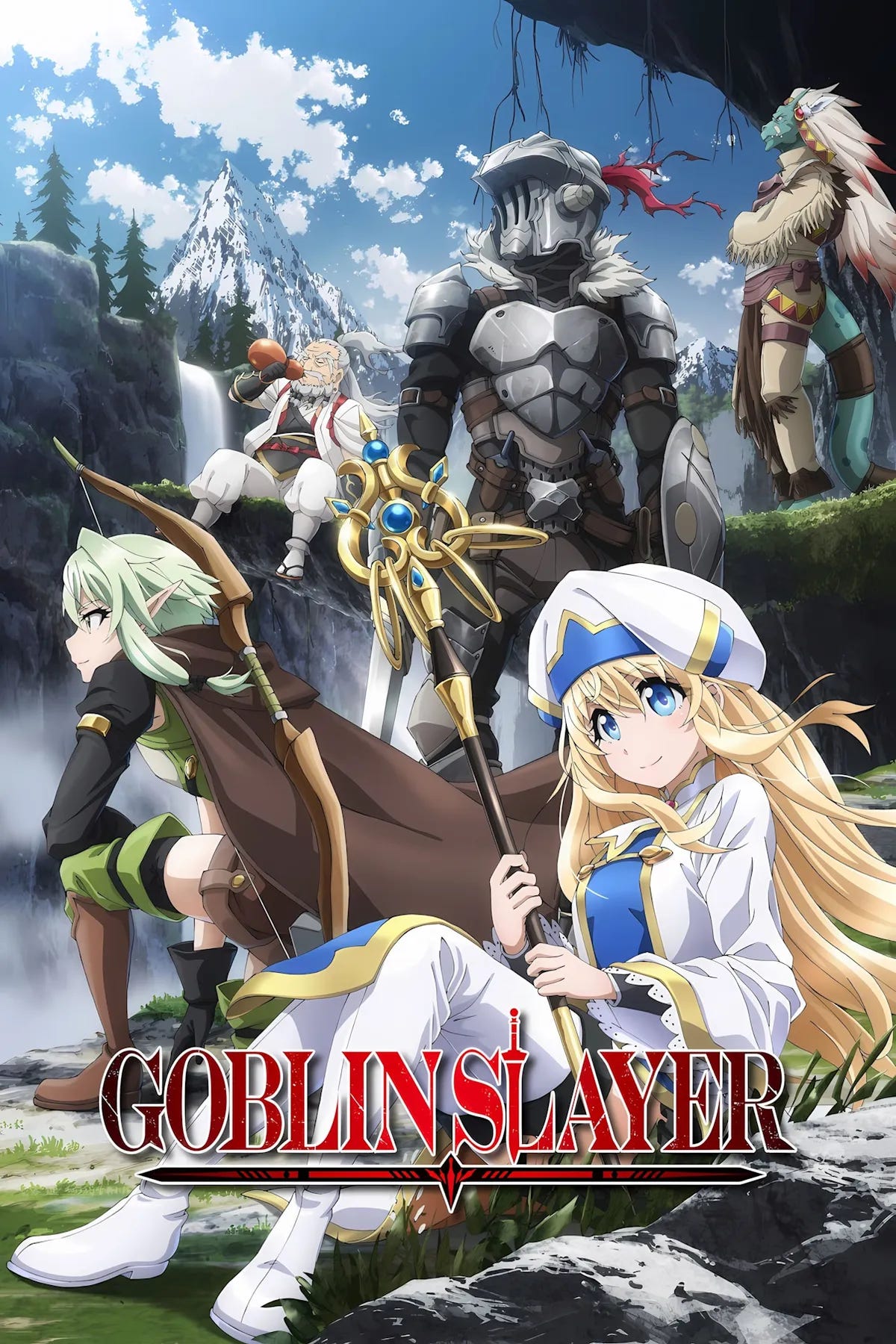
Killing goblins isn’t Goblin Slayer’s character arc. Living is.
At the beginning, he almost seems less like a person than a function.
Goblins exist. Therefore, he kills goblins.
Then people start getting through the armor.
Priestess trusts him. High Elf Archer drags him toward something resembling adventure. Dwarf Shaman shares meals and drinks. Lizard Priest discovers the sacred glory of cheese. Cow Girl waits for him. Guild Girl values what he does. Other adventurers begin seeing him differently.
There are conversations.
- Meals.
- Jokes.
- Invitations.
- Celebrations.
- Friendships.
And slowly, almost painfully, a life begins forming around the mission. That’s the beautiful thing about his party.
They don’t necessarily need Goblin Slayer to stop killing goblins. They need him to understand that killing goblins doesn’t have to be the only reason he exists.
He can take danger seriously without allowing danger to become his entire world. He can prepare for tomorrow while still enjoying tonight. He can protect people.
And then come home.
Heroism Without Glory
Fantasy usually points us toward the biggest threat.
The Demon Lord. The dragon. The army. The apocalypse. The thing threatening everyone.
Goblin Slayer points the camera toward the quest nobody wants.
There’s probably another hero somewhere dealing with the Demon Lord.
Good. Somebody should.
Goblin Slayer is helping the people whose problems aren’t important enough to become legends. And there’s something deeply adult about that.
Most good done in the real world isn’t legendary.
There aren’t songs. Nobody writes an epic. Sometimes somebody simply notices a problem, shows up, does an unpleasant job correctly and makes another person’s tomorrow slightly safer.
The Demon Lord might threaten the entire world. A goblin nest might threaten one village.
If it’s your village? That distinction probably doesn’t mean a damn thing.
Let’s Be Fair
Goblin Slayer isn’t going to be for everyone.
Its depictions of violence and sexual violence can be extremely difficult to watch, particularly early in the series.
Some viewers may reasonably decide that material crosses a line for them.
The show’s fixation on goblins is intentionally repetitive, and viewers looking for a traditional fantasy epic centered on enormous world-changing events may find its priorities strange.
Its characters also lean heavily into recognizable fantasy and tabletop archetypes. But those archetypes are part of the point.
Goblin Slayer isn’t trying to reinvent every component of fantasy. It’s interested in examining what living inside that fantasy world might actually require.
What does adventuring look like when equipment matters? When preparation matters? When the beginner quest can kill you? When surviving something doesn’t automatically mean you’re okay? And when the least glamorous job on the board still needs somebody willing to accept it?
That’s where the series earns its identity.
Who Should Watch Goblin Slayer?
Give Goblin Slayer a chance if you enjoy:
- Dark fantasy
- Tactical combat
- Tabletop RPG-inspired worlds
- Adventuring parties
- Methodical protagonists
- Fantasy worlds where preparation and equipment matter
- Stories about trauma and recovery
- Found family
- Characters slowly learning to trust each other
- Fantasy that treats adventuring like an actual profession
You may want to skip it if graphic violence or sexual violence is a hard boundary.
And that’s worth repeating.
This isn’t a series where I’d tell somebody to simply push through material they’re deeply uncomfortable watching because “it gets good.”
Know what you’re walking into.
Make the decision that’s right for you.
Why Goblin Slayer Matters
There’s an interesting contradiction at the center of Goblin Slayer.
Our protagonist has dedicated his life to something the rest of his profession largely considers beneath them.
He isn’t fighting the strongest enemy. He isn’t accepting the most prestigious quests. He isn’t saving the greatest number of people. He’s simply going where he’s needed.
Again.
And again.
And again.
Because someone has to.
That makes Goblin Slayer an unexpectedly compelling story about service. Not glorious service. Not legendary service.
Necessary service.
But the longer the story continues, the more that idea begins working both ways.
Goblin Slayer spends his life showing up for people who need him. Eventually, other people start showing up for him.
Priestess.
High Elf Archer.
Dwarf Shaman.
Lizard Priest.
Cow Girl.
Guild Girl.
His world gets bigger. And maybe that’s the victory Goblin Slayer never realized he needed.
Not defeating every goblin. Not erasing what happened. Not becoming some legendary hero.
Just becoming a person capable of imagining tomorrow as something other than another mission.
Ctrl+Binge Final Take
Goblin Slayer begins with a man who appears to have reduced his entire existence to one purpose.
Goblins exist. He kills goblins.
Simple.
Except the longer we travel with him, the less simple it becomes.
Priestess needs him. His party trusts him. Cow Girl waits for him. Guild Girl believes in the work.
People invite him to dinner. They joke with him. Argue with him. Fight beside him. Expect him to come back.
And somewhere between quests, preparations, victories, meals and ridiculous conversations about cheese, something starts happening Goblin Slayer never planned for.
He builds a life.
Maybe heroism isn’t always defeating the Demon Lord.
Sometimes it’s noticing the monster everyone else considers beneath them. Sometimes it’s doing the ugly job because somebody has to. Sometimes it’s making sure somebody gets home.
The world might never know their name.
That’s okay.
You don’t have to save the world to save someone’s world.
Join the Conversation
Fantasy gives us legendary heroes all the time.
But what actually makes someone heroic?
Is it the size of the threat they defeat—or the people who get to go home because they showed up?