The puck drops tonight.
And somewhere months from now, after 84 regular-season games, four rounds of playoff hockey, bruises, broken sticks, overtime heartbreak, playoff beards, and probably at least one goalie temporarily becoming a supernatural being, somebody is going to lift the Stanley Cup.
That journey starts now.
The NHL’s 2026–27 regular season begins tonight, September 29, and for the first time since 1993–94, every team is playing an 84-game schedule.
So if you have ever watched hockey and thought:
“This looks fun as hell, but I have absolutely no idea what is happening…”
Perfect.
You are exactly who this is for.
Because hockey can look intimidating from the outside.
Everybody is moving ridiculously fast. Players keep jumping on and off the ice. Someone shoots the puck to the other end, and everybody suddenly stops because of something called icing.
Another guy crosses a blue line half a second too early and apparently that is a crime.
Then two players throw their gloves down and start punching each other while everyone acts like this is somehow still within the larger framework of organized sport.
Hockey has its own language. But the basic game? Much simpler than it looks.
Get the puck into their net more times than they get it into yours.
Everything else is just the beautiful chaos surrounding that idea.
The Surface Version
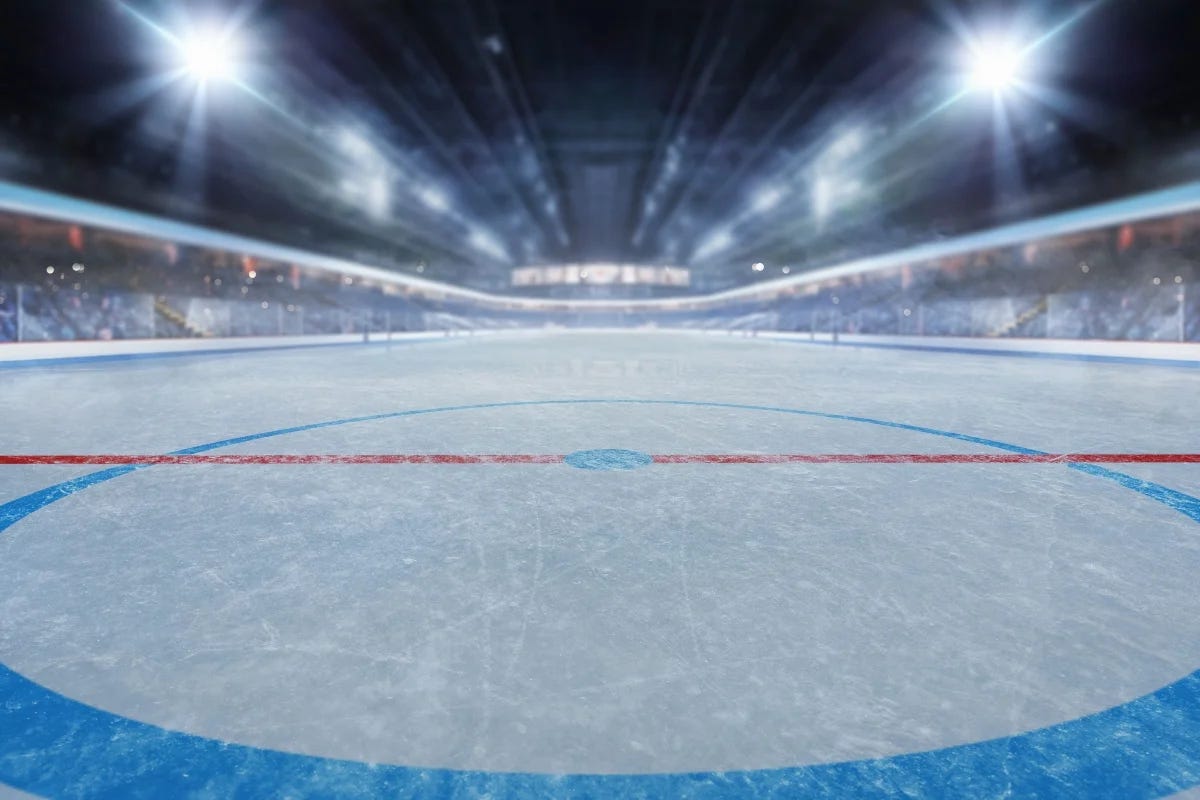
At the surface level, hockey is easy to describe.
- Two teams.
- Ice.
- Skates.
- Sticks.
- A puck.
- Two nets.
- More goals wins.
- Done.
That is technically correct.
It also explains hockey about as well as saying football is “guys trying to carry a ball to the other end.”
The fun is in everything happening between the goals.
Hockey is speed. Angles. Spacing. Contact.
Substitutions happening while the game is still going.
Goaltenders making saves they probably should not physically be capable of making.
Players turning a loose puck along the boards into a scoring chance three seconds later.
It is one of the few sports where you can watch a play develop slowly and then suddenly realize everybody is moving at terrifying speed.
And unlike football, there is no reset after every play. Unlike baseball, there is no pause between pitches.
Hockey flows.
Sometimes beautifully. Sometimes violently. Sometimes directly into the boards.
The easiest mistake a newcomer can make is trying to understand everything at once.
Do not.
You do not need to know every defensive system. You do not need to identify a forecheck. You do not need to understand Corsi. You definitely do not need to know why somebody on television is yelling about expected goals before you even know why the whistle just blew.
Start with the landmarks.
- Who is attacking?
- Where is the puck?
- Where are the blue lines?
- Who has more players on the ice?
- And is the goalie currently standing where the goalie is supposed to be?
If you can follow those questions, the rest starts revealing itself.
The Main Drive
First: Who Is Out There?
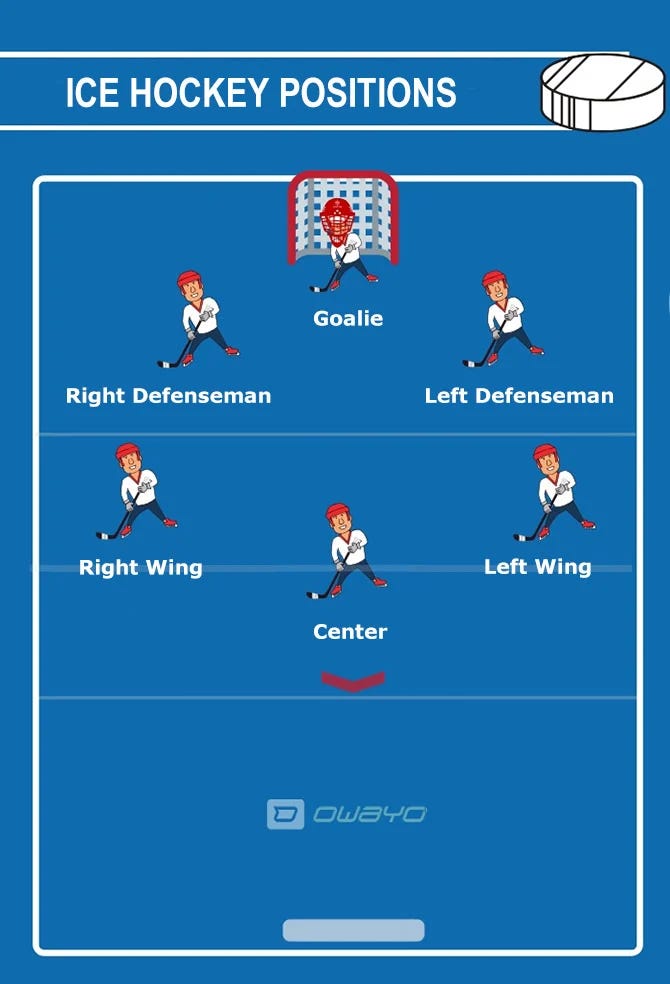
Each team normally has six players on the ice:
A goalie.
Two defensemen.
And three forwards — usually a center and two wings.
The forwards are generally responsible for generating offense, although modern hockey is much more fluid than simply saying “forwards attack and defensemen defend.”
Defensemen join the rush. Forwards come back to defend. Everyone moves.
The goalie, meanwhile, has the least complicated job description and possibly the most horrifying actual job:
Stop the puck.
A piece of vulcanized rubber is coming toward you at very high speed while people with sticks obstruct your vision.
Good luck.
Three Periods, Not Quarters
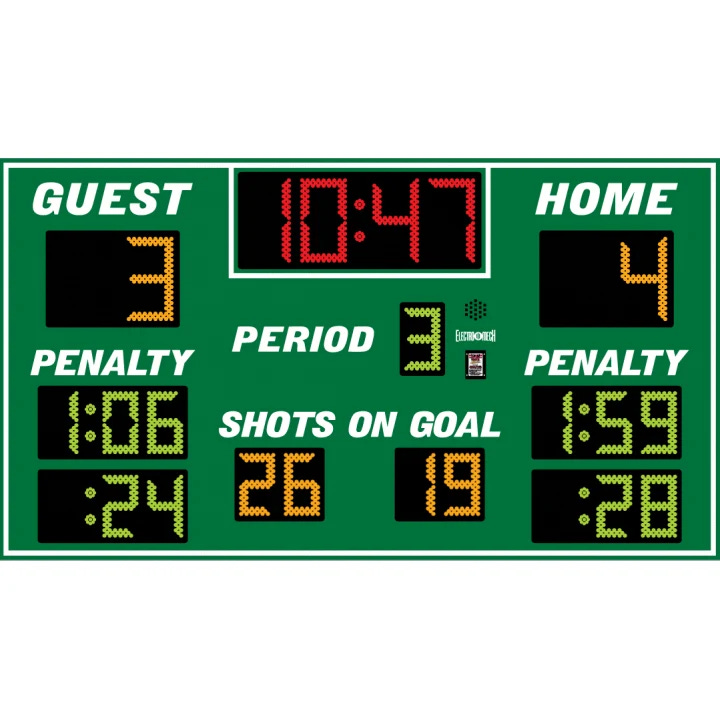
An NHL game is played in three 20-minute periods.
The clock stops during whistles, so those are 20 minutes of actual game time, not a running clock. Hockey moved to the three-period format more than a century ago, and it remains one of the sport’s defining rhythms.
Teams switch ends after each period.
And the second period has a fun little wrinkle called the long change.
Because the benches are farther from each team’s defensive zone during the middle period, tired players can have farther to skate before reaching the bench.
That becomes important because hockey players change constantly.
Which brings us to one of the strangest things for a newcomer.
Why Does Everyone Keep Jumping Over the Boards?
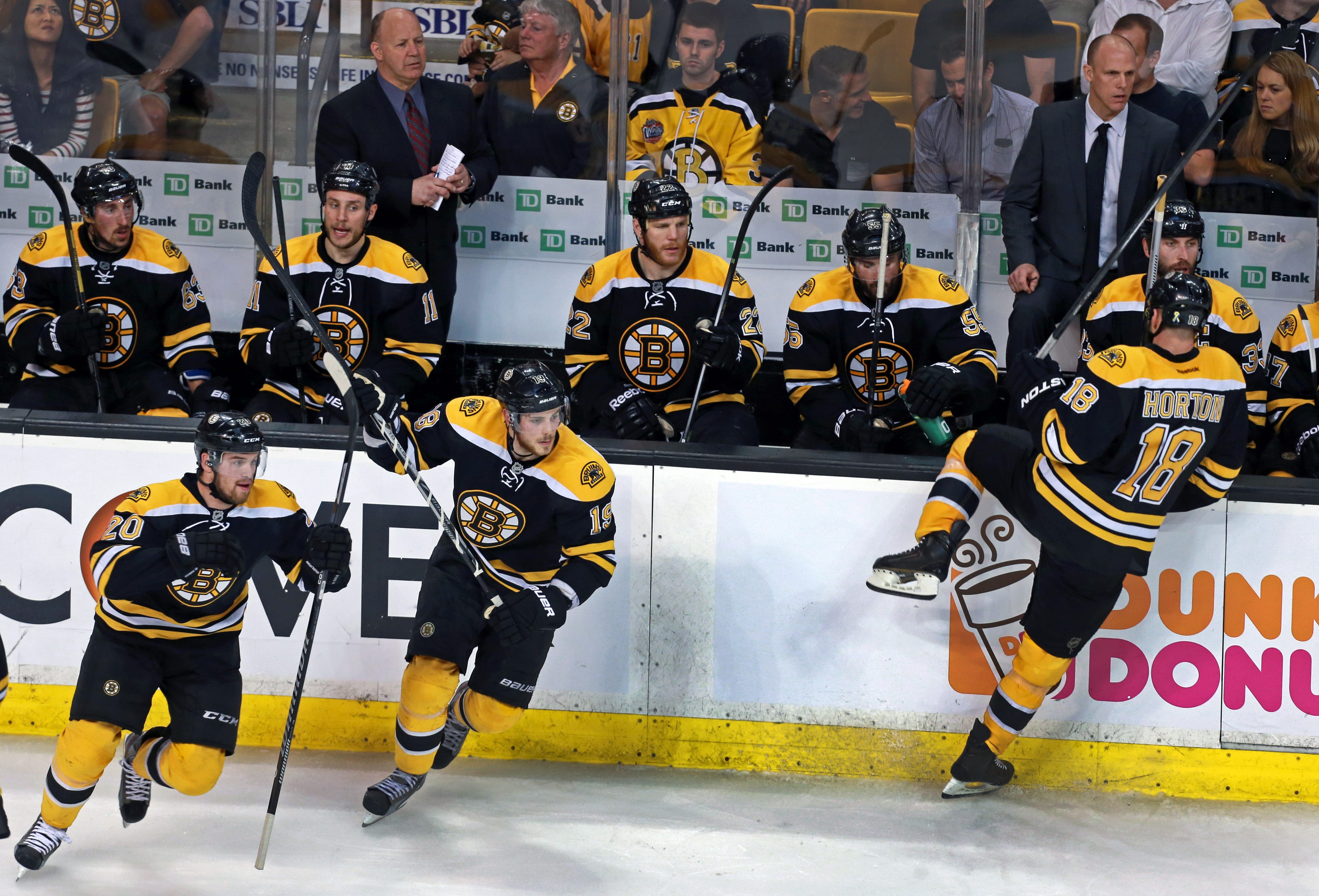
Because hockey is exhausting, players generally do not stay on the ice for long uninterrupted stretches. Instead, teams rotate groups of players — lines and defensive pairings — throughout the game.
And unlike most sports, substitutions can and definitely will happen while play is still going.
This is called changing on the fly.
So yes, the first few times you watch hockey, it can look like random people are abandoning the game while five other dudes jump over a wall.
There is a system. Usually.
A good line change keeps fresh players on the ice without surrendering possession or giving the opponent an easy scoring chance.
A bad line change can turn into:
“Oh no.”
Followed shortly by:
“Why is that guy completely alone in front of the goalie?”
Power Plays and Penalty Kills
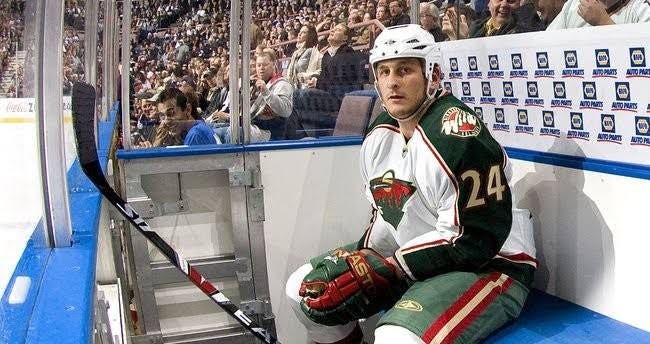
Then someone commits a penalty.
- Tripping.
- Hooking.
- Slashing.
- High-sticking.
- Interference.
- Cross-checking.
And now things get fun.
Most ordinary penalties send a player to the penalty box for two minutes, leaving his team shorthanded.
That gives the other team a power play.
Usually:
Five skaters against four.
The team with the extra player spreads the defense out, moves the puck quickly, and tries to create a clean shooting lane.
The shorthanded team is now on the penalty kill.
Their goal becomes survival.
- Block shots.
- Clear the puck.
- Protect the middle.
- Burn the clock.
A power play is one of the easiest ways for a newcomer to suddenly see hockey’s strategy clearly.
One team has an advantage.
The other is trying to endure it.
Offside, Without a Law Degree
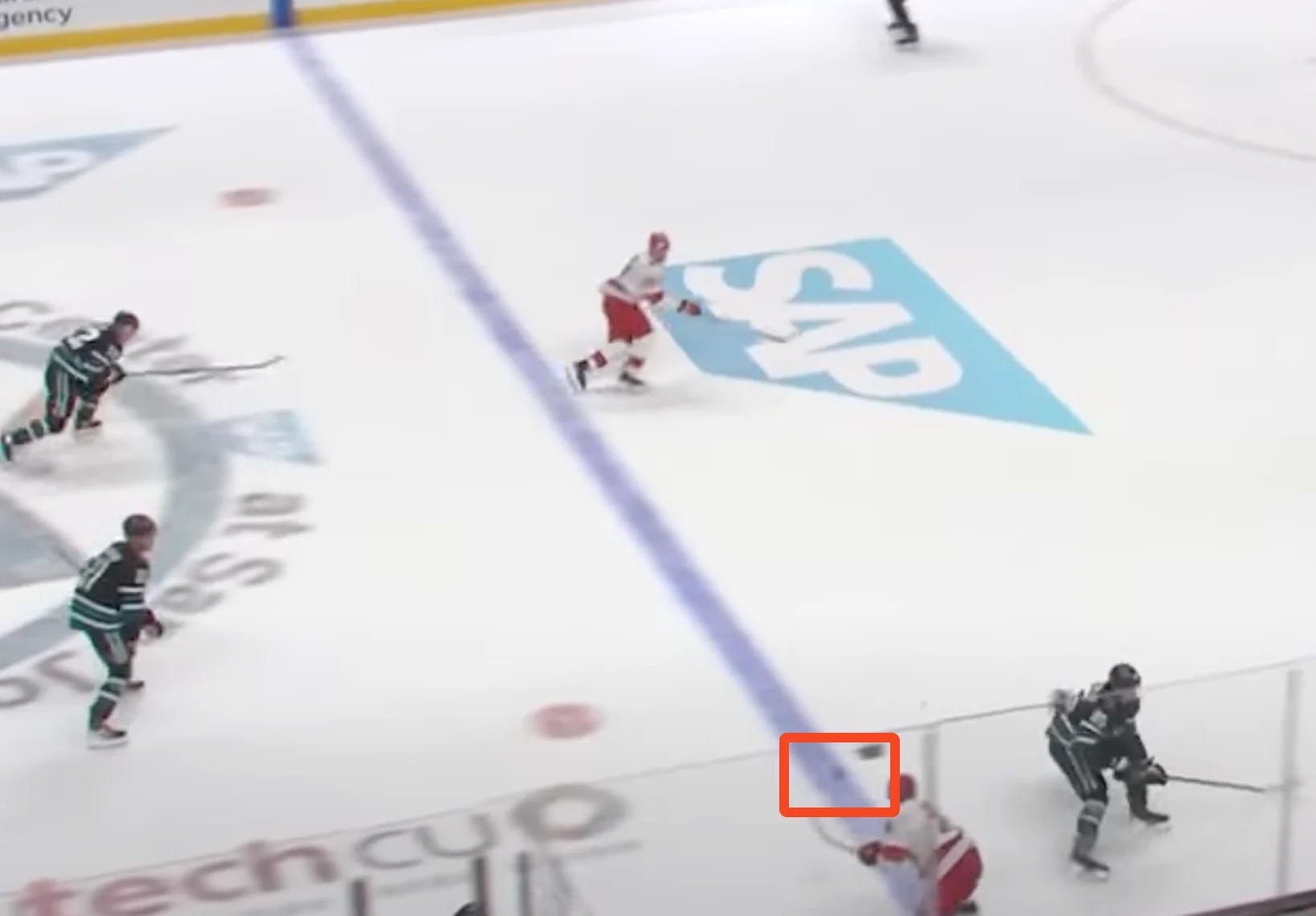
Offside sounds harder than it is.
The offensive team cannot send an attacking player across the opponent’s blue line before the puck enters the attacking zone.
Think of the blue line like a starting gate.
Puck first. Attackers second.
That is the beginner version.
There are delayed offsides and various details you can worry about later. For now, if everyone suddenly stops because one guy crossed a blue line slightly too early? That is probably offside.
The NHL’s official video rulebook has an entire section devoted to offside situations, which should tell you two things:
- It matters.
- Hockey fans have found plenty of ways to argue about it.
Icing: The Rule Everyone Has to Learn Once
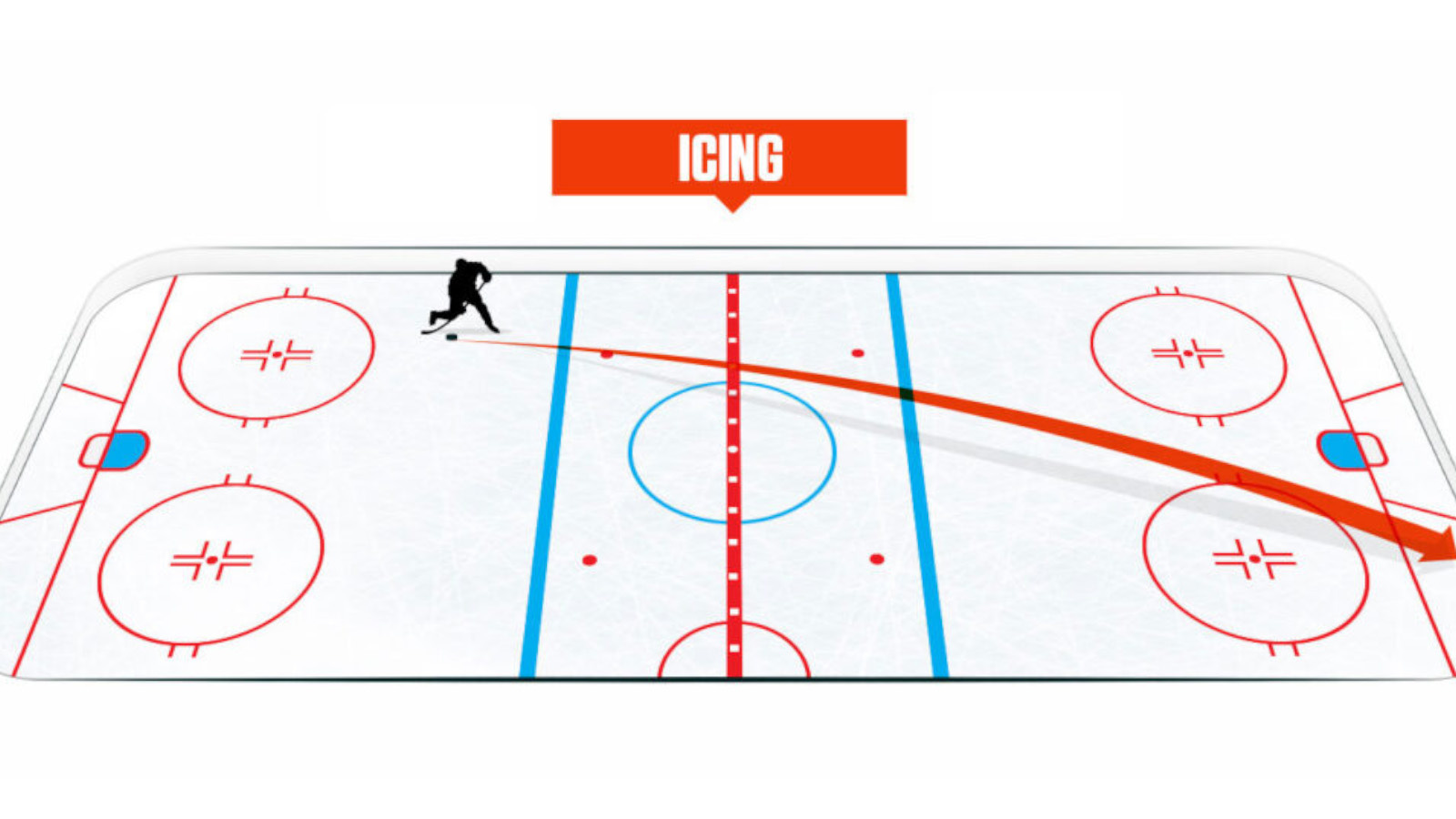
Icing might be the classic newcomer question.
Here is the easiest explanation.
You usually cannot stand deep in your own end and just launch the puck all the way past the opponent’s goal line to escape pressure.
If you do, and the conditions for icing are met, play stops and the faceoff comes back into your defensive zone.
There is another punishment too:
The team that iced the puck generally cannot simply make a normal line change before the ensuing faceoff.
So if your exhausted players launch the puck down the ice hoping for a breather?
Congratulations.
They may now have to stay out there.
That is why icing is not just a random whistle.
It punishes a team for simply throwing the puck away to escape danger.
Checking: Yes. Attempted Murder: No.
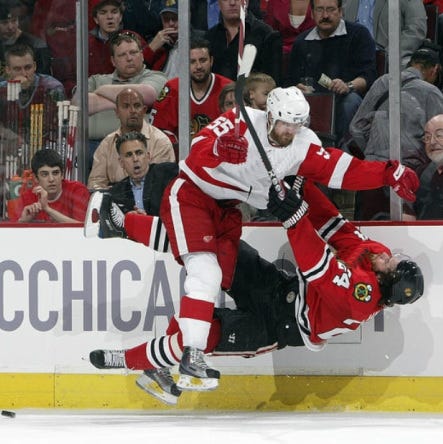
Hockey is physical.
…Very physical.
Body checking is part of the sport. But “hockey allows hitting” does not mean “anything goes.”
There are rules against boarding, checking from behind, illegal checks to the head, elbowing, kneeing, clipping, and plenty of other ways somebody can turn normal physical contact into a penalty.
The basic idea is:
Use your body to separate an opponent from the puck.
Not:
Launch somebody into next Tuesday.
Those two concepts occasionally become confused.
Hence the penalty box.
Okay, So What About Fighting?
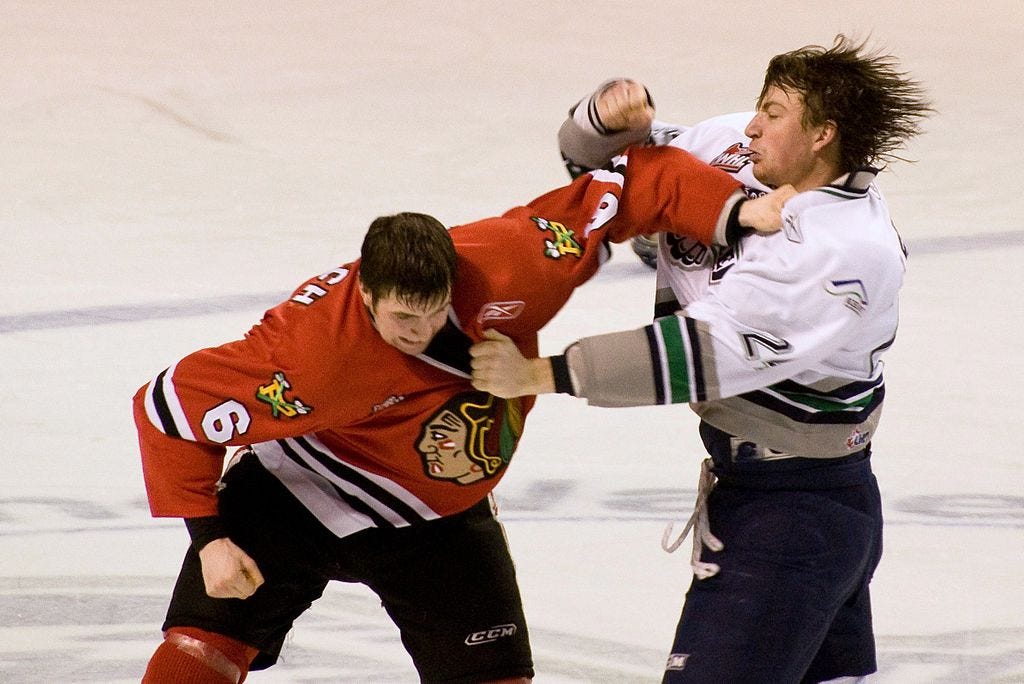
Yes.
Fighting happens.
No.
That does not mean fighting is simply legal with no consequences.
A player who fights receives a major penalty, and the NHL rulebook contains additional penalties for things like instigating, continuing an altercation, or acting as the aggressor.
Hockey has a complicated cultural relationship with fighting.
For generations, fighting has been treated by many players and fans as part of the game’s internal policing system and emotional release valve.
Others have questioned how necessary it remains.
For the newcomer, just remember:
- Yes, they are really fighting.
- No, the referees have not forgotten the rules.
- And yes, they are absolutely going to sit in a box afterward.
What Happens if the Game Is Tied?
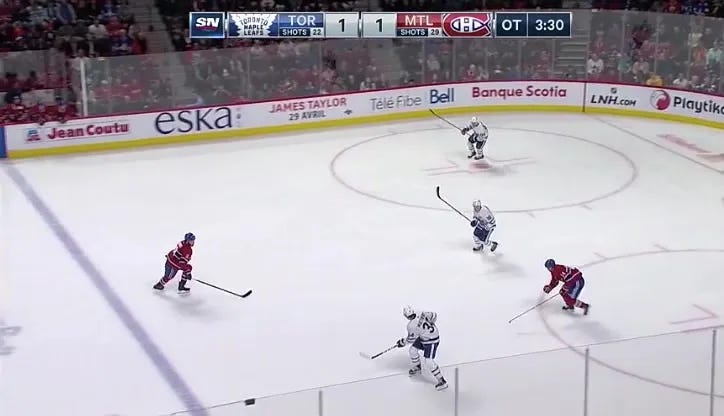
Regular-season NHL games do not end in ties.
If the score is even after regulation, the game goes to overtime.
Modern regular-season overtime is played with fewer skaters, creating enormous amounts of open ice and turning hockey into something dangerously close to a video game.
If nobody scores during overtime, the game goes to a shootout.
One shooter.
One goalie.
Everybody else watching.
In the standings, a win is worth two points, while a team that loses in overtime or a shootout still earns one. Regulation losses earn nothing.
But once the playoffs arrive?
Forget the shootout.
They keep playing full overtime periods until somebody scores.
- No gimmick.
- No skills competition.
Just sudden-death hockey until somebody becomes a hero and somebody else stares into the void.
84 Games to Get There
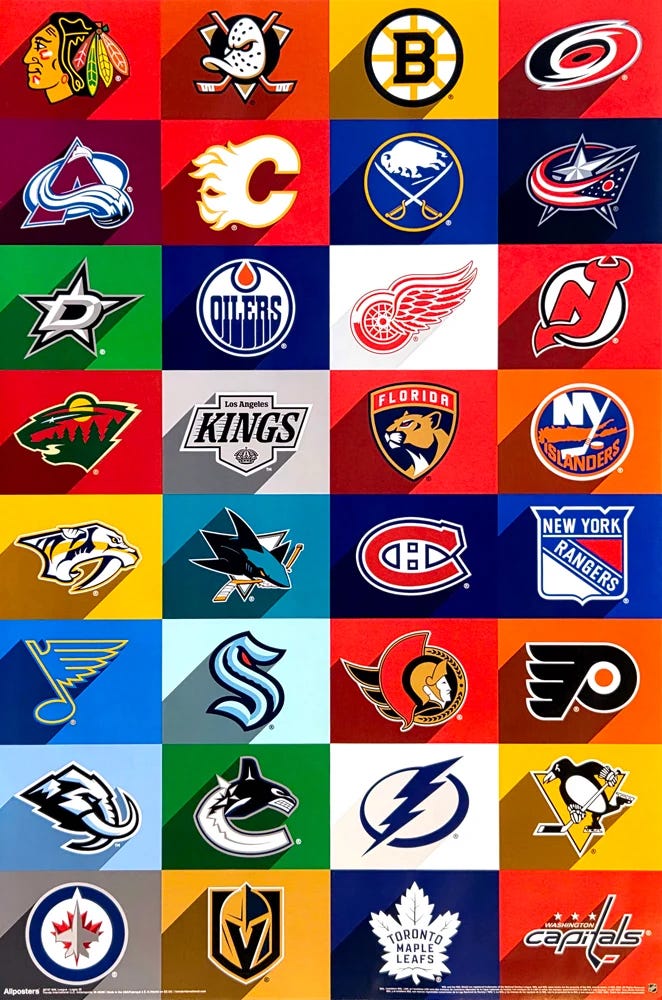
The NHL currently has 32 teams split between the Eastern and Western Conferences, with two divisions in each conference.
And beginning this season, every club plays 84 regular-season games — 42 at home and 42 on the road. The schedule includes 28 divisional games, 24 games against the other division in the same conference, and 32 interconference games.
That is the marathon.
Then comes the tournament. Perhaps the tournament.
Then Comes the Best Part: The Stanley Cup Playoffs
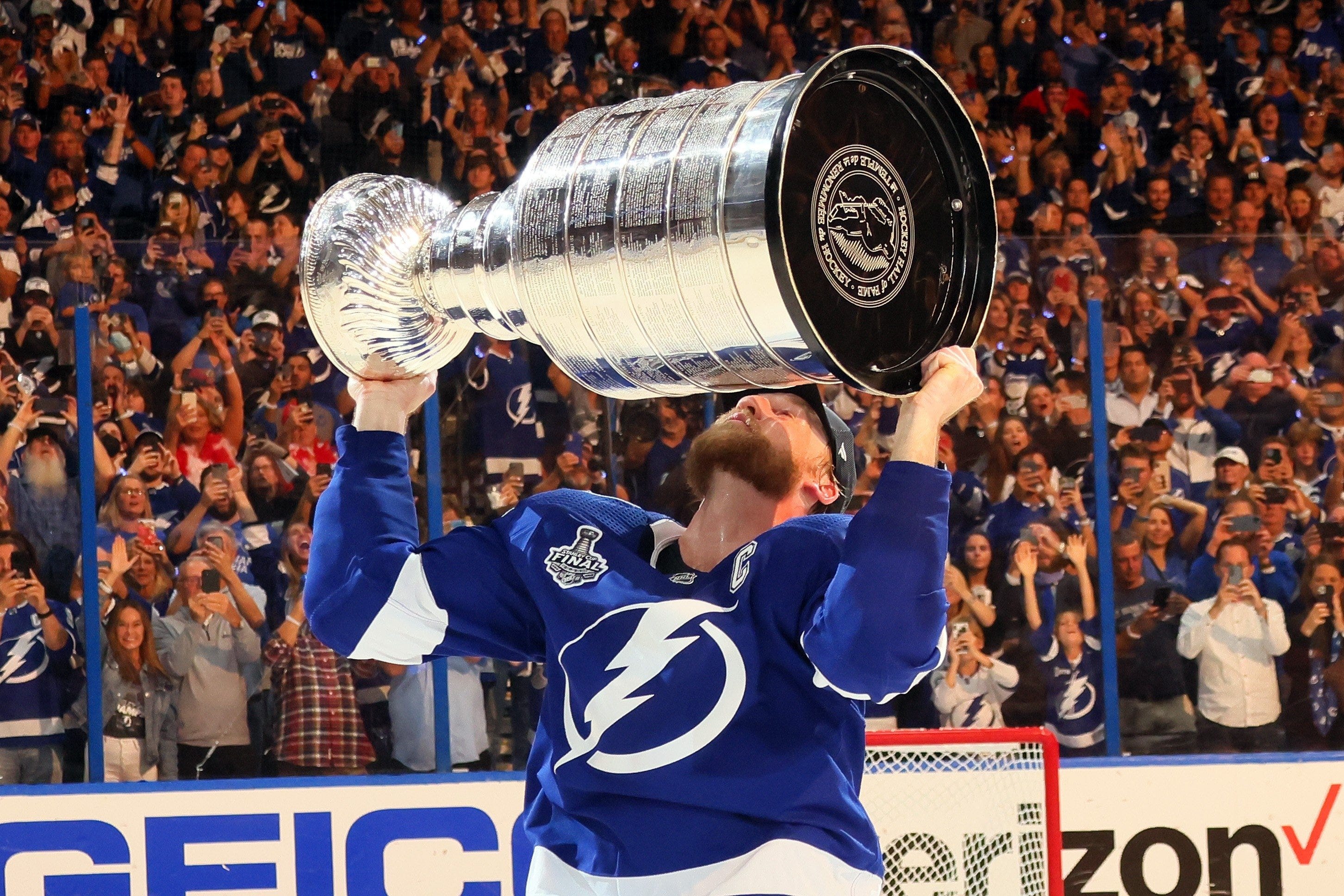
Hockey becomes something else in the postseason.
Sixteen teams make the Stanley Cup Playoffs. Eight from each conference.
Four rounds. Every round is best-of-seven.
Four wins to survive. Sixteen wins to become champion.
Simple enough.
Actually doing it is anything but.
There is a reason so many sports fans — including plenty who do not follow hockey closely during the regular season — consider the Stanley Cup Playoffs one of the best postseasons in sports.
There are no easy nights.
- A lower seed can turn into a nightmare because its goalie suddenly decides nothing is getting past him.
- A favorite can dominate for six months and watch the entire season disappear in seven games.
- Overtime has no shootout to rescue anybody.
They just keep playing.
And playing.
And playing.
Until somebody scores.
By the time a team reaches the Final, players are blocking shots with bruised bodies, skating through injuries we usually do not hear about until the season is over, and growing playoff beards that have gone from tradition to cry for help.
That brutality is part of what makes the reward feel so enormous.
Because waiting at the end is the Stanley Cup. And there may not be a more beautiful trophy in sports.
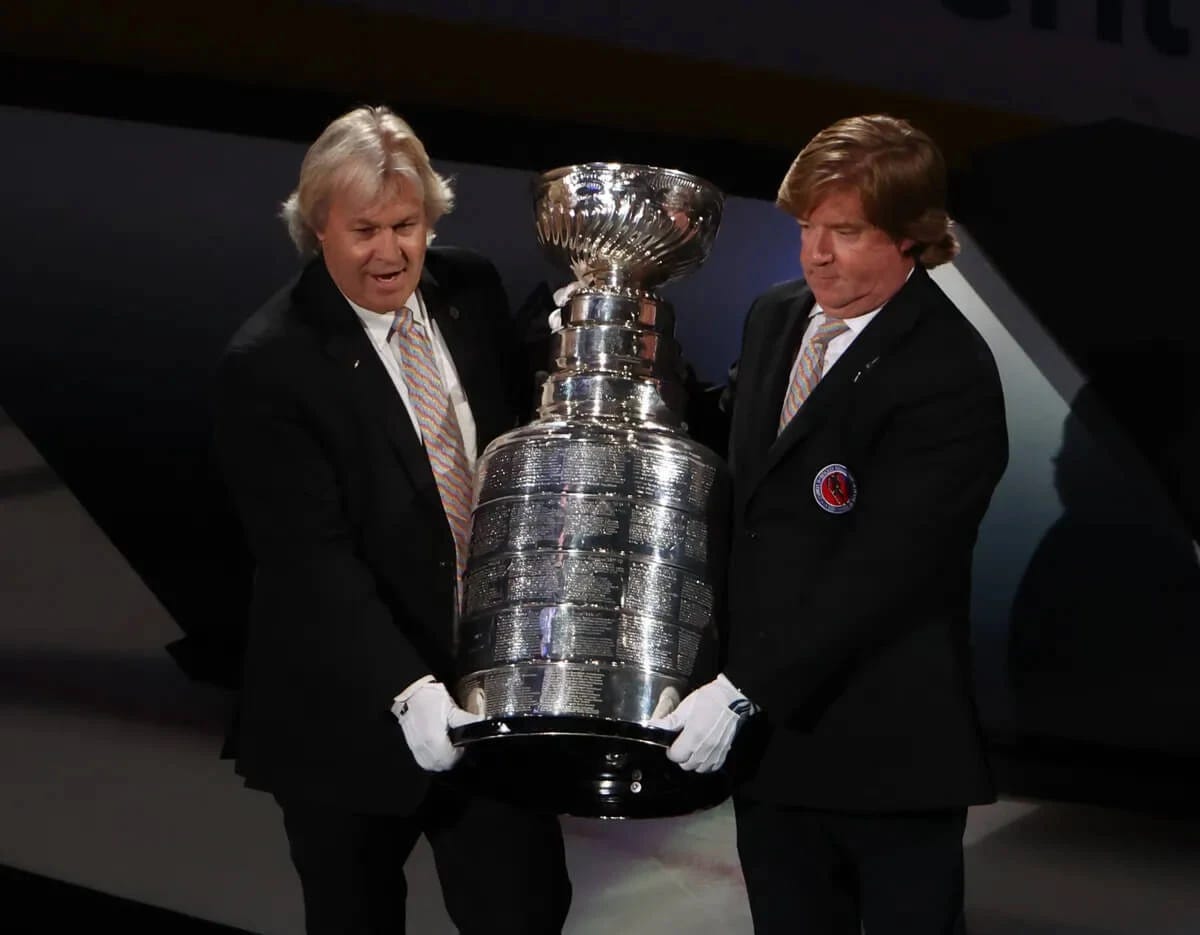
It does not look like something designed yesterday in a marketing meeting.
It looks like an artifact.
- Silver.
- Massive.
- Immediately recognizable.
And engraved with the names of the players, coaches, and teams that came before. That might be the coolest part.
When somebody lifts the Stanley Cup, they are not simply holding a trophy representing this season. They are physically holding hockey history.
Generations of champions are already there. Your name only gets added if you survive long enough to join them.
So, the NHL regular season may be an 84-game marathon. But everything eventually narrows into one of sports’ great tournaments:
- Sixteen teams.
- Four rounds.
- Sixteen wins.
- One magnificent old silver trophy.
And everybody wants to be the last team allowed to touch it.
Superstition Season
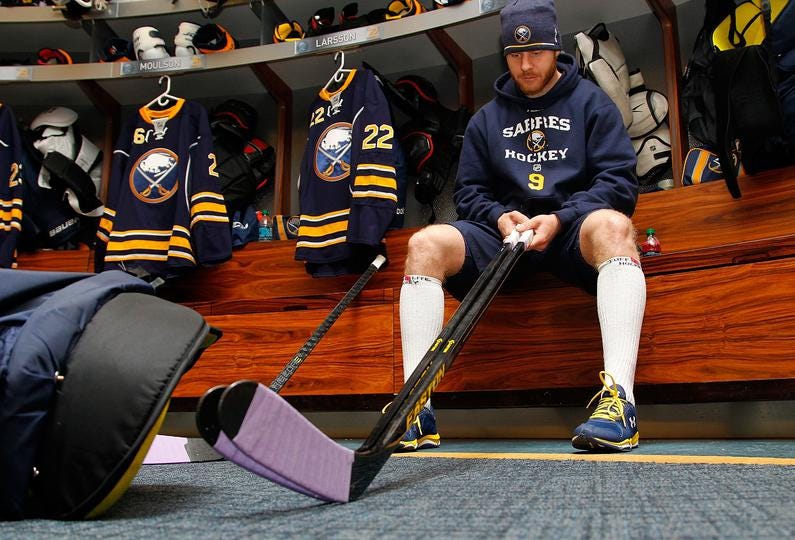
Hockey players are a superstitious bunch. And playoff hockey turns that dial all the way up.
- Playoff beards.
- Specific meals.
- Specific routines.
- Lucky equipment.
Doing something exactly the same way because the team won last time.
Then there are the trophies.
Some teams refuse to touch the Prince of Wales Trophy or Clarence S. Campbell Bowl after winning their conference because they believe the only trophy worth touching is the Stanley Cup.
Other teams deliberately touch them because refusing to touch them did not work the last time.
The Carolina Hurricanes chose not to touch the Prince of Wales Trophy on their way to the 2026 Stanley Cup Final, following the tradition their coach Rod Brind’Amour used when Carolina won in 2006. Other champions — including teams led by Sidney Crosby and Alex Ovechkin — have famously ignored the superstition entirely and touched the conference trophy anyway.
And then there is the Cup itself.
Plenty of NHL players grow up believing you do not touch it until you have actually won it.
Hockey is a sport built on steel blades, frozen water, and vulcanized rubber.
But spend enough time around it and you discover something else.
These people believe in rituals.
Patterns.
Luck.
Things you touch.
Things you absolutely do not touch.
Which seems appropriate.
October is almost here.
Why Fans Love It
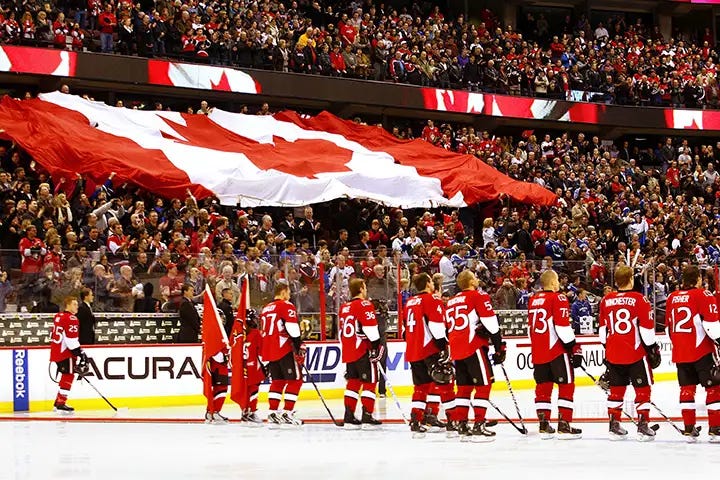
Hockey rewards attention.
At first, everything looks fast. Eventually, you start seeing patterns inside the speed.
You notice the defenseman creeping toward the net. You notice the winger flying into open space. You know the power play is setting something up before the shot happens. You start recognizing when a goalie is completely locked in.
And once playoff hockey begins? The whole thing tightens.
Every blocked shot matters. Every bad bounce feels personal. Every overtime begins with the horrifying knowledge that one mistake can end somebody’s season.
That is hockey.
Beautiful.
Fast.
Occasionally stupid.
Frequently painful.
And almost impossible to look away from once you understand what you are watching.
Why This Matters
You do not have to grow up with hockey to become a hockey fan.
That is the reason for the layman’s guide.
Every sport has that invisible wall around it where longtime fans know the language and everyone else assumes they missed the class where it was taught.
You did not. Start tonight.
Watch where the puck goes. Watch how quickly players change. Notice what happens when someone takes a penalty.
Listen for icing. Watch the blue lines.
And when something makes absolutely no sense?
Welcome to sports.
You are doing fine.
Modern Connection
Hockey feels like a battle anime where nobody waits for the other guy to finish announcing his attack.
Everything happens at once.
Five players cycling through the offensive zone. Defensemen jumping into the play. A goalie standing between disaster and salvation. Players rotating off the ice before their stamina meter empties.
Then somebody gets sent to the penalty box and suddenly one side has activated a temporary numerical power-up.
And the playoffs?
That is the tournament arc.
Sixteen teams enter.
Every matchup becomes a best-of-seven series.
Rivalries sharpen.
Injuries accumulate.
Heroes appear.
Goalies become final bosses.
And eventually only one team survives long enough to touch the trophy everyone spent their whole life dreaming about.
Final Whistle
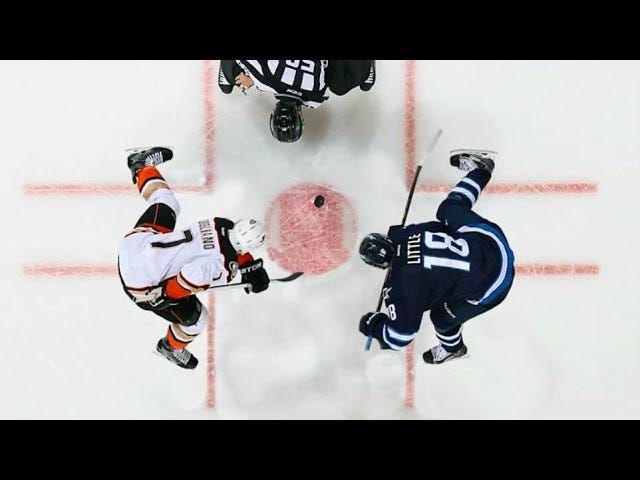
The NHL season starts tonight.
That is the beginning.
Eighty-four games from now, we will know who survived the regular season.
Then sixteen teams will enter the playoffs.
Four rounds.
Sixteen wins.
And somewhere at the end of all of it, somebody will finally get to raise the Stanley Cup.
The trophy nobody wanted to touch too early. The trophy with generations of names engraved into hockey history. The trophy players dream about long before they ever reach the NHL.
Tonight, everybody starts at zero.
Nobody has been eliminated. Nobody has been crowned. The ice is clean. The season is new.
And if you have never watched hockey before?
Perfect.
You are right on time.
The Ctrl+Binge Question
If you were trying to turn somebody into a hockey fan with one thing, what would you show them?
A rivalry game?
A playoff overtime?
A goalie standing on his head?
A huge clean hit?
A perfect passing sequence?
A fight?
Or would you simply hand them a seat for Game 7 and let hockey do the rest?