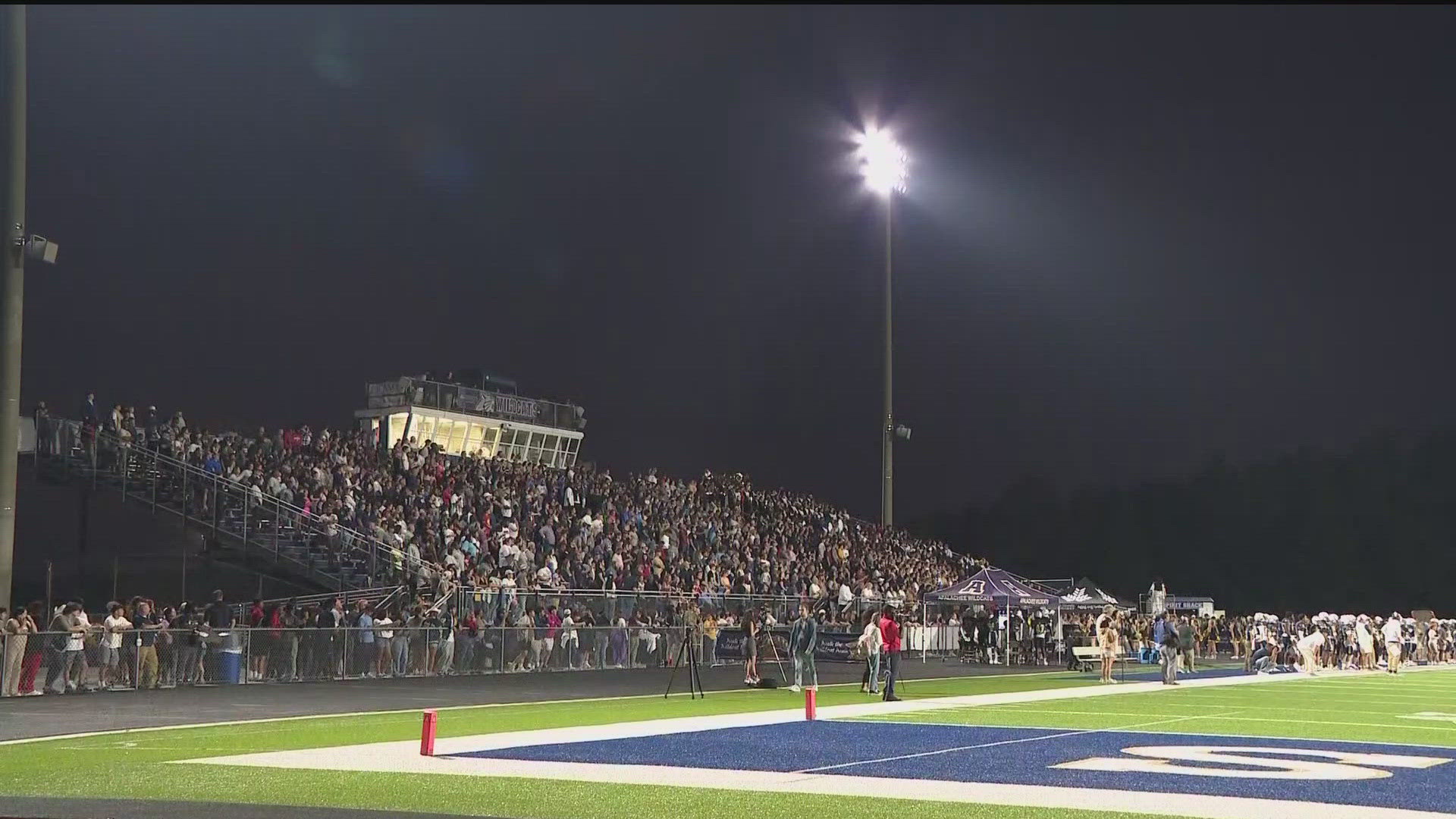
You can hear it before you see it.
The band warming up. The whistle. The crowd. The announcer testing the microphone. The pads cracking somewhere near midfield. The concession stands waking up. The smell of popcorn, nacho cheese, wet grass, and whatever miracle is happening on the grill.
That is high school football.
Not the NFL. Not college football. Not fantasy lineups, betting lines, transfer portals, draft boards, or TV contracts.
Just a field.
A scoreboard.
A school.
A town.
And a Friday night where everyone suddenly remembers where to look.
My old high school kicks off this Friday night, which makes this the perfect time to talk about high school football. Not because high school football is the biggest version of the sport.
It is not.
Not because it is always the cleanest version.
It definitely is not.
But because for a lot of people, high school football is the most personal version.
It is where the sport becomes local.
It is where rivalries are not national brands, but schools you actually know. Towns you drive through. Families you recognize. Players whose parents sit three rows over. Coaches who taught somebody’s older brother. Bands that have been playing the same fight song since before anyone on the field was born.
High school football is where football becomes local mythology.
And if you are new to it, returning to it, or just trying to understand why people care so much about teenagers playing under stadium lights on a Friday night, this is your beginner’s guide.
The Surface Version
The surface version is easy. High school football is just younger football.
Smaller players. Smaller stadiums. Less polish. Fewer cameras. No professional contracts. No national broadcast most of the time.
Just kids playing a sport before college or the NFL, right?
Kind of.
That description is not wrong. It just leaves out almost everything that makes high school football matter.
Because high school football is not simply a smaller NFL.
It has its own rhythm. Its own stakes. Its own chaos. Its own rituals.
At the high school level, the sport is still tied directly to place. The name on the front of the jersey is not a franchise. It is a school. Sometimes it represents a town. Sometimes a county. Sometimes a neighborhood. Sometimes generations of people who wore those same colors, sat in those same bleachers, and circled that same rivalry game on the calendar.
That changes the feeling.
A high school football game can be sloppy and still be unforgettable.
A player can become a local legend without ever playing a snap in college.
A rivalry game can matter even if nobody outside the county knows it happened.
Because the point is not always national importance.
Sometimes the stakes are simpler.
We have to see these people at the gas station on Monday. That is enough.
High school football is not just football with younger players. It is community football. That is the difference.
The game on the field matters, but so does everything orbiting it.
- The marching band.
- The cheerleaders.
- The student section.
- The parents.
- The alumni.
- The homecoming court.
- The local businesses.
- The booster club.
- The little kids watching from the fence, already imagining when it might be their turn.
High school football is one of the last sports experiences where the whole event can feel like a town meeting, a family reunion, a school pep rally, and a live sporting event all at once.
That is why Friday night still matters.
Because the game is only part of the story.
How Football Works, Without Making This a Playbook
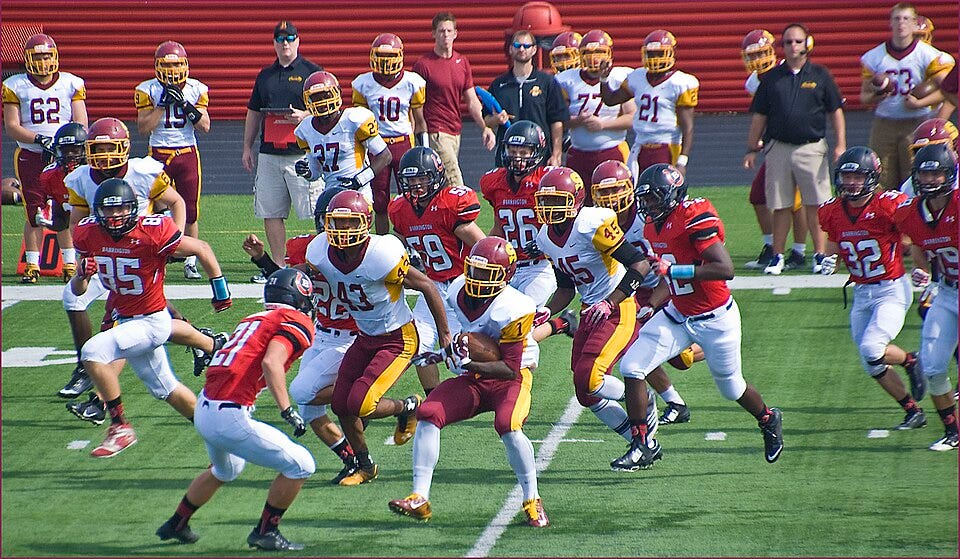
Let’s keep the rules simple.
Football is a territory game.
One team has the ball. That team is the offense. The other team tries to stop them. That team is the defense.
The offense gets four tries, called downs, to move the ball ten yards. If they get ten yards, they earn a new set of downs. If they do not, they usually have to punt the ball away or risk going for it on fourth down.
The main goal is to score a touchdown, which is worth six points. After that, the team can kick for one extra point or try a play from close range for two. A field goal is worth three points. A safety is worth two, and usually involves something terrible happening to the offense near its own end zone.
That is the basic framework.
Move the ball. Protect the ball. Score. Stop the other team from scoring.
But high school football has its own flavor because the talent gap can be huge.
In the NFL, almost everyone is elite. In high school, one great athlete can change an entire game.
A dominant running back can take over. A quarterback with a big arm can feel like a cheat code. A linebacker who understands the play before it happens can wreck everything. A fast receiver can terrify an entire sideline. A strong offensive line can make the whole night miserable for the defense.
That is why high school football often feels more raw than higher levels. Coaching matters. Scheme matters. But sometimes the whole stadium can feel the moment when one player is simply different.
And yet, football is still football.
One player can shine, but eleven players have to function. The snap has to be clean. The blocking has to hold. The route has to be run. The tackle has to be made. The assignment has to be remembered.
That balance is what makes the sport work.
Football is a team game that still gives individuals a chance to become legends.
Friday Night Lights
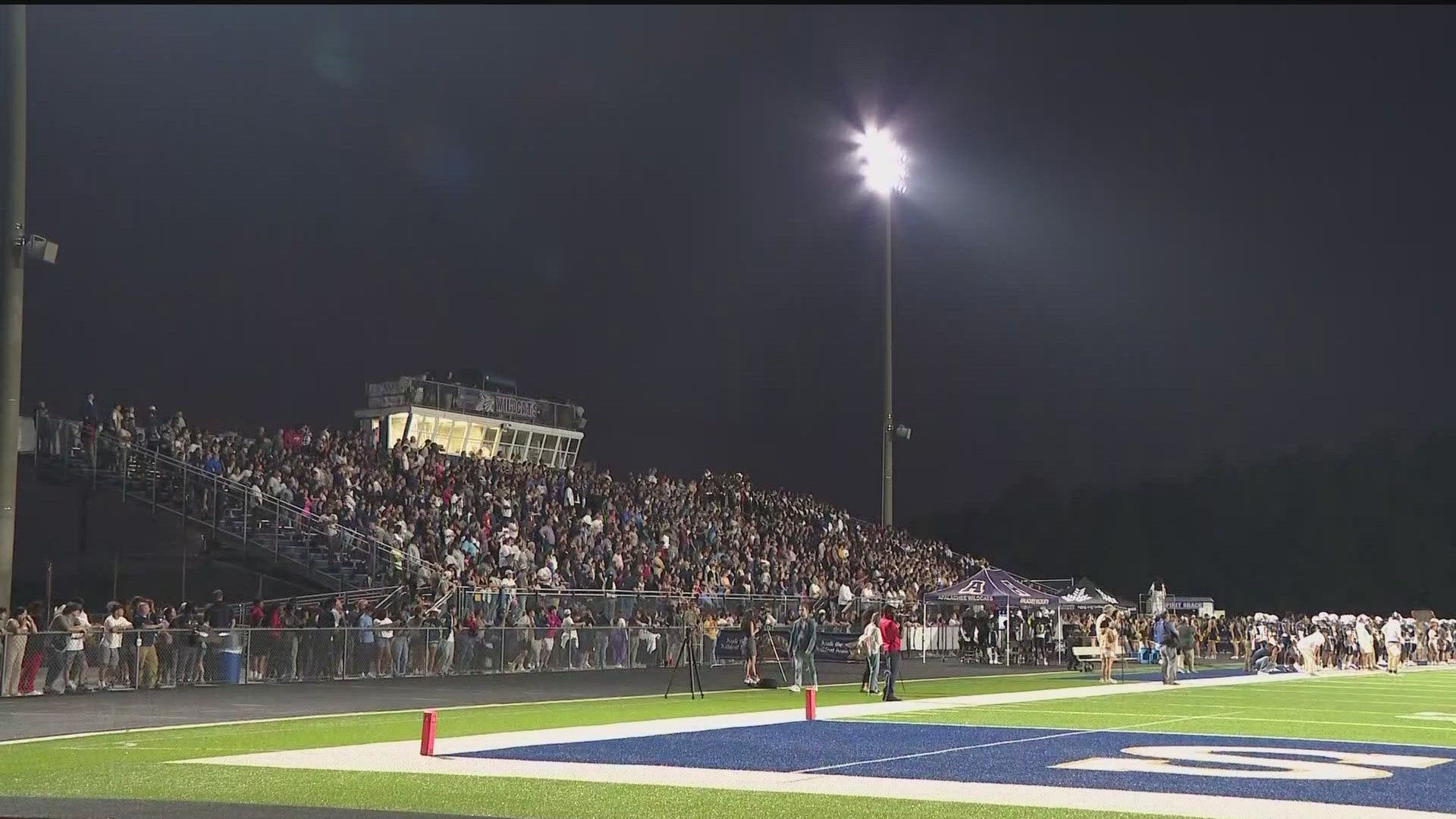
There is a reason people talk about Friday night lights like they are sacred.
It is not just because games happen on Friday. It is because Friday night has a feeling.
The school week ends. The weekend begins. The air starts changing.
Even before fall fully arrives, football makes it feel close.
The lights come on, and suddenly the field becomes the center of town. That is the emotional power of high school football. It gives people a weekly gathering place.
For students, it is a social event. For parents, it is pride and nerves. For alumni, it is memory. For little kids, it is imagination. For the players, it is the thing they have been working toward since summer.
That is what separates high school football from simply being “a game.”
It belongs to more people than the ones wearing helmets.
A Friday night game can become a town’s shared story for the week.
Who played well? Who got hurt? Who made the tackle? Who missed the kick? Who beat the rival? Who looked better than expected? Who is going to be good next year?
In that way, high school football is not just watched. It is carried around.
It becomes conversation.
- At school.
- At church.
- At the diner.
- At work.
- At the gas station.
- At the grocery store.
Football gives people something to talk about, and in small communities, that can matter more than outsiders realize.
Two-A-Days: The Training Arc
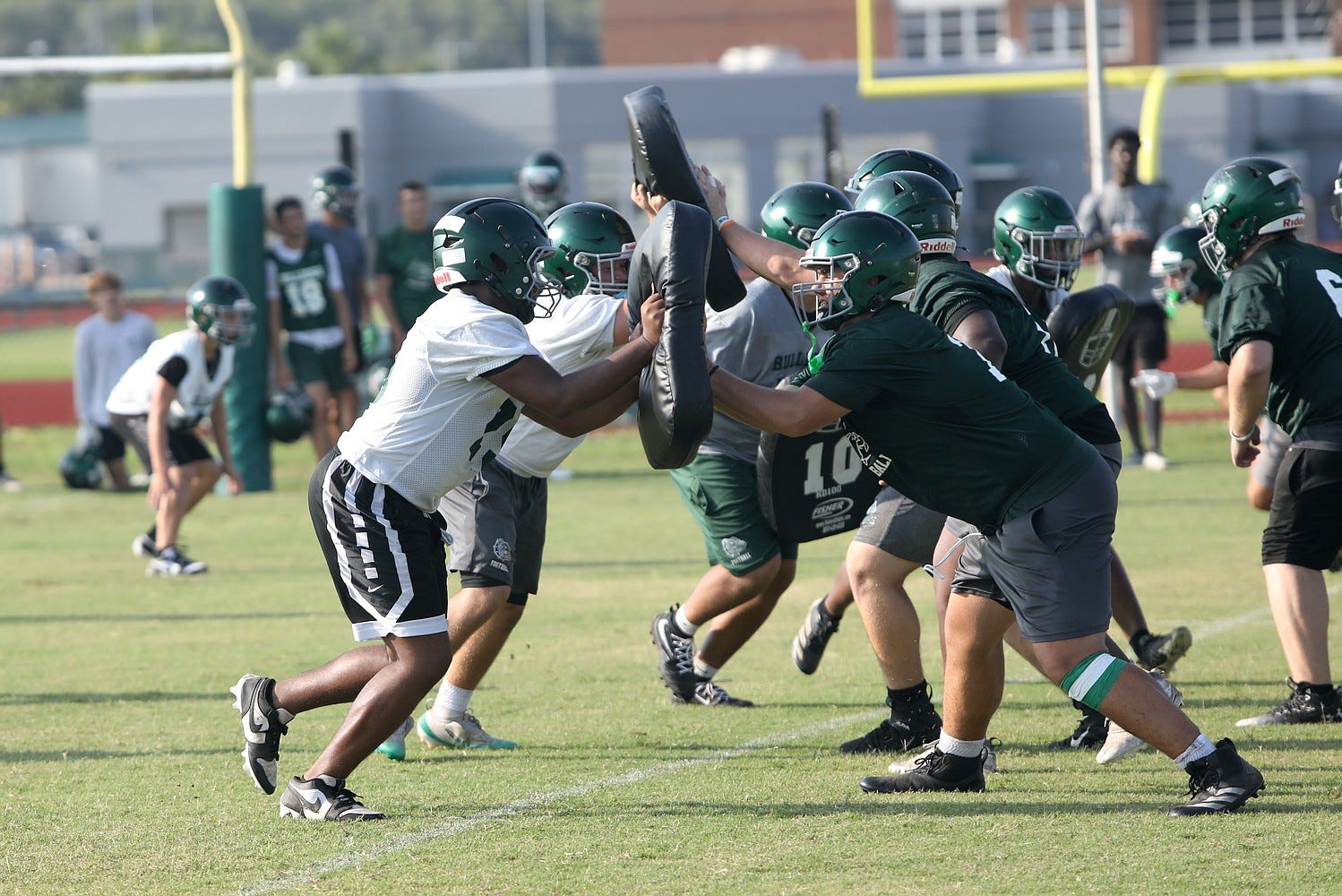
Before the lights, there is the heat. Before the crowd, there is conditioning. Before the first kickoff, there is football camp.
And if high school football has a true training arc, it is two-a-days.
Two-a-days are exactly what they sound like: practices twice in one day. They are sweaty, exhausting, miserable, formative, and remembered by former players with a strange mix of trauma and pride.
This is where the season starts becoming real.
Pads go on. Depth charts start forming. Coaches install plays. Players learn assignments. Freshmen realize high school football is not middle school football. Seniors realize this is their last run.
Everybody gets tired. Everybody gets sore.
Somebody forgets the snap count. Somebody throws up. Somebody earns a spot. Somebody loses one.
This is where the romantic version of Friday night gets paid for.
Because the lights are fun. The work is not always fun. But the work is the point.
Football is a sport of repetition. You do not magically know where to line up. You do not naturally understand gap responsibility, route timing, blitz pickup, tackling angles, or special teams discipline. Those things are drilled.
Again.
And again.
And again.
Two-a-days are where the team becomes a team. Not in the movie speech sense. In the practical sense.
Can you line up correctly when you are tired? Can you trust the guy next to you? Can you remember the play when your legs are gone? Can you keep going when the heat is winning?
That is the training arc.
And like every good training arc, nobody enjoys every second of it while it is happening.
They just understand later why it mattered.
Homecoming: The Ritual
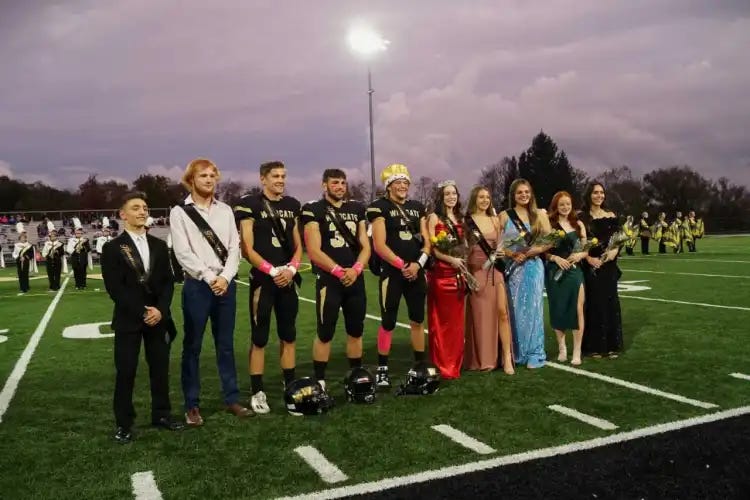
Homecoming is one of the great high school football rituals.
Technically, it is not only about football. There is usually a dance.
- A court.
- Spirit week.
- Dress-up days.
- Floats.
- Pep rallies.
- Alumni events.
- Photos that will one day embarrass everyone involved.
But the football game is usually the center of gravity. That is because homecoming is about return.
People come back. Former students come back. Families come back. Old players come back.
The school gets to show itself off for a night. And the football team becomes the public centerpiece of the whole thing.
Homecoming games feel different because they carry more ceremony. The crowd may be bigger. The band feels louder. The halftime show matters. The introductions feel heavier. The whole school seems to be trying to say, “This is who we are.”
That is why winning homecoming feels great. And losing homecoming feels like somebody spilled nacho cheese on the family photo.
It matters because the game becomes attached to memory.
Years later, people may not remember the full score. But they remember the night. They remember the lights. They remember the dress.
- The float.
- The song.
- The touchdown.
- The missed tackle.
- The friend group.
- The weather.
The feeling of being young and convinced the whole world fit inside one stadium. That is homecoming.
It is football as ritual.
Rivalries: Local Mythology
Every level of football has rivalries.
But high school rivalries are special because they are personal in a way professional rivalries usually are not.
You might know the other school. You might have cousins there. You might work with their parents. You might date somebody from there. You might have lost to them last year and heard about it for twelve straight months.
That is what makes city and county rivalries so good. The stakes do not have to be national. They are local, and local can be plenty.
Sometimes it is school district vs. school district. Sometimes it is town vs. town. Sometimes it is public school vs. private school. Sometimes it is old money vs. new growth. Sometimes it is rural vs. city.
Sometimes it is simply two schools that have disliked each other for so long nobody fully remembers who started it.
That is sports folklore.
The rivalry game can define a season even if neither team wins a championship.
Beat the rival, and the year has a highlight. Lose to the rival, and someone is bringing it up at Thanksgiving.
This is where high school football becomes larger than the scoreboard.
The game becomes a chapter in a story people have been telling for years. And when the players run onto the field, they are not just playing that night’s opponent. They are stepping into the whole history of the thing.
Texas: The Final Boss
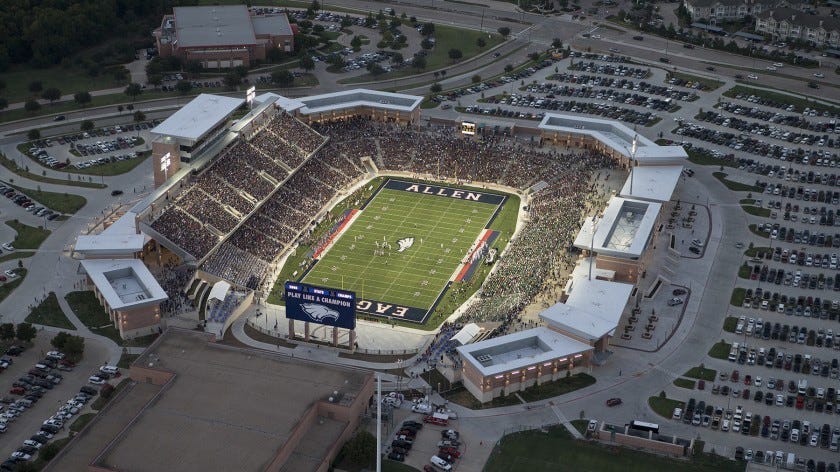
You cannot talk about high school football culture without giving a special shoutout to Texas.
Texas high school football is the final boss version.
- The stadiums.
- The crowds.
- The pageantry.
- The expectations.
- The sheer civic weight of it.
In Texas, high school football can feel less like an extracurricular activity and more like a public institution. Towns rally around teams. Stadiums look like small college venues. Local heroes become legends. The sport becomes part of the state’s identity.
That does not mean every other state is doing it wrong. Not at all.
High school football matters all over the country. But Texas shows what happens when the culture gets turned all the way up. It is the exaggerated version that helps explain the whole phenomenon.
Because if you want to understand why people care about high school football, Texas gives you the answer in giant glowing letters.
It is not just about the game. It is about belonging.
The school represents the town. The team represents the school. The season becomes a shared calendar. The rivalry becomes a civic argument. And Friday night becomes the place where all of it shows up wearing school colors.
The Modern Shift: Athletic-First Academies

High school football has also changed.
For a long time, the traditional model was mostly place-based. You played for your school. Your town. Your district. Your community.
That still exists, and for most people, that is still the heart of high school football.
But in recent years, athletic-first academies and national football programs have become a bigger part of the conversation.
These programs are often built around player development, recruiting exposure, elite competition, travel schedules, and preparing athletes for the next level. That creates a different kind of high school football story.
Traditional high school football often asks: Where are you from?
The modern academy model often asks: Where are you trying to go?
That is not automatically good or bad. It is complicated.
For elite athletes, those programs can offer exposure, training, competition, and opportunity that a smaller local school might not be able to provide. If a player is chasing college football, scholarships, and national attention, the academy model can make sense.
But something changes when the sport becomes less tied to place.
The local rivalry matters differently. The community connection feels different. The season becomes less about the town watching its own kids and more about athletes building toward the next step.
Again, that is not a simple villain story.
Sports evolve. Opportunities evolve. Families make choices. Athletes chase dreams. But it does create a real contrast.
High school football as community tradition. High school football as development pipeline. Both exist now.
And understanding that shift helps explain why people feel so protective of the Friday night version.
Because once football becomes only about where someone is going next, it can lose some of what made people care about where they came from.
Why This Matters
High school football matters because it is often someone’s first sports mythology.
Before a kid understands salary caps, recruiting rankings, playoff committees, or television contracts, they understand the local field.
They understand the colors. They understand the rival school. They understand the band. They understand the older players everyone talks about.
They understand that the whole town feels different after a win. That is powerful.
High school football teaches people how sports become stories.
It teaches rivalry. It teaches pride. It teaches heartbreak. It teaches that one night can feel bigger than it probably should. It teaches that a senior season can carry real emotion because it is the end of something.
That is the part adults sometimes forget.
For the players, high school football is not a stepping stone for most of them. It is the thing.
Most high school football players will not play in college. Almost none will play professionally. That means for many of them, these Friday nights are not just preparation for the next level.
They are the level. The last game really might be the last game.
That gives the sport an emotional weight you do not always get when everyone is already thinking about contracts, draft boards, and transfer destinations.
High school football matters because it is temporary.
And temporary things can be beautiful.
Modern Connection
If the NFL is corporate warfare and college football is regional mythology, high school football is the origin story.
It is the coming-of-age arc. Training camp is the montage. Two-a-days are the brutal early episodes. The rival school is the antagonist. Homecoming is the festival episode.
The senior quarterback is the veteran leader. The freshman getting varsity snaps is the shocking newcomer. The county rivalry is the tournament arc. The marching band is the soundtrack.
And somewhere under those lights, someone gets one night they will talk about for the rest of their life.
That is why high school football fits so naturally into the Ctrl+Binge universe.
It is sports, yes. But it is also story. It is community. It is nostalgia. It is identity.
It is a bunch of people gathering under lights to watch young athletes carry school colors into a game that feels bigger because everybody knows the names.
That is not small. That is intimate. There is a difference.
Final Whistle
High school football is not the biggest version of football.
It is not the richest.
It is not the most polished.
It is not the highest level of athletic execution.
But sometimes it is the version that feels closest. Because the players are familiar.
The field is ours. The rivalries are local. The band is loud. The concession stand is open. The parents are nervous. The alumni are remembering. The kids near the fence are dreaming.
And when the lights come on Friday night, the whole town knows where to look.
That is why Friday night still matters.
Not because every game becomes history. But because for the people who were there, some of them do.
The Ctrl+Binge Question
What made high school football special where you grew up?
The team? The band? The rivalry? The homecoming game? The whole town showing up? Or something else entirely?
And Go Red Devils!