Everybody remembers the first time Shenron appeared. The seven Dragon Balls began to glow. The sky turned black. Lightning tore across the clouds. Then, from seven little orange spheres scattered across the ground, an enormous green dragon erupted into the night.
For a few moments, Dragon Ball stopped feeling like a comedy. It stopped feeling like a martial arts adventure. It felt ancient. Sacred. Almost frightening.
Shenron towered over everyone below him, his body twisting across the darkened sky as he delivered one simple command:
“State your wish.”
But here is the thing most nonreaders or watchers might not know about Shenron. He never attacks anyone. He does not guard a mountain of gold. He does not burn villages, kidnap princesses, or wait in some forgotten cave for a hero to arrive with a sword.
Shenron is not an obstacle standing at the end of the adventure. He is the miracle waiting there.
By the time Dragon Ball Z reaches its final chapters, he has also become something else: A recurring member of the cast. He knows these people. He knows their world.
And after years of being summoned to resurrect their friends, repair their catastrophes, and listen to them argue over the wording of their wishes, he sometimes seems just a little tired of them.
Then the heroes travel to Namek and meet Porunga, a second dragon who is larger, louder, more muscular, and somehow even more divine. That discovery changes everything. Because Shenron and Porunga are not merely magical creatures. They are the creations of the Namekians. They are living reflections of the people who made them.
And hidden inside these two dragons is one of the most fascinating pieces of mythology in all of Dragon Ball Z.
THE FAMILIAR VERSION
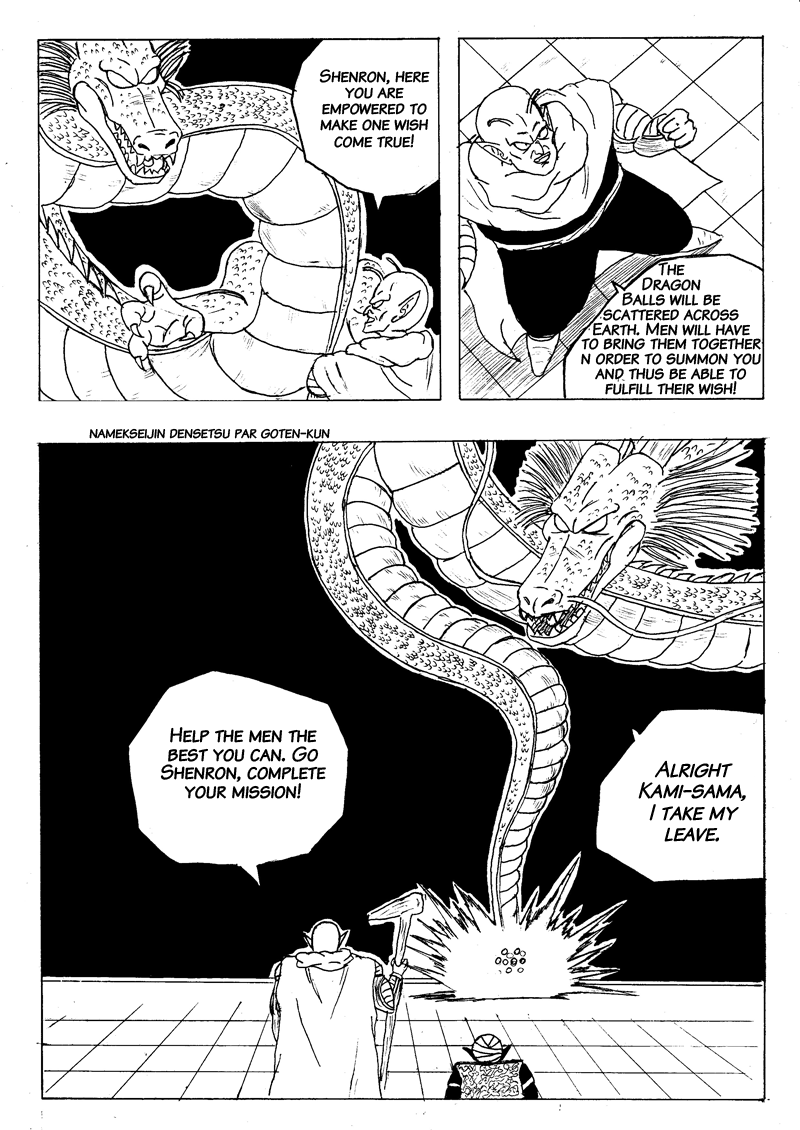
The rules seem simple.
- 1) Find the seven Dragon Balls.
- 2) Bring them together.
- 3) Summon the dragon.
- 4) Make a wish.
- 5) Dragon Balls seperate.
It is the promise contained in the title of the entire franchise.
At first, Shenron appears to be something beyond explanation.
Kami created the Dragon Balls, but we know very little about where that power came from or why Earth’s Guardian could summon a gigantic dragon capable of bringing people back from the dead.
That mystery fits the original Dragon Ball perfectly. The world is filled with strange things. Talking animals run cities. Capsules contain entire houses. Dinosaurs wander through the wilderness. A boy with a monkey tail can ride a cloud.
Why should a wish-granting dragon require an explanation? Dragon Ball Z changes that.
The journey to Namek reveals that Kami was never a unique god who simply appeared above the Earth. He was a Namekian. The Dragon Balls were not an isolated miracle. They were part of his heritage.
Shenron was not the beginning of the tradition. He was one branch of it.
Waiting on Kami’s homeworld was another set of seven Dragon Balls, another sacred ritual, and another dragon with his own rules, powers, and personality.
His name was Porunga.
In the Namekian language, his name means the “God of Dreams.” That title tells us exactly how the Namekians see him.
Not as an animal. Not as a monster. As a god. You realize Shenron was never supposed to act like the dragons we usually know.
WHY SHENRON DOESN’T ACT LIKE A DRAGON
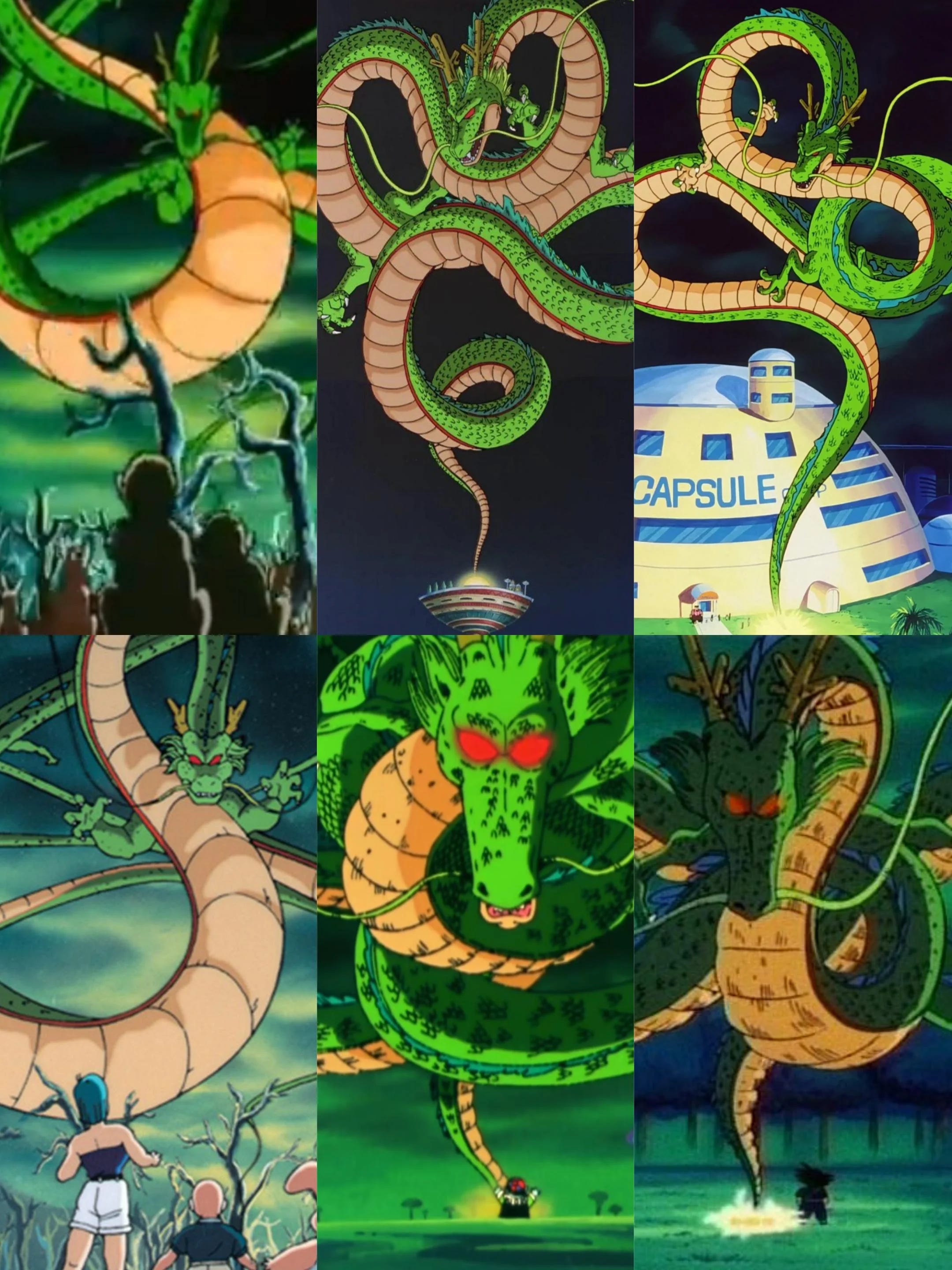
For many Western audiences, a dragon usually means danger. It is a beast to be hunted. A monster sleeping beneath a mountain. A symbol of destruction, greed, or chaos. The hero’s job is to survive it or kill it.
Shenron belongs to a different storytelling tradition.
His long, serpentine body, antler-like horns, flowing whiskers, and lack of enormous wings immediately connect him to the dragons of East Asian mythology.
Those dragons were often associated with water, rain, heavenly authority, good fortune, and the forces that allowed life to continue. They could be immensely powerful and occasionally temperamental, but they were not automatically evil. They were beings to respect, petition, and sometimes worship.
That difference explains almost everything about Shenron. When the sky darkens and he appears, nobody reaches for a weapon. They look up. They wait. They state their request.
Shenron does not challenge the heroes to prove that they are strong enough to defeat him. The challenge has already happened. They crossed the world. They survived armies, assassins, monsters, Saiyans, androids, and tyrants. They found the seven Dragon Balls.
Summoning Shenron means the journey worked. He is not the battle at the end of the quest. He is the proof that the heroes completed it. That makes his role fundamentally different from the dragons found in so many other fantasy stories.
Shenron does not represent a world that must be conquered. He represents a world willing to offer one more chance.
SHENRON HAS HAD ENOUGH OF THESE PEOPLE
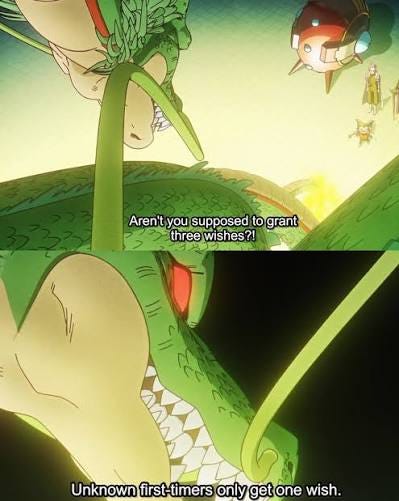
Shenron may look like an untouchable dragon god, but Dragon Ball never allows its gods to remain completely distant. Eventually, they become characters.
Kami is divine, but he worries, regrets, argues, and makes mistakes. King Kai is a great teacher who also tells terrible jokes. Even the mighty King Yemma spends his afterlife doing paperwork.
Shenron fits naturally into that world. The first time he appears, he feels unknowable. By Dragon Ball Z, the gang practically knows his office hours.
They understand how long the Dragon Balls remain inactive. They know that Shenron cannot grant a wish beyond the power of his creator. They know his resurrection rules. They know that every wish needs to be worded carefully.
Most importantly, they know that once Shenron has been summoned, he would very much like everyone to stop talking and tell him what they want.
There is something wonderfully funny about watching Earth’s heroes stand beneath an ancient celestial dragon—and then begin debating.
Should they revive one person? A group? Where should everyone be transported? Does the wording include the right planet? Has anyone forgotten somebody?
Meanwhile, Shenron waits above them with the energy of a supernatural customer-service representative who has already explained the policy twice.
He is not exactly sarcastic. He is not openly disrespectful. But he can be impatient, blunt, and occasionally a little sassy.
- He has rules.
- He knows them.
- And he expects the people who summoned him to get to the point.
That familiarity never completely removes his majesty. The sky still darkens. The lightning still flashes. Everyone still stops when he speaks. But Shenron is no longer a mysterious force appearing once in a lifetime.
He has become a recurring character in the lives of Goku and his friends. He has watched their family grow. He has returned their friends to life. He has restored the Earth after their battles destroyed it. In his own strange way, Shenron has been there for the story almost from the beginning.
NAMEK CHANGES EVERYTHING
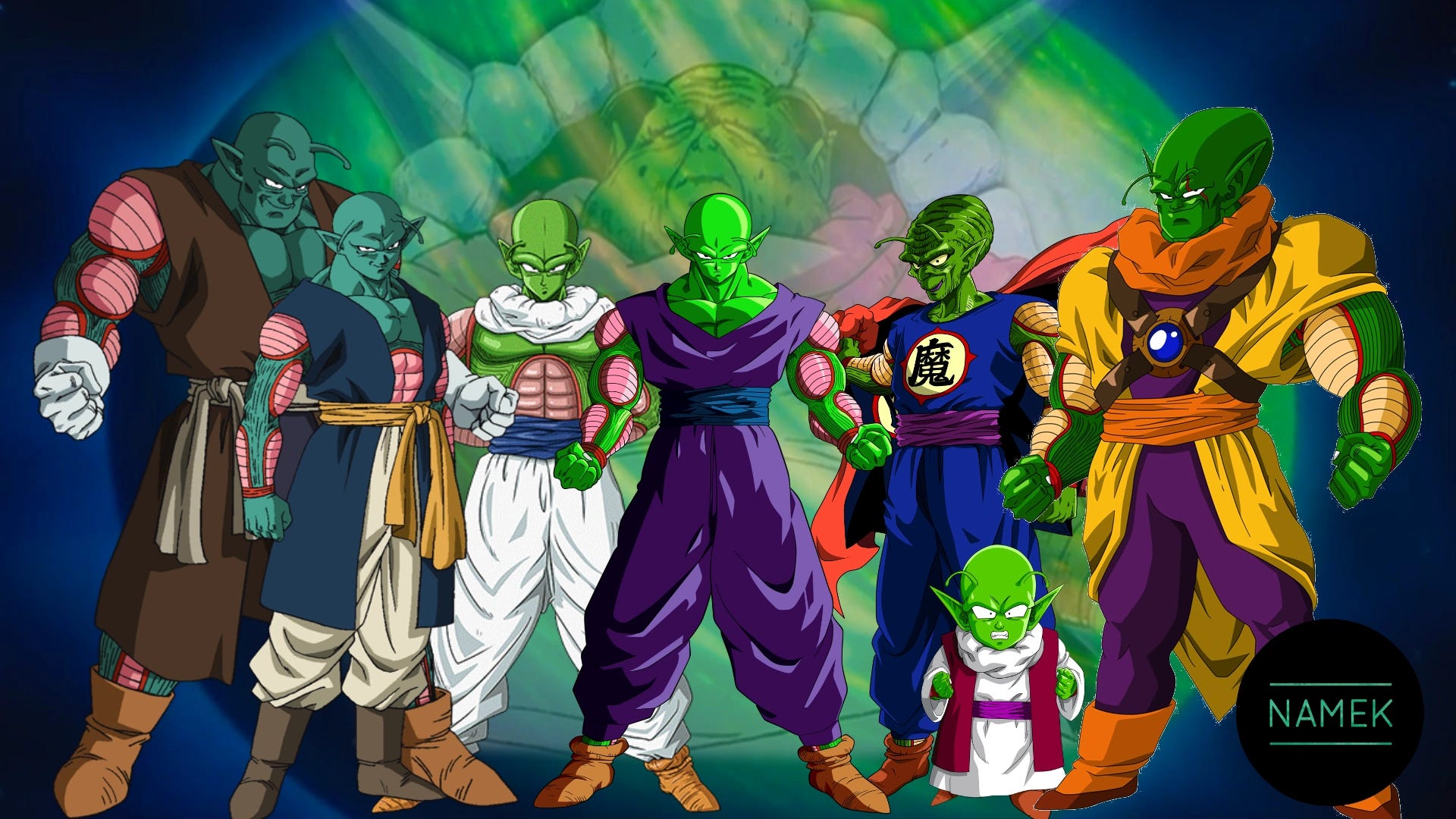
The arrival on Namek does more than introduce another set of Dragon Balls. It redefines the entire mythology of the series.
Before Namek, Kami appears to be the origin of the miracle. After Namek, we understand that he inherited it.
The Namekians are not simply green aliens who happen to share Piccolo’s appearance. They possess a spiritual relationship with creation itself.
Some Namekians belong to the Warrior Clan. Others belong to the Dragon Clan.
While fighters such as Nail defend their people through strength, members of the Dragon Clan can possess healing abilities, magical knowledge, and the power necessary to create Dragon Balls.
That makes the Namekians unlike almost every other major civilization in Dragon Ball Z.
The Saiyans transform themselves into weapons. Frieza’s empire conquers and sells worlds. Human scientists create machines powerful enough to challenge gods. The Namekians create miracles. And their world reflects that spirit.
Namek is quiet, open, and natural. Its people live in small villages rather than enormous cities. They farm strange trees, respect their elders, and protect a tradition powerful enough to alter life and death.
Then Frieza arrives.
He does not see sacred objects. He sees a shortcut to immortality.
That is why the Namek Saga’s hunt for the Dragon Balls feels so different from the searches that came before it.
On Earth, collecting the Dragon Balls was usually an adventure. On Namek, it becomes a race to keep divine power away from a tyrant.
The Dragon Balls themselves are enormous. Their summoning requires words spoken in the Namekian language. The wishes must also be communicated in Namekian. Even the ritual reminds outsiders that this power does not belong to them.
Then Porunga rises.
PORUNGA, THE GOD OF DREAMS
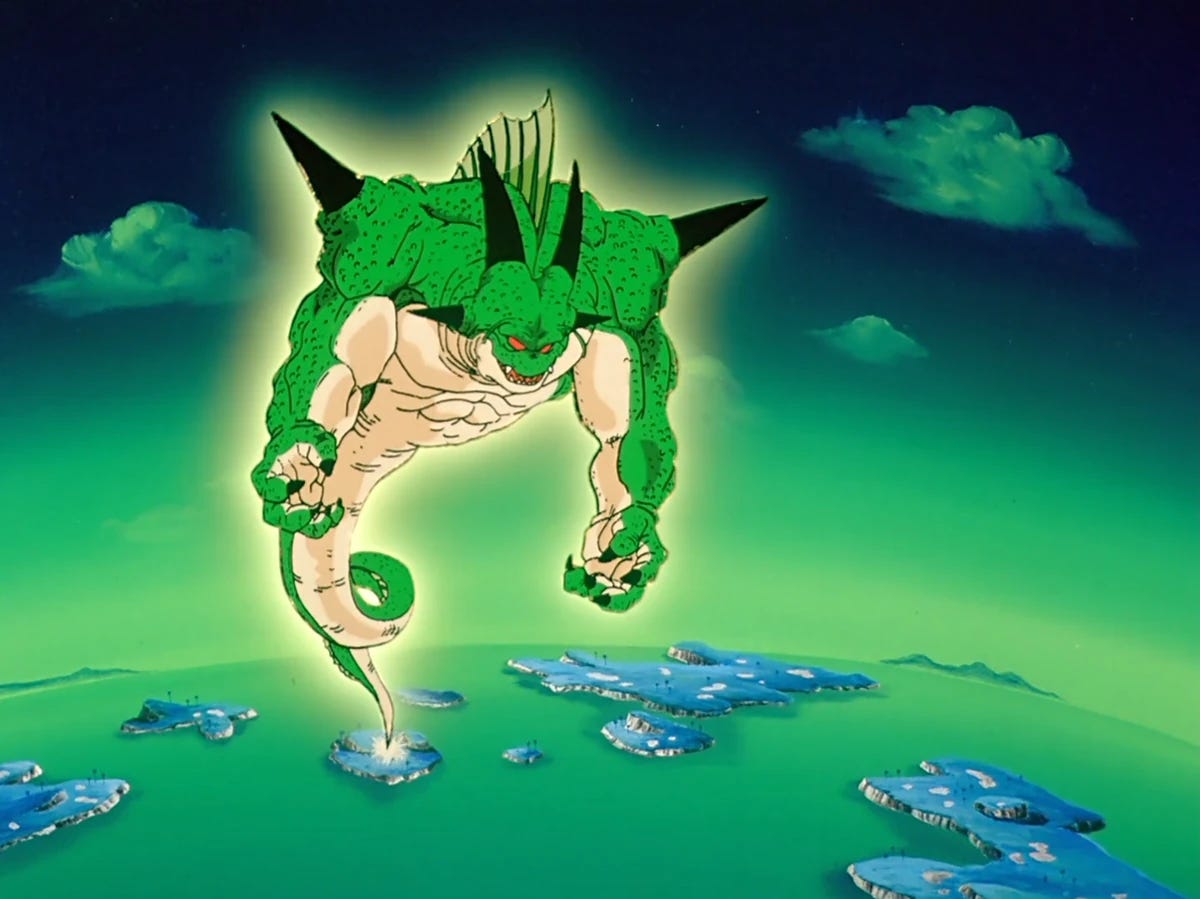
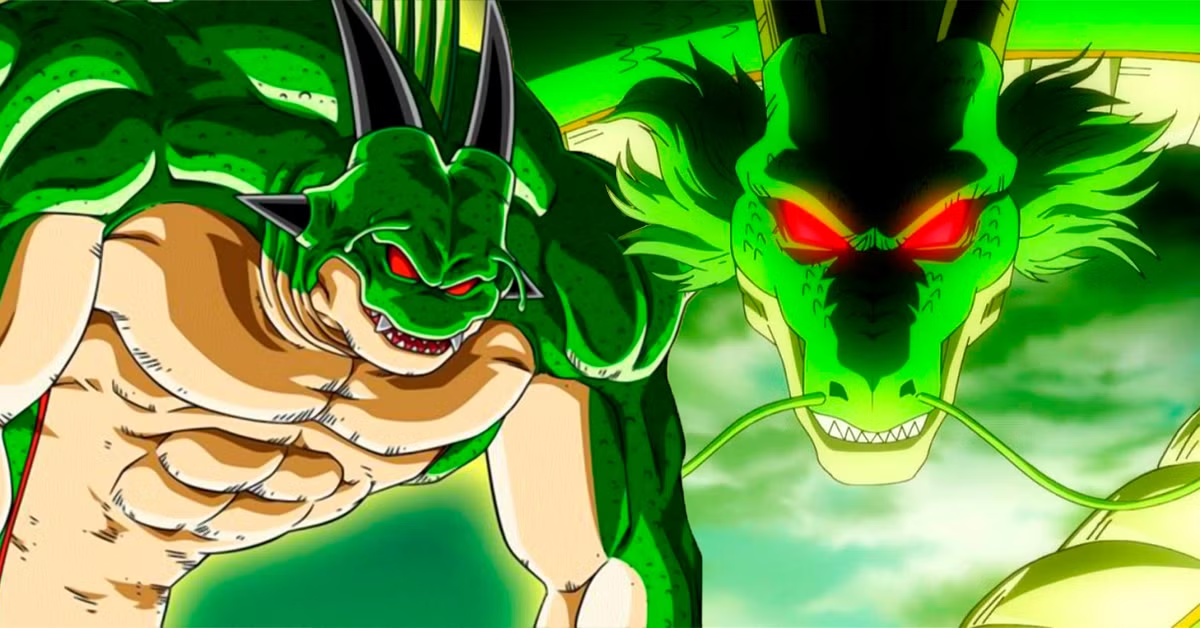
Porunga does not look like Shenron with a different coat of paint. He feels like an entirely different kind of god.
Shenron is long, elegant, and serpentine.
Porunga is massive.
His upper body is broad and muscular. His arms look powerful enough to physically wrestle the wish into reality. His face is less like a mysterious spirit and more like an ancient deity who has been awakened from beneath the planet.
Even his personality feels different.
Shenron is formal and serious.
Porunga appears more expressive and energetic—a distinction even highlighted by Dragon Ball’s official character material.
Then come the wishes. Earth’s Shenron originally grants one wish per summoning. Porunga grants three.
That immediately makes him seem more powerful, but Dragon Ball gives the two dragons different limitations.
During the Namek Saga, Porunga can resurrect only one person with each wish, while Shenron can restore multiple people at once.
Porunga’s Dragon Balls also recharge according to Namek’s much shorter year rather than Earth’s full calendar year.
Neither dragon is simply “better.” They were built under different rules. They express the abilities and decisions of different creators. That is one of the most important details in the entire system.
Shenron and Porunga may appear godlike, but they are not omnipotent. Their power has boundaries. They cannot grant anything beyond the abilities of the Namekian connected to them.
They can restore life, transport populations, rebuild worlds, and perform miracles—but even miracles have terms and conditions.
Dragon Ball turns one of fantasy’s most unlimited concepts, the magical wish, into a carefully constructed system.
- Who created the dragon?
- How powerful was that creator?
- How many wishes are allowed?
- Who can be resurrected?
- How many times?
- How long must the Dragon Balls recharge?
Every miracle comes with rules.
And because Dragon Ball’s heroes are Dragon Ball’s heroes, they will eventually test every single one of them.
THE DRAGON EVOLVES
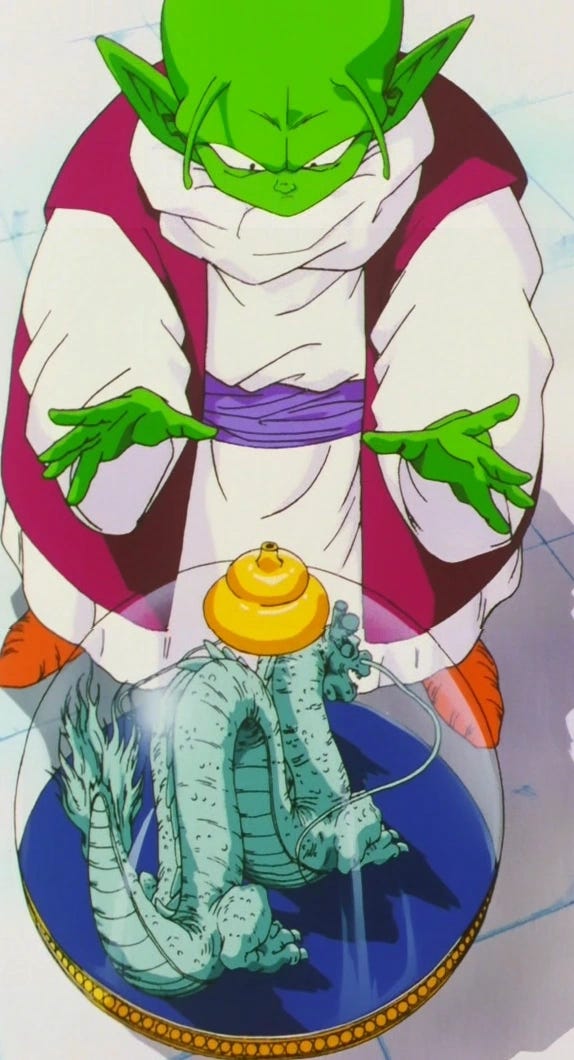
The connection between a dragon and its creator becomes even clearer when Dende becomes Earth’s new Guardian.
Kami’s fusion with Piccolo removes the old Guardian from the world. Because Shenron and the Dragon Balls were connected to Kami, they disappear with him.
Earth does not merely lose a dragon. It loses one of its greatest sources of hope. Goku’s solution is not to find a more powerful warrior. It is to find another creator.
He travels to New Namek and returns with Dende, the young Namekian whom Gohan and Krillin befriended during the war against Frieza.
Dende is not selected because he can defeat Cell.
He is chosen because he belongs to the Dragon Clan and possesses the rare gifts necessary to restore what Earth has lost. Elder Muri describes him as a prodigy, and Dende takes Kami’s place as the planet’s Guardian.
This leads to an important distinction.
It is easy to say that Dende simply created a “stronger Shenron” because he was more powerful than Kami. But the truth is more interesting. Dende understands the craft differently.
He rebuilds Earth’s Dragon Balls and modifies the rules governing them.
The restored Shenron can grant as many as three wishes, bringing him closer to Porunga’s original system. However, a wish that resurrects a large number of people uses more of that power, reducing the total number of available wishes.
Dende does not remove every limitation. He redesigns the miracle.
That tells us that the dragons are not fixed, eternal beings whose powers have always existed in exactly the same form.
They can change. Their creators can alter them. Their rules can be refined.
The relationship resembles an artist and a creation, an engineer and a machine, or perhaps a Guardian and the promise he makes to his world.
Kami’s Shenron reflected Kami. Dende’s restored Shenron reflects Dende.
When Earth gains a new Guardian, its dragon gains a new future.
EVEN THE DRAGON GODS HAVE LIMITS
Dragon Ball Z repeatedly places its most powerful figures under unexpected restrictions.
King Kai can train Goku, but he cannot fight every battle for him. The Supreme Kai understands the universe’s divine order, but he is still terrified of Majin Buu.
Shenron and Porunga can reverse death itself, yet they cannot simply solve every problem the moment it appears. That tension is essential.
Without limitations, the Dragon Balls would erase every consequence from the story.
A villain appears? Wish him away. A battle begins? Wish for victory. Someone grows stronger? Wish to become stronger still. Instead, the rules force the heroes to complete the adventure themselves.
The dragons cannot defeat Frieza. They cannot stop Cell. They cannot contain Majin Buu. Goku and his friends still have to fight. The Dragon Balls do not prevent tragedy. They provide a way to rebuild after it.
This is why their presence never completely destroys the emotional weight of death in Dragon Ball Z. The characters may know resurrection is possible, but it is never guaranteed.
The Dragon Balls can be destroyed. Their creator can die. The planet holding them can explode. A person may fall outside the rules of a particular wish. The heroes still have to survive long enough to gather all seven.
Hope exists.
But hope requires work.
THE DRAGON AT THE END OF THE WORLD
By the Majin Buu Saga, Shenron and Porunga are no longer strange discoveries. They are trusted allies.
When Buu destroys the Earth, the final battle cannot be won through strength alone. Goku needs energy for the Spirit Bomb. Vegeta needs time. The people of Earth need to be restored. The planet itself needs to return.
Once again, the Namekians and their dragon become essential. Porunga restores the Earth. He resurrects its people. He helps place the entire world back on the board so that humanity can contribute to its own salvation.
The final victory of Dragon Ball Z does not belong only to Goku.
It requires Vegeta’s plan. Mr. Satan’s voice. The energy of Earth’s people. Dende’s communication. The Namekians’ Dragon Balls. And Porunga’s wishes.
The God of Dreams helps give an entire planet another chance to dream. That is not a convenient detail added after the battle. It is the culmination of what the dragons have represented all along.
The heroes fight for the world.
The dragons allow the world to begin again.
WHY WE KEEP TELLING THIS STORY
Dragon Ball Z is filled with characters who can destroy planets.
- Frieza does it effortlessly.
- Cell threatens to erase the Earth.
- Majin Buu wipes away cities as casually as a child knocking over toys.
Destruction becomes so common that the series must constantly search for larger ways to express it. Yet the title of the franchise does not come from a transformation.
It does not come from the Kamehameha.
It does not come from a warrior, a tournament, or a power level.
It comes from seven objects capable of summoning a dragon. Because beneath all the screaming, fighting, explosions, and impossible displays of strength, Dragon Ball has always been a story about possibility.
A lost friend can return. A destroyed world can be restored. A terrible mistake does not have to become the final chapter.
Shenron and Porunga are not the strongest characters in Dragon Ball Z. They may be the most hopeful.
Every appearance means the heroes survived long enough to ask for another chance. Sometimes they use that chance wisely. Sometimes they waste a wish on something ridiculous. Sometimes they stand beneath an ancient dragon god and argue while he waits impatiently for them to finish.
But the promise remains.
The world can be wounded without being lost forever.
THE CTRL+BINGE CONNECTION
Shenron and Porunga work because they are both mythological and deeply personal. They are gods created by people. They possess overwhelming power, but they are shaped by the abilities, cultures, and choices of the Namekians who made them.
Porunga tells us who the Namekians are before any history book could. They are a people capable of creating something that grants dreams.
Shenron tells us what Earth has become. It is no longer merely Kami’s planet. It is a world shaped by Goku, Bulma, Piccolo, Dende, and every friend gathered along the way.
Even Shenron’s increasing familiarity with the heroes reflects that change. At first, he is a distant god looking down upon strangers. Eventually, he is the dragon who knows this family is going to need another resurrection explained to them.
That combination is pure Dragon Ball. The sacred becomes familiar. The divine becomes funny. The impossible becomes part of the family.
But it never stops feeling magical when the seven Dragon Balls begin to shine.
For most fantasy heroes, the arrival of a dragon means the adventure is about to become dangerous.
For Goku and his friends, it usually means the danger has finally passed.
- The sky turns black.
- Lightning rolls across the clouds.
- A dragon rises above the world.
And everyone who survived the journey looks upward. Not because they are afraid. Because they have hope.
Shenron and Porunga do not appear to end the story.
They appear so the story can continue.
THE QUESTION THAT LINGERS
What is more powerful: A dragon capable of destroying the world… or a dragon willing to give it another chance?