Everybody knows Goku. The spiky hair. The orange gi. The flying cloud. The magic staff.The endless appetite. The habit of picking fights with people much stronger than himself.
But here’s the strange thing. None of those ideas started with Dragon Ball. Long before Akira Toriyama created Goku, another hero was leaping across the heavens.
A troublemaker. A martial artist. A monkey born from stone. A warrior so powerful that he challenged Heaven itself. A hero who rode a magical cloud, wielded a magical staff, transformed into different forms, and spent most of his life ignoring authority.
His name was Sun Wukong. The Monkey King.
And once you learn his story, you start realizing something remarkable: Dragon Ball wasn’t just inspired by Journey to the West. The original Dragon Ball is practically a love letter to it.
THE FAMILIAR VERSION
Most Dragon Ball fans know the basics. Someone eventually points out that Goku’s Japanese name, Son Goku, comes from Son Wukong. You hear that fact. You nod. You move on. Maybe you notice a few similarities.
- The tail.
- The Power Pole.
- The Flying Nimbus.
- The monkey motif.
But that’s usually where the conversation stops. Because modern Dragon Ball has become so enormous that it’s easy to forget where it began. Today we think of Dragon Ball as a battle shonen.
Transformations. Tournaments. Saiyans. Gods. Multiversal threats. But the original Dragon Ball was something very different.
It was an adventure story. A comedy. A fantasy journey. A group of oddball travelers crossing the world in search of magical objects. Which sounds suspiciously familiar. Because that’s exactly what Journey to the West was.
And, then you meet the original Monkey King.
ORIGINS: THE MONKEY BORN FROM STONE
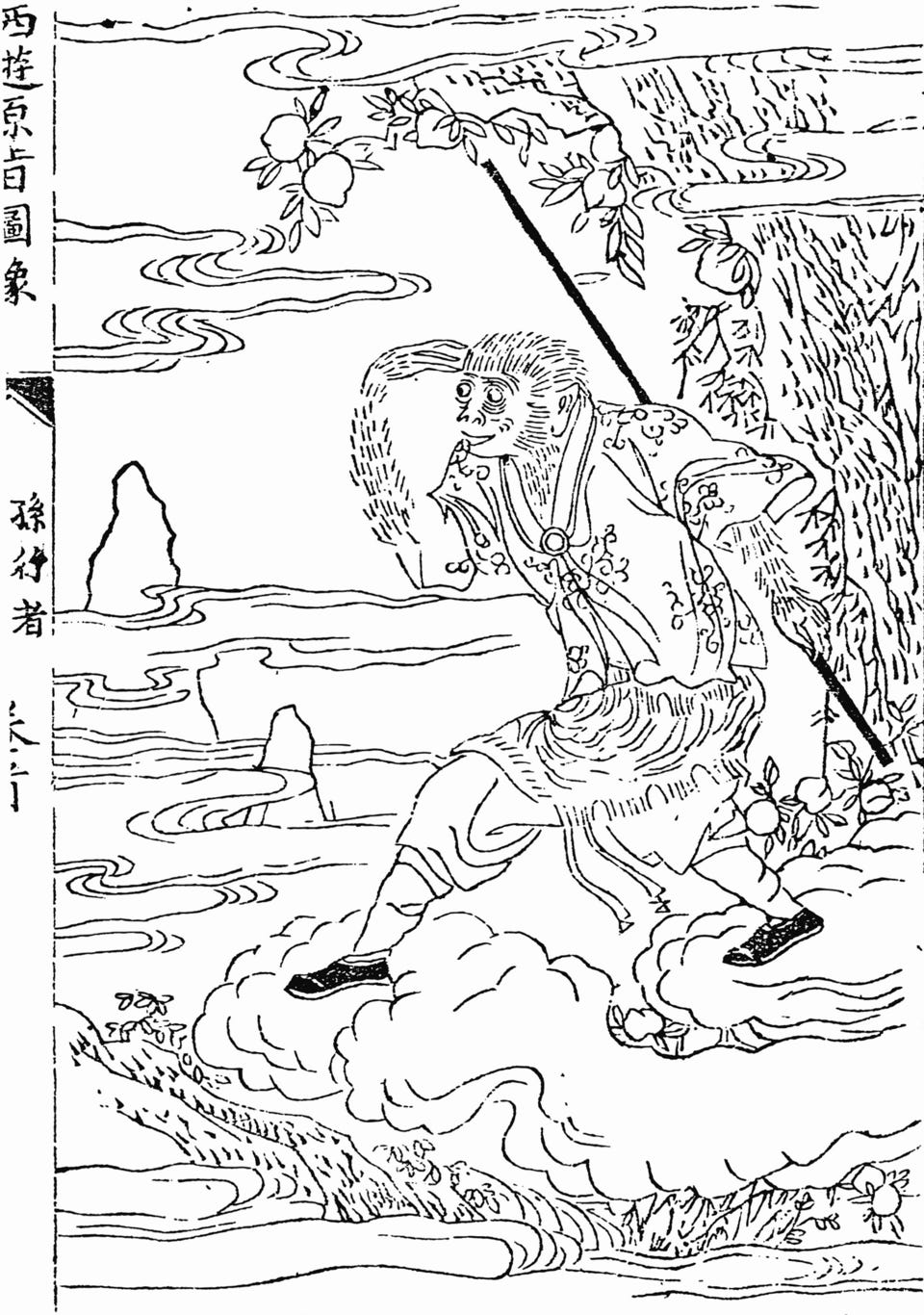
Journey to the West is one of the great classics of Chinese literature. Written during the Ming Dynasty, it tells the story of a monk’s pilgrimage to India to retrieve sacred Buddhist scriptures.
But let’s be honest. Nobody remembers the story because of the monk. They remember the monkey.
Sun Wukong begins life in one of the coolest origin stories ever written. A magical stone sits atop a mountain for ages. One day it cracks open. Out steps a monkey. Not a baby monkey. Not an ordinary monkey. A fully formed monkey already destined for greatness.
From the start, Wukong is curious, fearless, and completely incapable of accepting limits. Which should already sound familiar.
THE GREAT SAGE EQUAL TO HEAVEN
As Wukong grows stronger, he learns martial arts, magic, and immortality. Then he does what every reasonable person would do. He declares war on Heaven.
The celestial bureaucracy tries to control him. Wukong responds by causing absolute chaos. He steals sacred treasures. Erases his name from the Book of Death. Defeats heavenly armies. And eventually proclaims himself: “The Great Sage Equal to Heaven.” That’s one of the hardest titles ever invented.
The Monkey King isn’t evil. He’s rebellious. He refuses to accept that power should belong only to those born with it. He challenges authority because authority keeps telling him what he can’t do. That rebellious spirit eventually becomes one of the defining traits of Goku.
THE STAFF, THE CLOUD, AND THE MONKEY TAIL
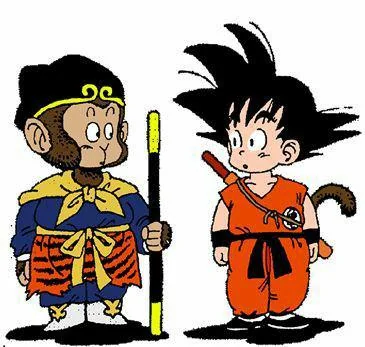
This is where Dragon Ball fans start smiling. Sun Wukong carries a magical staff called the Ruyi Jingu Bang. The staff can shrink to the size of a needle or grow large enough to support the heavens.
Sound familiar? Hello, Power Pole.
He travels using magical clouds. Hello, Flying Nimbus.
He’s a monkey. Hello, Saiyan tail.
Even Goku’s early design is loaded with references.
Toriyama wasn’t hiding the inspiration. He was celebrating it. Original Dragon Ball practically wears Journey to the West on its sleeve.
THE JOURNEY ITSELF
The similarities don’t stop with Goku.
The original Dragon Ball adventure mirrors Journey to the West in surprising ways. Bulma serves as the catalyst for the journey. Oolong resembles Zhu Bajie, the pig spirit companion. Yamcha fills the role of a wandering rogue. The Dragon Balls themselves function as a quest object that constantly pushes the cast forward.
Even the structure feels familiar.
- Travel.
- Meet strange people.
- Fight monsters.
- Learn lessons.
- Move on.
- Repeat.
The earliest Dragon Ball chapters often feel less like modern anime and more like a mythological road trip.
THE WEIRD STUFF
And now we get to the really fun part. Because Sun Wukong is completely insane. Not evil. Not cruel. Just gloriously chaotic. Among other things, he:
- Defeats dragons
- Travels across the world in a single leap
- Possesses dozens of magical abilities
- Creates clones from his own hair
- Battles gods
- Fights demons
- Breaks into Heaven repeatedly
- Achieves multiple forms of immortality
At one point, Heaven essentially concludes:“We have no idea how to stop this monkey.” That’s basically every Dragon Ball villain after meeting Goku.
POP CULTURE TAKEOVER
The Monkey King didn’t just influence Dragon Ball. He influenced almost everything. You can see pieces of him in:
- Dragon Ball
- Naruto
- One Piece
- Pokémon
- League of Legends
- Smite
- Enslaved: Odyssey to the West
- countless anime, games, comics, and films
In many ways, Sun Wukong is Asia’s equivalent of King Arthur, Robin Hood, or Hercules. Except somehow even more influential. For centuries, creators have been remixing his story. Akira Toriyama simply created one of the most famous remix of all.
WHY WE KEEP TELLING THIS STORY
Because the Monkey King embodies something people love; potential. He isn’t born a king. He isn’t chosen. He isn’t destined to rule. He earns his power through effort, stubbornness, and an almost reckless refusal to accept limitations.
That’s why audiences connect with him. And it’s why they connect with Goku. Both characters represent the same idea: There is always another mountain to climb. Another challenge to face. Another level to reach. The journey never truly ends.
CTRL+BINGE CONNECTION
This is one of the reasons Dragon Ball became such a cultural phenomenon. Toriyama wasn’t simply creating a new hero. He was plugging into one of the oldest and most beloved heroic archetypes in human storytelling.
The rebellious trickster. The wandering warrior. The hero who refuses to stay in his place.
When Goku rides the Flying Nimbus, swings the Power Pole, and charges headfirst into impossible odds, he’s carrying centuries of mythology with him. Most fans just don’t realize it.
The funny thing about mythology is that it never really disappears. Stories evolve. Heroes change names. Legends find new audiences. A stone monkey becomes a martial artist. A magical staff becomes the Power Pole. A Chinese folk hero becomes the face of one of the most successful anime franchises ever created.
The details change.
The spirit remains.
THE QUESTION THAT LINGERS
If Sun Wukong and Son Goku share the same heroic spirit…
Which one would be more shocked by what the other eventually became?