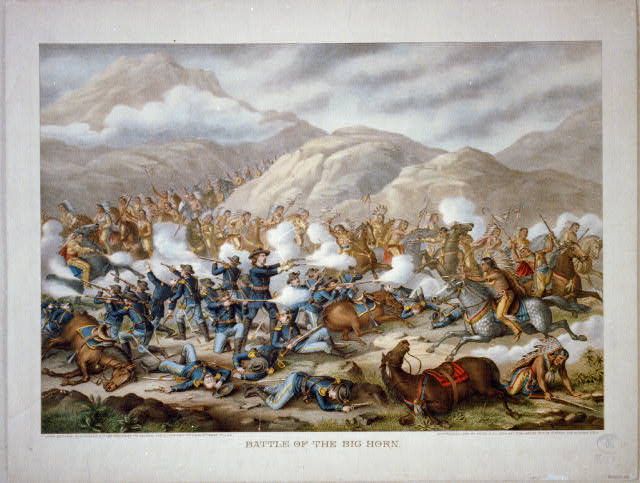
On June 25, 1876, one of the most famous battles in American history began along the banks of a river in present-day Montana. Nearly 150 years later, most people know it by another name:
Custer’s Last Stand.
The image is burned into American memory.
- A cavalry officer.
- A desperate defense.
- A battlefield surrounded by enemies.
- The end of a legend.
Or at least, that’s the version most of us inherited. Because the more you learn about the Battle of Little Bighorn, the stranger it becomes. The story isn’t just about how George Armstrong Custer died. It’s about how one of the most famous officers in America walked into a battle he fundamentally didn’t understand.
And that’s where things get interesting.
THE HISTORY CLASS VERSION
Here’s the version most people remember:
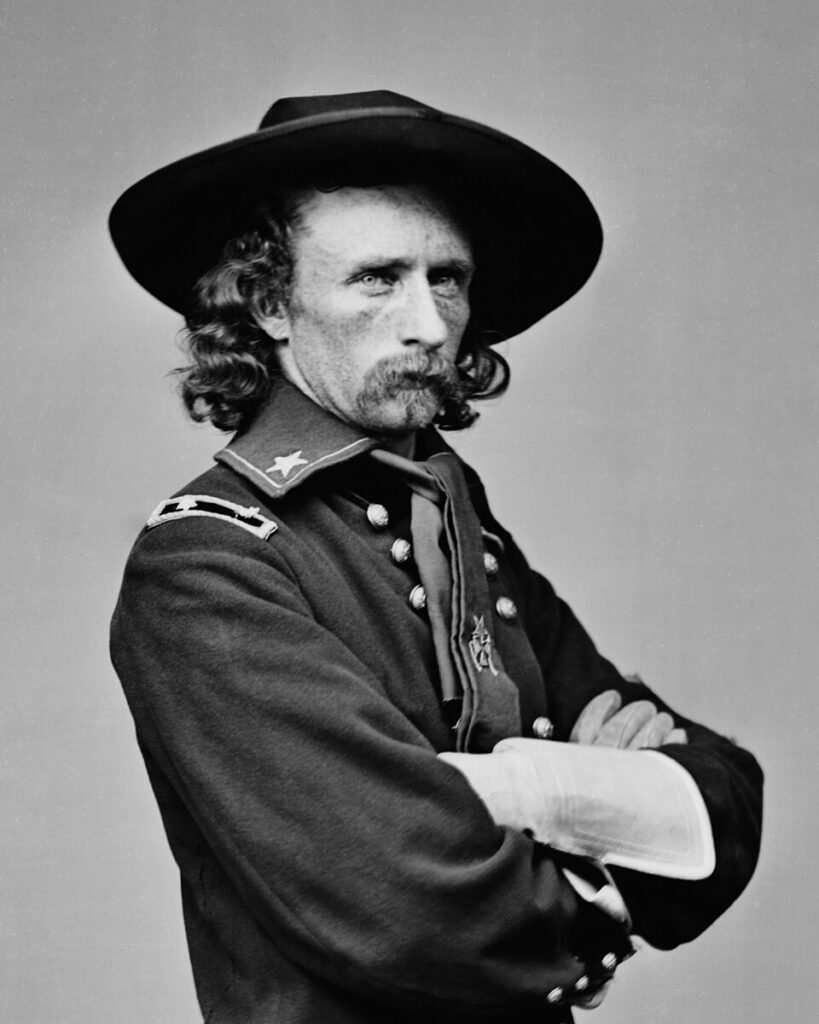
In June 1876, Lieutenant Colonel George Armstrong Custer and the U.S. Army’s 7th Cavalry were ordered to locate and engage Native American groups that had refused government orders to move onto reservations.
The campaign took place during the Great Sioux War.
Near the Little Bighorn River, Custer discovered what he believed was a large Native encampment.
Rather than wait for reinforcements, he chose to attack. The result was catastrophic. Forces led by leaders such as Sitting Bull, Crazy Horse, Gall, and others overwhelmed Custer’s battalion.
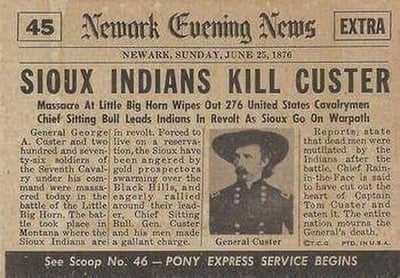
Custer and more than 200 of his men were killed. News of the defeat shocked the nation. “Custer’s Last Stand” became one of the most famous military defeats in American history.
That’s the version most of us know. And for the most part? It’s true. But history rarely stays that neat.
Because Little Bighorn wasn’t supposed to be a last stand. It wasn’t supposed to be a massacre. And it definitely wasn’t supposed to be a Native American victory.
The U.S. Army believed it was pursuing scattered groups. Instead, it stumbled into something much bigger. Something nobody fully appreciated until it was too late.
IT STARTED WITH GOLD
As it turns out, this story begins the way a lot of American stories begin: With people finding gold.
In 1874, gold was discovered in the Black Hills. There was just one problem. The Black Hills belonged to the Lakota under the Treaty of Fort Laramie. Legally, settlers weren’t supposed to be there. Reality had other ideas.
Prospectors flooded into the region. The government attempted to purchase the land. The Lakota refused. Tensions escalated.
Soon, military action followed. Little Bighorn wasn’t an isolated battle. It was the result of years of growing pressure.
THE BIGGEST THING CUSTER DIDN’T SEE
One of the most overlooked details of the battle is the size of the Native encampment. This wasn’t a small village. It wasn’t a scattered collection of camps. It was enormous.
Thousands of Lakota, Northern Cheyenne, and Arapaho people had gathered along the Little Bighorn River.
- Families.
- Children.
- Elders.
- Warriors.
- Entire communities.
For many participants, it was one of the largest gatherings they had ever seen. The Army expected to find smaller groups spread across the region. Instead, they found a temporary city. And that changed everything.
THE GAMBLE
Custer’s reputation had been built on speed. Aggression. Bold attacks. Sometimes those traits brought success. Sometimes they brought headlines. At Little Bighorn, they brought disaster.
Reports from scouts suggested the village was much larger than expected. Some reportedly warned that the force ahead was immense. But Custer feared the village might scatter if he waited. So, he made a decision that history students have been shaking their heads at ever since.
He divided his command. Part of the force went with Major Reno. Part went with Captain Benteen. And part stayed with Custer himself.
Military history is full of moments where leaders split their forces. When it works, they’re called geniuses. When it doesn’t… Well, people write textbooks and Throwback Thursday articles about you.
THE OTHER SIDE OF THE STORY
One reason Little Bighorn remains so fascinating is that it isn’t just Custer’s story. It’s also the story of the people who defeated him.
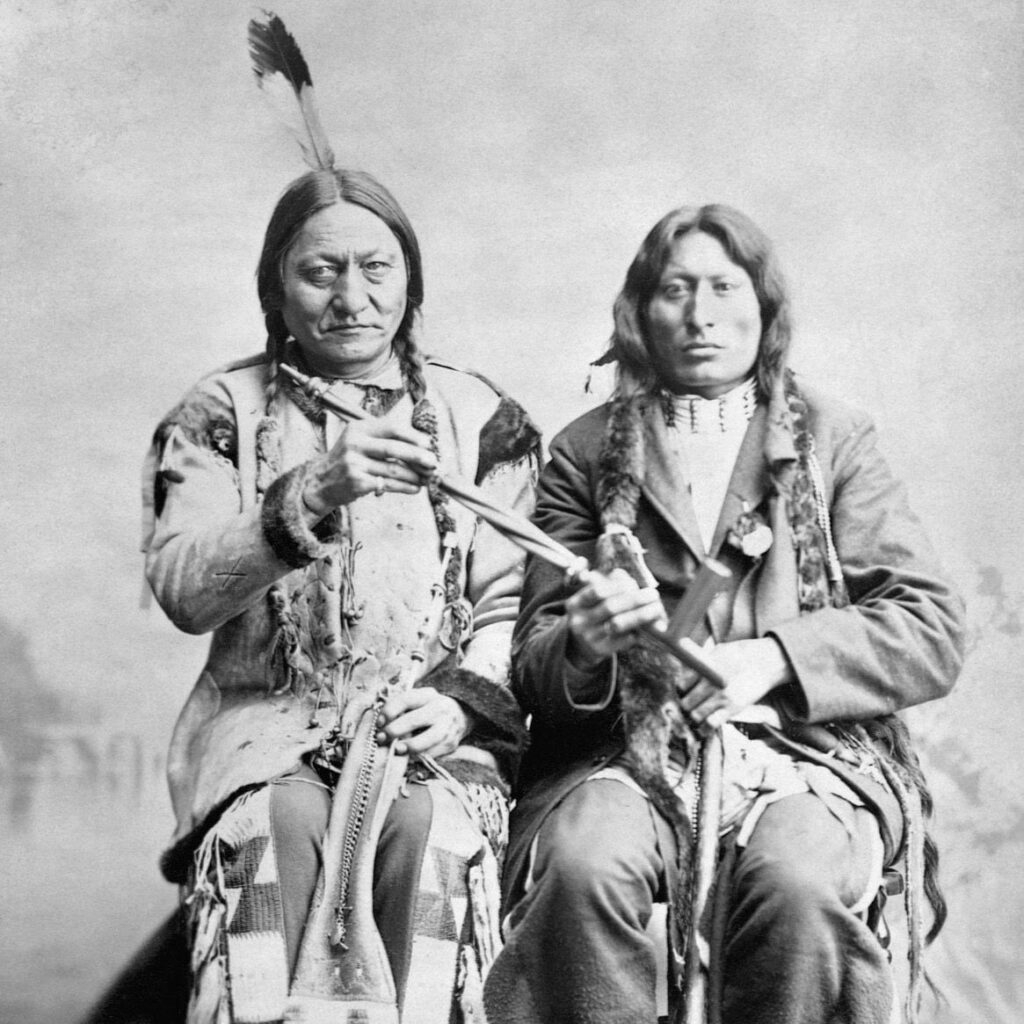
Leaders like Sitting Bull and Crazy Horse have become legendary figures, but they weren’t fighting for glory. They were fighting for their homes, families, and way of life. For one brief moment, multiple nations stood together against a common threat.
That unity mattered. The victory wasn’t an accident. It was earned. And for a short time, it showed what was possible when those nations acted together.
THE WILD DETAIL
Here’s a lore drop for you. One of Custer’s Crow scouts reportedly climbed a ridge before the battle and saw the village below. What he saw stunned him.
The camp stretched farther than expected. Farther than normal. Farther than comfortable. According to later accounts, he tried to communicate the scale of what lay ahead.
Imagine being the person who realizes the problem. Imagine seeing the storm coming. And realizing nobody around you fully understood what you’re trying to tell them. History is full of moments like that.
Little Bighorn may be one of the most famous.
WHY THIS MATTERED
Here’s the tragic irony. Little Bighorn was a stunning Native American victory. But it wasn’t a lasting one. News of Custer’s defeat spread rapidly. Public outrage followed. Military pressure intensified.
Within a few years, many of the leaders involved had been killed, captured, or forced onto reservations. The victory became both a triumph and a turning point. That’s part of what makes the battle so haunting.
The warriors who won the fight ultimately couldn’t stop the larger forces surrounding them. History doesn’t always reward battlefield victories. Sometimes the bigger story keeps moving.
MODERN CONNECTION
Little Bighorn feels surprisingly modern. At its core, it’s a story about underestimating your opponent. About believing your own reputation. About ignoring warnings because they don’t fit the narrative you already believe. We’ve seen that story everywhere.
Sports dynasties lose to underdogs. Movie villains dismiss heroes. Anime rivals underestimate protagonists. Businesses ignore changing markets.
The details change. The lesson doesn’t. Confidence is powerful. Overconfidence is expensive.
PARTING SHOT
The Battle of Little Bighorn is remembered as Custer’s Last Stand. But that title only tells part of the story.
It was also Sitting Bull’s stand. Crazy Horse’s stand. The stand of thousands of people determined to protect their homes and their future. Nearly 150 years later, the battle still sparks debate because it refuses to fit neatly into a single narrative.
- It was a defeat.
- A victory.
- A warning.
- A tragedy.
And a reminder that history is often far more complicated than the legends we build around it.
CTRL+BINGE QUESTION
Imagine you’re standing beside Custer on the morning of June 25, 1876. Your scouts tell you the village ahead is far larger than expected.
Do you attack immediately? Or do you wait, regroup, and rethink the plan?
Because history turned on that decision.