Everyone knows the Spanish Armada.
Or at least… they think they do.
Massive fleet.
Catholic superpower.
England standing alone against impossible odds.
The story usually ends the same way:
England wins.
Spain loses.
History moves on.
Simple.
Except the real story feels less like a clean military victory and more like a disaster movie directed by history itself.
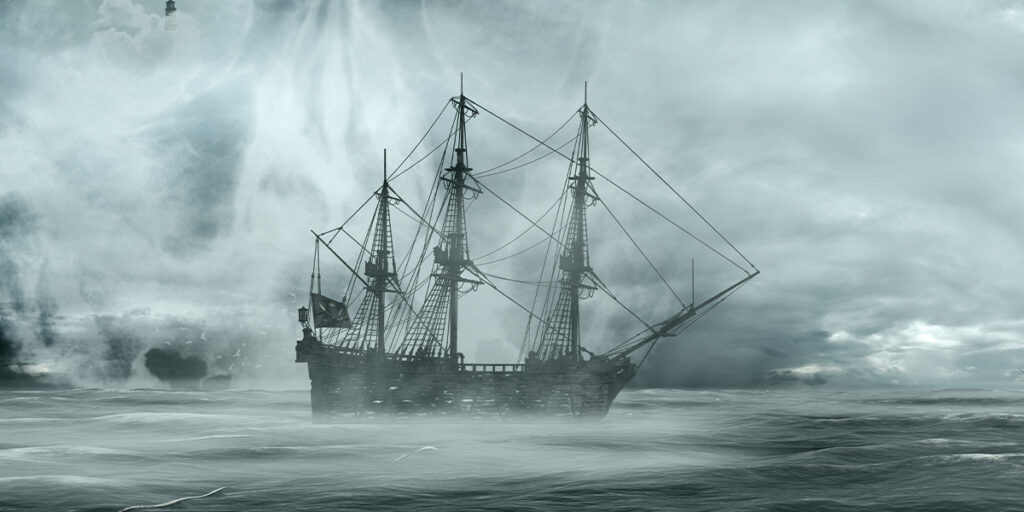
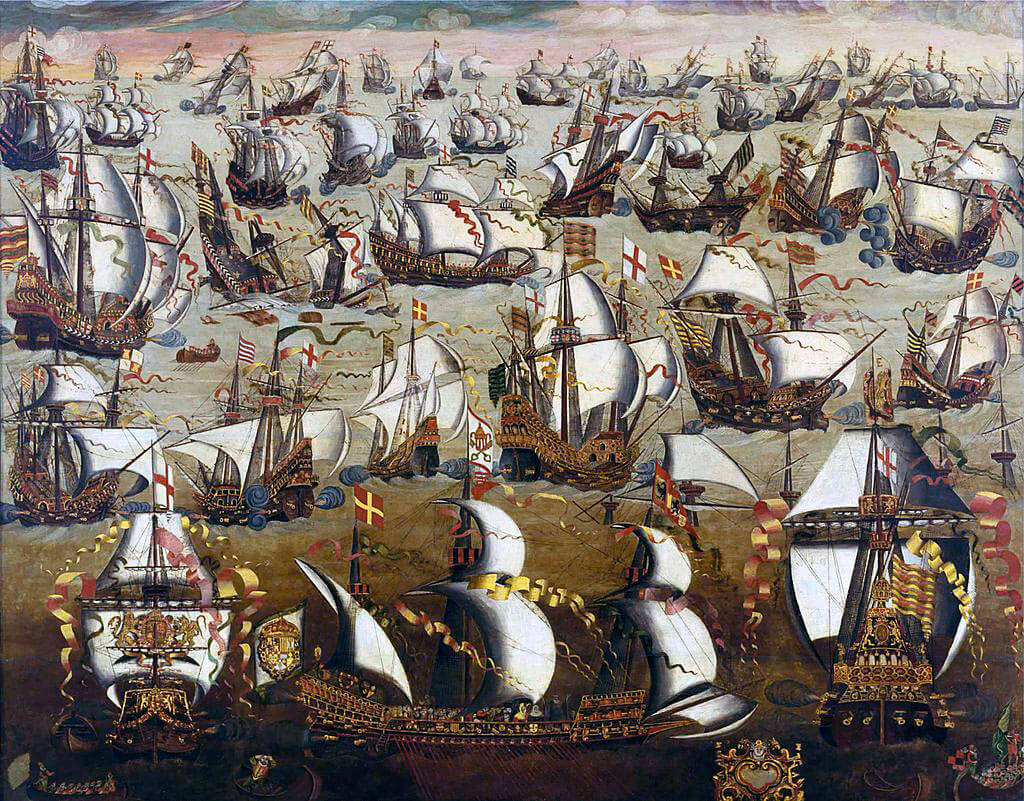
Because on this day in 1588, the Spanish Armada — one of the largest naval forces ever assembled to that point in human history — set sail to secure control of the English Channel.
And what followed was chaos:
storms,
miscommunication,
bad coordination,
burning ships,
starvation,
and thousands of men dying not just in battle… but trying to get home.
The Armada wasn’t just a failed invasion.
It became one of history’s most famous examples of how even the biggest powers on Earth can lose control of the story.
THE HISTORY CLASS VERSION
Here’s the version most people remember.
In 1588, Catholic Spain, ruled by King Philip II, launched a massive fleet called the Spanish Armada to invade Protestant England, overthrow Queen Elizabeth I, and restore Catholic influence.
Spain was the dominant superpower of the era:
- enormous empire
- absurd wealth from the Americas
- feared military
- legendary navy
England?
Smaller.
Less powerful.
Outgunned on paper.
The Armada’s goal was straightforward:
Sail through the English Channel, link up with Spanish forces in the Netherlands, then escort an invasion army into England. Sounds simple, right? Not so fast, my friend!
Instead, the English navy harassed the fleet, fireships caused panic, storms wrecked the retreat, and the Armada collapsed during its attempted journey home around Scotland and Ireland.
England celebrated it as divine victory.
Spain suffered one of the most famous naval disasters in history.
That’s the version history class gives us.
And technically?
Most of that is true.
But history rarely stays that neat.
Because the Armada wasn’t some unbeatable superweapon that suddenly exploded.
And England didn’t exactly “solo” Spain in glorious underdog fashion either.
The real story is messier.
And truthfully?
Way more human.
WHAT ACTUALLY HAPPENED
The Armada was massive for its time:
around 130 ships,
30,000 men,
thousands of cannons.
But it had a huge problem before it even left harbor:
the plan depended on perfect coordination.
Spain’s navy had to sail from Spain, navigate hostile waters, communicate with the Duke of Parma’s army stationed in the Netherlands, pick up thousands of soldiers, then escort them safely across the Channel.
In the 1500s.
Without modern communication.
That’s already terrifying.
And the English knew it.
Under commanders like ya boi Sir Francis Drake, the English navy avoided direct “heroic showdown” combat and instead used speed, range, and harassment tactics.
They stayed mobile.
Kept distance.
Attacked supply lines.
Forced Spain into defensive formations.
This wasn’t a medieval knight battle on water.
It was closer to death by a (hundred) thousand cuts.
Then came the fireships.
At Calais, the English sent burning ships drifting toward the anchored Armada at night.
Now, fireships themselves weren’t new.
But psychologically?
Absolute nightmare fuel.
Spanish captains panicked, cut anchor lines, scattered formation, and suddenly the carefully organized fleet became fragmented chaos.
That mattered.
Because naval battles in this era depended heavily on formation and coordination.
Once that structure cracked, everything became harder.
THE HUMAN DRAMA
King Philip II believed the mission had divine support.
That wasn’t unusual for the era.
Religion and politics were deeply intertwined.
England under Queen Elizabeth I represented more than a rival kingdom to Spain.
It represented Protestant resistance.
The Armada wasn’t just military strategy.
It was ideological.
And then there’s Elizabeth herself.
Her famous speech at Tilbury became legendary:
“I have the body of a weak and feeble woman, but I have the heart and stomach of a king…”
That speech helped shape English national identity for centuries afterward.
But here’s the twist:
England itself was nervous.
Very nervous.
People act like everyone knew England would win.
Nobody knew that.
If the invasion force landed successfully?
History might look completely different today.
THE WEATHER PROBLEM
Now for the phrase everyone remembers:
“The Protestant Wind.”
After failed battles in the Channel, the Armada attempted to retreat north around Scotland and Ireland to return home.
That’s where nature stepped in.
Violent storms wrecked ships already low on supplies and damaged from combat.
Sailors drowned.
Ships smashed into rocky coasts.
Survivors starved or were killed after making landfall.
Thousands died during the retreat.
That’s important because the Armada wasn’t destroyed in one giant cinematic battle.
It was worn down,
scattered,
then brutalized by weather and logistics.
Turns out even the largest fleet in Europe still has to respect the Atlantic Ocean.
THE WILD DETAIL
Here’s your lore drop:
Some Spanish ships carried so many supplies and soldiers that they were effectively floating cities.
Food spoiled quickly.
Fresh water became contaminated.
Disease spread fast.
Imagine being trapped on an overcrowded wooden ship for months while storms throw you around the North Atlantic.
And then imagine hearing:
“Good news! We’re going around Scotland now.”
Absolutely horrifying.
Also: Sir Francis Drake reportedly paused during earlier operations against Spain to finish a game of bowls before engaging the enemy.
That story may be exaggerated.
But honestly?
The fact we WANT it to be true tells you everything about how legends work.
THE AFTERMATH MYTH
The Armada’s defeat became propaganda gold.
England framed it as proof God favored them.
Spain’s image took a major hit internationally.
But here’s the nuance: Spain didn’t instantly collapse afterward.
It remained a major power for decades.
This wasn’t “game over.”
It was more like the moment the aura cracked.
And once people realize the giant can bleed?
Everything changes.
WHY THIS MATTERED
The Spanish Armada mattered because it reshaped perception.
England emerged with growing naval confidence.
Spain lost part of its invincible reputation.
And the future of Atlantic power slowly began shifting.
Long term, this helped open the door for:
- English naval expansion
- colonial growth
- eventually the British Empire itself
That’s massive.
Because one failed invasion attempt helped alter who would dominate global trade and sea power for centuries afterward.
It also changed warfare.
The Armada showed that:
- mobility mattered
- logistics mattered
- coordination mattered
- giant fleets alone weren’t enough
Big numbers don’t guarantee victory.
Ask basically every sports superteam ever.
This was the original “superteam collapse.”
On paper, Spain looked unstoppable.
Then reality happened.
Bad communication.
Pressure.
Panic.
Logistics falling apart.
The weather deciding it wanted MVP votes.
This was basically the historical version of:
- the heavily favored team losing in the playoffs
- the villain armada failing in a fantasy finale
- the giant anime empire realizing the protagonists refuse to cooperate with destiny
And imagine social media during this.
“ARMADA FRAUD WATCH”
“DRAKE CLEARS”
“THE WIND WITH THE CLUTCH ASSIST”
Absolute chaos.
PARTING SHOT
The Spanish Armada is remembered as one of history’s greatest military failures.
But maybe the most fascinating part is this:
Nobody involved thought they were living through a symbol.
To them, it was just: orders, fear, storms and survival.
History only becomes mythology afterward.
And sometimes the difference between “invincible empire” and “catastrophic failure” is thinner than anyone wants to admit.
CTRL+BINGE QUESTION
What’s the bigger factor in history:
great leadership…
or pure uncontrollable chaos?
Because the Spanish Armada had power, numbers, and confidence.
And the ocean still said:
“Not today.”