
Everyone knows Charles Lindbergh.
Or at least… they think they do.
The guy in the plane.
The leather helmet.
The impossible flight.
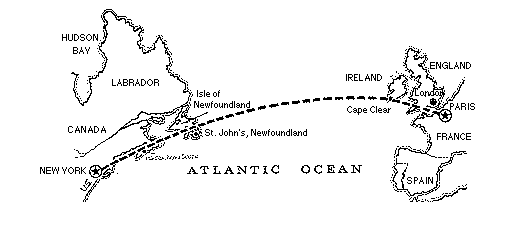
On this day in 1927, Lindbergh landed in Paris, completing the first solo nonstop transatlantic flight from New York to Paris.
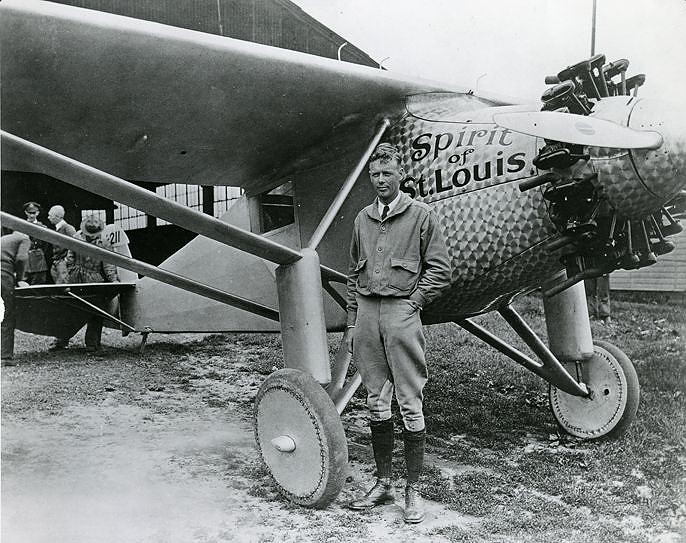
Thirty-three and a half hours. Alone. Over the Atlantic. In a plane called the Spirit of St. Louis.
It sounds like one of those stories history cleaned up into something neat.
A brave pilot.
A daring mission.
A happy ending.
Cue swelling orchestral music.
But history rarely stays that tidy.
Because the real story isn’t just about a flight.
It’s about risk, ego, engineering, media frenzy, national mythmaking… and one man becoming something dangerously bigger than himself.
Here’s the version most people remember.
In the 1920s, aviation was still the Wild West.
Planes existed, sure — but commercial flight wasn’t normal life. Flying was dangerous, unreliable, and often viewed as equal parts innovation and insanity.
Then a challenge emerged:
The Orteig Prize offered $25,000 to the first aviator who could complete a nonstop flight between New York and Paris.
Several famous pilots wanted it.
Some died trying.
Then came Lindbergh.
A relatively unknown 25-year-old airmail pilot from America.
No co-pilot.
No navigator.
No radio.
Just him and a specially designed aircraft.
On May 20, 1927, he took off from Long Island.
On May 21, he landed in Paris to a crowd of over 100,000 people.
Instant legend.
The flight proved long-distance aviation was possible, accelerated public enthusiasm for air travel, and made Lindbergh one of the most famous people on Earth.
That’s the version history class loves.
And to be fair?
That part’s true.
But that’s not the whole story.
Because “heroic solo flight” is only part of what happened.
The real story includes dead competitors, absurd engineering choices, terrifying sleep deprivation, and a media machine that turned one guy into the prototype for the modern celebrity.
A. WHAT ACTUALLY HAPPENED
The race to cross the Atlantic wasn’t just adventurous.
It was lethal.
Before Lindbergh succeeded, multiple crews had already attempted the trip.
Some crashed.
Some died.
This wasn’t “can someone do this?”
It was “how many people are we willing to lose finding out?”
Lindbergh’s edge wasn’t fame.
It was strategy.
Other teams packed their aircraft with comfort and technology.
Lindbergh did the opposite.
His plane was stripped down to maximize fuel:
- No radio
- No parachute
- No windshield in front of him (seriously)
Instead, he used a side periscope because fuel tanks blocked forward visibility.
Imagine crossing the Atlantic in a flying gas tank while occasionally looking sideways to see where you’re going.
That’s not bravery.
That’s commitment bordering on insanity.
B. THE HUMAN DRAMA
And then there’s Lindbergh himself.
He wasn’t some grizzled aviation titan.
He was 25.
Young. Ambitious. Confident enough to believe he could do what more experienced crews couldn’t.
That’s either heroic or the energy of every anime protagonist ever.
He flew for over 33 hours with almost no sleep.
He reportedly hallucinated.
Saw phantom shapes.
Fought exhaustion so severe he slapped himself awake.
At one point, he was essentially running on stubbornness and vibes over the Atlantic Ocean.
That’s what makes this story hit.
The technology mattered.
But the human endurance may have mattered more.
Here’s your lore drop:
Lindbergh intentionally chose not to bring a radio.
Not because he forgot.
Because it weighed too much.
Same with a parachute.
Same with other safety gear.
This man looked at life-saving equipment and basically said:
“Fuel > survival.”
That’s either elite optimization…
Or absolutely unhinged behavior.
Maybe both.
Also?
When he landed in Paris, the crowd was so wild they literally swarmed the plane and began tearing pieces off it as souvenirs.
Imagine landing after the most exhausting flight in human history and immediately getting mobbed like the Beatles.
This may be the first modern celebrity mega-event.
Newspapers went insane.
Headlines everywhere.
Interviews.
Public appearances.
Parades.
Lindbergh became larger than life overnight.
Not just pilot famous.
Global icon famous.
And that changed things.
Because now aviation wasn’t just dangerous engineering.
It was aspirational.
Sexy.
Modern.
His flight helped kickstart public trust in air travel.
One man didn’t create the airline industry.
But he absolutely poured jet fuel on its public image.
History loves clean heroes.
Reality rarely cooperates.
Lindbergh later became a deeply controversial figure for his isolationist political views before WWII, including speeches many Americans found disturbing.
That doesn’t erase the flight.
But it complicates the mythology.
Which is very Throwback Thursday.
Heroic moment?
Absolutely.
Perfect man?
Not even close.
The flight changed aviation forever.
Before Lindbergh:
Flying felt experimental.
After Lindbergh:
Flying felt inevitable.
Investments surged.
Public fascination exploded.
Air travel gained legitimacy.
The world got smaller.
And psychologically?
This mattered too.
Humans love impossible barriers.
Crossing oceans had once belonged to ships.
Now one guy in a glorified aluminum fever dream proved distance itself was negotiable.
That changes how civilization thinks.
This was basically the moon landing before the moon landing.
Same energy:
- Impossible challenge
- Massive public attention
- One iconic human face attached to it
Or if we’re speaking Ctrl+Binge:
This was anime protagonist behavior.
“Everyone else failed?”
“I’ll do it alone.”
“No safety net.”
“Maximum determination.”
Even modern sports gets this.
This was Jordan flu game mythology.
Kirk Gibson home run energy.
Game 7 legendary stuff.
And imagine Twitter in 1927.
“BRO TOOK OFF WITH NO PARACHUTE???”
Absolute chaos.
Charles Lindbergh’s flight was real.
The danger was real.
The achievement was real.
But history doesn’t just remember what happened.
It remembers how stories get told afterward.
Sometimes the legend is earned.
Sometimes it grows teeth of its own.
This one?
A little of both.
Who has bigger protagonist energy: Charles Lindbergh crossing the Atlantic solo… or NASA deciding the Moon was the next logical step? ✈️🚀