Everybody knows dragons.
Big monsters.
Scales. Fire. Chaos.
Western mythology taught us that when something ancient and powerful appears… someone usually needs a sword.
But in Chinese mythology?
One of the most powerful creatures in all of folklore doesn’t arrive to destroy kingdoms.
It arrives to announce greatness.
It doesn’t hunt.
It doesn’t terrorize villages.
It supposedly walks so gently that it avoids crushing grass beneath its feet.
Which raises a better question:
What if some cultures imagined power not as something terrifying…
…but something worthy?
That creature is the Qilin.
And if you’ve ever looked at anime, JRPG monster design, Pokémon, or fantasy creature lore and thought:
“Wait, why does that elegant deer-dragon thing feel familiar?”
You’ve probably already seen its descendants.
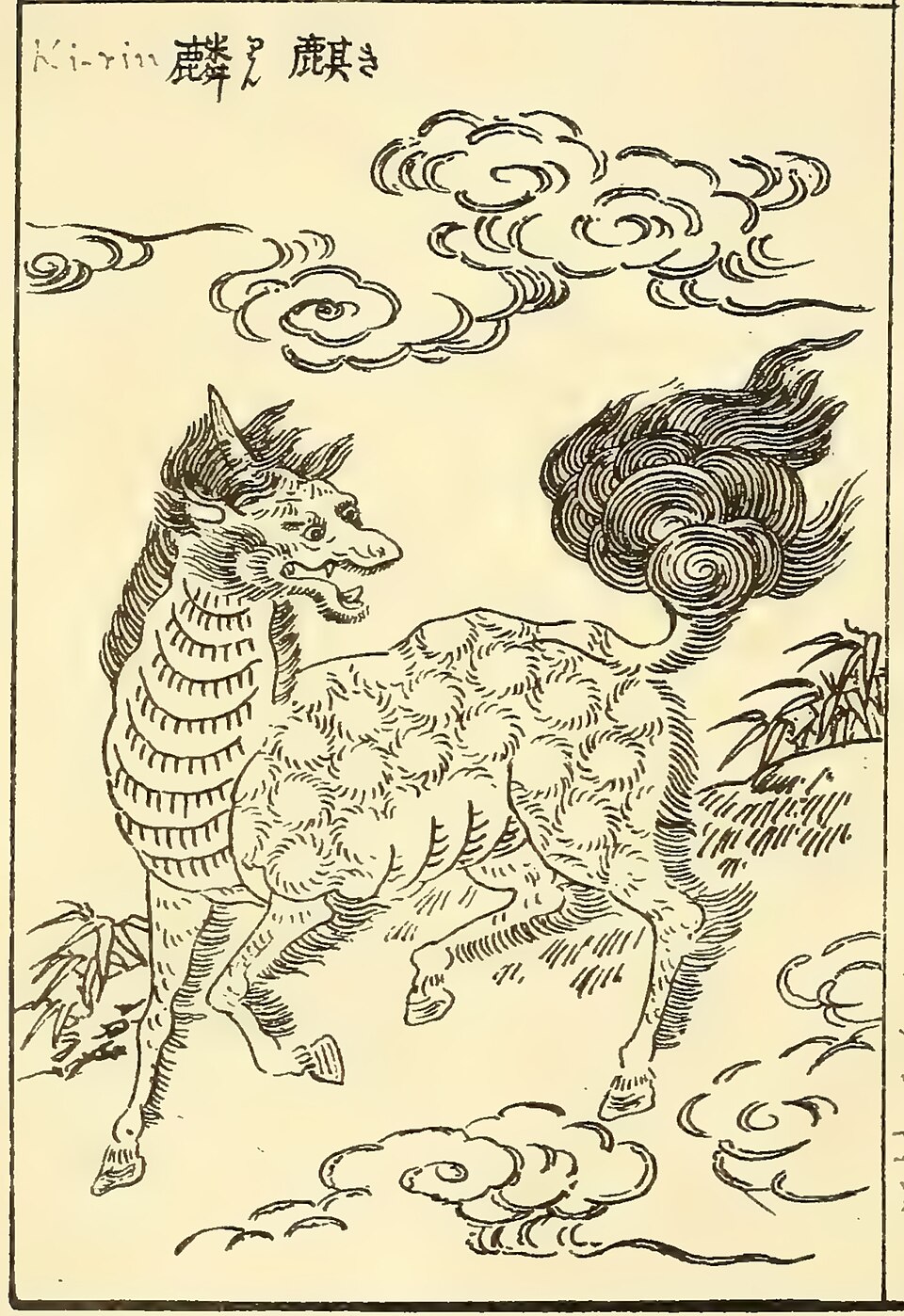
If you’ve heard of the Qilin (麒麟), you probably know it as “the Chinese unicorn.”
That’s the shorthand version.
A majestic mythical creature.
Part deer.
Part dragon.
Part horse.
Sometimes scales.
Sometimes hooves.
Sometimes fire trailing around its body.
It’s often shown as elegant, noble, and strangely serene.
Unlike Western dragons — which frequently symbolize greed, destruction, or conquest — the Qilin is almost always a positive omen.
Its appearance traditionally signals:
- the birth of a great ruler
- the arrival of a sage
- peace and prosperity
- divine favor
In some stories, seeing a Qilin is like the universe itself saying:
“Pay attention. Someone important is here.”
Pop culture has simplified it into “Asian unicorn.”
That’s not wrong.
But it’s also wildly incomplete.
Because the Qilin isn’t just a cool creature design.
It’s a walking philosophy.
But mythology gets way stranger when the “monster” isn’t actually the threat.
ORIGINS: BEFORE IT WAS FANTASY ART
The Qilin’s roots stretch back over 2,000 years in Chinese mythology.
Earliest references appear during the Zhou dynasty, though the creature likely existed in oral tradition even earlier.
And unlike many mythological beasts born from fear…
The Qilin was aspirational.
This thing symbolized:
- wisdom
- righteousness
- justice
- benevolent rulership
- cosmic harmony
It wasn’t something people feared meeting.
It was something they hoped to witness.
One famous legend claims a Qilin appeared shortly before the birth of Confucius, effectively marking him as destined for greatness.
That tells you everything.
This creature wasn’t about survival horror.
It was mythological PR.
THE DESIGN IS DELIGHTFULLY CHAOTIC
Ask ten artists to draw a Qilin and you might get ten different creatures.
Common traits include:
- deer-like body
- dragon scales
- ox tail
- horse hooves
- flowing mane
- horns
- fire motifs
Basically:
Ancient creature design said:
“What if elegance and raw myth energy had a baby?”
And because Chinese mythology tends to focus more on symbolism than biological consistency…
That works.
The design reflects hybridity because the symbolism is bigger than anatomy.
Power + grace.
Wildness + restraint.
Strength + peace.
IT DOESN’T WANT TO HURT YOU
One of the most fascinating pieces of Qilin lore?
It’s said to be so gentle that it avoids harming living things.
Some legends say:
- it refuses to step on insects
- avoids crushing plants
- does not eat flesh
Think about how radically different that is from Western monster logic.
In European stories:
Big creature = threat.
Here?
Big creature = moral perfection.
That cultural contrast is fascinating.
THE GIRAFFE INCIDENT (YES REALLY)
One of the weirdest real-world chapters?
In 1414, during the Ming Dynasty, Chinese explorers received a giraffe from East Africa.
And some people genuinely interpreted it as a Qilin.
Honestly?
Look at a giraffe through medieval eyes.
Long neck. Graceful. Exotic. Strange proportions.
I get it.
This became a political flex for Emperor Yongle.
“Clearly heaven approves of my reign. A Qilin showed up.”
That’s incredible myth-meets-statecraft energy.
JAPAN GOT ITS OWN VERSION
The Japanese Kirin is derived from the Qilin.
Same roots. Different flavor.
Japanese depictions often lean more deer-like and elegant.
If you’ve consumed anime, JRPGs, or Japanese fantasy media?
You’ve absolutely encountered this aesthetic DNA.
This thing quietly shaped creature design for generations.
POP CULTURE TAKEOVER
The Qilin may not be as instantly recognizable in Western pop culture as dragons or phoenixes, but its influence absolutely lingers across East Asian fantasy storytelling.
You’ll see echoes of it in:
- Chinese fantasy dramas and xianxia stories, where sacred beasts often symbolize divine order, wisdom, or heavenly favor
- Japanese interpretations of the Kirin, which evolved directly from the Qilin tradition
- RPG creature design that favors elegant, mystical “guardian beasts” over purely destructive monsters
- fantasy stories where encountering a creature is less about surviving a fight… and more about witnessing something sacred
The important distinction is this:
Western fantasy often treats mythical beasts as obstacles.
Defeat the dragon.
Slay the monster.
Claim the treasure.
The Qilin comes from a completely different storytelling philosophy.
It isn’t a boss battle.
It’s an omen.
Its appearance means something bigger is happening — the arrival of greatness, the presence of virtue, the approval of heaven itself.
That shift matters.
Because it tells you a lot about how different cultures imagine power.
One says power must be conquered.
The other says power, at its highest form, might look like wisdom, restraint, and grace.
The Qilin survives because it reflects something people still want to believe.
That true greatness isn’t loud.
That power can be gentle.
That wisdom matters more than violence.
That extraordinary beings might show up not to destroy…
…but to affirm.
That’s honestly beautiful.
Especially now.
In an era where “power” often gets coded as aggression, domination, or spectacle…
The Qilin offers another model.
Quiet strength.
Moral authority.
Grace.
Not every myth survives because we fear it.
Some survive because we admire what they represent.
If Western fantasy built its creatures around conquest…
Eastern fantasy often builds them around philosophy.
That’s why Pokémon like Suicune feel different.
Why so many anime sacred beasts aren’t “monsters” at all.
Why JRPG summons often feel divine instead of predatory.
The Qilin didn’t just survive folklore.
It became a design language.
Maybe that’s what makes the Qilin so compelling.
It’s powerful.
Ancient.
Supernatural.
And yet…
it doesn’t exist to destroy anything.
For a mythical beast, that’s surprisingly refreshing.
Maybe some cultures looked into the unknown…
and imagined something worth aspiring to.
If your culture invented a legendary creature to represent ultimate power…
Would it be something to fear?
Or something to become? 🐉🦌