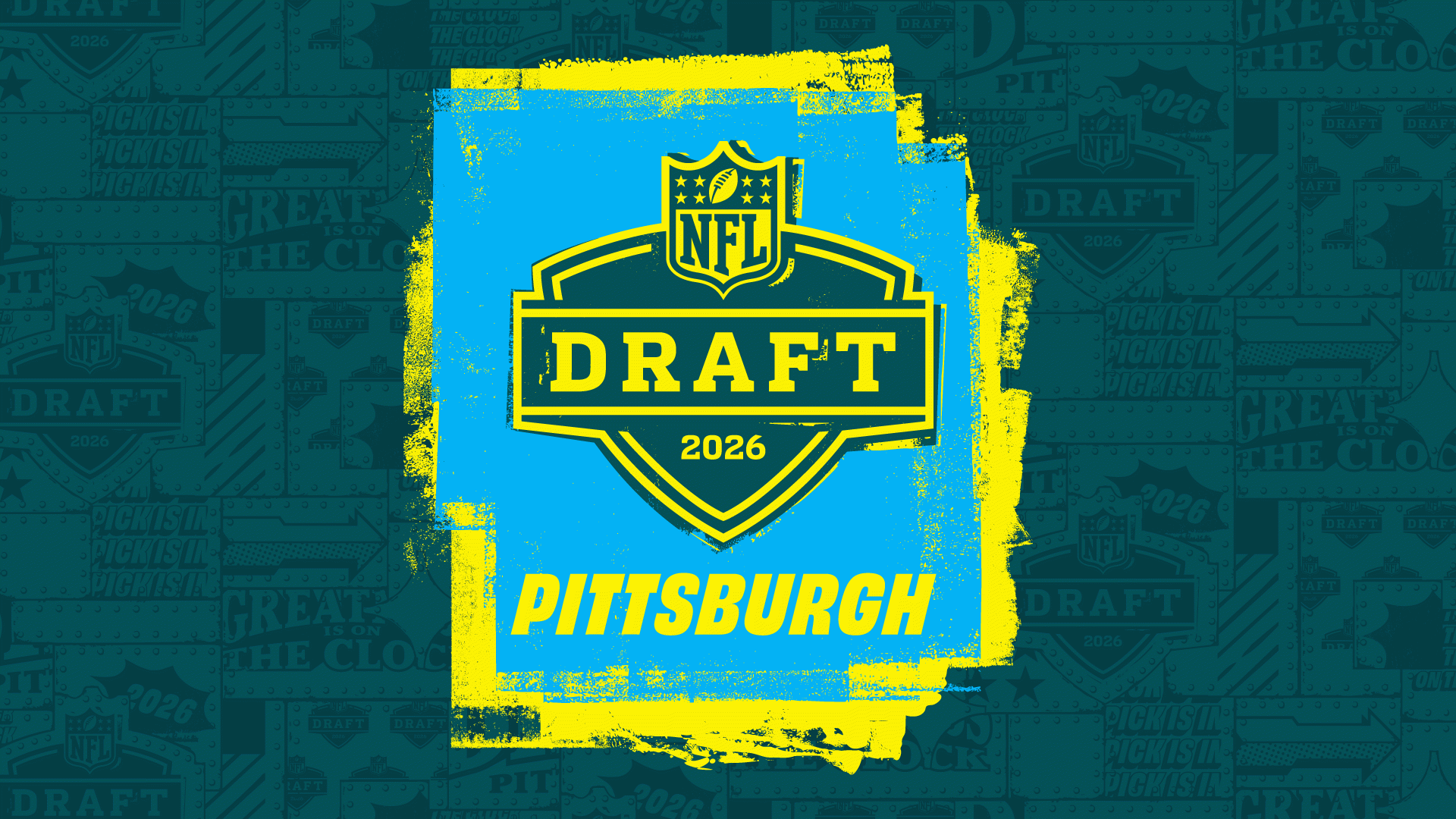
In honor of the NFL Draft taking place this week in Pittsburgh, this week’s Touchdown Tuesday is all about it!
The NFL Draft didn’t start as a spectacle.
It started as a solution.
Back in 1936, the league needed a way to keep teams competitive. The best college players were all signing with the same few franchises, and the gap between good teams and bad teams was growing fast. So, the NFL created the draft, a system where teams would select players in reverse order of their standings.
Worst team picks first.
Best team picks last.
For seven rounds, each of the teams pick.
Simple.
Fair.
At least in theory.
Over time, that simple system turned into one of the biggest events in sports.
Today, the draft isn’t just about teams picking players. It’s an entire industry.
There are:
- Scouts traveling the country year-round
- Analysts breaking down film frame by frame
- Mock drafts predicting every pick
- Combine performances measured down to fractions of a second
For months, the draft becomes its own universe.
People argue about players they’ve never seen play live.
Fans fall in love with prospects.
Entire franchises hinge on decisions made in minutes.
It’s not just selection.
It’s projection.
Because that’s what makes the draft so fascinating.
Nobody actually knows.
You’re not drafting who a player is.
You’re drafting who they might become.
That’s where the language of the draft comes in.
A “late-round steal” is a player taken later than expected who turns into something far more valuable than their draft position suggests. These are the finds…the players who outperform every expectation. Think Shannon Sharp, who the Denver Bronco’s took in the 7th round of the 1990 NFL draft, who became one of the greatest Tight Ends of all time.
A “bust” is the opposite. A highly drafted player who never lives up to the hype. Sometimes it’s injuries. Sometimes it’s situation. Sometimes… it just doesn’t work. Think Ryan Leaf, taken second overall to the Chargers in 1998. Or JaMarcus Russell, who was first overall to the Raiders in 2007
And then there’s one of the most unique traditions in all of sports:
Mr. Irrelevant.
The final pick of the draft.
The last name called.
A title that sounds like a joke — but has become its own badge of honor. That player gets attention, ceremonies, even a nickname that flips the meaning entirely.
Because even the last pick?
Still made it.
Some former Mr. Irrelevant designees? Pro Bowler Brock Purdy and Super Bowl champion Kicker Ryan Succop.
And then there’s the story everyone comes back to.
Tom Brady.
Drafted 199th overall in the 6th round.
Not highly recruited.
Not physically overwhelming.
Not expected to become much of anything.
And yet, he became the greatest quarterback of all time.
Seven Super Bowls.
A career that completely redefines what a “good pick” even is.
Because Brady isn’t just a success story.
He’s proof that the draft is imperfect.
That evaluation has limits.
That greatness doesn’t always announce itself early.
That’s why the draft works.
It’s not about certainty.
It’s about possibility.
Every pick carries a question:
What if this is the one?
What if this player changes everything?
And every year, fans buy in.
Hope resets.
Franchises rebuild.
Careers begin.
The draft is the only place in sports where:
- The worst teams get first hope
- The best players haven’t proven anything yet
- And the future is decided before anyone plays a snap
It’s not just a process.
It’s a belief system.
Question for readers:
Would you rather your team have the #1 overall pick… or find the next Tom Brady at #199?