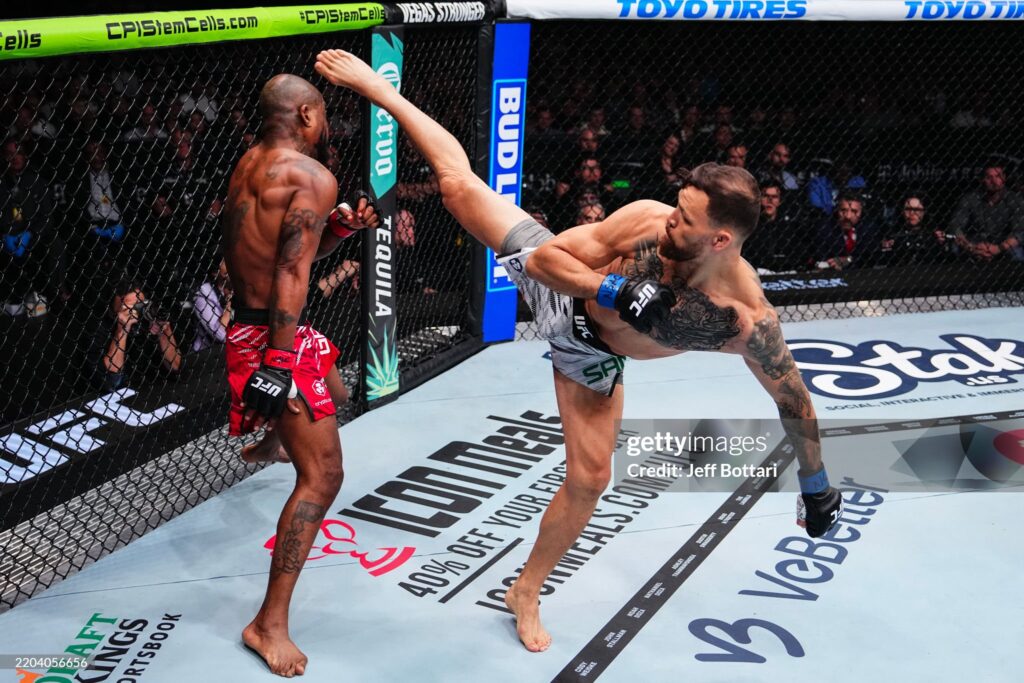
At first, it didn’t look like a sport.
No weight classes.
No real structure.
Just a question hanging in the air:
What actually works in a fight?
Most people remember early MMA as chaos.
The early days of the Ultimate Fighting Championship in the 90s felt raw — almost uncomfortable. Different styles thrown together with barely any rules. Boxer vs wrestler. Karate vs jiu-jitsu. It was marketed as something closer to spectacle than sport.
And then there was Royce Gracie — smaller, calmer, stepping into the cage and submitting bigger opponents with techniques most people had never seen before.
That’s the version we remember.
A proving ground.
A question being answered in real time.
But that wasn’t the beginning.
Long before the UFC, the idea of mixed fighting styles already existed. In Brazil, a tradition called Vale Tudo — literally “anything goes” — had been running for decades. Fighters from different disciplines would test themselves against each other with minimal rules. It wasn’t mainstream, but it planted the seed.
When the UFC launched in 1993, it didn’t invent MMA.
It packaged it.
The early events were designed to answer a simple question: which martial art is the best? But what actually happened was more interesting — no single style dominated forever. Specialists had their moment, then got figured out. Wrestlers learned submissions. Strikers learned takedown defense. Jiu-jitsu practitioners learned how to strike.
The sport forced evolution.
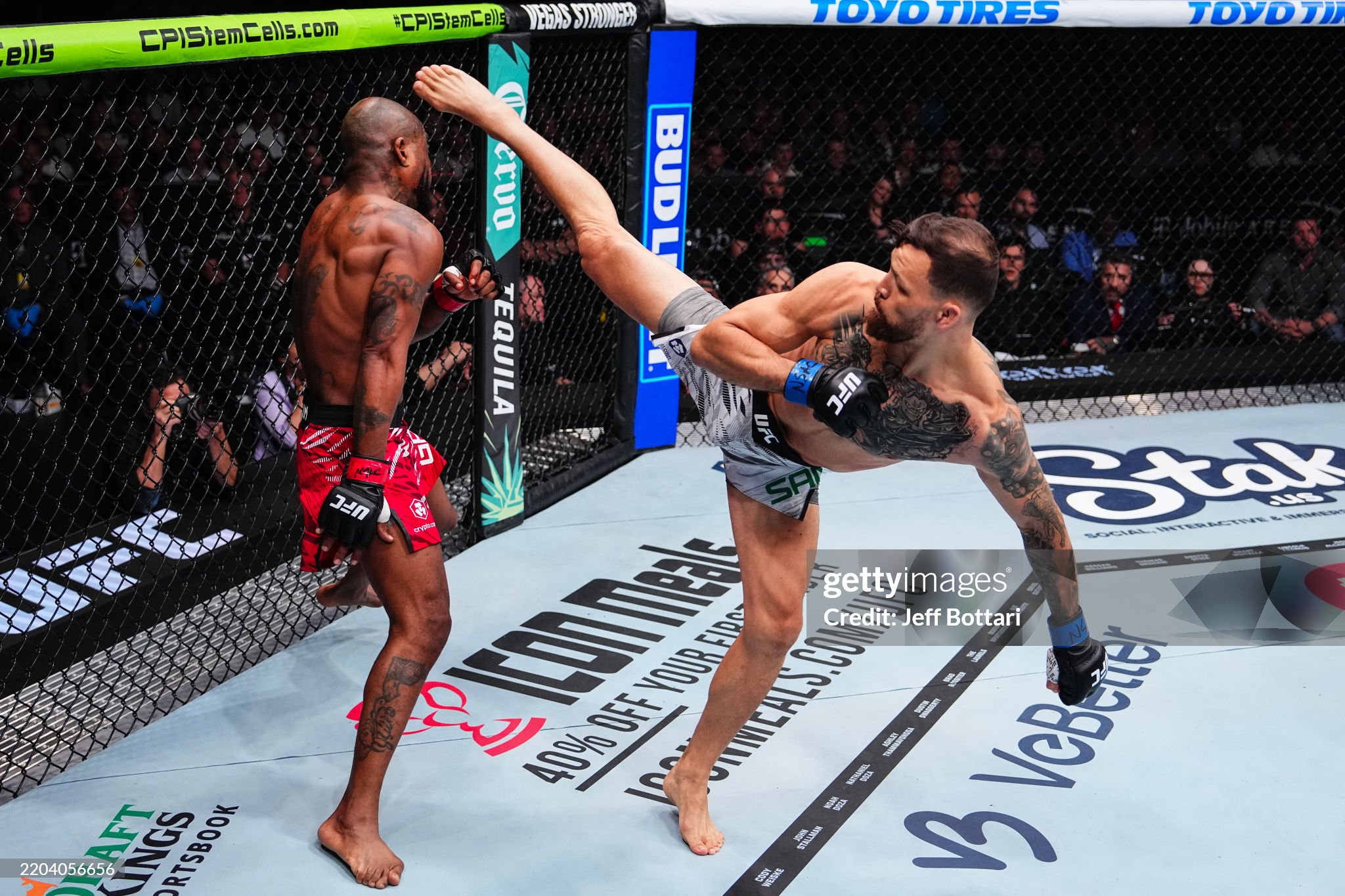
Today, MMA is five-minute rounds, three or five rounds total, inside a cage. You can win by knockout, submission, or judges’ decision — where control, damage, and effectiveness matter more than just volume. It’s not about throwing the most punches.
It’s about landing the right ones.
And culturally, the sport had to fight for legitimacy. It was banned in multiple states. Called “human cockfighting.” Nearly shut down. What saved it wasn’t just regulation — weight classes, gloves, unified rules — it was the fighters themselves becoming complete.
The sport didn’t get safer.
It got smarter.
Great Fights to Watch
If you want to understand MMA, don’t start with highlights.
Start with these:
- Forrest Griffin vs. Stephan Bonnar (2005)
The fight that helped save the UFC. Pure heart, nonstop action. - Anderson Silva vs. Chael Sonnen I
A dominant performance flipped in the final minutes. Chaos meets precision. - Jon Jones vs. Alexander Gustafsson I
Skill, endurance, and adaptation at the highest level. - Conor McGregor vs. Nate Diaz II
Strategy, adjustments, and two fighters solving each other in real time. - Robbie Lawler vs. Rory MacDonald II
Brutal, emotional, unforgettable. The human side of the sport.
Each one shows a different layer of what MMA really is.
MMA is one of the rare sports where you can watch evolution happen.
It started with a question:
What’s the best way to fight?
And instead of finding one answer, it found something better.
There isn’t one.
Only adaptation.
Only growth.
Only what works right now.
And that feels familiar.
Because that’s not just fighting.
That’s life.
If you’ve ever watched an anime fight where a character adapts mid-battle — learning, adjusting, overcoming — that’s MMA.
It’s:
- A fighting game where you can’t main just one character
- A story where the rigid fighter loses to the adaptable one
- A constant evolution of style and strategy
Fighters like Georges St-Pierre and Jon Jones don’t just win.
They evolve.
That’s the real power system.
QUESTION
If MMA proved that no single style is enough…
What do you think that says about how we approach challenges outside the cage?