Five hundred and five years ago today, one of the greatest cities in the world fell.
On August 13, 1521, the Mexica ruler Cuauhtémoc was captured while attempting to escape the besieged city of Tenochtitlan. Organized resistance collapsed soon afterward. The capital was devastated. The Spanish conquest of the Mexica Empire had reached its decisive moment.
Most of us know the simplified version of what happened.
Hernán Cortés arrived in Mexico with a few hundred Spaniards. They carried steel weapons and guns. They rode horses the Mexica had never encountered. They marched into Tenochtitlan, defeated the Aztecs, and claimed Mexico for Spain.
Cortés conquered an empire.
Roll credits.
Except… History rarely stays that neat.
The History-Class Version
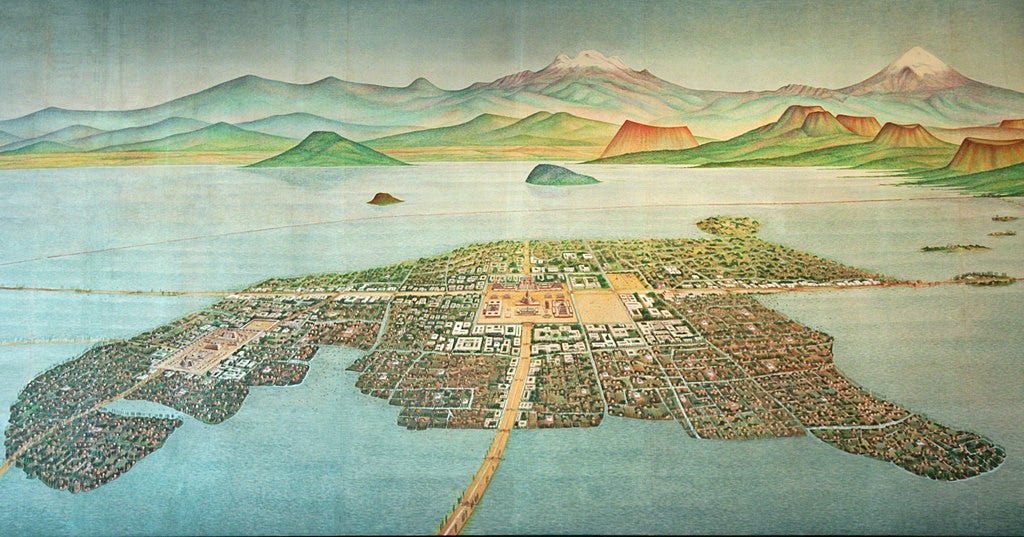
When Cortés entered Tenochtitlan in November 1519, he encountered a city that stunned the Europeans traveling with him.
Built on islands in Lake Texcoco, Tenochtitlan was connected to the mainland by enormous causeways. Canals carried people and goods through the city. Aqueducts supplied fresh water. Temples and palaces towered above crowded streets. Vast markets sold food, clothing, tools, jewelry, pottery, medicine, and almost anything else its residents needed.
This was not a primitive settlement waiting to be discovered.
It was the powerful capital of the Triple Alliance, the political structure commonly called the Aztec Empire. Tenochtitlan may have been home to hundreds of thousands of people, placing it among the largest cities in the world.
And less than two years after Cortés first entered it… Much of that city lay in ruins.
That part of the familiar story is true. The idea that a small band of Europeans accomplished it alone is not.
Cortés did not conquer Tenochtitlan with a few hundred Spaniards. He led a coalition.
The Mexica Empire had expanded by conquering neighboring communities and demanding tribute from them. That system made Tenochtitlan powerful. It also created enemies.
Some Indigenous states saw the arrival of the Spanish as an opportunity to challenge Mexica domination. The Tlaxcalans became Cortés’s most important allies, while warriors from Texcoco, Huejotzingo, Chalco, and other communities eventually joined the campaign.
By the final siege, the Spanish were supported by tens of thousands of Indigenous warriors. That does not make Cortés harmless. It makes the real story much more complicated.
This was not simply Europe versus the Americas. It was a Spanish invasion inserted into an existing world of rival states, old grievances, competing ambitions, and political survival.
Cortés did not create every crack within the empire. He learned how to use them.
The Woman Between Two Worlds
He could not have done that alone either.
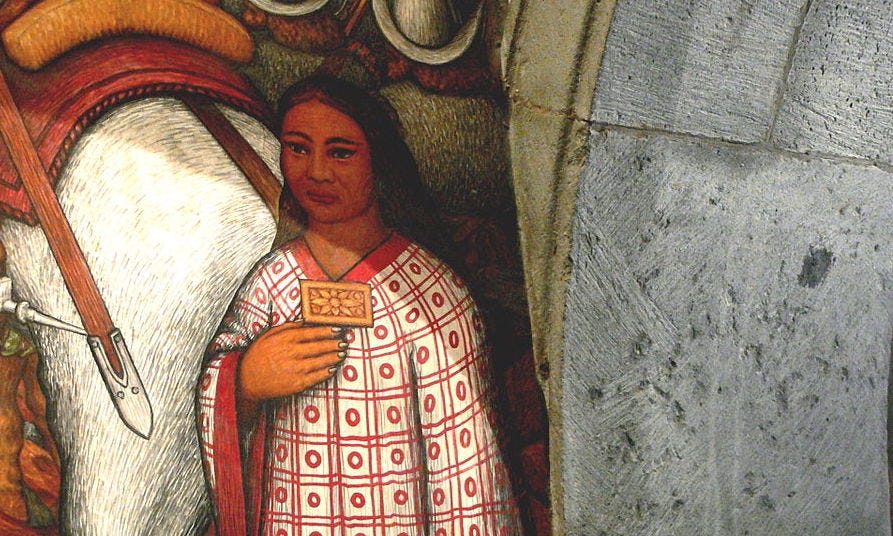
Malintzin—also remembered as Malinche or Doña Marina—was an Indigenous woman who became Cortés’s interpreter and political intermediary.
Her command of languages allowed Cortés to negotiate, gather information, form alliances, issue threats, and understand the political world surrounding him.
Without her, he was a foreigner standing in a civilization whose languages he did not speak and whose rivalries he did not understand.
Malintzin’s legacy remains deeply complicated. She has been portrayed as a traitor, collaborator, victim, survivor, and mother of a new cultural identity.
But reducing her to any one of those labels ignores the reality of her position. She had been enslaved and transferred between powerful men before being given to the Spanish.
She was navigating a violent world she did not create.
Whatever judgment history places upon her, one fact is unavoidable: The story of Cortés “conquering Mexico” becomes much harder to tell once we acknowledge how dependent he was upon an Indigenous woman standing beside him.
The Conqueror Gets Thrown Out
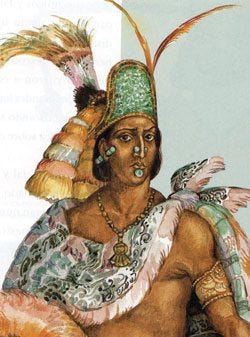
The Spanish were not unstoppable.
In 1520, Cortés left Tenochtitlan to confront another Spanish force sent to arrest him. While he was gone, Pedro de Alvarado ordered an attack during an Indigenous religious festival. Tenochtitlan erupted.
Moctezuma died amid the uprising, although accounts disagree over exactly how he was killed.
The Spanish attempted to escape the city during the night of June 30 into July 1. They were discovered.
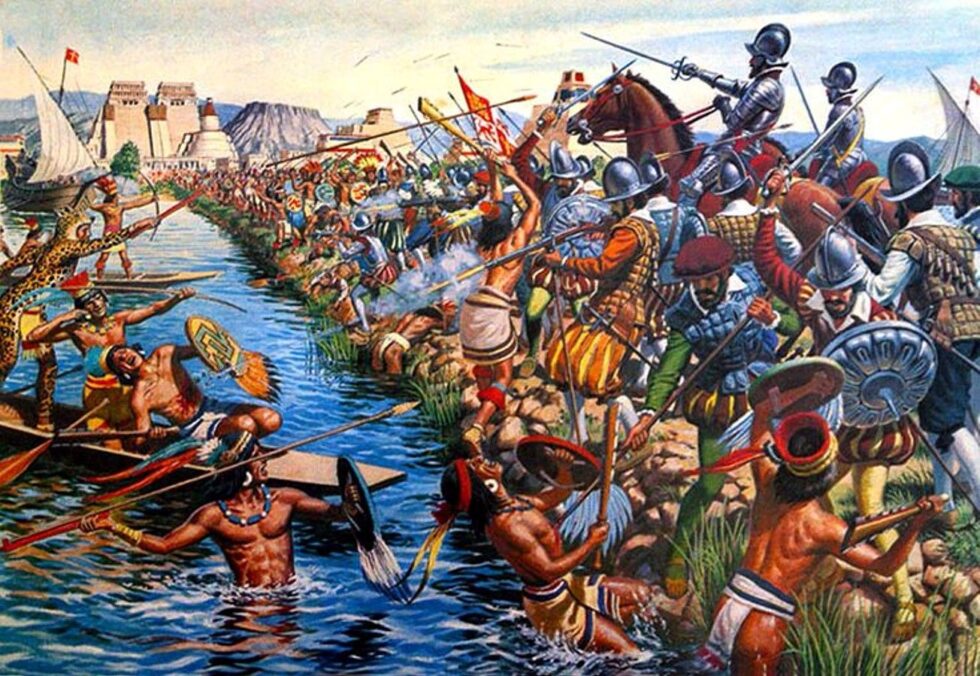
Mexica warriors attacked them along the causeways, killing hundreds of Spaniards and many of their allies. Men carrying stolen treasure drowned beneath its weight in the canals and lake.
The retreat became known to the Spanish as La Noche Triste—the Night of Sorrows.
Cortés had not conquered Tenochtitlan. He had been thrown out of it. But he survived.
He returned to Tlaxcala, rebuilt his coalition, gathered supplies, and prepared to come back. Then another enemy entered the war.
The Enemy Nobody Could Fight
Smallpox reached central Mexico in 1520. The disease tore through communities with no previous exposure to it. People became too sick to gather food, care for relatives, or defend the city.
Among the dead was Cuitláhuac, the Mexica ruler who succeeded Moctezuma and helped drive the Spanish from Tenochtitlan.
Cuauhtémoc became ruler amid the catastrophe. He inherited an empire facing invasion, political isolation, and an epidemic.
When Cortés and his allies returned in 1521, they did not attack the same city they had fled the previous year. Tenochtitlan was still defiant. But it had been deeply wounded before the siege even began.
Ninety-Three Days
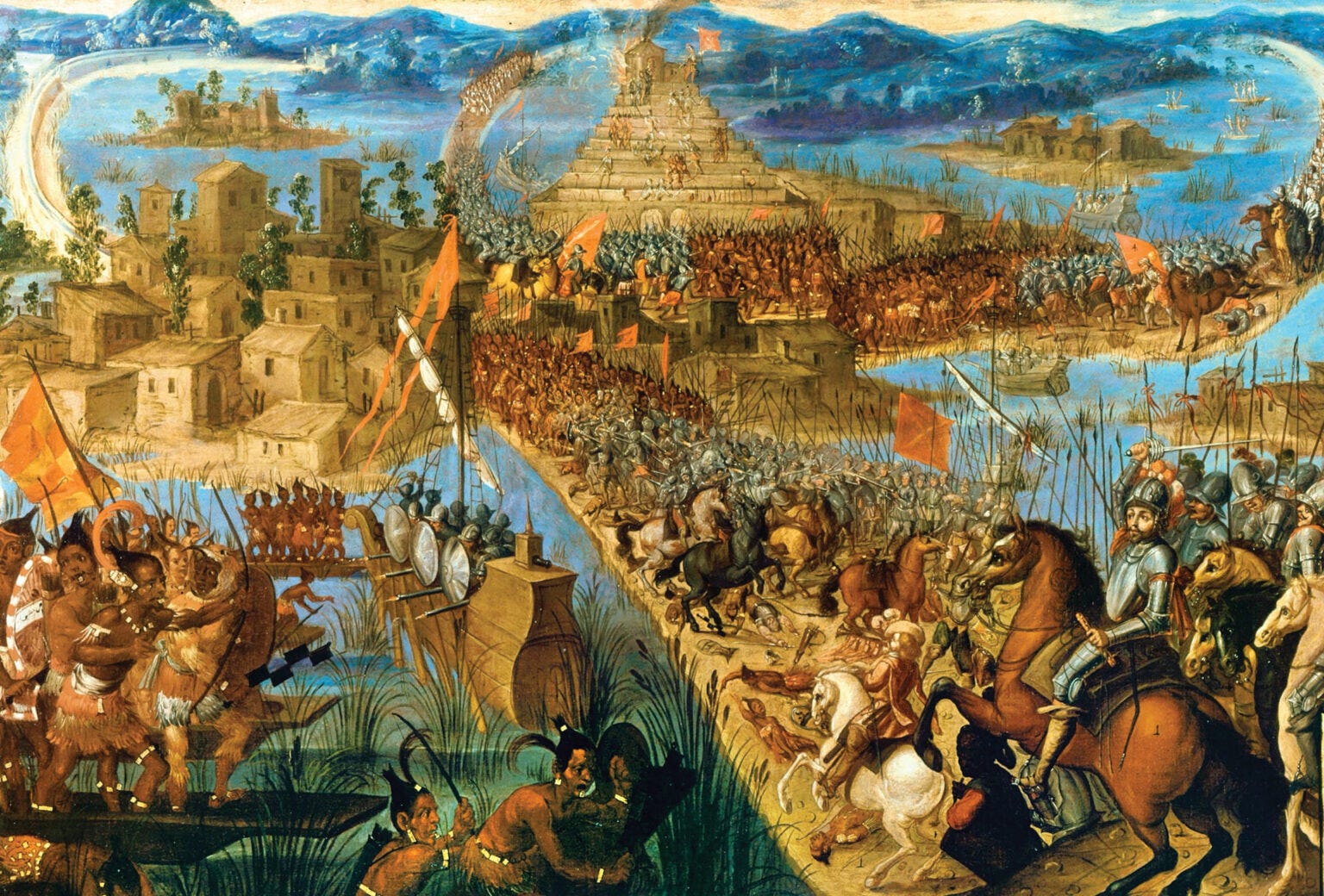
The final siege began in May 1521.
Cortés used small armed ships called brigantines to contest control of Lake Texcoco. His forces attacked along the causeways while cutting Tenochtitlan’s access to fresh water, food, and reinforcements.
The coalition advanced block by block. The defenders fought from buildings, canoes, bridges, and barricades.
Hunger spread. Clean water disappeared. Disease continued taking lives. Still, the city resisted for approximately 93 days.
On August 13, Cuauhtémoc was captured. The fighting ended. Tenochtitlan was looted, burned, and dismantled. Survivors emerged from a city filled with destruction and death. Cortés had won.
But “Cortés conquered the Aztecs” leaves almost everyone else out of the sentence. The Indigenous allies who formed most of his army. The communities gambling that Spain would liberate them from Mexica tribute. Malintzin translating between worlds. The people trapped inside the siege. The victims of smallpox.
And Cuauhtémoc, attempting to hold together a city already being starved to death.
Why This Mattered
The fall of Tenochtitlan broke the political center of Mexica power and opened the way for Spanish rule across much of central Mexico. But conquest did not magically end everywhere on August 13.
Spain still had to extend its control over other Indigenous states and territories. Some of those campaigns continued for years—and in certain regions, much longer.
Even Cortés’s allies did not receive the freedom many may have expected.
The old tribute system was not simply erased. It was redirected.
Spanish colonizers constructed Mexico City upon the ruins of Tenochtitlan, using pieces of the conquered capital to build the colonial city that replaced it.
Empire did not disappear. It changed hands.
History Loves a Superstar
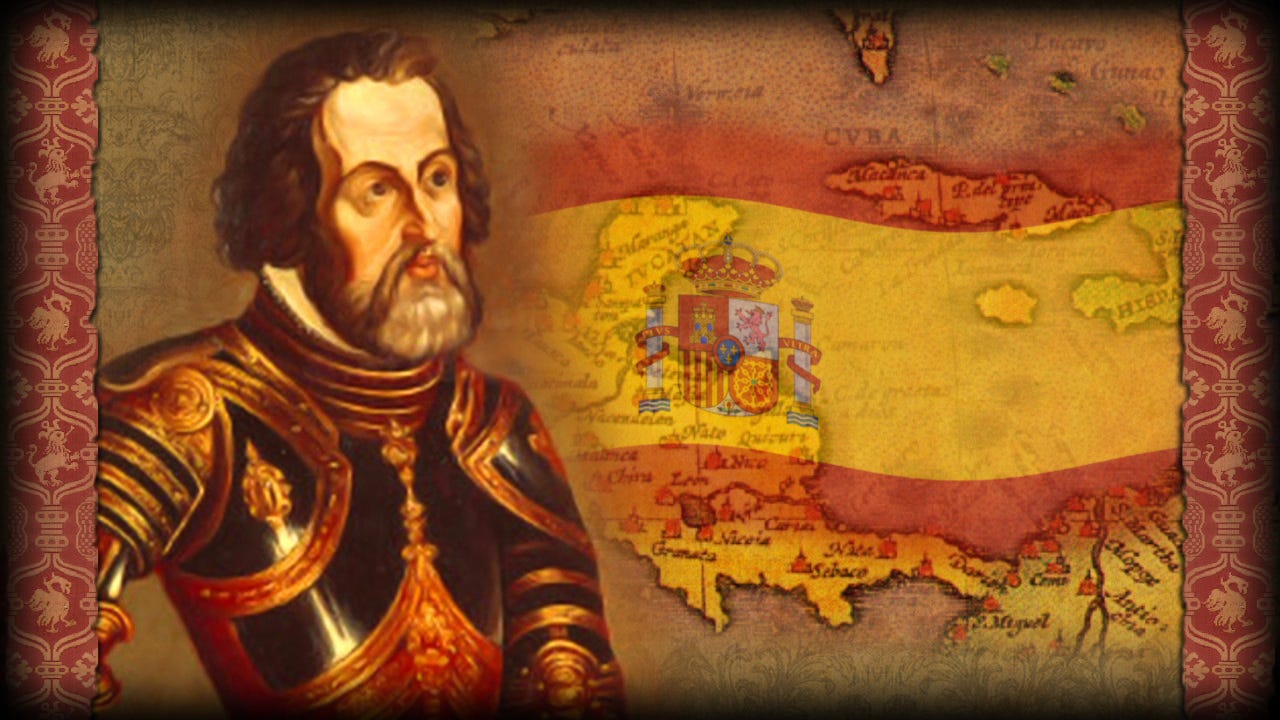
History often works like a bad sports recap. One famous player gets the headline while the rest of the roster disappears.
“Cortés conquered the Aztecs” is the historical equivalent of claiming one superstar won a championship without teammates, coaches, opponents, injuries, strategy, or luck.
Cortés mattered. Spanish weapons mattered. But so did Indigenous alliances. So did Malintzin. So did the smallpox epidemic. So did the Mexica Empire’s own political enemies. So did starvation, naval warfare, decisions, betrayals, and terrible timing.
Empires rarely fall because one man arrives with a sword.
They fall when pressures gather from every direction until something finally breaks.
What Remains Beneath
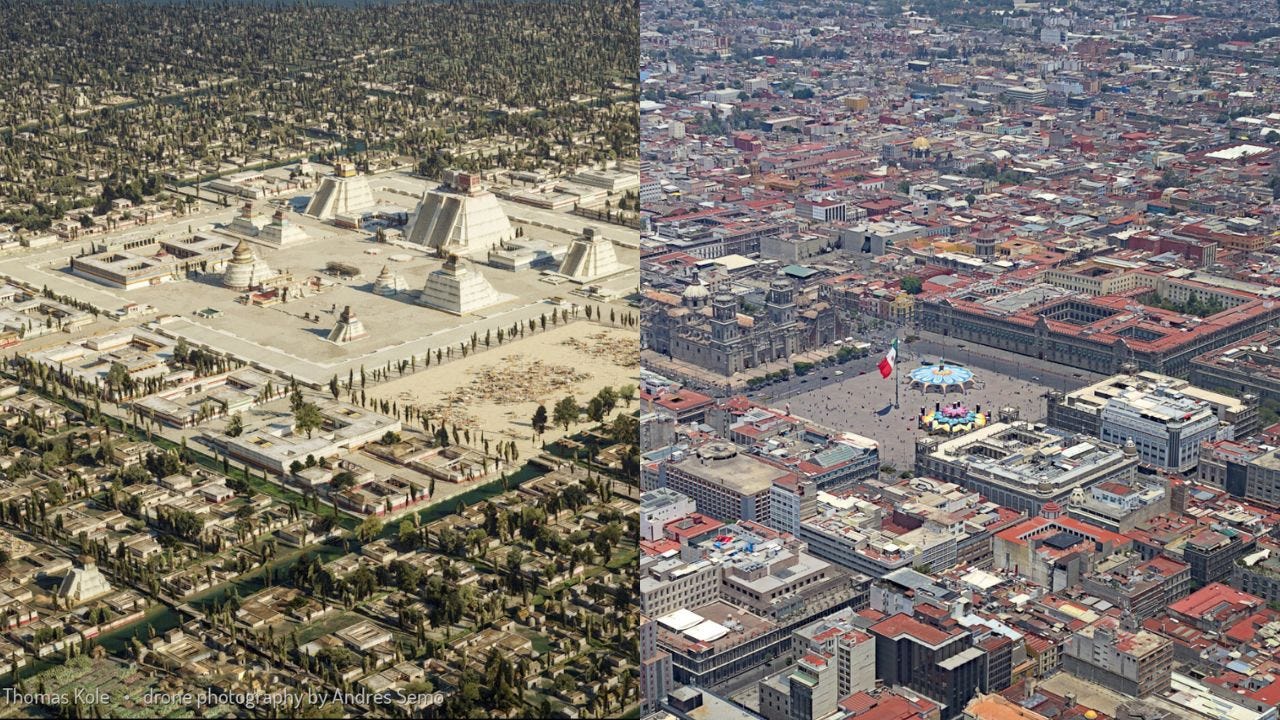
Today, millions of people walk through Mexico City. Beneath its streets are the remains of Tenochtitlan.
Not a mythical lost civilization. Not an empty land waiting for Europeans. A living capital that contained homes, markets, temples, families, governments, arguments, celebrations, and ordinary human lives.
Cortés did not walk into an empty world and build history. He entered a world already filled with history and helped destroy one of its greatest cities.
Five hundred and five years later, Tenochtitlan is still there. Buried beneath the capital that replaced it.
Ctrl+Binge Question
Which factor do you think mattered most in the fall of Tenochtitlan: Spanish weapons, Indigenous alliances, smallpox, or the political enemies the Mexica Empire had already created?