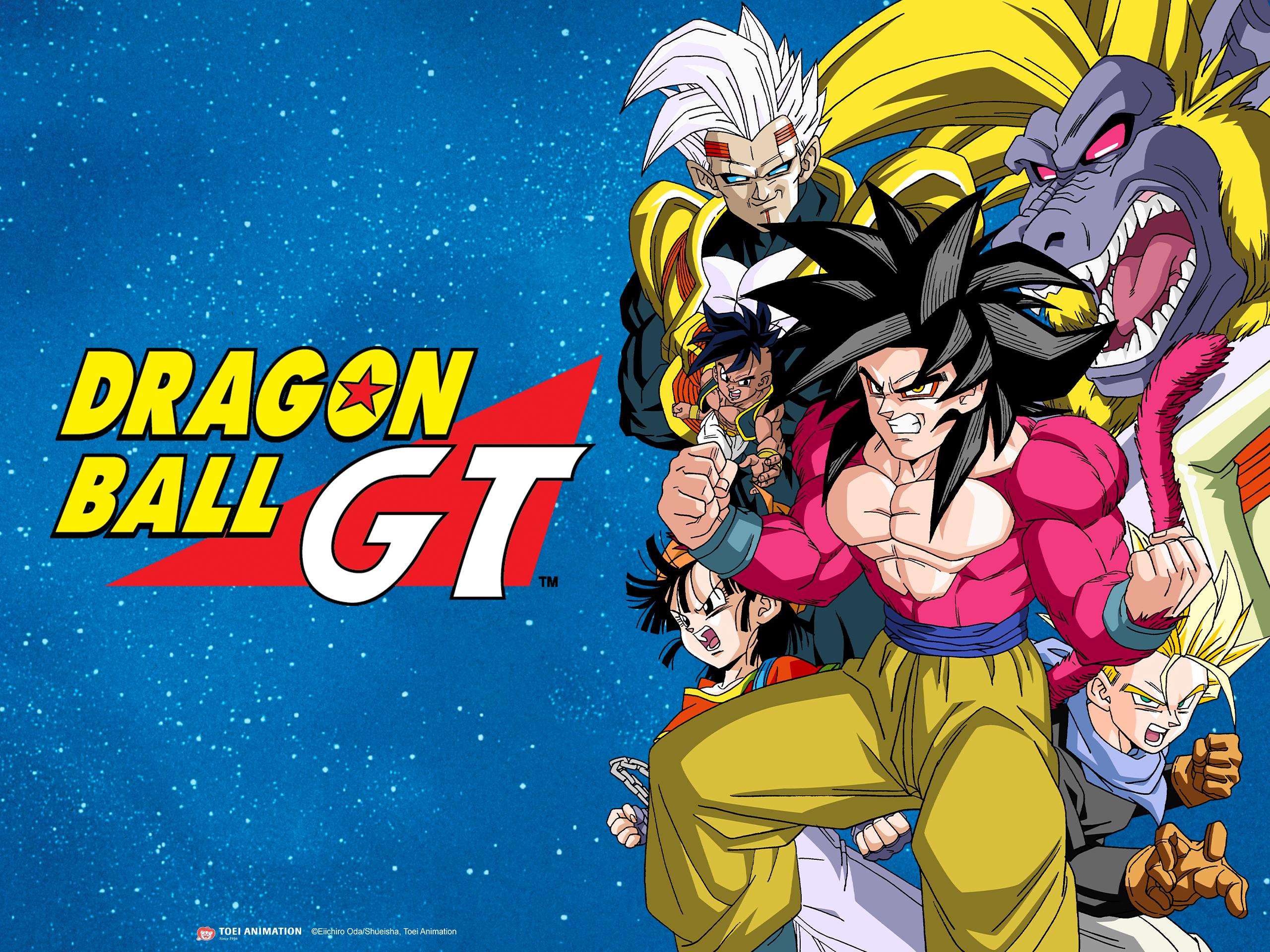
Dragon Ball GT has spent most of its existence trapped inside an argument. Is it canon? Is it underrated? Did Akira Toriyama create Super Saiyan 4? Was turning Goku back into a child a terrible idea? Does the theme song make up for everything?
Depending on which Dragon Ball fan you ask, GT is either a misunderstood sequel filled with brilliant ideas or the weird relative nobody mentions at family gatherings.
But before we decide whether Dragon Ball GT was good, bad, necessary, unnecessary, canon, non-canon, or some complicated combination of all five, there is a much more interesting question: Why does Dragon Ball GT exist at all?
The simple answer is that Dragon Ball had become far too successful for everyone involved to casually walk away.
The fuller answer involves an exhausted creator, a studio facing the end of one of its biggest programs, and the nearly impossible task of continuing a story that had already reached its conclusion.
Dragon Ball GT was not born because Akira Toriyama had another grand saga waiting in his notebook.
It was born because Dragon Ball ended—and almost nobody else was ready for that ending.
For the First Time, Dragon Ball Was Over
The original Dragon Ball manga began its run in Weekly Shōnen Jump in 1984.
For more than a decade, Akira Toriyama produced Goku’s story at the punishing pace required of a weekly manga creator. Week after week. Chapter after chapter. Tournament after tournament. Villain after villain.
Dragon Ball grew from a comedic adventure inspired by Journey to the West into one of the defining action stories in manga history.
Then, in 1995, Toriyama brought it to an end.
After 519 chapters, the manga concluded with Goku leaving the World Martial Arts Tournament to train Uub. The story had lasted from 1984 until 1995, carrying readers from Goku’s childhood all the way to his role as the most powerful teacher on Earth.
The Dragon Ball Z anime still had material left to adapt, but the finish line was approaching there too. Its final Japanese episode aired on January 31, 1996.
One week later, on February 7, Dragon Ball GT began. There was almost no breathing room. No long farewell. No decade of nostalgia.
One series ended, and the next one immediately took its place. That quick transition tells us almost everything we need to know.
For viewers, Dragon Ball was a beloved story.
For Toei Animation, Fuji Television, Shueisha, Bandai, advertisers, licensees, and countless other companies, it was also an enormous entertainment ecosystem.
The manga may have ended. The demand had not.
Toriyama Had Reached His Ending
Fans sometimes talk about Toriyama’s limited role in GT as though someone removed him from his own creation. That framing misses the most important point. Toriyama had finished the story he wanted to tell.
He had spent more than ten years producing Dragon Ball under weekly deadlines. By the conclusion of the manga, Goku had grown from a child in the mountains into a grandfather who had protected Earth repeatedly and was now prepared to guide the next generation.
Whatever anyone thinks about Uub or the final time jump, it was an ending. Toriyama had earned the right to stop.
After Dragon Ball concluded, he moved toward shorter projects and continued contributing artwork to games and other creative work. He did not immediately begin writing another long-running Dragon Ball manga. That distinction matters.
Dragon Ball GT was not an adaptation of a secret Toriyama sequel.
There was no new manga running ahead of the anime. No stack of completed chapters waiting to become episodes.
For the first time, Toei would be continuing Dragon Ball without Toriyama supplying the primary story. The anime was no longer following the manga. It was stepping beyond it.
The Machine Could Not Stop Overnight
By the mid-1990s, Dragon Ball was much larger than the pages of Weekly Shōnen Jump.
- It was an anime.
- A toy line.
- A video-game property.
- A merchandising giant.
- A television institution.
A collection of films, cards, figures, clothing, school supplies, and almost anything else a child could convince an adult to purchase.
Bandai’s Dragon Ball card products alone had existed since 1988, years before the original story ended. That meant the conclusion of the manga created a difficult reality.
Toriyama could put down his pen. A television network could not simply pretend millions of regular viewers had disappeared. An animation studio could not ignore the value of a series that had occupied a dependable place on television for years. Toy and game companies could not immediately replace one of their strongest brands.
This does not mean GT was created by a room full of cartoon villains clutching bags of money. It means Dragon Ball had become an industry.
Industries develop momentum. People had jobs attached to the franchise. Broadcast schedules were built around it. Products were planned months or years in advance. Children still wanted more Dragon Ball.
The story had reached an ending, but the larger Dragon Ball machine was still moving.
So Toei Animation faced a question that has become increasingly common in modern entertainment: What happens when the creator reaches the end, but the franchise remains valuable?
In 1996, the answer was Dragon Ball GT.
What Did Toriyama Actually Do?
Akira Toriyama did not write the full GT storyline or create a manga for the anime to follow. The main story was developed by Toei Animation’s staff.
However, saying Toriyama had “nothing to do with GT” goes too far in the opposite direction.
He provided early visual material, contributed designs for members of the main cast, and created the series title and logo. The “GT” stood for “Grand Tour,” reflecting the plan to send Goku and his companions traveling through space. He later referred to the series as a grand side story connected to his original Dragon Ball.
That is a limited role compared with writing and drawing the manga every week. But it is not zero involvement.
Toriyama helped Toei establish what the next era looked like. He helped dress the characters. He helped name the journey. Then he largely allowed the anime staff to take the wheel.
That arrangement explains why GT can simultaneously feel unmistakably like Dragon Ball and strangely unlike it.
The characters, machines, landscapes, and playful designs carry pieces of Toriyama’s visual identity. The storytelling decisions belong much more heavily to the studio.
GT existed inside Toriyama’s world without being driven by Toriyama’s weekly narrative.
Why Turn Goku Into a Child?
Of all GT’s creative choices, making Goku a child again may be the most revealing. At first glance, it appears to be a gimmick. The strongest warrior in the universe gets accidentally wished back into a tiny body. There is humor in that. There is also strategy.
By the conclusion of Dragon Ball Z, Goku had become almost impossibly powerful. He could teleport across worlds. Fight gods and monsters. Transform into several increasingly powerful Super Saiyan forms.
How do you create danger for someone who has already defeated Frieza, Cell, and Majin Buu? One answer is to make every new enemy even stronger. Dragon Ball Z had already spent years doing that. GT initially tried something else.
It shrank Goku. It removed many familiar characters from the central journey. It sent Goku, Pan, and Trunks into space to search for the Black Star Dragon Balls. Even the title—Grand Tour—announced that this was supposed to be a journey.
The early concept attempted to recover some of the original Dragon Ball’s adventure structure:
- Travel to strange places.
- Meet unusual people.
- Search for magical objects.
- Get into trouble.
- Use comedy alongside action.
In other words, Toei did not originally seem interested in producing “Dragon Ball Z, but with an even larger number.” It tried to circle back toward the beginning.
The irony is that many fans, especially those who had fallen in love with Dragon Ball Z’s escalating battles, did not necessarily want a return to the beginning.
They wanted the next Frieza. The next Cell. The next transformation. GT initially offered a road trip.
The Impossible Sequel
The people making GT inherited one of the most difficult assignments imaginable. Continue Dragon Ball. But do it without a continuing Toriyama manga.
Keep Goku recognizable. But find some way to challenge him.
Honor the ending of Dragon Ball Z. But immediately undo its finality.
Return to the adventure and comedy of early Dragon Ball. But satisfy viewers who expected the action of Dragon Ball Z.
Use the familiar cast. But introduce a new generation.
Create something new. But never let it feel too different.
Those goals do not fit together easily.
GT’s identity crisis was almost built into its existence. Its opening episodes chase the adventurous tone of the original series. Later, the story shifts toward darker enemies and larger battles.
Baby brings Saiyan history and revenge into the foreground. Super 17 returns to androids, Hell, and old villains. The Shadow Dragons turn the Dragon Balls themselves into the final threat.
The series keeps searching for the correct answer to one central question: What is Dragon Ball supposed to become after Dragon Ball Z?
GT never finds one answer that satisfies everyone. But the struggle to find it is part of what makes the series historically fascinating.
Ideas Too Good to Disappear
Whatever anyone thinks of GT as a complete television series, it produced ideas that have survived far longer than the show’s original 64-episode run.
Super Saiyan 4 remains one of the most recognizable transformations in the franchise.
Baby is still considered by many fans to be GT’s strongest villain.
The Shadow Dragons present one of Dragon Ball’s smartest concepts: every wish has consequences, and years of using the Dragon Balls have created a debt that must finally be paid.
The series also gave us an older Pan, a more active Trunks, a mustached Vegeta, Super Saiyan 4 Gogeta, and one of the most emotional conclusions in Dragon Ball history.
Even people who dislike GT often love pieces of GT. That may be its strangest legacy. The series is rejected as a whole, then continuously mined for characters, forms, villains, games, toys, and conversations.
Dragon Ball GT ended its Japanese broadcast in 1997, and the years immediately following saw far fewer new Dragon Ball games and projects than the franchise had produced at its peak.
But GT itself never really vanished. Its ideas remained part of Dragon Ball culture.
They appeared in video games. Trading cards. Figures. Promotional anime. Fan art. Arguments. Lots and lots of arguments.
Before Every Franchise Had to Continue
Today, the situation that created GT feels normal. Marvel stories continue without their original creators. Star Wars continues decades after George Lucas first told his central story. Pokémon evolves from one generation to another. Comic-book heroes regularly outlive the writers and artists who created them.
Entertainment companies now build universes specifically designed to continue indefinitely. But GT arrived during an earlier version of that conversation. It asked what would happen if a beloved story became bigger than the work that originally created it.
Could Dragon Ball continue without a new Dragon Ball manga? Could a studio create the future of a world built by one artist? Could the franchise belong partly to its creator, partly to its corporate partners, and partly to the millions of fans who were not ready to stop watching?
GT became the first major attempt to answer those questions for Dragon Ball. It would not be the last.
Years later, Toriyama would return to a far more involved creative role through new films and Dragon Ball Super. But GT came from a very different moment. A moment when the original story had just ended. No one knew whether Toriyama would ever return to it.
And the companies surrounding Dragon Ball had to decide whether the end of the manga also meant the end of everything else.
They decided it did not.
Why Dragon Ball GT Exists
Dragon Ball GT exists because Akira Toriyama was finished. It exists because Toei Animation was not. It exists because viewers still wanted Goku. Because television schedules needed another series. Because merchandise shelves still had room. Because the end of a story does not always mean the end of a franchise.
It exists because Dragon Ball had become something greater than a weekly manga. That does not automatically make every decision in GT correct. It does not mean Toriyama secretly wrote the whole thing. It does not settle whether the series belongs in anyone’s personal definition of canon.
It simply explains the moment. One of the greatest manga runs in history had ended. The creator stepped away from the weekly grind. The world he built remained enormously popular.
And Toei faced a choice: Let Dragon Ball end with him. Or attempt the grand tour without him.
They chose the tour. Nearly thirty years later, fans are still debating the destination.
Ctrl+Binge Question
Imagine you were sitting in Toei Animation’s offices when Dragon Ball Z ended.
What would you have done? End Dragon Ball completely? Create Dragon Ball GT? Wait and hope Akira Toriyama eventually returned? Or continue the series in an entirely different direction?