Every legend eventually becomes history. Every adventure reaches its final chapter. Every hero eventually has to ask the same question: What happens after you’ve already saved the world?
For nearly a decade, Dragon Ball had been about becoming stronger.
Dragon Ball introduced us to a curious boy with a monkey tail who simply wanted to see what was over the next mountain.
Dragon Ball Z transformed that same boy into one of the greatest heroes in anime history, inspiring an entire generation with impossible battles, unforgettable transformations, and the belief that no obstacle was too great to overcome.
Then Dragon Ball GT did something unexpected. Instead of asking how Goku could become stronger, it asked what happens after the fighting is over.
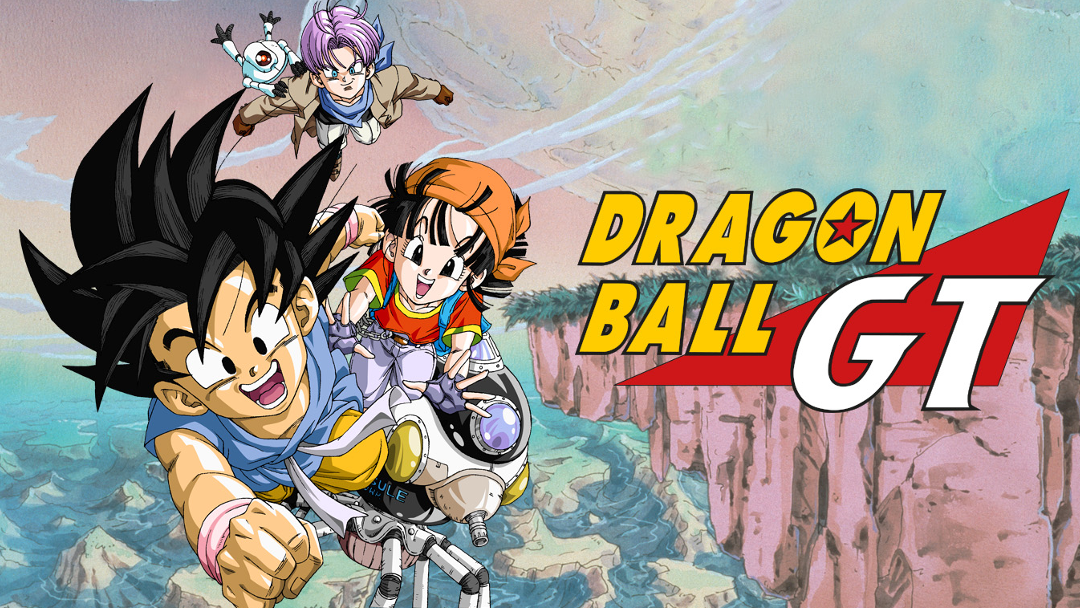
For years, Dragon Ball GT has occupied a unique place in anime history. Some fans dismiss it because it isn’t considered part of the modern canon. Others defend it because it was their introduction to Dragon Ball. The conversation has often focused on what GT wasn’t, instead of what it was trying to become.
That’s a shame. Because while Dragon Ball GT is far from perfect, it also contains some of the franchise’s boldest ideas.
It’s a story about consequences. It’s a story about family. And above all else… It’s a story about legacy.
Set years after the defeat of Majin Buu, peace has finally returned to Earth.
Everything changes when Emperor Pilaf accidentally uses the mysterious Black Star Dragon Balls to transform Goku back into a child. Unlike the Dragon Balls we’ve known throughout the series, these scatter across the galaxy after being used—and if they aren’t gathered within a year, Earth will be destroyed.
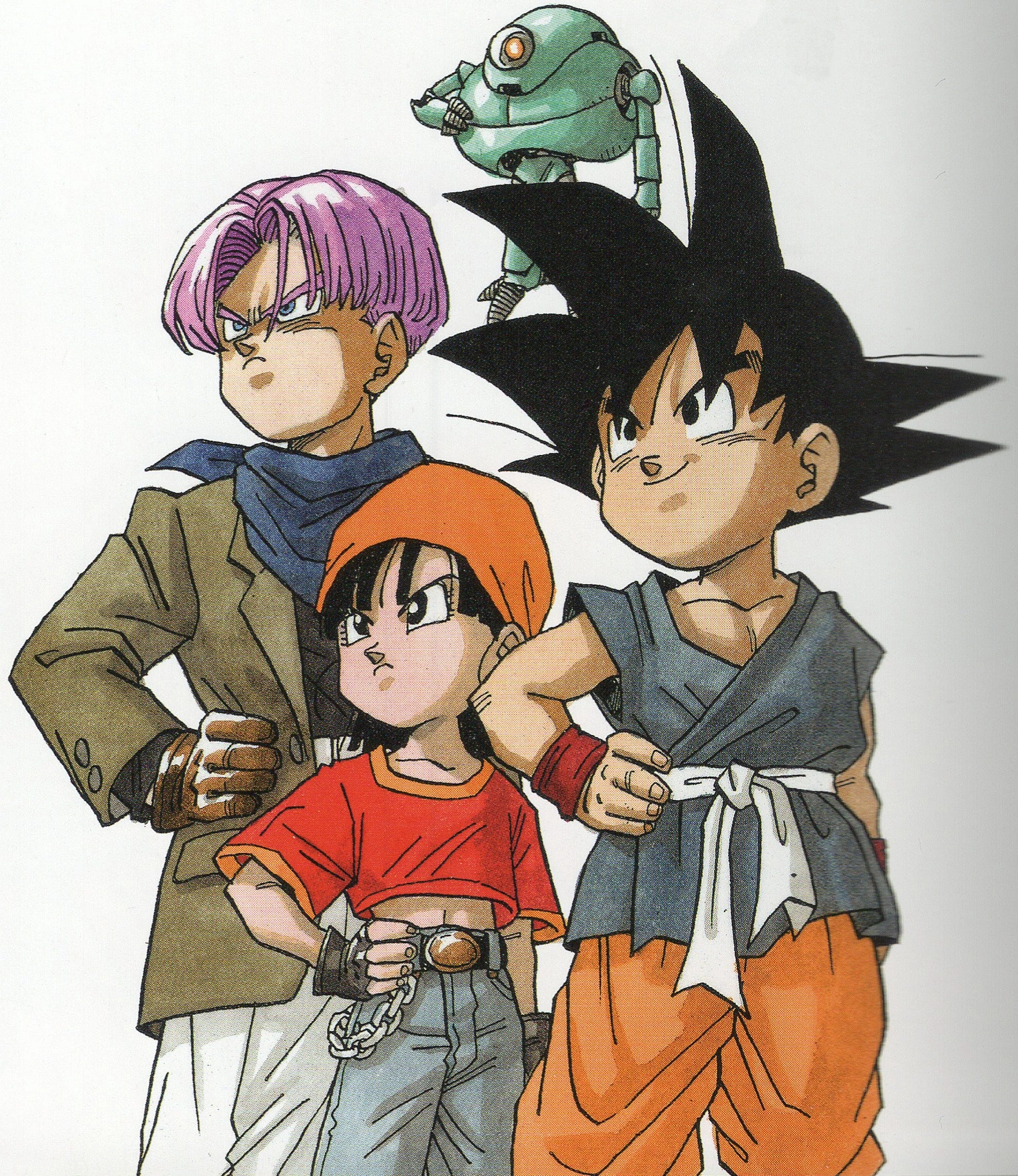
Joined by his granddaughter Pan and an older Trunks, Goku embarks on one final journey across the stars. What begins as a return to Dragon Ball’s adventurous roots slowly evolves into battles against Baby, Super 17, and ultimately the Shadow Dragons themselves.
On the surface, GT feels like another Dragon Ball adventure.
Beneath that adventure lies a surprisingly thoughtful story about endings, responsibility, and the weight of everything that came before.
The Familiar Version
Ask most anime fans about Dragon Ball GT and you’ll probably hear one of a few familiar responses.
- “It’s the non-canon one.”
- “It isn’t as good as Dragon Ball Z.”
- “It has Super Saiyan 4, and that’s about it.”
Those opinions and criticisms didn’t come from nowhere. GT has uneven pacing. Some story arcs never fully reach their potential. Its tone shifts dramatically over its 64 episodes.
Those are fair. But if we stop there, we miss something important. Because Dragon Ball GT isn’t interesting because it’s perfect. It’s interesting because of the questions it asks.
Looking Beyond the Canon Debate
Judging Dragon Ball GT only by what it isn’t means overlooking what it tried to become. Underneath every discussion about continuity is a story focused on something Dragon Ball had rarely explored before.
Legacy.
What do heroes leave behind after they’ve already won? How do the next generation live in the shadow of legends? And can the greatest victories of yesterday eventually create tomorrow’s greatest problems?
Those questions quietly drive almost every major storyline in GT.
The Characters
Goku
Dragon Ball introduced a curious child.
Dragon Ball Z forged a legendary hero.
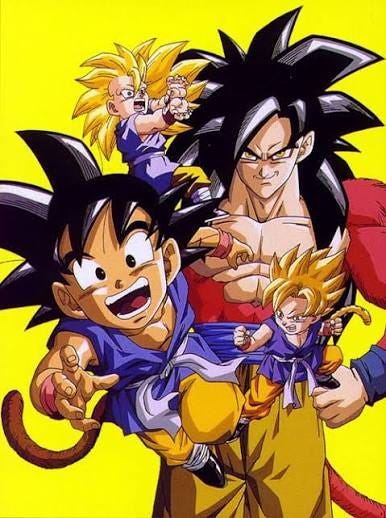
Dragon Ball GT treats Goku like mythology.
Turning him back into a child wasn’t about erasing everything he had learned. It was about reminding us that curiosity—not power—has always been Goku’s defining trait.
No matter how many worlds he’s saved or impossible battles he’s survived, Goku still approaches every new place with childlike excitement. That’s why he still feels like Goku.
Not because of his strength.
Because of his spirit.
Pan
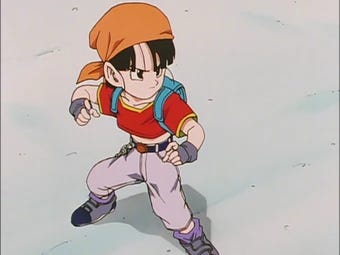
Pan may be one of GT’s most important ideas. She’s the first member of Goku’s family who grows up in a peaceful world. She isn’t trying to become Goku. She’s trying to discover what kind of hero she wants to become.
Her writing isn’t always consistent, and she occasionally finds herself sidelined during major fights, but her role within the story remains meaningful.
She’s living proof that the next generation doesn’t inherit greatness. It has to earn it.
Trunks
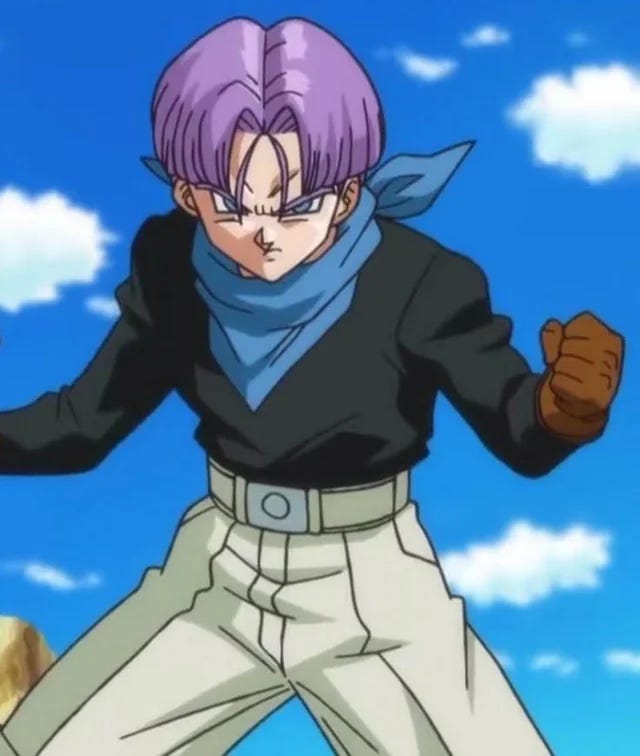
GT’s version of Trunks doesn’t receive nearly enough credit.
Gone is the battle-hardened warrior from the future. Instead, we meet a successful businessman helping run Capsule Corporation.
At first glance, that seems like a strange direction. Until you realize… This is exactly what Future Trunks fought to protect. A peaceful future.
The fact that Trunks can focus on business instead of survival isn’t a disappointment. It’s the victory his family sacrificed everything to achieve.
Vegeta
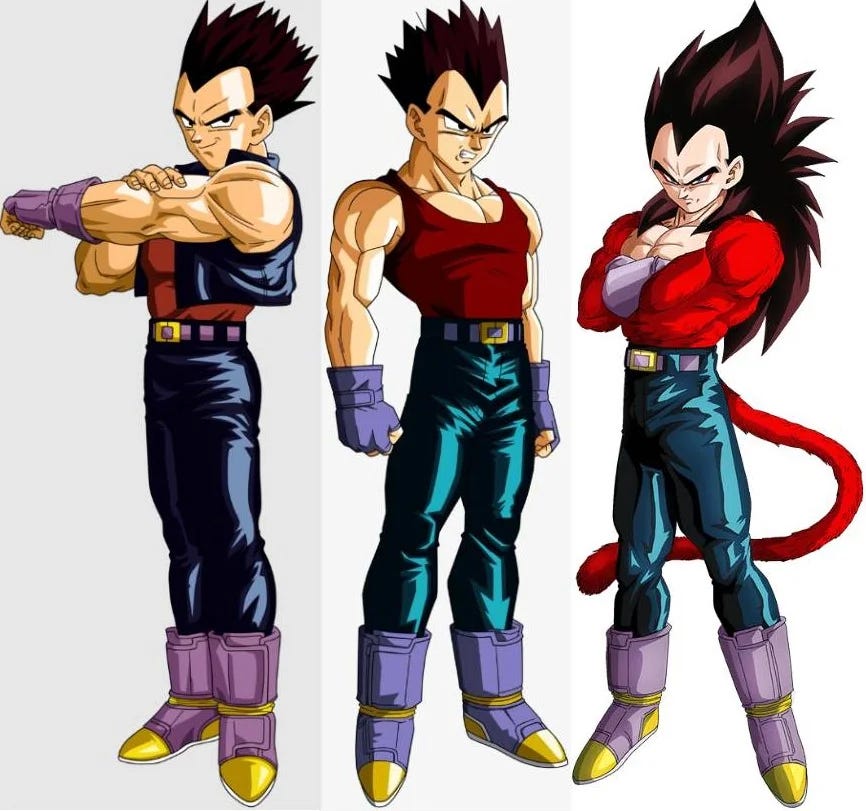
Dragon Ball Z gave Vegeta redemption. Dragon Ball GT gives him peace.
He’s still proud. Still competitive. Still unmistakably Vegeta. But now he’s also a husband. A father. Someone comfortable enough to enjoy the family he once never thought he deserved.
Sometimes character growth isn’t another transformation. Sometimes it’s learning to live happily after the battle ends.
The Villains
Baby
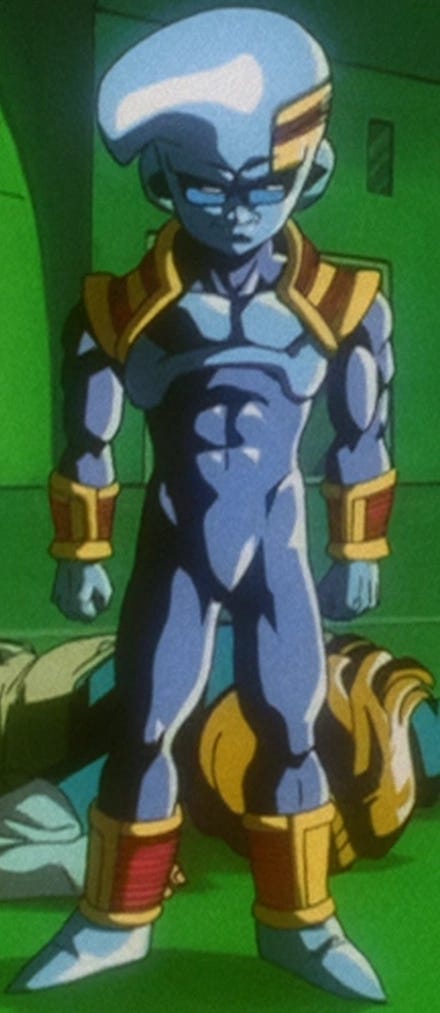
If there’s one villain who deserves more appreciation, it’s Baby. Unlike Frieza or Cell, Baby isn’t driven by simple conquest. He’s revenge made flesh. As the last surviving Tuffle, he represents the forgotten victims of Saiyan expansion.
For one of the first times in Dragon Ball, our heroes aren’t simply facing another evil tyrant. They’re facing the consequences of their ancestors. That’s compelling storytelling.
Super 17
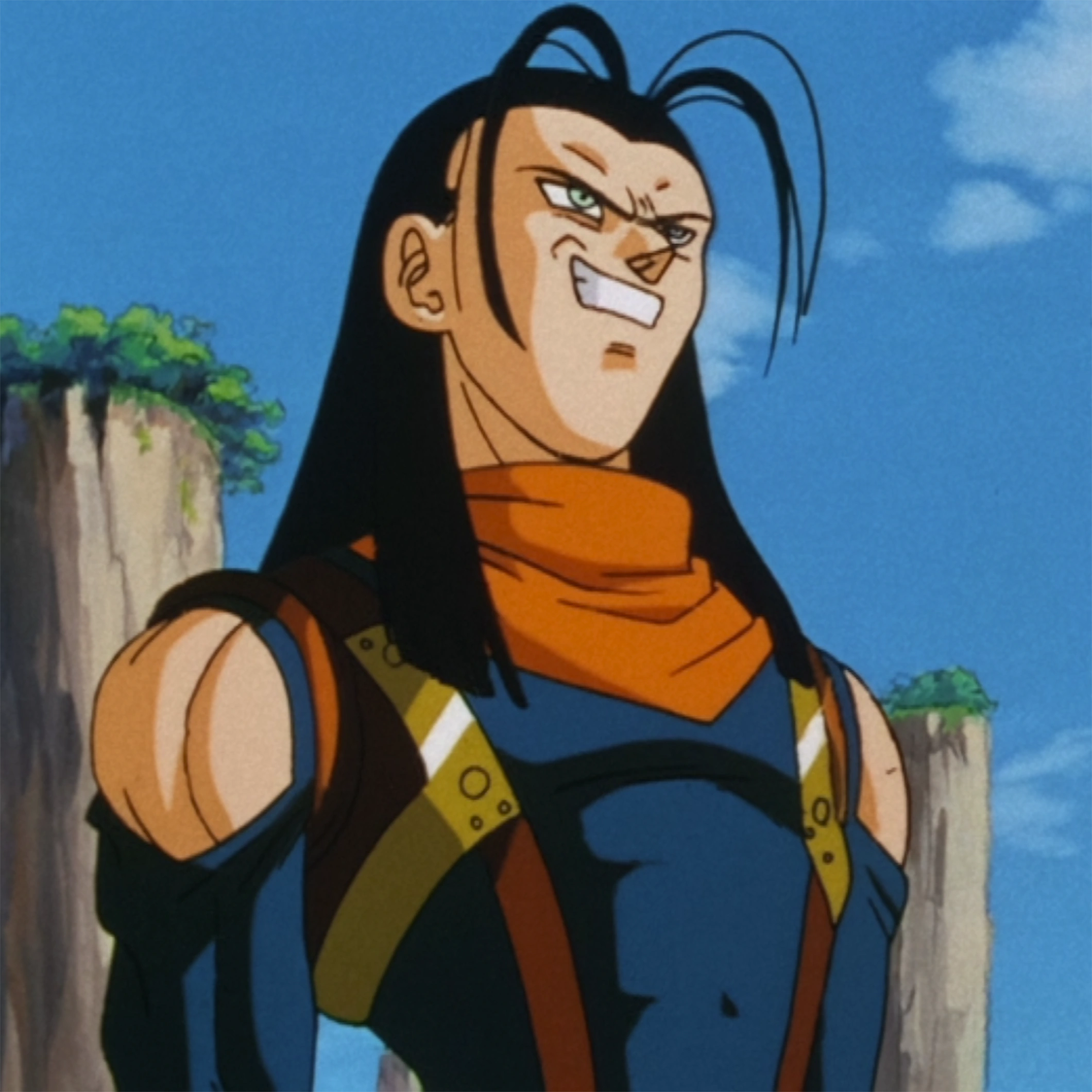
The Super 17 Saga introduces a fascinating concept. Old enemies. Hell breaking open. Androids combining into an even greater threat.
It’s a fun idea, even if the execution never quite lives up to its enormous potential.
The Shadow Dragons
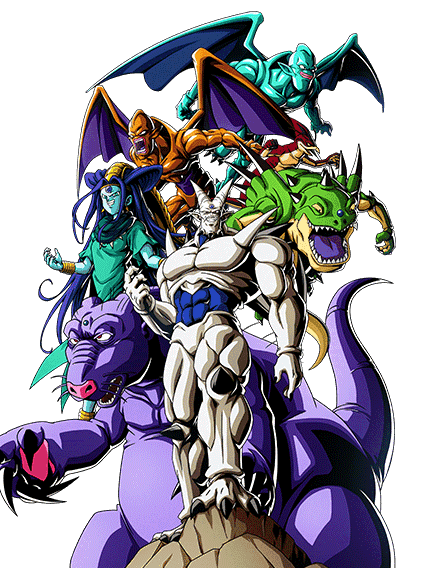
Then comes Dragon Ball GT’s greatest contribution to the franchise;The Shadow Dragons.
It’s one of the smartest concepts Dragon Ball has ever introduced. For decades, the Dragon Balls had been a miracle. Whenever things became impossible, Shenron could set everything right.
GT finally asks the obvious question. What if constantly rewriting fate came with consequences?
- Every wish.
- Every miracle.
- Every shortcut.
Leaves behind negative energy. Eventually… Those consequences become monsters.
Whether every individual Shadow Dragon is equally memorable is debatable. The idea itself is brilliant.
Worldbuilding
Dragon Ball explored Earth. Dragon Ball Z expanded into the universe. Dragon Ball GT explores history.
Everything that happened before matters. Every Dragon Ball wish matters. Every victory matters. Every decision leaves behind ripples.
GT reminds us that history doesn’t disappear simply because peace arrives. Sometimes history waits patiently until it’s ready to be confronted.
Action & Power System
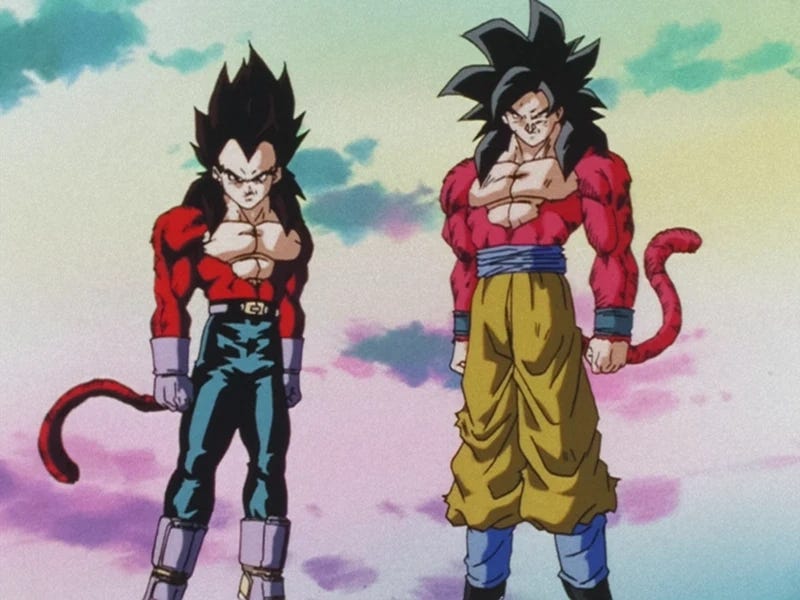
GT doesn’t try to overwhelm viewers with dozens of new transformations. Instead, it focuses on making its biggest moments unforgettable.
None are bigger than Super Saiyan 4.
Even today, it’s one of the most beloved transformations in Dragon Ball history.
Unlike later forms, Super Saiyan 4 doesn’t feel divine.
- It feels primal.
- Wild.
- Ancient.
Instead of abandoning Saiyan history, it embraces it.
The design reconnects Goku and Vegeta to their Great Ape heritage, making Super Saiyan 4 feel less like another power-up and more like the culmination of everything Saiyan mythology had been building toward.
The action itself is energetic and creative throughout the series, even if some arcs reach greater heights than others.
The Emotional Core
Dragon Ball was about discovery. Dragon Ball Z was about transformation. Dragon Ball GT is about legacy.
Every major storyline circles back to that same idea. Pan struggles to build her own identity beneath generations of heroes. Vegeta learns what life looks like after redemption. Baby forces the Saiyans to answer for their past. The Shadow Dragons force everyone to confront the cost of their greatest miracles.
Everything asks the same question. What do we leave behind?
That’s why GT resonates with so many fans years later. Not because it’s flawless. Because it understands that every ending becomes someone else’s beginning.
Presentation
Dragon Ball GT deserves tremendous credit for its atmosphere. Its return to adventure feels refreshing after the escalating battles of Dragon Ball Z.
Its soundtrack creates an almost melancholic sense of wonder. Super Saiyan 4 remains visually iconic. And its final episodes deliver one of the most emotional farewells in anime.
At the same time, GT earns many of the criticisms it receives. The Black Star Dragon Ball Saga begins slowly. Pan’s characterization occasionally feels inconsistent. The Super 17 Saga feels rushed. Much of the supporting cast disappears for long stretches.
GT isn’t consistently excellent. But it’s almost never uninteresting.
Let’s Be Fair
Dragon Ball GT isn’t secretly a perfect series waiting to be rediscovered. Some storylines deserved more time. Some deserved another rewrite.
Comparisons to Dragon Ball Z are inevitable, and many fans will still prefer Z or Super. That’s perfectly reasonable.
But dismissing GT entirely means overlooking one of the boldest thematic swings Dragon Ball has ever taken.
Sometimes ambition matters just as much as execution.
Who Should Watch Dragon Ball GT?
You’ll probably enjoy GT if you love:
- Adventure-driven storytelling
- Character growth
- Legacy-focused narratives
- Dragon Ball history
- Emotional endings
- Super Saiyan 4
You may struggle with GT if you’re looking for:
- Constant action
- Perfect pacing
- A massive supporting cast involved in every arc
- A series judged solely by modern canon
Why Dragon Ball GT Still Matters
Dragon Ball GT spent years being judged by what it wasn’t.
- It wasn’t the next manga written by Akira Toriyama.
- It wasn’t Dragon Ball Z.
- Eventually, it wasn’t considered part of the official canon.
But time has a funny way of changing conversations. Today, fans don’t just remember GT for what it lacked.
They remember Super Saiyan 4. They remember Baby. They remember the Shadow Dragons. They remember one of anime’s most emotional farewells.
That’s the funny thing about legacy. History rarely remembers perfection. It remembers what lasts.
Ctrl+Binge Final Take
Dragon Ball GT isn’t remembered because it was perfect. It’s remembered because it dared to ask what happens after the adventure ends.
Sometimes it stumbles. Sometimes it soars.
But at its best, GT reminds us that every wish carries responsibility, every hero leaves behind a legacy, and every great journey deserves a meaningful goodbye.
Whether it’s canon or not almost feels beside the point. Because decades later, fans are still talking about Super Saiyan 4.
They’re still debating Baby. They’re still praising the Shadow Dragons. They’re still getting emotional during that final farewell.
Legends aren’t defined by perfection. They’re defined by the stories people refuse to stop telling.
QUESTION
If you could bring one idea from Dragon Ball GT into modern Dragon Ball forever, what would it be?
- Would you choose Super Saiyan 4?
- Baby?
- The Shadow Dragons?
- Or something else entirely?
Let us know. We’d love to hear your pick.