The future of Pokémon finally arrived.
And immediately started clipping through the floor.
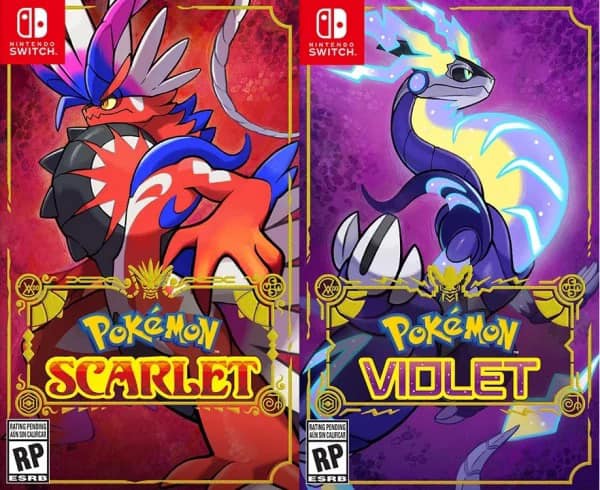
This week, we’re wrapping our Pokémon generation journey with Pokémon Scarlet and Violet — the current mainline generation, the franchise’s biggest leap into true open-world design, and maybe its most divisive modern release.
And yes…when Sun and Waves eventually arrives?
Ctrl+Binge will absolutely be there.
But until then?
This is our final Poké-stop for a little while.
Ask people about Gen IX and you’ll probably hear two things immediately:
“It was buggy as hell.”
And:
“Best Pokémon game in years.”
Which is honestly a wild combination.
The marketing sold Scarlet and Violet as Pokémon finally doing what fans had been asking for forever:
A true open-world Pokémon adventure.
No rigid route progression.
No forced pathing.
A world you could tackle in your own order.
That was the dream.
And when the games launched?
The memes came faster than a wild Veluza.
Characters walking at 3 FPS in the distance.
Pokémon clipping into terrain.
Physics doing whatever physics felt like doing that day.
The internet had a field day.
For people who never played it, Scarlet and Violet became:
“The broken Pokémon game.”
For people who did play it?
A lot of them said:
“Yeah… but I kinda loved it.”
That tension defines Gen IX.
The technical criticism is real.
But underneath the rough launch is one of the most emotionally successful Pokémon games the franchise has ever made.
Mechanics — Pokémon Finally Goes Fully Open World
This is the closest Pokémon has ever come to:
“Go wherever. Good luck.”
For the first time in mainline Pokémon, Paldea is built as a true open world.
You can freely explore huge environments, spotting Pokémon roaming naturally in the overworld, chasing side paths, climbing mountains, crossing lakes, and getting distracted every five minutes by “oh wait, what’s THAT?”
The traditional formula gets split into three major story paths:
- Victory Road (classic Gym progression)
- Path of Legends (Titan Pokémon hunts)
- Starfall Street (taking on Team Star)
You can technically approach them in your preferred order.
That freedom changes the feel dramatically.
And then there’s traversal.
Your legendary Pokémon isn’t just some endgame god encounter.
It becomes your ride:
Running. Swimming. Climbing. Gliding.
It turns movement itself into progression.
Pokémon has never felt this physically explorable.
Story & Characters — Quietly One of Pokémon’s Best
And here’s where Scarlet and Violet sneak up on people.
Because the writing?
Shockingly good.
Your rivals and companions actually feel like people.
Nemona is battle-obsessed in the most lovable “golden retriever who discovered competitive fighting” way.
She’s not evil. Not annoying. Just genuinely thrilled to have someone who can keep up.
Arven starts as kind of abrasive… until his storyline reveals one of the most emotionally grounded arcs Pokémon has ever done.
And Team Star?
What initially looks like another goofy villain group turns into something much more human.
Bullied kids. Outsiders. Misunderstood rebellion.
Then the game saves its strongest storytelling for the final act.
No spoilers.
But longtime Pokémon fans know exactly what I mean.
That ending lands.
Hard.
World / Visuals / Atmosphere — Ambition Over Polish
Paldea is huge.
Inspired by the Iberian Peninsula, it’s full of:
- Open plains
- Rocky cliffs
- Coastal regions
- Snowy mountains
- Academic hubs
- Hidden caves
And unlike older Pokémon games, the world isn’t segmented into neat little routes.
It’s continuous.
That ambition matters.
Does it always look polished?
No.
Sometimes it looks like the Switch is being held together by pure optimism.
But the feeling of exploration works.
Because Pokémon are no longer surprises triggered by grass encounters.
They’re part of the environment.
Watching them exist changes the emotional relationship players have with the world.
Sound & Music — Pokémon Finds Mood Again
Scarlet and Violet’s soundtrack deserves more love.
It blends:
- energetic battle themes
- exploration music
- emotional character beats
- surprisingly intense late-game scoring
And yes:
The Area Zero music deserves its flowers.
That sequence feels different.
Less “Pokémon adventure.”
More “something ancient and not entirely understood.”
The soundtrack helps sell that tonal shift beautifully.
It’s subtle until it absolutely isn’t.
Scarlet and Violet matter because Pokémon finally committed.
Not halfway.
Not cautiously.
Fully.
This isn’t a Wild Area experiment.
This isn’t a side-series detour.
This is Pokémon saying:
“Fine. Here’s your open world.”
And while the execution was undeniably rough, the design philosophy matters.
Because fans had been asking for freedom for years.
And for the first time?
Pokémon actually gave it to them.
That’s why players were willing to forgive so much.
Because underneath the bugs was the shape of something exciting.
Gen IX feels like Pokémon responding directly to modern gaming culture.
Players expect:
- open worlds
- player freedom
- exploration-driven discovery
- emotionally stronger companions
Games like Breath of the Wild permanently changed audience expectations.
Scarlet and Violet are Pokémon’s answer to that world.
Not perfectly.
But unmistakably.
And the storytelling? Honestly?
It reflects modern anime better too.
The found-family vibes.
The emotionally messy side characters.
The late-game tonal escalation.
Very anime-coded.
In a good way.
LOOKING AHEAD
This wraps our Pokémon mainline generation retrospective.
From Kanto’s humble pixel beginnings… all the way to Paldea’s ambitious open-world chaos.
But the journey’s not over.
When Sun and Waves arrives?
You already know.
Free Play Friday will be back in the tall grass.
QUESTION
Now that we’ve seen Pokémon go fully open-world…
What matters more going forward:
Polish and stability… or bold ambition that pushes the series forward?