A hotel with hidden rooms.
Hallways that led nowhere.
Doors that locked from the outside.
And at the center of it all?
A man smiling politely while people vanished around him.
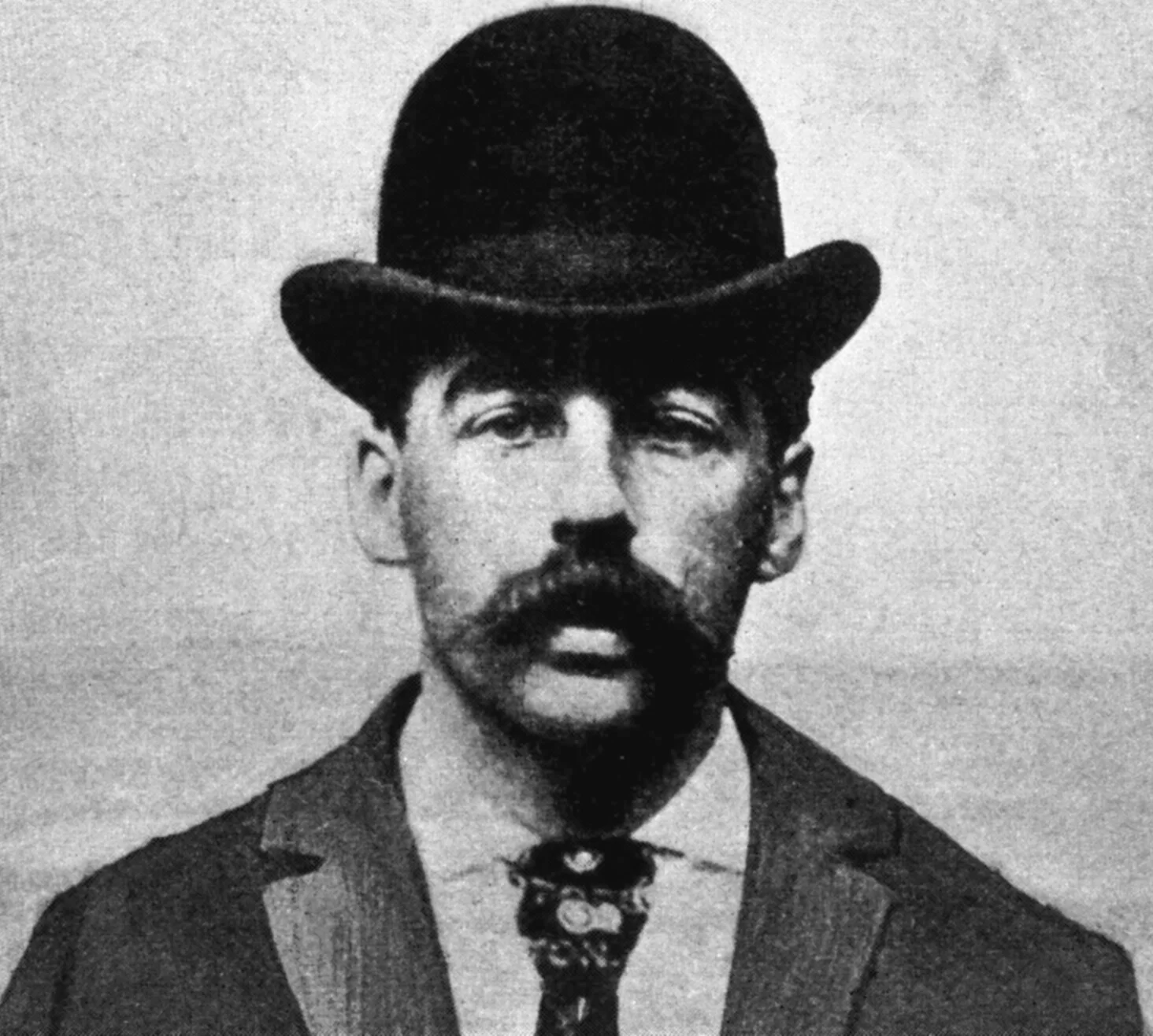
On this day in 1896, H. H. Holmes was hanged.
And his legend only got darker from there.
Most people know the broad strokes.
H.H. Holmes is often called America’s first serial killer. During the 1893 Chicago World’s Fair, he supposedly built a massive “Murder Castle” full of trap doors, gas chambers, secret passages, and hidden crematoriums designed to kill guests without anyone noticing.
The story sounds almost supernatural:
- A charming doctor
- A labyrinth hotel
- Dozens — maybe hundreds — of victims
It feels less like history and more like horror fiction.
Like America accidentally created its own slasher villain before movies even existed.
That’s the version most people know.
But that’s not the whole story.
First: Holmes was absolutely a real killer.
Born Herman Webster Mudgett, he was a con artist long before he became infamous. He studied medicine, ran insurance scams, forged documents, and reportedly stole corpses during medical school for fraud schemes.
That detail matters.
Holmes understood something terrifyingly modern:
If people trusted your image, they stopped questioning your behavior.
By the late 1880s, he arrived in Chicago and eventually acquired property near the upcoming World’s Columbian Exposition — one of the biggest public events in American history.
Millions of visitors flooded the city.
Perfect place to disappear.
Now here’s where things get complicated.
The famous “Murder Castle” was real… but many of the most extreme claims likely became exaggerated over time. Holmes’ building did contain:
- Hidden rooms
- Confusing layouts
- Soundproof areas
- Chutes leading downward
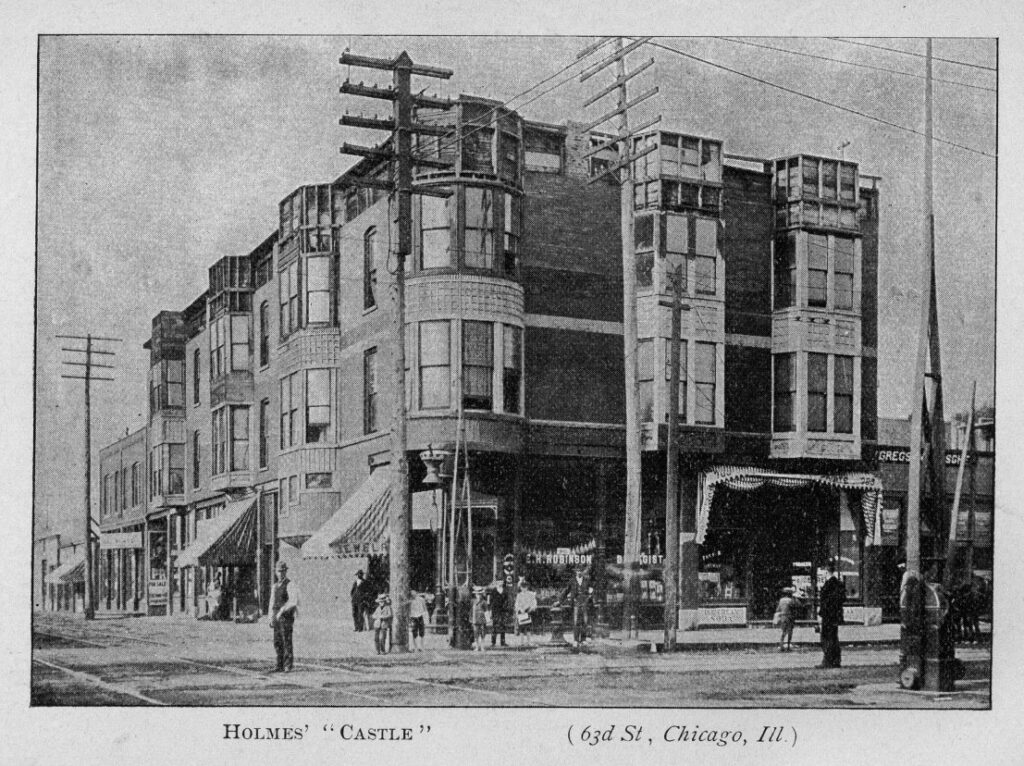
But stories about elaborate torture chambers and gigantic death mazes were heavily sensationalized by newspapers after his arrest.
And remember:
This was the golden age of Yellow Journalism.
Big headlines sold papers.
Especially horrifying ones.
That doesn’t make Holmes innocent.
Far from it.
But the version history remembers is partly true crime… and partly media mythology.
Holmes eventually confessed to 27 murders, though the exact number remains unknown. Some historians believe the real total was far lower than the legendary “200 victims” figure often repeated in pop culture.
Still horrifying.
Still monstrous.
But maybe not the comic-book supervillain later stories created.
And honestly?
That may be scarier.
Because the real Holmes wasn’t a theatrical mastermind lurking in shadows.
He was a polite, educated man who understood manipulation, charisma, and systems.
That’s what unsettled people then.
And now.
There’s another layer here too:
Holmes emerged during a rapidly changing America.
Industrial cities were growing fast. People traveled more. Urban anonymity was increasing. You could arrive in a city, reinvent yourself, and vanish into the crowd.
That fear — the idea that modern life lets dangerous people hide in plain sight — became part of the story.
Holmes wasn’t just a killer.
He became a symbol of the anxiety surrounding modern cities themselves.
H.H. Holmes endures because he sits at the crossroads of two things humans can’t resist:
True crime…
and mythmaking.
The public didn’t just want facts.
They wanted a monster.
And newspapers, books, documentaries, and movies kept feeding that image for over a century.
That tells us something important:
We don’t just consume horror.
We build legends around it.
Sometimes to warn ourselves.
Sometimes to entertain ourselves.
Sometimes because reality alone doesn’t feel dramatic enough.
You can still feel Holmes’ influence everywhere:
- True crime podcasts
- Serial killer documentaries
- Horror games with impossible buildings and hidden rooms
- Villains who weaponize charm instead of brute force
Even modern internet culture plays into it:
“Did you know this terrifying hidden fact?” content thrives for the same reason Yellow Journalism did.
Fear spreads fast.
Especially when the story feels cinematic.
Holmes was basically a real-life creepypasta before the internet existed.
QUESTION
What do you think scares people more:
The idea of a larger-than-life monster…
Or the possibility that someone completely ordinary could become one?
Because H.H. Holmes lives somewhere right in the middle of those two fears.