Before Formula 1.
Before NASCAR.
Before engines roared across continents.
There was a race.
One driver.
One vehicle.
One winner.
When we think of car racing, we think competition.
Multiple drivers.
Speed.
Risk.
Victory earned against someone else.
But the first recorded “motoring competition” in Europe didn’t look like that at all.
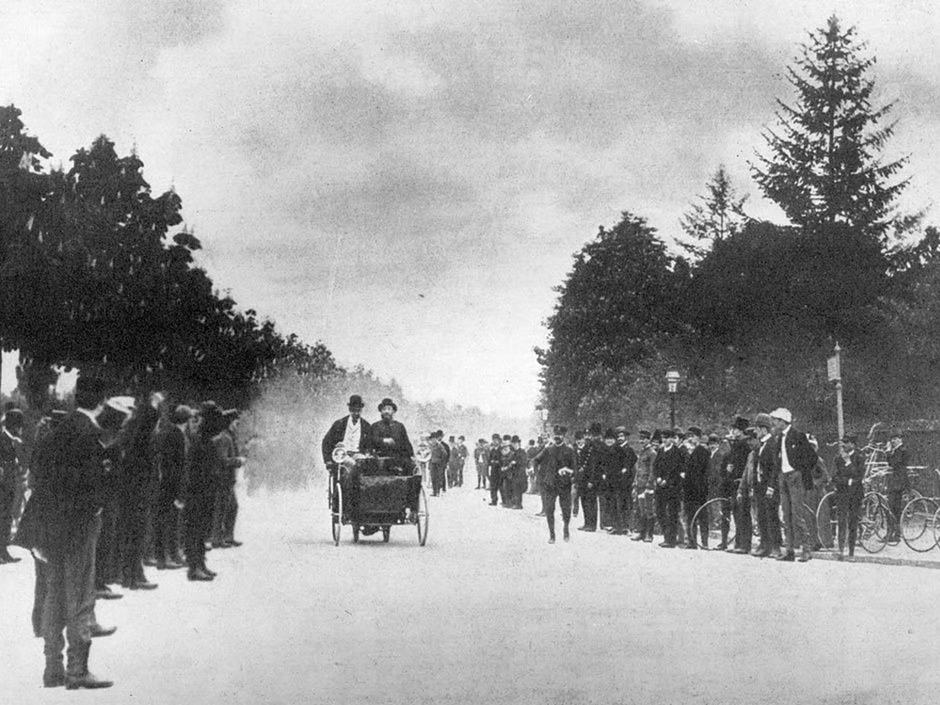
In 1887, a French newspaper called Le Vélocipède organized what it called a test — essentially a public demonstration of motorized travel.
The winner?
Marquis de Dion, driving a steam-powered quadricycle built by Georges Bouton.
The catch?
He was the only participant.
But that wasn’t the point.
This “race” wasn’t about beating someone.
It was about proving something.
At the time, the idea of a self-propelled vehicle — something that didn’t rely on horses — still felt experimental. Steam power existed, but applying it to personal transport? That was new territory.
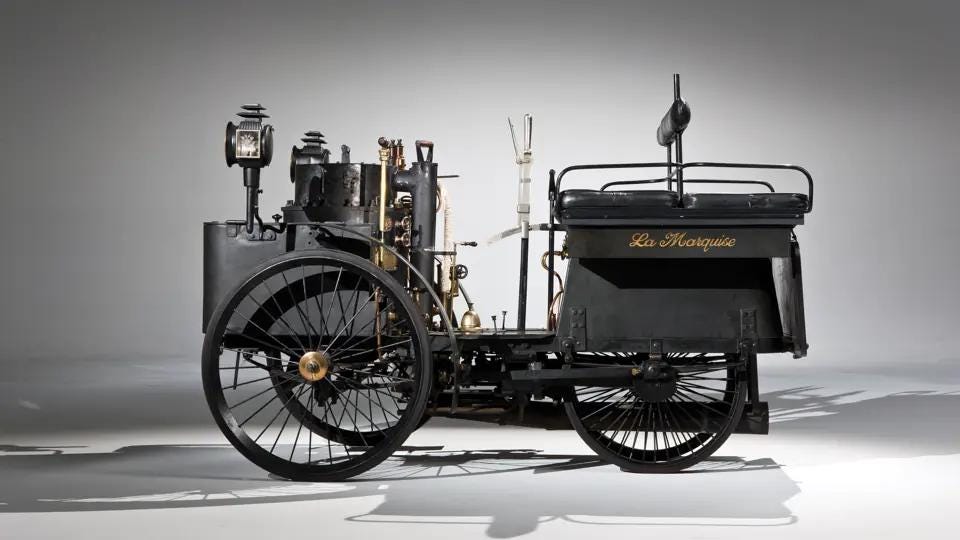
De Dion’s vehicle wasn’t sleek. It wasn’t fast by modern standards. It was loud, mechanical, and a little unpredictable. But it moved under its own power.
And that mattered.
Because the real audience wasn’t other drivers.
It was the public.
And maybe more importantly, the skeptics.
This was less a race and more a statement:
This works.
The fact that no one else entered says just as much as the “victory” itself. There wasn’t a field of competitors because the field hadn’t been built yet. Innovation was still catching up to imagination.
And yet, from that moment, the idea stuck.
If one machine could do it…
Others would follow.
Every major competition we love today started somewhere smaller than we imagine.
Before rivalries, before championships, before legacy — there’s always a moment where someone simply proves the thing is possible.
That’s what this was.
Not a race to win.
A race to exist.
We tend to remember the polished versions of history — the fully formed leagues, the iconic moments, the legends.
But the truth is messier.
Awkward.
Sometimes almost laughably simple.
One man. One machine. One finish line.
It’s not that different from what we see today.
The first livestream.
The first esports tournament.
The first person to try something new while everyone else watches.
At the time, it feels small.
Maybe even strange.
But years later?
It looks like the beginning of everything.
Like an origin story.
The kind you’d see at the start of a series before the world gets bigger.
QUESTION
If you were there in 1887 watching that “race” …
Would you have seen the future?
Or just a guy driving a strange machine down the road?