Opening Kickoff
Imagine this.
You just had one of the best seasons of your life. Maybe you won an MVP. Maybe you became one of the most recognizable players in football. Maybe millions of kids are wearing your jersey, screaming your name, and trying to recreate your highlights in their backyard.
Then the phone rings…EA Sports wants you on the cover of Madden.
For an NFL player, that should be one of the coolest honors imaginable. You have officially become the face of football’s biggest video game.
There is just one problem…Some fans might prefer you say no.
Because for more than two decades, NFL players who appear on the Madden cover have had a nasty habit of getting hurt, declining, disappearing, or otherwise watching their season go sideways.
And this year?
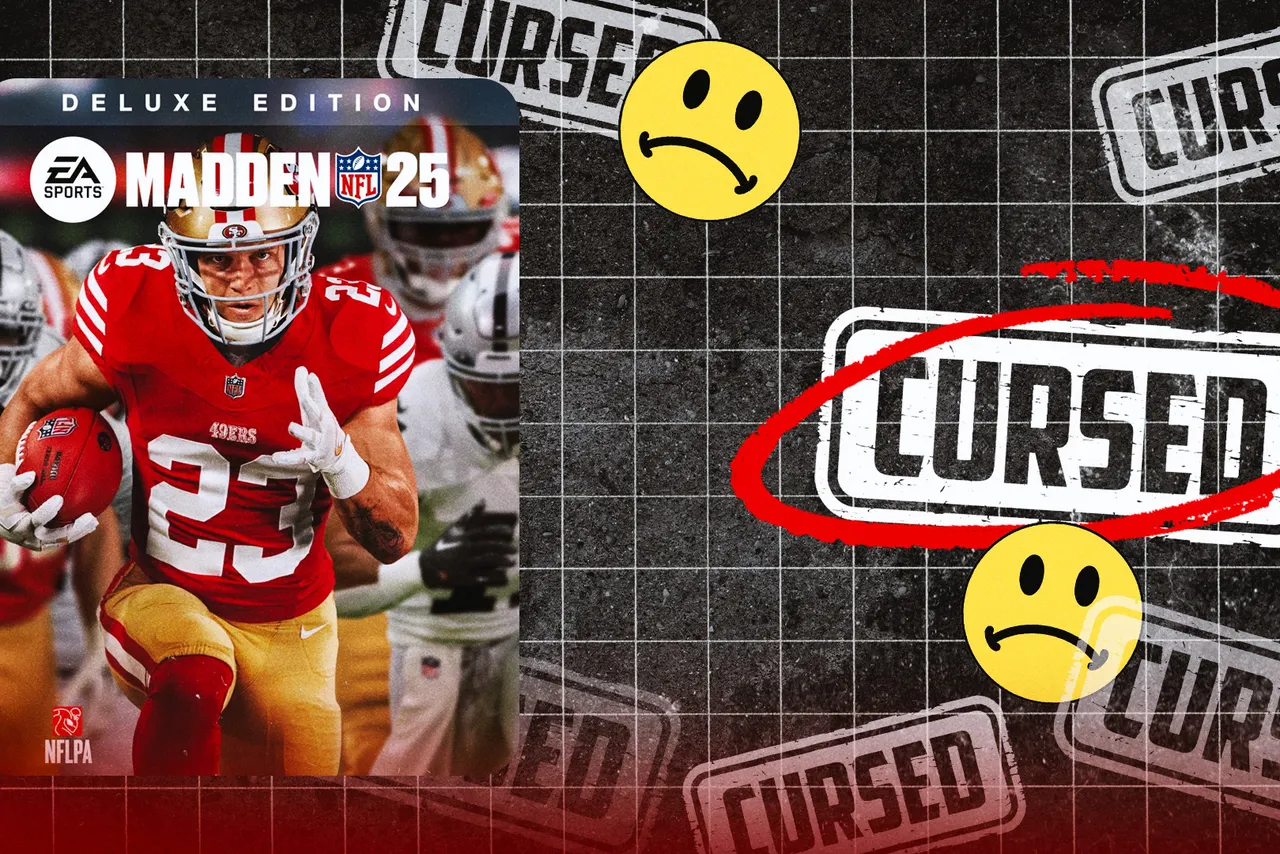
Chicago Bears quarterback Caleb Williams became the Madden NFL 27 cover athlete.
Then in Week 2, he strained his hamstring.
As of this writing, he still has not returned to game action.
So here we are again.
The Madden Curse.
Fake? Coincidence? A predictable result of putting football superstars on a box? Or should somebody at EA maybe stop tempting whatever ancient spirit apparently controls hamstrings?
Welcome back to Bingetober.
The Surface Version
The Madden cover is an honor. That is the simple version.
John Madden himself dominated the game’s artwork for years, but around the turn of the millennium, EA began placing NFL stars front and center.
And suddenly, appearing on Madden became another sign that a player had arrived.
You were not just good. You were marketable. Recognizable. One of the faces of the league.
ESPN once described the cover appearance as a kind of status symbol for NFL players. Which makes perfect sense.
Kids grow up playing Madden. Then one day, if everything goes right, they might become the guy staring back at them from the cover.
That should be awesome.
But football fans started noticing something.
The guys on the cover kept having very bad years, for a variety of reasons.
Sports curses do not begin because somebody proves anything. They begin because fans notice a pattern. Then the pattern happens again. And again.
And eventually somebody says: “Okay… this is getting weird.”
That is exactly what happened with Madden.
One unfortunate cover athlete could be bad luck. Two? Still coincidence.
Five or six? Now people are paying attention.
And once fans started looking backward, the early Madden covers started resembling a horror movie cast list.
The Curse Begins
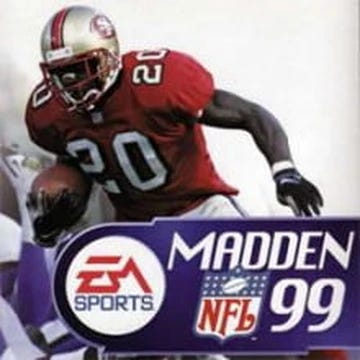
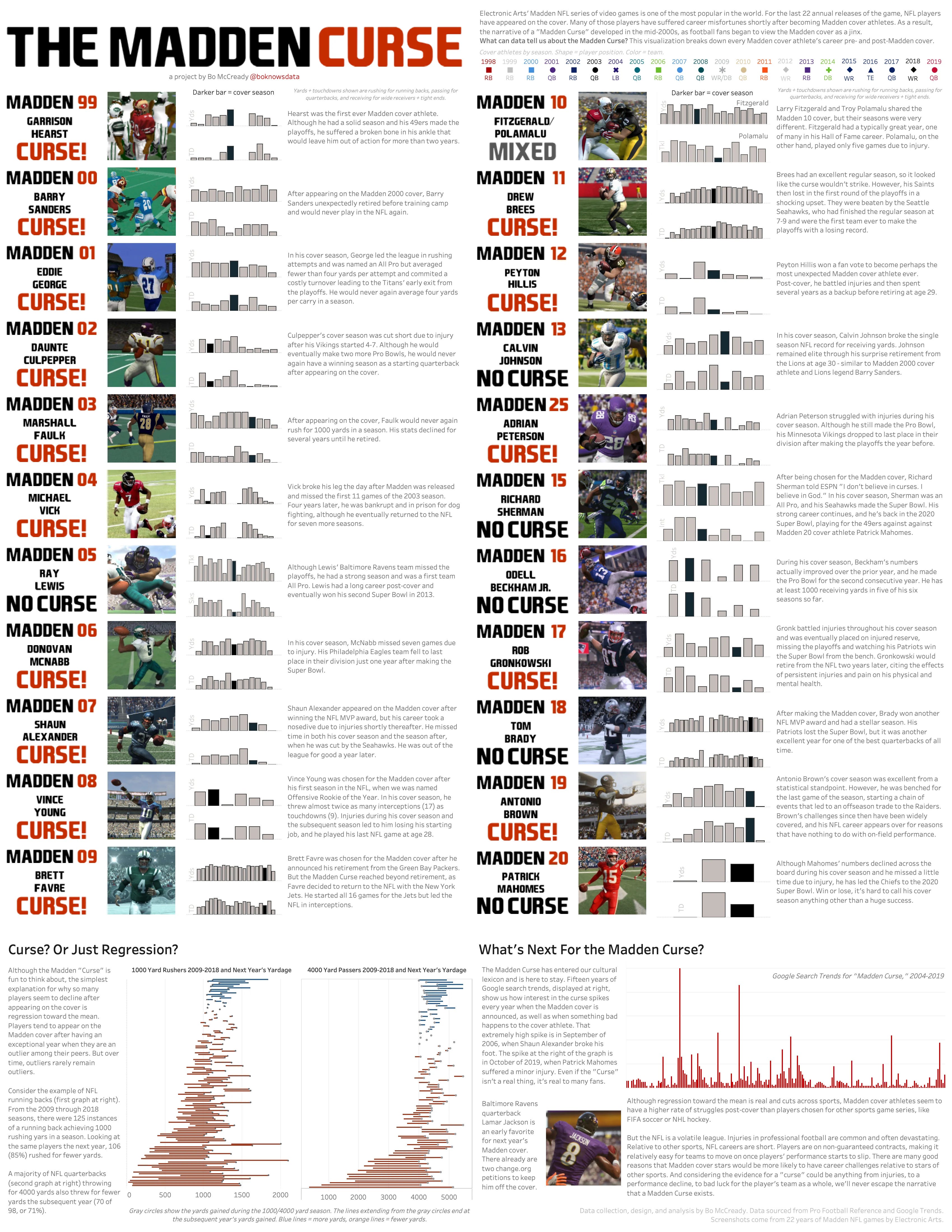
One of the earliest examples was Garrison Hearst, who appeared on the Madden NFL 99 cover.
Hearst had rushed for a career-high 1,570 yards during the 1998 regular season.
Then he suffered a devastating ankle injury in the playoffs. He would not play again until 2001.
Then came Barry Sanders. Sanders was supposed to appear prominently with Madden NFL 2000.
Instead? He retired before the season.
That is an unusual way for a cover athlete’s year to end before it even begins.
Still, maybe that is nothing.
Then the list kept growing.
Eddie George, Daunte Culpepper and Marshall Faulk
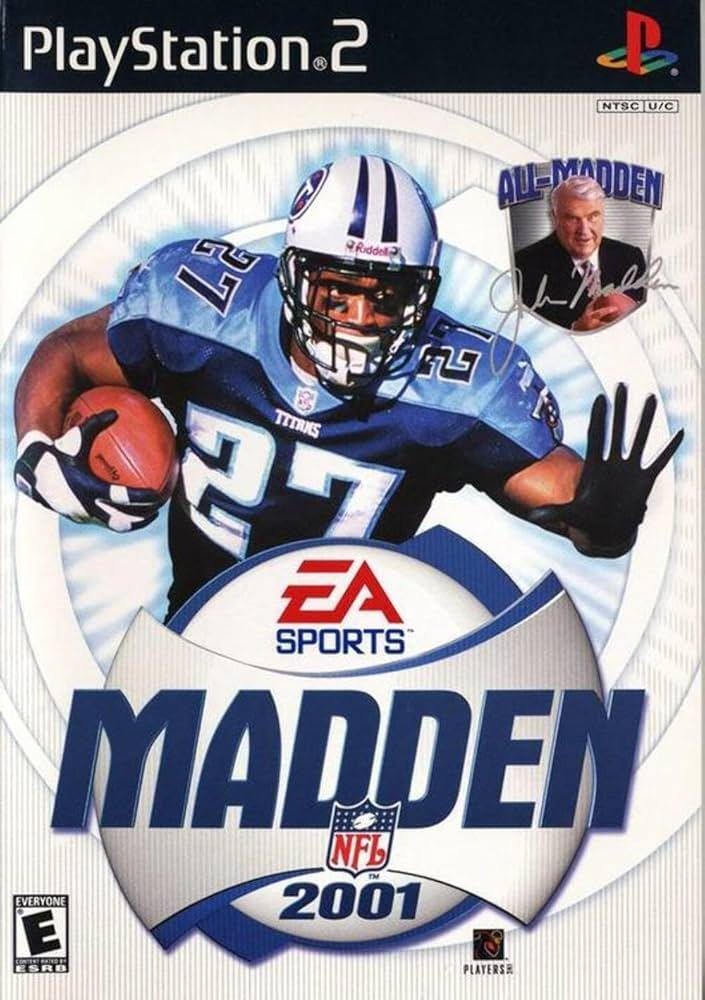
Eddie George appeared on Madden NFL 2001. He actually had a huge season around the time of his cover appearance. Then his production dropped sharply afterward.
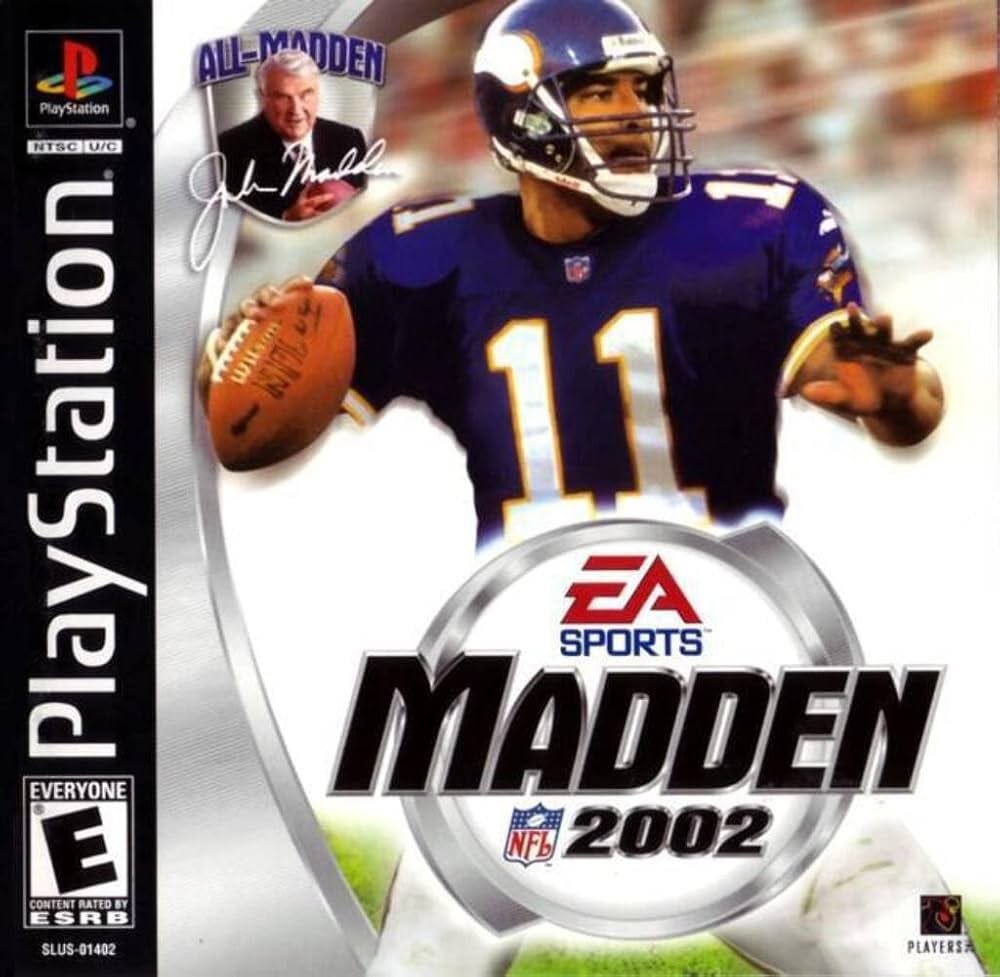
Daunte Culpepper followed in 2001. A knee injury ended his season early.
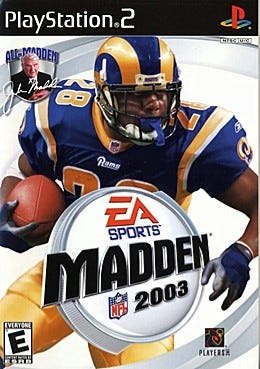
Then came Marshall Faulk, one of the most dominant offensive weapons of his era. An ankle injury cost him time, and he never again reached 1,000 rushing yards after appearing on the Madden NFL 2003 cover.
At this point, fans were no longer inventing a curse out of thin air. They were being handed material.
Then Michael Vick Happened
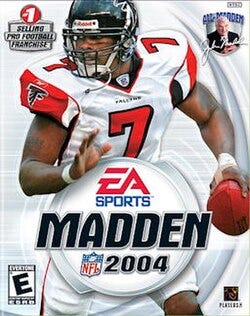
If the Madden Curse needed its signature moment, this might be it.
Michael Vick appeared on the cover of Madden NFL 2004. Vick was one of the most exciting players football had ever seen. A quarterback with a cannon arm who could suddenly turn into the fastest player on the field.
Perfect Madden material.
Then during the preseason, Vick fractured his right fibula. He missed the first 11 games of the season.
That one landed differently. Because now the curse had one of the NFL’s brightest young stars.
And it happened almost immediately.
Donovan McNabb and Shaun Alexander Keep It Going
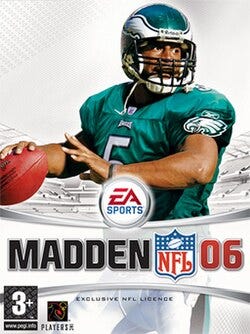
Donovan McNabb made the Madden NFL 06 cover after leading Philadelphia to the Super Bowl.
Then he battled a sports hernia and eventually missed significant time.
The following year? More injury trouble.
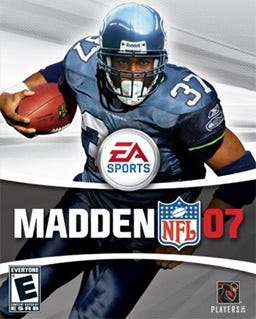
Then came Shaun Alexander, fresh off one of the greatest rushing seasons imaginable. He had rushed for 1,880 yards and scored 28 touchdowns.
Madden NFL 07 put him on the cover.
Alexander then fractured his foot and missed six games. His production never returned to its previous level.
At that point, even people who did not believe in curses knew the joke.
Your favorite player made the Madden cover? Congratulations.
And condolences.
Even Sharing the Cover Was Dangerous
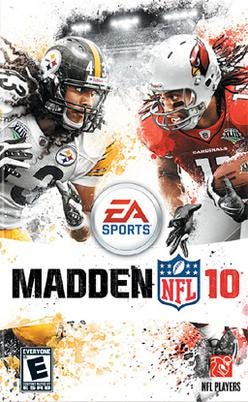
Madden NFL 10 tried something different: Two players.
- Larry Fitzgerald.
- Troy Polamalu.
Offense and defense sharing the cover.
EA officially announced them as the first pair of athletes to share a Madden cover.
Fitzgerald was mostly fine. Polamalu though?
Knee injuries limited him to five games that season.
Apparently, the curse could choose. Which honestly makes it worse.
Peyton Hillis: The Curse Gets a Fan Vote
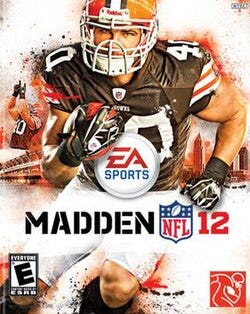
By 2011, the Madden Curse had become famous enough that fans were already joking about it.
EA did something dangerous that year: They let the fans choose.
Cleveland Browns running back Peyton Hillis had just exploded onto the scene with 1,177 rushing yards and 11 touchdowns. He became a cult favorite, bulldozing defenders and turning one breakout season into one of football’s strangest Cinderella stories.
Fans voted him onto the cover of Madden NFL 12. Then everything went sideways.
- Injuries.
- Illness.
- Missed games.
- Contract drama.
Hillis played only 10 games in 2011 and rushed for 587 yards. A year after becoming one of the NFL’s biggest surprise stars, the momentum was gone.
Was that the Madden Curse? Probably not.
But if you were trying to convince somebody the curse was real? Peyton Hillis was Exhibit A.
Then People Started Surviving
Here is where the story gets inconvenient for anyone arguing that an actual supernatural force lives inside EA headquarters.
Some players went on the cover and had perfectly good seasons. Some had great ones.
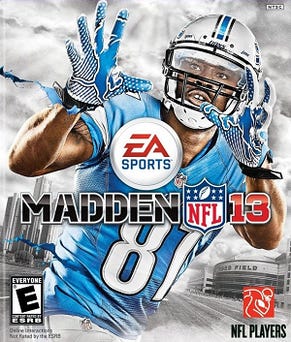
Calvin Johnson appeared on Madden NFL 13 and responded by setting the NFL single-season receiving yardage record.
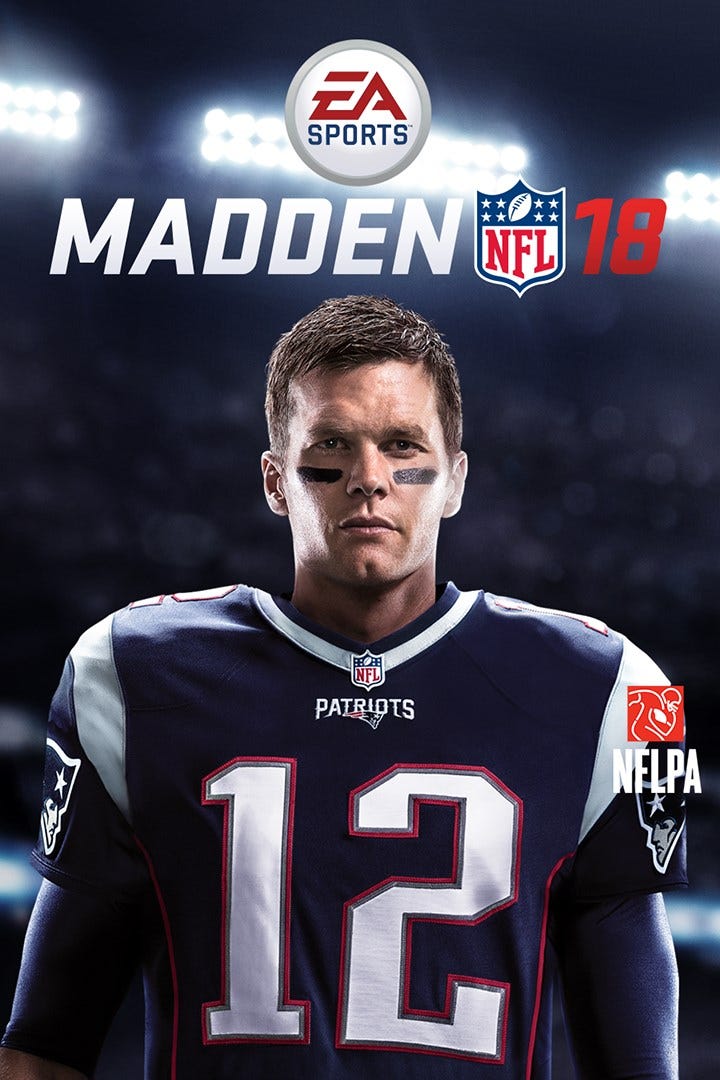
Tom Brady appeared on Madden NFL 18 and went on to win league MVP and reach another Super Bowl.
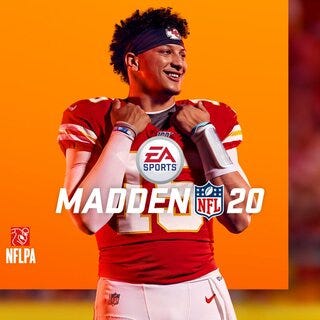
Then Patrick Mahomes appeared on Madden NFL 20. He won the Super Bowl. And Super Bowl MVP. That is not exactly cursed.
ESPN eventually listed stars including Fitzgerald, Johnson, Richard Sherman, Brady, Mahomes and Lamar Jackson among players who largely escaped the supposed curse.
Brady and Mahomes later even shared the Madden NFL 22 cover.
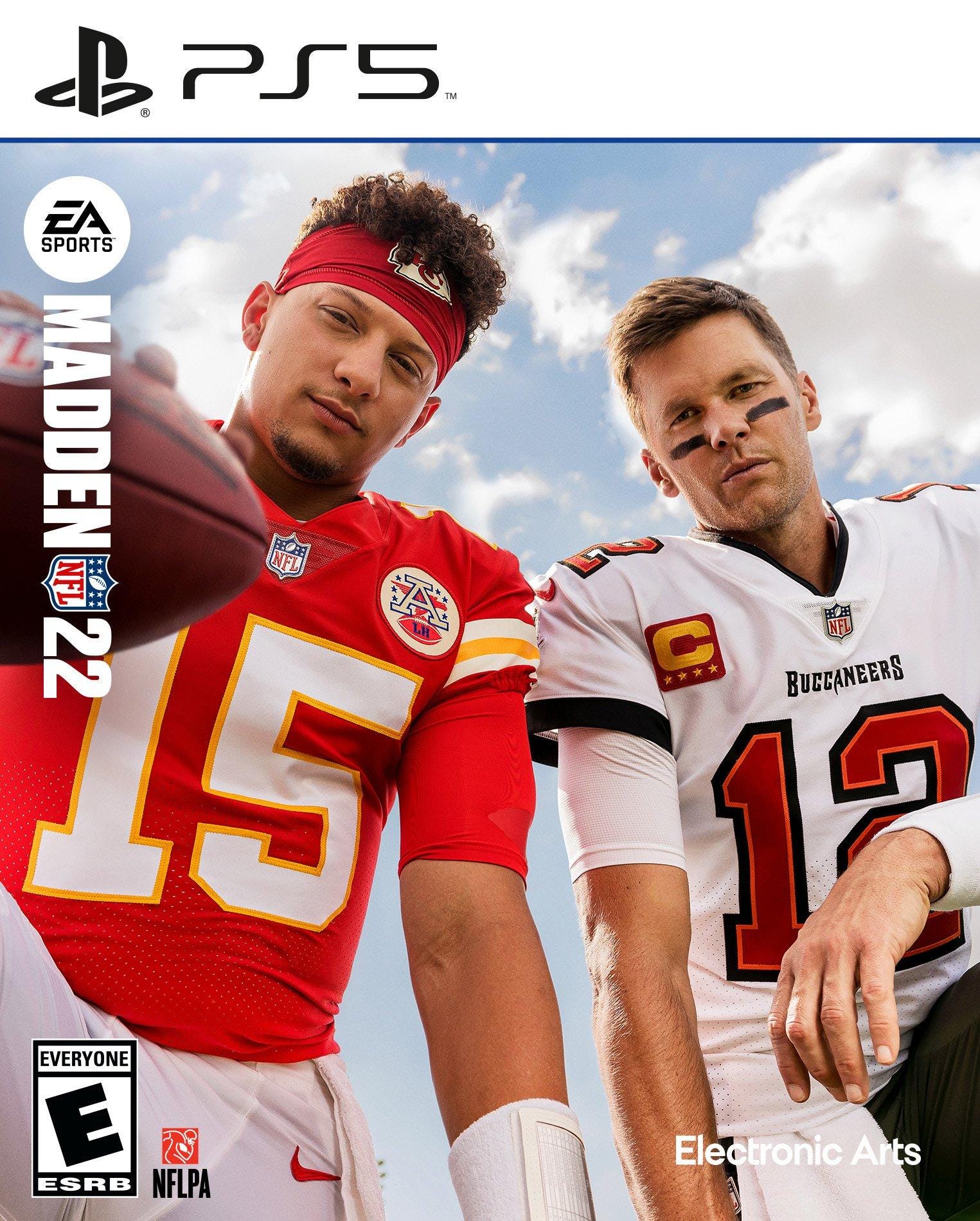
Both somehow survived being placed on the same box.
So if the curse is real?
It has apparently lost some accuracy.
Maybe the Curse Has a Boring Explanation
Here is the strongest argument against the Madden Curse.
Think about who gets selected for the Madden cover. Usually, it is someone who just had an incredible season. That creates two problems.
First: It is really hard to repeat an incredible season.
If somebody rushes for 1,800 yards, throws 50 touchdowns, or produces some career-defining year, chances are their next season will look slightly worse.
That is not a curse. That is regression.
Second: This is football.
Football players get hurt.
A lot.
And Madden cover athletes are often players receiving huge workloads while being tackled by some of the largest and fastest human beings alive.
Put enough elite football players on covers for enough years, and eventually plenty of them are going to get injured.
The curse might simply be doing what every good sports superstition does:
Taking ordinary events and arranging them into a much more interesting story.
Except… Caleb Williams
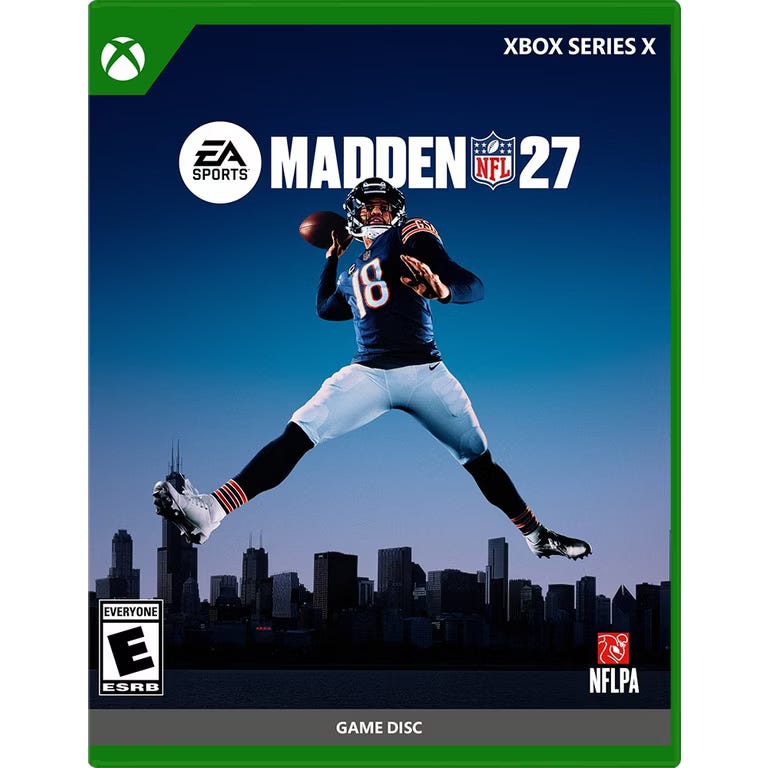
And then the current Madden cover athlete strains his hamstring in Week 2. Of course he does.
EA announced Caleb Williams as the Madden NFL 27 cover athlete in June, making him the first Chicago Bears player ever featured on a Madden cover.
He entered the 2026 season coming off a breakout year.
Then Week 2 arrived. Williams injured his right hamstring against Minnesota and left the game. He has not played since and was still working his way back ahead of Chicago’s Week 6 matchup.
Does that prove anything? Absolutely not.
Is it funny enough that we have to mention it in a Bingetober article about the Madden Curse?
Absolutely.
Somewhere, somebody who owns a Bears jersey saw the injury and immediately whispered:
“Not again.”
Why This Matters
The Madden Curse is really not about whether video game packaging contains supernatural powers. It is about how sports fans create mythology.
We want patterns. We remember coincidences. We connect events that probably have nothing to do with one another. And then we pass the story along.
Eventually, the story becomes part of the sport itself. The Madden cover is now two things at once.
- An honor.
- A joke fans nervously make when their favorite player receives that honor.
That is sports folklore.
Nobody has to genuinely believe the curse exists for the curse to matter.
Modern Connection
This might be the most Ctrl+Binge sports curse imaginable. Because it is literally attached to a video game.
Being named the Madden cover athlete is basically finding an ultra-rare legendary item.
The stats are amazing. The artwork looks incredible. Everyone wants it.
Then you read the item description:
+10 Fame
+20 Marketability
+50 Legacy
Possible Side Effect: Hamstring explodes sometime around Week 4.
Would you equip it? Of course you would. Probably. But you are absolutely saving the game first.
Final Whistle
The Madden Curse probably is not real. Probably.
NFL players get hurt. Great seasons are difficult to repeat. Cover athletes are selected specifically because they are already sitting near the top of the sport, meaning there is often nowhere to go except sideways or down.
There are completely logical explanations for almost every supposed victim. But logic has never killed a good sports curse.
Because next summer, EA will announce another Madden cover athlete. The player will smile. The team will celebrate. Fans will buy the game. And somewhere inside that fanbase, somebody will immediately think: Oh no.
That might be the real power of the Madden Curse. It no longer needs to be real.
We already know the story.
The Ctrl+Binge Question
Your team’s best player gets offered the Madden cover.
Are you celebrating?
Or are you politely asking EA to please put somebody else on the box?