Werewolves are legend.
The bodies in Gévaudan were not.
Between 1764 and 1767, something hunted the people of rural France. It attacked shepherds in open fields, dragged children away from livestock, and left survivors describing an enormous wolf-like creature unlike anything they had ever seen.
It was too large. Too fast. Too intelligent.
Hunters shot it, yet it returned.
Officials declared it dead, yet people continued dying.
Soldiers, professional wolf hunters, royal marksmen, and local farmers all pursued it through the forests and mountains.
Eventually, people stopped calling it an animal. They called it the Beast.
Some believed it was an unknown predator. Others saw divine punishment, a creature from Hell, or a wolf carrying something far more terrible beneath its skin.
The werewolf was the legend. But the terror was real.
The Legend We Inherited
The popular version of the story goes something like this:
A monstrous wolf terrorized the French province of Gévaudan during the reign of Louis XV. Ordinary weapons could not kill it. The king sent his best hunters, but the creature escaped again and again.
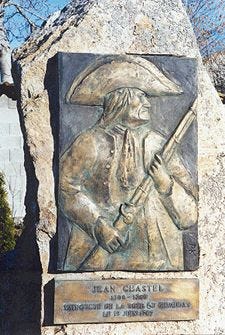
Then a local hunter named Jean Chastel entered the forest carrying a bullet made from blessed silver. He prayed, waited for the monster to appear, and finally killed the Beast in 1767.
It is a nearly perfect werewolf story.
There is an isolated countryside. A seemingly supernatural predator. Frightened villagers. A powerful government unable to protect them. A devout local man who succeeds where trained professionals fail.
And, of course, a silver bullet.
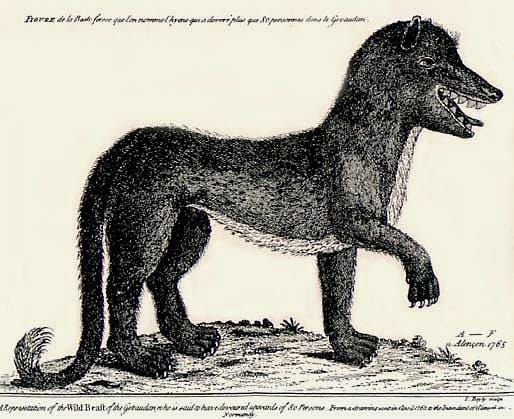
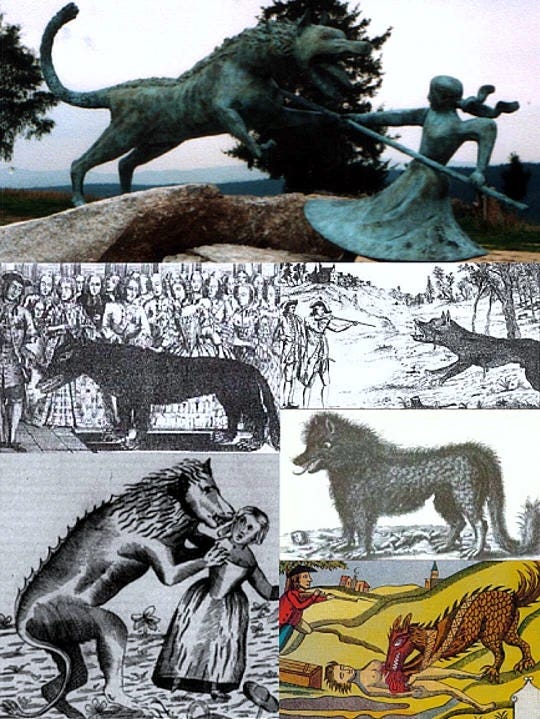
The Beast has since appeared in novels, films, television series, games, music, and countless cryptid investigations. Every generation gives it a new body: wolf, hyena, lion, wolf-dog, trained killing animal, serial killer’s accomplice, or full-blown werewolf.
But that neat version leaves out the most important possibility.
There may never have been one Beast at all.
The Attacks Were Real
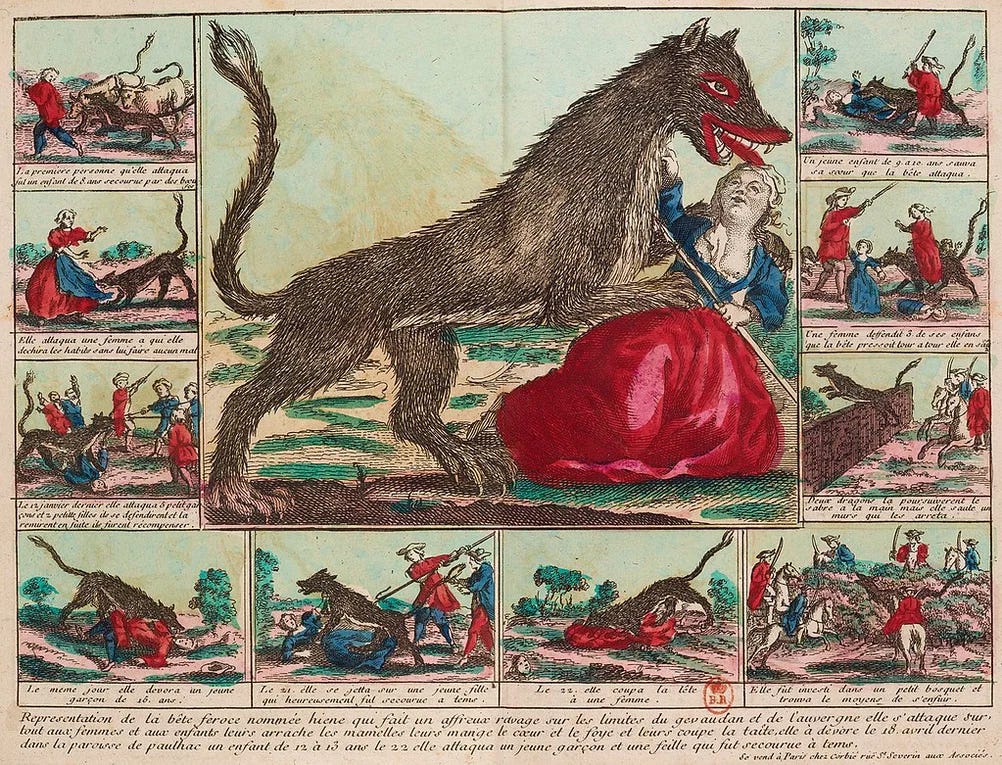
This is not a case where a single campfire story grew into an imaginary massacre.
The attacks happened.
Parish records documented burials. Officials exchanged letters about the killings. Newspapers reported new victims. Survivors described their encounters. Rewards were offered, military patrols were organized, and large-scale hunts swept across the countryside.
The exact totals vary depending on which attacks are included, but roughly one hundred people were killed, with many others injured.
Most of the victims were women and children.
That was not necessarily because the animal possessed some supernatural hatred of them. In rural Gévaudan, children frequently watched livestock away from the protection of villages. Women also worked in fields and pastures. They were smaller, more isolated, and more vulnerable to a large predator.
The first widely recognized fatality was 14-year-old Jeanne Boulet, killed while tending sheep in the summer of 1764.
She would not be the last.
A Landscape Built for Fear
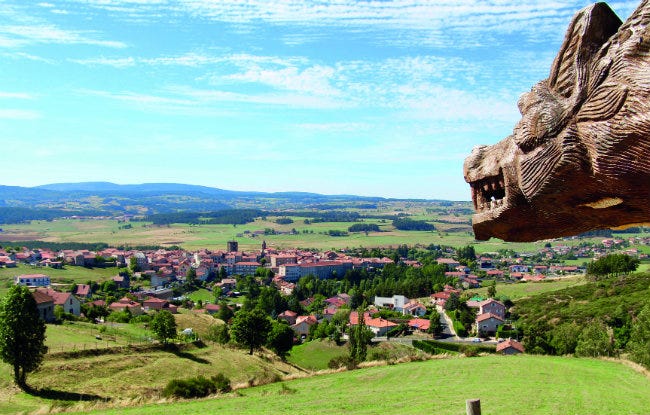
Gévaudan was remote, mountainous, heavily forested, and difficult for outsiders to navigate.
To someone sitting safely in Paris, it already sounded like the edge of civilization—a place where old superstitions might survive beneath the trees.
To the people living there, it was simply home.
But it was a home filled with wolves.
Wolf attacks were a documented danger in France during this period. Gévaudan was not the only region to experience clusters of predatory attacks, and the country supported a much larger wolf population than it does today.
That does not mean wolves spent every night hunting human beings. Most avoided people.
But eighteenth-century rural life created very different opportunities. Children guarded animals in exposed fields. Firearms were less reliable. Communication between villages was slow. A dangerous predator could attack, disappear into miles of difficult terrain, and strike somewhere else before word reached the next community.
The Beast did not need supernatural powers to appear as though it could vanish.
It only needed the landscape.
France Sends in the Professionals
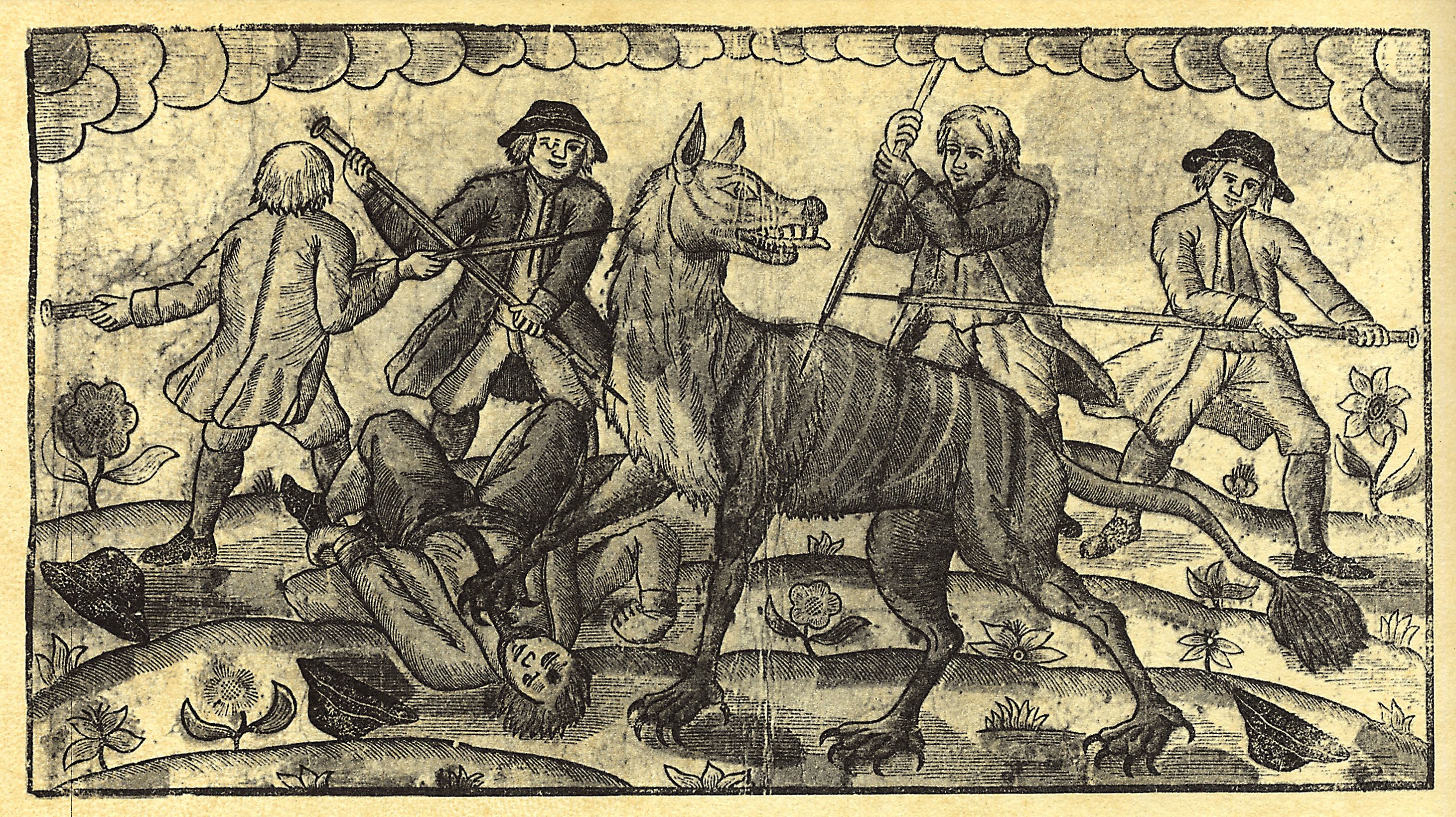
The attacks quickly became more than a local emergency.
France had recently emerged from the Seven Years’ War bruised, humiliated, and financially strained. Louis XV had lost much of France’s overseas empire, including Canada. The monarchy desperately needed to project control.
Then reports began circulating that the king’s subjects were being devoured by an animal his government could not stop.
That was not merely frightening.
It was embarrassing.
Captain Jean-Baptiste Duhamel and his soldiers organized hunts. Thousands of local volunteers joined searches. Poisoned bait was left in the countryside. Men reportedly disguised themselves as women because the Beast appeared to prefer female victims.
When those efforts failed, professional wolf hunters Jean-Charles and Jean-François d’Enneval arrived.
They failed too.
Finally, the king sent François Antoine, his own gun bearer and an experienced hunter.
In September 1765, Antoine killed an unusually large wolf near the Abbey of Chazes. Survivors identified the animal as the Beast. Its body was preserved and sent toward the royal court.
France celebrated. The monster was dead.
Except people started dying again.
One Beast Dies. And Another Keeps Killing
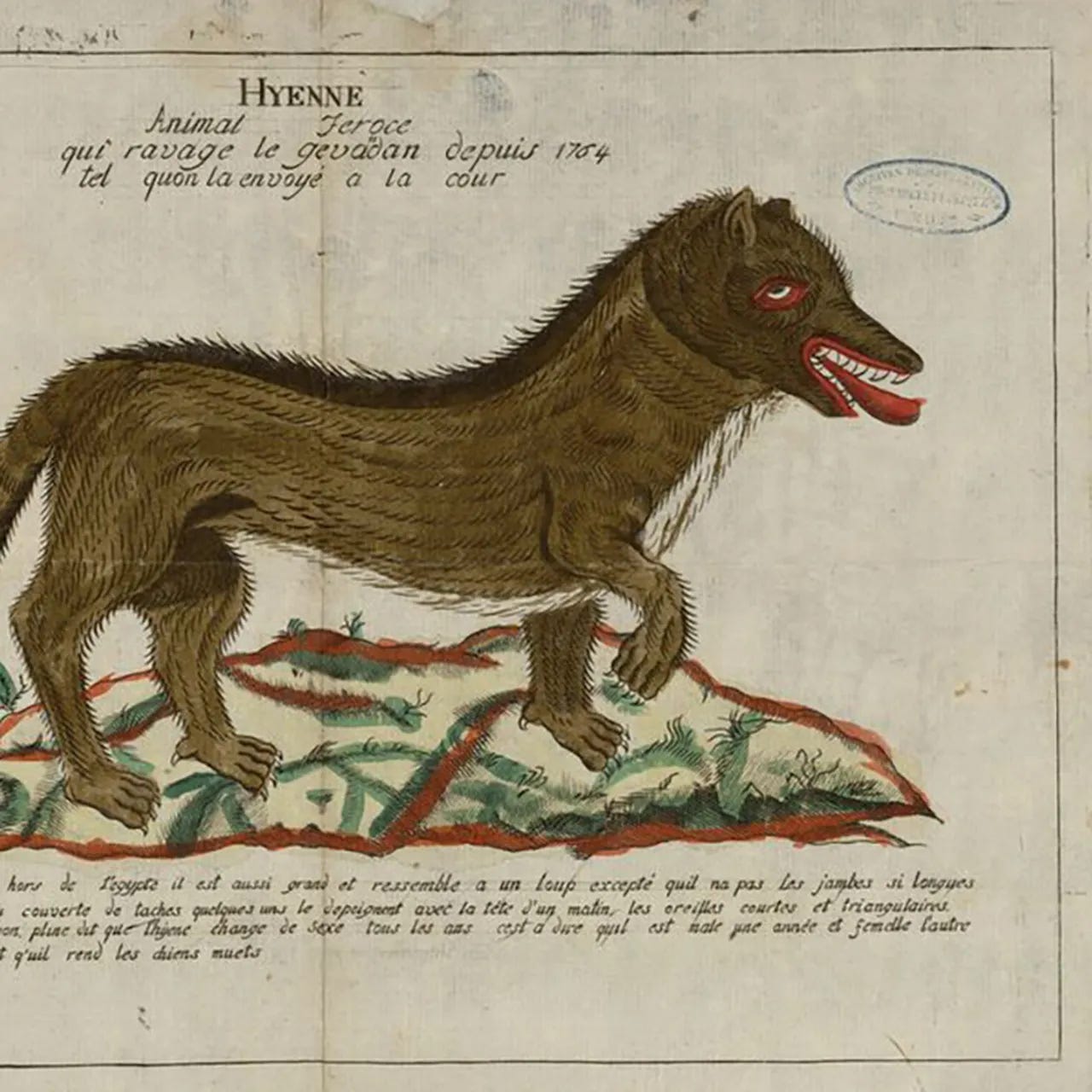
The renewed attacks created a serious problem.
If Antoine had killed the Beast, what was now attacking Gévaudan?
One explanation was supernatural. The creature had returned from the dead, or the hunters had killed the wrong animal while the true Beast continued stalking the countryside.
There was another possibility.
There had always been more than one animal.
The name the Beast of Gévaudan encourages us to imagine a single creature moving through one continuous story. Every victim becomes part of the same body count. Every description is forced onto the same animal. Every failed hunt becomes another escape.
But if multiple wolves, wolf-dogs, or other feral canids were responsible, the contradictions become much easier to understand.
- One witness saw a massive reddish animal with a dark stripe.
- Another saw something resembling an ordinary wolf.
- Another described a creature with an enormous chest, a long tail, and proportions that seemed closer to a lion or hyena.
Those accounts cannot all describe the same animal with perfect accuracy. But they do not need to.
Different people may have encountered different predators. Frightened witnesses could also misjudge size, color, distance, and movement—especially during an attack in which someone was injured or killed.
Once everyone believed one legendary Beast was responsible, every dangerous animal seen in the region became another glimpse of the monster.
The Local Hunter Who Ended the Terror
By 1767, the king and the national press had largely lost interest. As far as Versailles was concerned, François Antoine had already killed the Beast and restored the monarchy’s honor.
The people of Gévaudan did not have the luxury of moving on.
Local hunters continued pursuing the animal or animals still attacking their communities.
On June 19, 1767, Jean Chastel killed a large wolf-like canid during a hunt organized by the Marquis d’Apcher.
After that day, the killings stopped.
The animal’s body was examined, and surviving descriptions portrayed something resembling an unusually large wolf or wolf-dog. Unfortunately, no skin, skeleton, or usable tissue remains for modern examination.
There will be no DNA test. No preserved skull will suddenly appear and end the argument.
The body disappeared, and the empty space it left behind was eventually filled by legend.
That includes the most famous detail of the story.
There is no contemporary evidence that Chastel killed the animal with a blessed silver bullet. That detail belongs to later retellings, where the man who killed a seemingly supernatural wolf needed an appropriately supernatural weapon.
History gave Chastel a gun. Legend gave him silver.
How the Newspapers Built a Monster
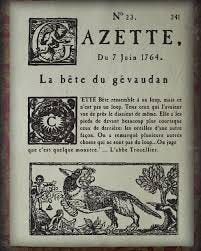
The attacks did not remain a regional story for long.
French political reporting was tightly restricted, but newspapers still needed material that attracted readers. The killings in Gévaudan offered everything an editor could want: violence, mystery, helpless authorities, brave survivors, terrified villagers, and a monster that could strike again before the next edition.
The Courrier d’Avignon, the Gazette de France, and other publications transformed the attacks into an ongoing serial.
This was eighteenth-century true crime.
Each new death advanced the story. Each failed hunt made the Beast more powerful. Every contradictory description added another unnatural feature. Illustrations gave the creature a recognizable form even when eyewitnesses could not agree on what they had seen.
The press did not invent the victims.
It gave their killer a brand.
A pack of wolves is a wildlife crisis.
The Beast of Gévaudan is a headline.
The People Inside the Legend
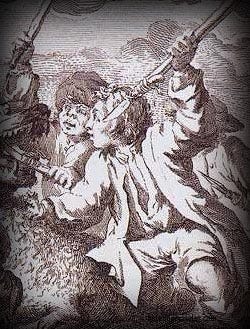
The story should not belong entirely to the hunters or the animal.
It also belongs to the people who fought back.
In January 1765, a group of children led by 12-year-old Jacques Portefaix defended themselves when the Beast attacked. Armed with sticks fitted with blades, they stayed together, drove the animal away, and survived.
Their courage reached Louis XV, who rewarded the children and paid for Portefaix’s education.
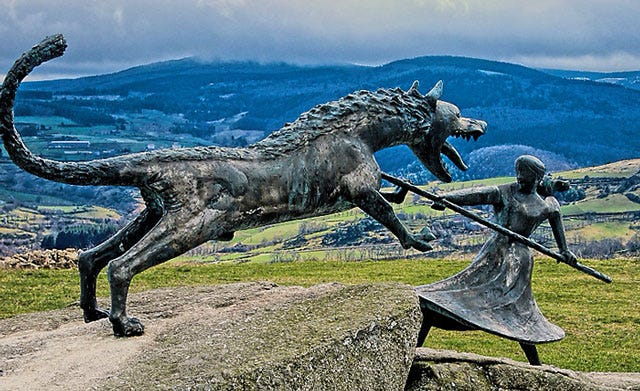
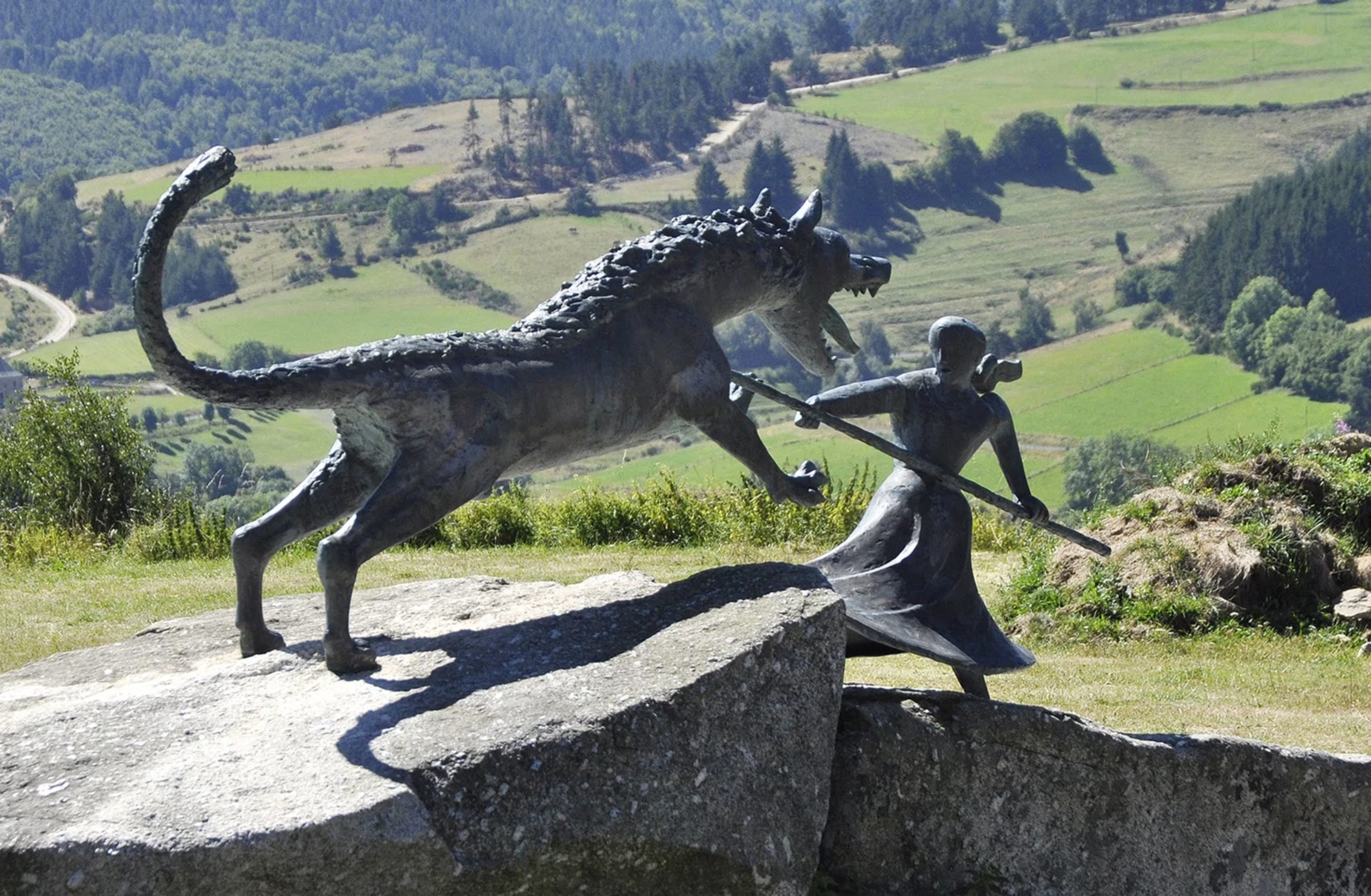
Later that year, Marie-Jeanne Vallet was attacked while crossing a stream. She drove a spear into the creature and escaped, earning the nickname the Maiden of Gévaudan.
These were not legendary warriors.
They were young people placed in an impossible situation because ordinary survival required them to enter fields where something was hunting human beings.
The Beast became famous.
Its victims and survivors were the ones who paid for that fame.
So What Was the Beast?
We cannot prove the answer with absolute certainty.
An escaped hyena has been suggested. So has a lion from a private menagerie. Some theories involve a wolf-dog trained by a human killer. Others propose an exotic animal wearing armor or protective hide.
There is no convincing physical evidence for any of them.
The simplest explanation remains the strongest:
Several wolves, wolf-dogs, or other large canids attacked vulnerable people across the region. The animals were combined into one supernatural predator through fear, incomplete communication, contradictory testimony, and sensational reporting.
The Beast could survive being shot because one wolf could be wounded while another attacked days later.
It could change color, size, and shape because witnesses were not always seeing the same animal.
It could die and return because the hunters repeatedly killed wolves, declared victory, and discovered that the danger remained.
The mystery does not disappear when we remove the werewolf.
In some ways, it becomes more frightening.
Why the Beast Still Matters
The Beast of Gévaudan shows how legends can form around something completely real.
Nobody needed to invent the bodies. Nobody needed to fake the grief. The people of Gévaudan experienced a genuine disaster.
But human beings want disasters to have a recognizable shape.
- One monster is easier to understand than several predators.
- One monster can be named.
- One monster can be hunted.
- One monster can be killed.
It also makes a better story.
If the attacks happened today, every sighting would spread instantly. Videos would be analyzed frame by frame. Amateur investigators would compare bite marks. Podcasts would name suspects. Social media would produce maps, theories, hoaxes, and accusations before officials finished their first press conference.
Every new attack would be assigned to the same creature because the story had already decided there was only one.
That does not make the fear irrational.
It demonstrates what fear does to information.
The Beast Beneath the Story
Yesterday, we asked whether the werewolf was the creature beneath the moon—or the person hiding beneath the skin.
Gévaudan offers a third possibility.
Sometimes the monster is the story we build over real wounds.
The people of Gévaudan did not imagine their dead. They did not invent the terror waiting beyond their villages.
But wolves became the Beast because a single immortal monster could carry every fear the real world refused to organize neatly.
The Beast may never have existed.
The terror did.
What frightens you more: one impossible monster—or several ordinary predators that learned human beings could be prey?