Punch a tree.
Build a shelter.
Survive the night.
Then look up and realize it is two in the morning, and you have spent the last hour rebuilding a staircase nobody else may ever see.
From the outside, Minecraft can look almost aggressively simple. Its world is made of blocks. Its animals are square. Its default characters barely have faces. There is no traditional campaign marching players from one cinematic sequence to the next, and the game rarely insists that anything must be accomplished in a particular order.
To someone who has never played it, Minecraft may look more like a toy than a game.
- It is digital LEGOs.
- It is Creeper merchandise,
- YouTube videos,
- children arguing about diamonds,
- and somebody building an unnecessarily large castle one block at a time.
None of those descriptions are wrong. They just fail to explain why people keep coming back.
They do not explain the adults reopening worlds they created years ago. They do not explain communities building cities together, engineers creating functioning machines with Redstone, or players spending an entire evening making sure the roof of a house looks exactly right.
Calling Minecraft simple is accurate. Treating that simplicity as a limitation is where people get it wrong.
Minecraft became irresistible because it is easy to enter, nearly impossible to exhaust, and personal enough that every player eventually feels like the world belongs to them.
The First Night Explains Everything
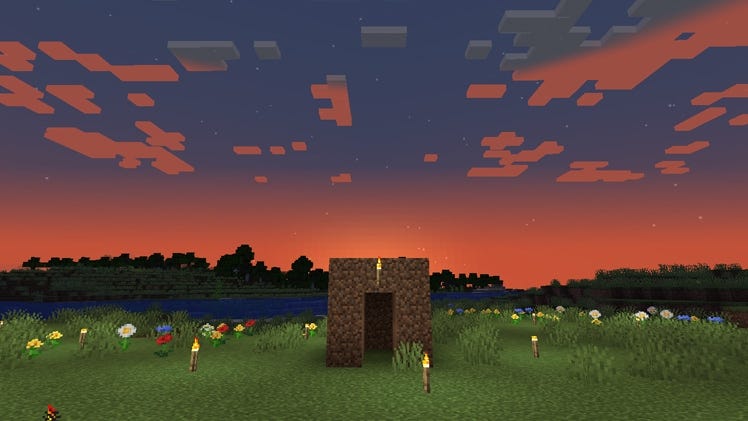
A new Minecraft world does not begin with a lengthy history lesson. There is no king waiting to hand over a sword, no commander explaining the mission, and no glowing trail pointing toward the first objective.
There is simply a world.
The sun is moving across the sky. Trees surround you. Animals wander nearby. Somewhere beneath your feet are resources you do not yet know how to reach.
So you punch a tree.
It is an absurd action, but it begins a chain of discoveries that quietly teaches the player how Minecraft works. Logs become planks. Planks become sticks. A crafting table creates tools. Tools make it easier to collect stone. Stone creates better tools.
Then the sun begins to fall.
That change introduces urgency without interrupting the player with a warning screen.
Darkness means monsters. Monsters mean the player needs protection. Suddenly, building a shelter is not merely a creative exercise. It is survival.
That first home may be a wooden cabin. It may be a cube made of dirt. It may be a hole carved into the side of a hill with a torch thrown against the wall.
It will probably be ugly.
It will also be yours.
That crude shelter represents the first moment the world stops feeling like randomly generated terrain and starts feeling like a place the player has changed. You survived because you understood the environment, gathered what you needed, and built something that did not exist before you arrived.
When morning comes, fear gives way to ambition.
Maybe the shelter needs a door. Maybe it needs windows. Maybe there should be a farm nearby. Maybe that mountain in the distance has iron inside it.
Maybe you should go see.
The One More Thing Machine
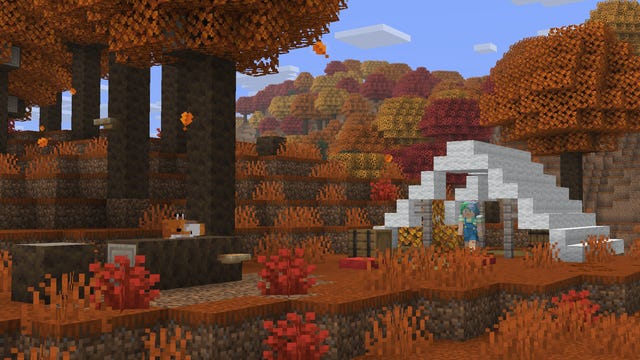
The first night contains the entire genius of Minecraft: curiosity creates a problem, the player discovers a solution, and that solution creates another possibility.
The game does not need to fill the screen with objectives because players constantly create objectives for themselves.
You need torches, so you search for coal.
You find iron, so you build a furnace.
You make better tools, which allow you to explore deeper caves.
You discover diamonds, which make stronger equipment possible. That equipment gives you the confidence to travel farther, enter the Nether, or begin preparing for the Ender Dragon.
But progression does not have to lead toward a boss fight.
Maybe you want a larger house. That means gathering more wood. While gathering wood, you find a village. The village needs a road back to your home. The road needs lighting. The lighting inspires a wall. The wall makes you realize the entire area could become a town.
One completed task produces three new ideas.
That is how an intended twenty-minute session quietly consumes an evening.
Minecraft is not endless because nothing ever happens. It feels endless because almost everything the player accomplishes suggests something else worth doing.
Survival Gives Creation Weight
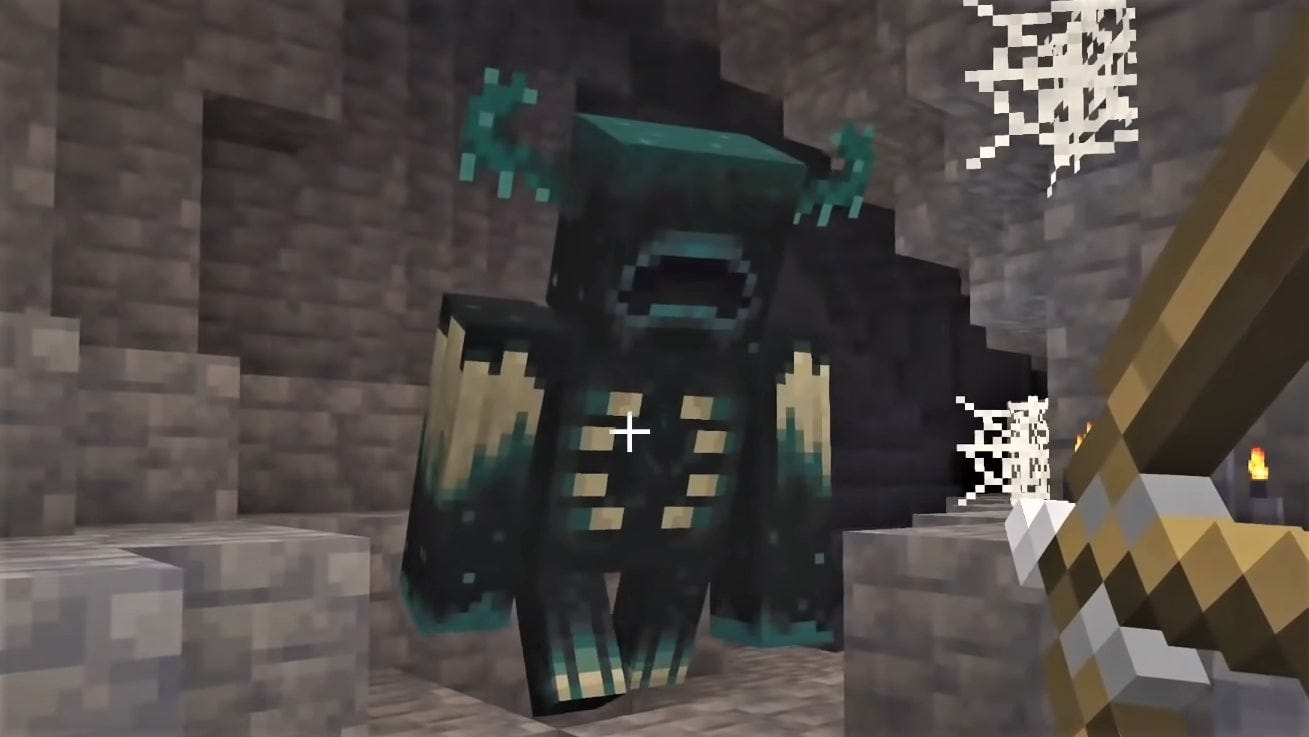
Creative Mode offers unlimited materials and the freedom to build without worrying about hunger, hostile creatures, or running out of resources. It turns Minecraft into an enormous three-dimensional canvas.
Survival Mode gives those creations weight.
A castle built in Creative Mode can be an incredible artistic achievement.
A castle built in Survival Mode also carries the memory of every tree cut down, every block of stone mined, every dangerous trip home, and every Creeper that appeared at the worst possible moment.
The house is not simply decoration. It protects you.
The farm is not simply scenery. It feeds you.
The bridge is not simply attractive. It makes the next journey safer.
Everything the player creates can become both practical and personal. The world rewards imagination, but it also gives imagination a purpose.
That balance allows completely different kinds of players to coexist inside the same game. One person can spend the day mining. Another can manage crops and animals. Someone else can explore thousands of blocks away from home. Another player can remain in the same small area for months, endlessly renovating a house that was already perfectly functional.
Nobody is playing incorrectly.
Easy to Understand Does Not Mean Shallow
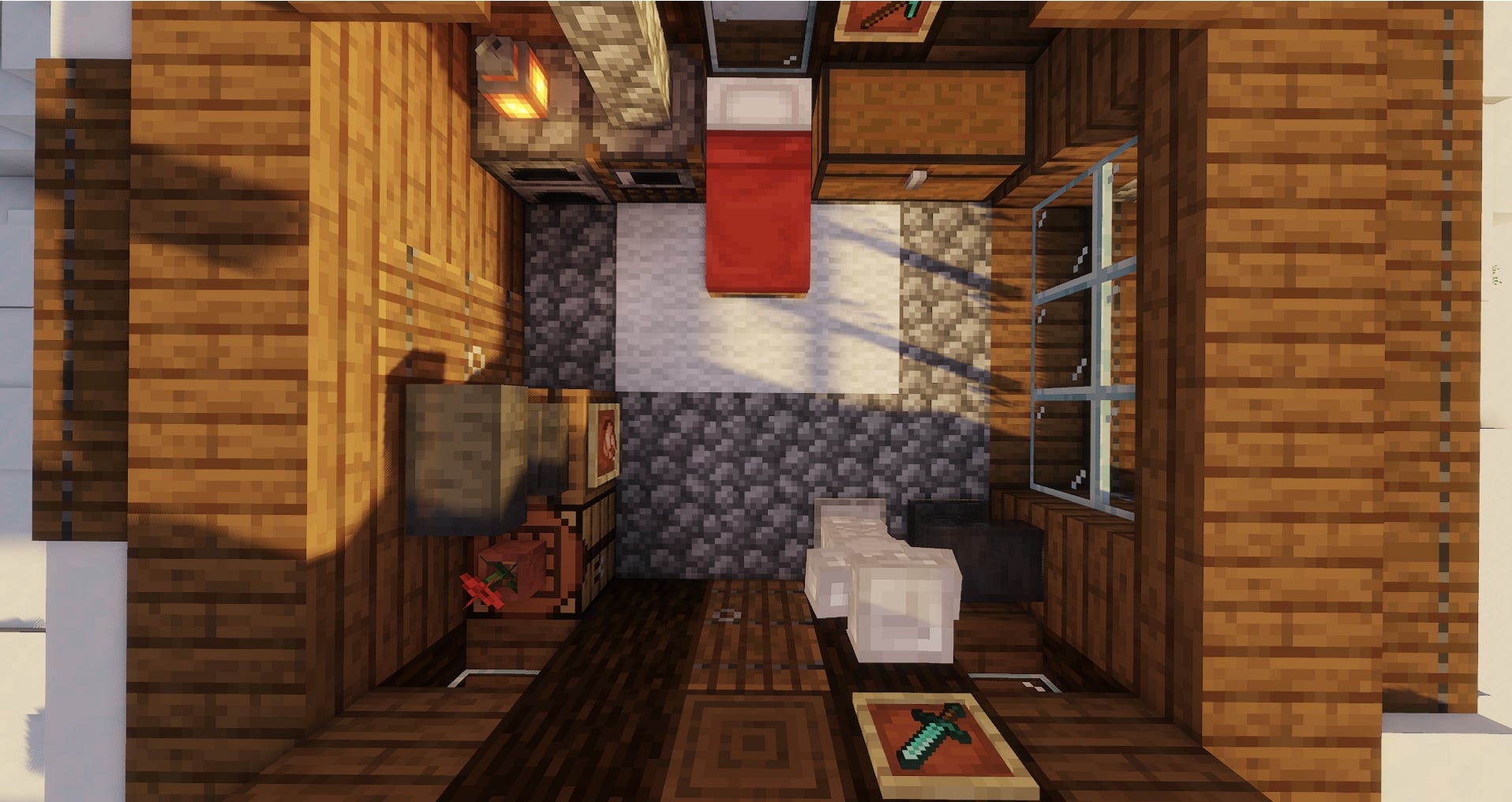
Blocks give Minecraft a visual language almost anyone can understand.
A block can be placed. A block can be removed. Blocks can be combined into walls, floors, roofs, statues, machines, and entire cities.
The grid creates a limitation, but that limitation makes creativity accessible. A new player understands how to stack blocks within minutes. An experienced builder understands how depth, color, lighting, and carefully selected materials can make those same blocks appear curved, weathered, enormous, or alive.
Then there is Redstone.
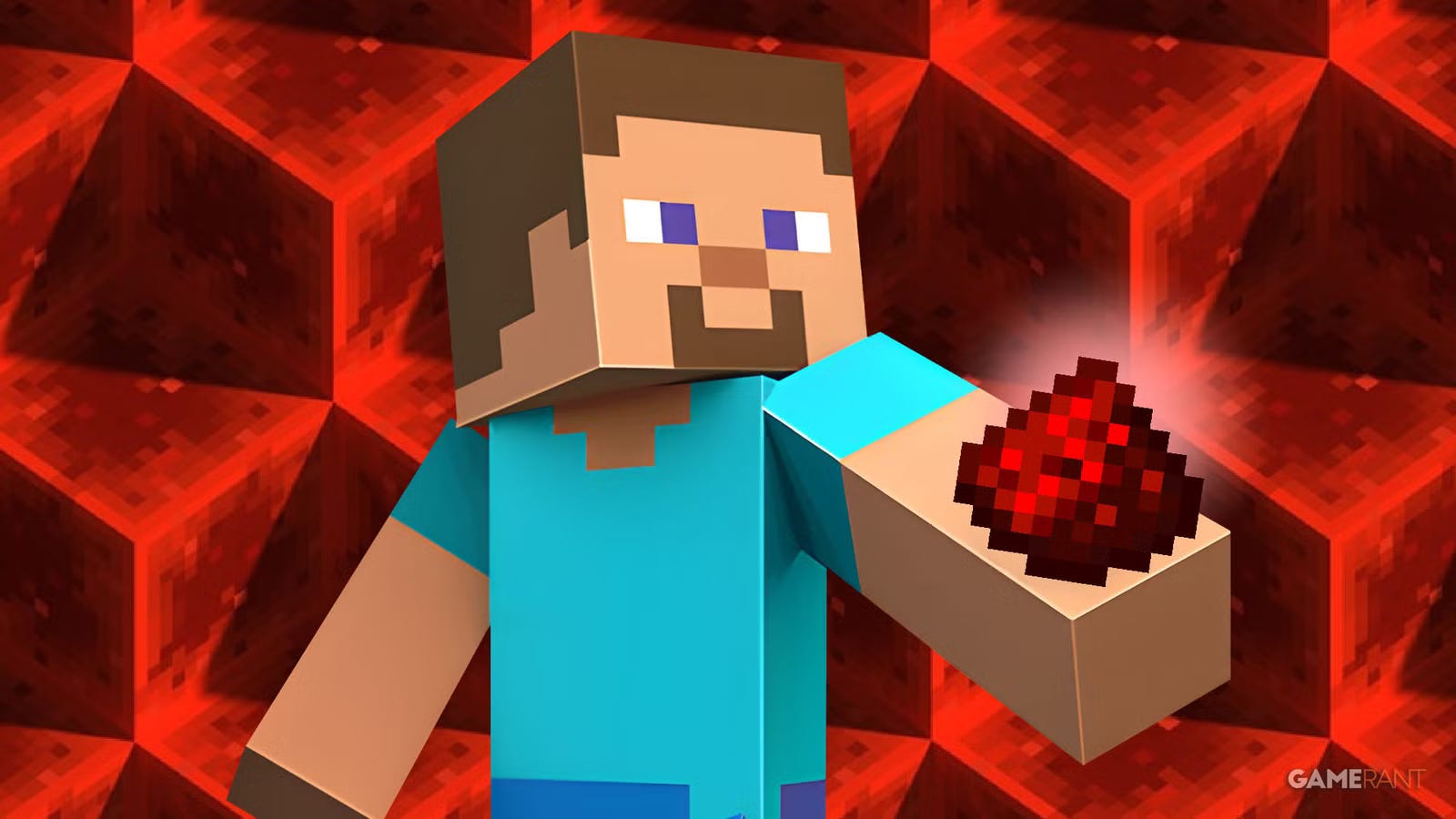
What begins as a strange red material becomes the foundation for powered doors, traps, rail systems, automated farms, hidden rooms, calculators, and even functioning computers built inside the game.
The same world that allows a child to build a first dirt house can challenge an experienced player to understand circuitry and automation.
Minecraft never abandons its simple language. It simply reveals how much can be said with it.
The Story Is Whatever Happened
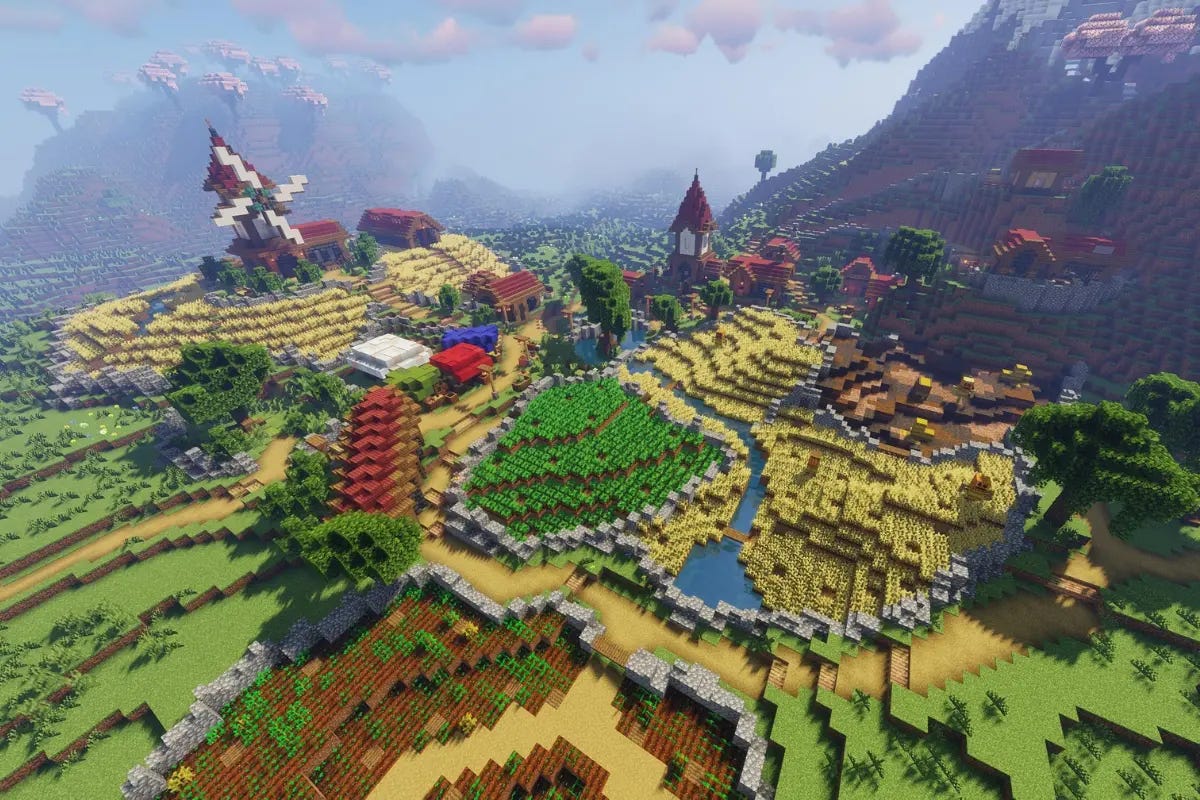
Minecraft contains recognizable characters, creatures, dimensions, and a nominal ending built around defeating the Ender Dragon. What it does not provide is a conventional story that every player experiences in the same way.
Instead, it creates the conditions for stories to happen.
The story is the wolf you tamed and somehow kept alive through every terrible decision. It is the expedition where everyone became lost and one friend insisted they knew the way home. It is the Creeper explosion that destroyed half the house and left a crater nobody ever bothered to repair.
It is dying deep underground and desperately racing back to recover everything before it disappears.
On a multiplayer server, these moments grow into shared history. Players form communities, divide responsibilities, establish rules, build competing settlements, and occasionally begin arguments over property lines that become far more serious than anyone intended.
A path between two houses becomes evidence of a friendship. An abandoned structure becomes proof that someone used to play there. A handwritten sign can preserve a joke years after the person who placed it stopped logging in.
The game does not write those stories.
The players do.
A World That Remembers You
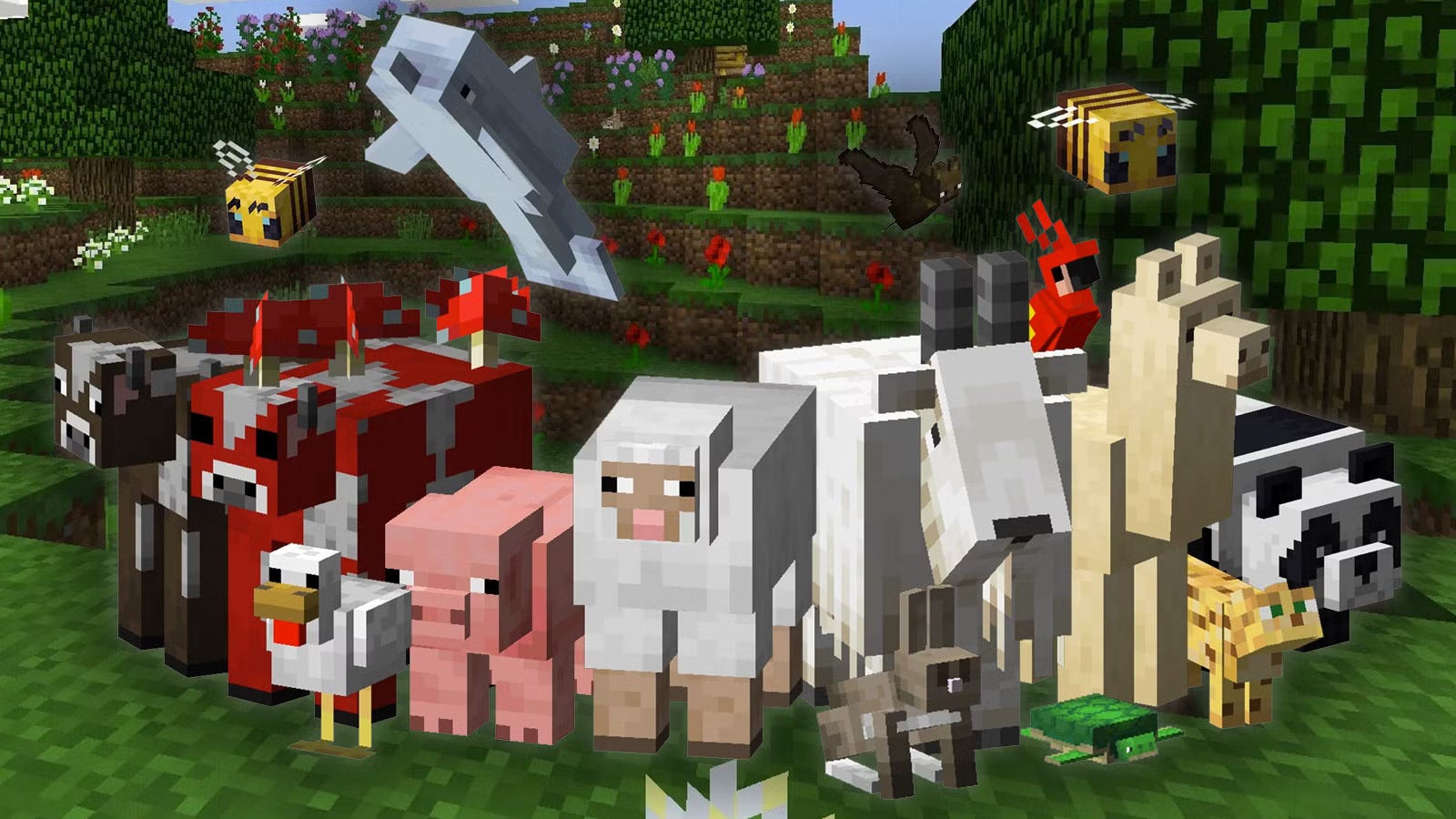
Every newly generated Minecraft world promises discovery. A hill blocks the horizon, which makes the player wonder what exists beyond it. A cave opens beneath the ground, which makes the player wonder how deep it goes.
There is always another forest, mountain, village, ruin, biome, or stretch of ocean waiting somewhere beyond what you already know.
But the procedural generation is only half of the equation.
The world becomes meaningful when the player leaves something behind.
Returning to an old save can feel like opening a time capsule. The first shelter is still there, even if it now looks tiny beside everything built afterward. Chests are filled with materials you once considered valuable. Half-finished projects reveal what you were planning before you became distracted by something else.
You can follow old roads and remember why they were built.
You can find a bed inside a distant outpost and realize you once spent an entire night there waiting for the rain to stop.
A Minecraft world does not merely record progress. It preserves a version of the person who played it.
Some worlds are never truly finished.
They are simply left waiting.
The Sound of Solitude
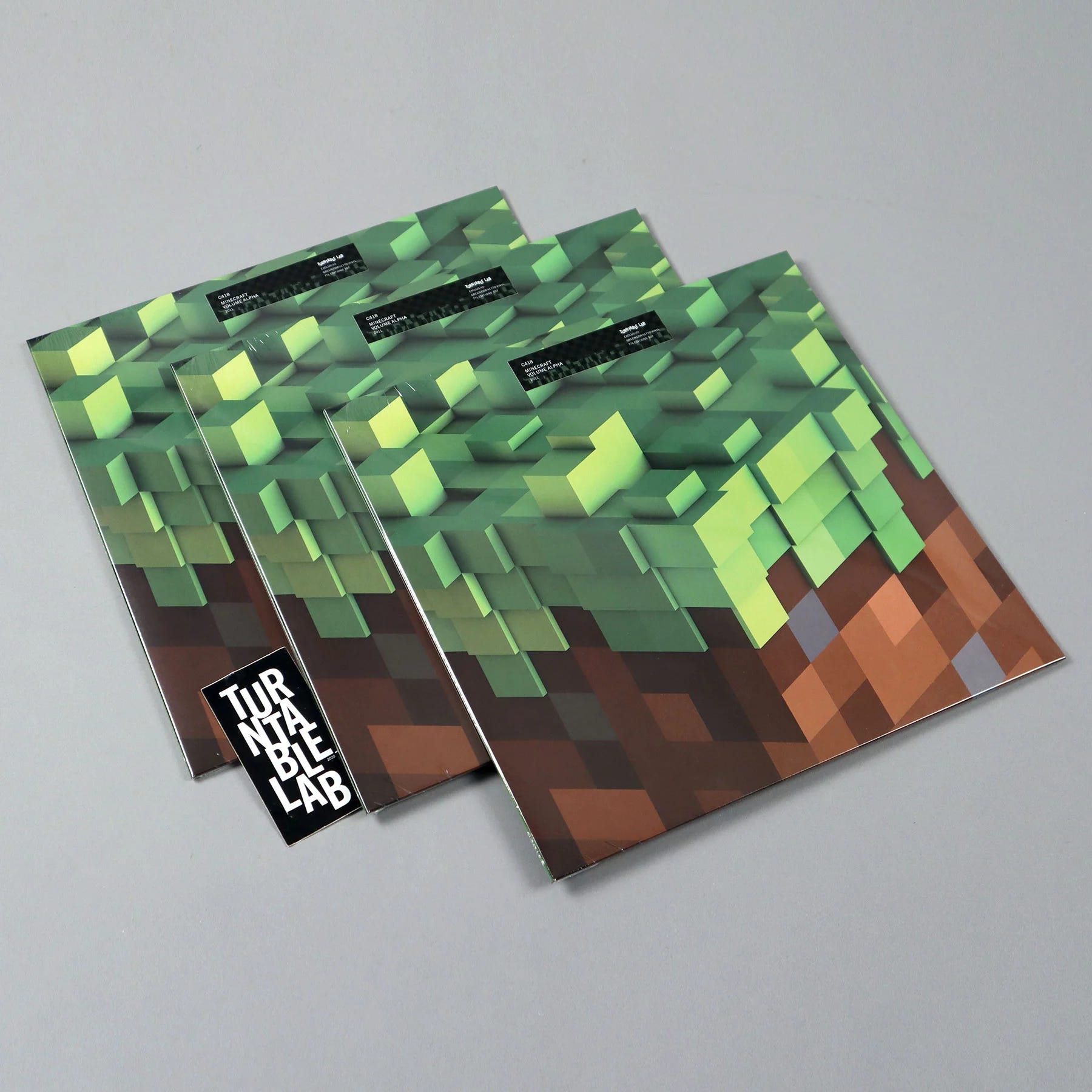
The original music composed by C418 is as important to Minecraft as its blocks.
Soft piano and ambient sounds drift into the game without demanding attention. The music does not constantly celebrate the player or tell them how to feel. It creates room for thought, allowing a massive digital world to feel peaceful, lonely, and strangely intimate at the same time.
Then a Creeper hisses behind you.
Few sounds in gaming can transform calm into panic so quickly.
That contrast defines the atmosphere of Minecraft. A quiet afternoon spent farming can become a desperate fight for survival. A peaceful cave can suddenly open into darkness. Safety and danger are often separated by a single wall—and occasionally by one poorly placed torch.
How Minecraft Became Bigger Than a Game
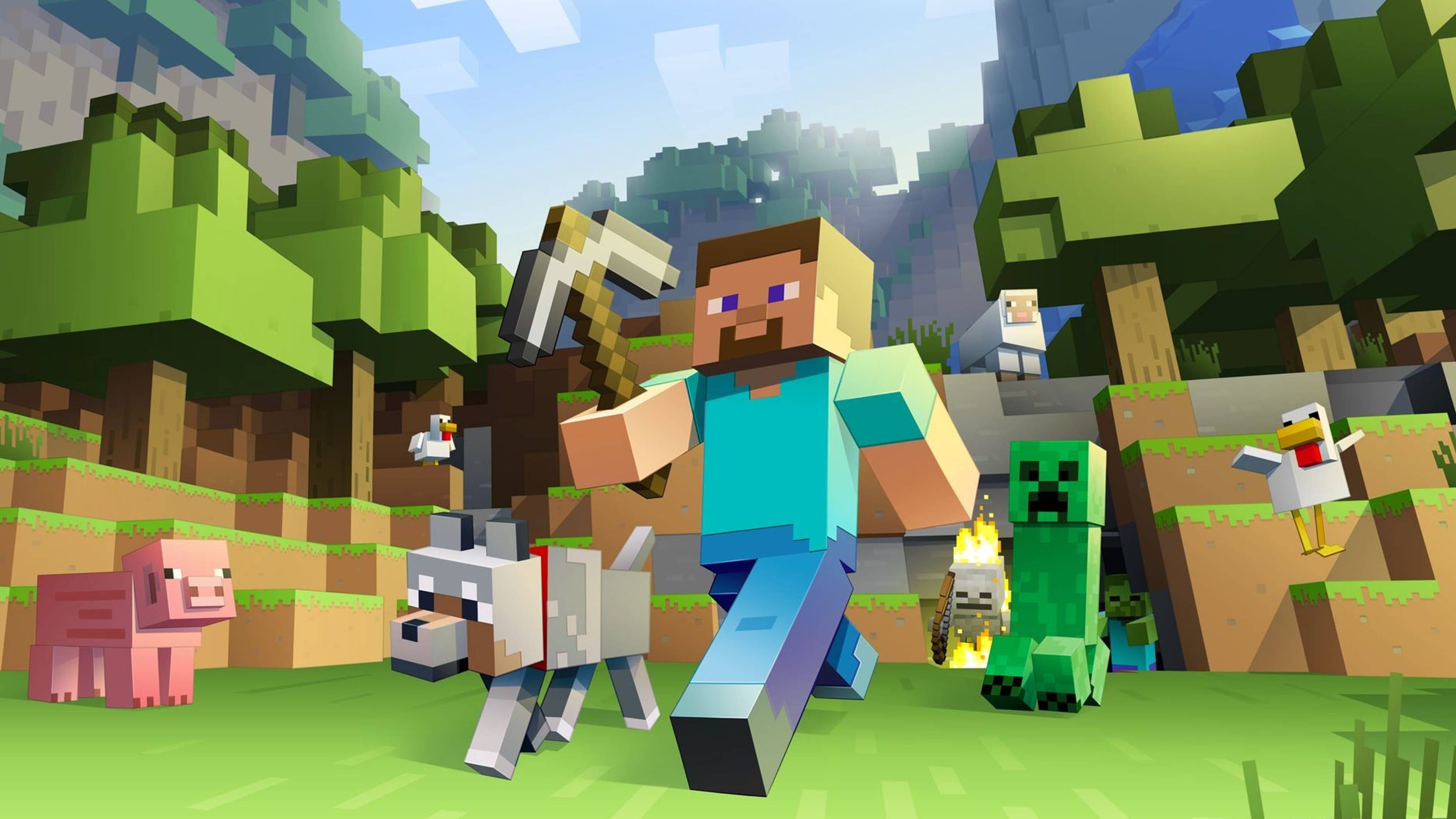
Minecraft first became publicly playable in 2009 before reaching its full 1.0 release in 2011. By 2023, it had crossed 300 million copies sold.
Its growth did not come from the game alone.
YouTube videos, tutorials, multiplayer servers, mods, challenge runs, elaborate builds, and community experiments continuously showed players new possibilities. In 2021, Minecraft-related content surpassed one trillion views on YouTube.
That relationship between the game and its community became a self-sustaining engine.
Players created things. Other players watched them and became inspired. They returned to their own worlds with new ideas, then shared what they made with someone else.
Every impossible build expanded the public understanding of what Minecraft could be.
Regular updates, community creations, mods, new platforms, and multiplayer helped the game evolve, but its central promise remained remarkably stable:
Here is a world.
Here are some tools.
What do you want to do?
Why Minecraft Still Matters
Modern gaming is filled with survival crafting systems, user-generated content, persistent online spaces, and games designed to become places where people spend time together.
Minecraft did not invent every part of that future, but it helped prove how powerful the combination could become.
Its influence can be felt in survival games, Roblox, Fortnite Creative, community servers, streaming culture, and the modern expectation that a game can continue evolving long after its original release.
But Minecraft has lasted because it offers something deeper than an endless stream of content.
It offers ownership.
A young player can shape a world at an age when much of real life is controlled by adults. Friends can build a place that belongs only to them. An experienced player can turn familiar systems into increasingly elaborate creations. An adult can return years later and rediscover the kind of unstructured play that becomes harder to find with age.
The game can be an adventure, an art program, an engineering challenge, a social space, or simply somewhere peaceful to spend an evening.
It becomes whatever the player needs it to become.
That is the answer to both questions.
How did Minecraft convince millions of people to spend countless hours playing it?
By creating clear rules, layered systems, endless discovery, and a loop where every accomplishment inspires another goal.
Why did they stay?
Because people want to explore. They want to create order from chaos. They want to build somewhere safe, share it with someone else, and leave proof that they were there.
Most games ask whether you can beat them.
Minecraft asks what you will build when nobody tells you what counts as winning.
And maybe its greatest trick is not generating a world that appears endless.
It is convincing you that one small corner of it is worth caring about.
Ctrl+Binge Question
What was the first thing you built in Minecraft that made the world feel like it belonged to you?