The road is empty.
Not quiet. Empty.
No headlights approach from the opposite direction. No porch lights shine beyond the trees. The radio has faded into static, and the only things your headlights catch are pavement, painted lines, and darkness.
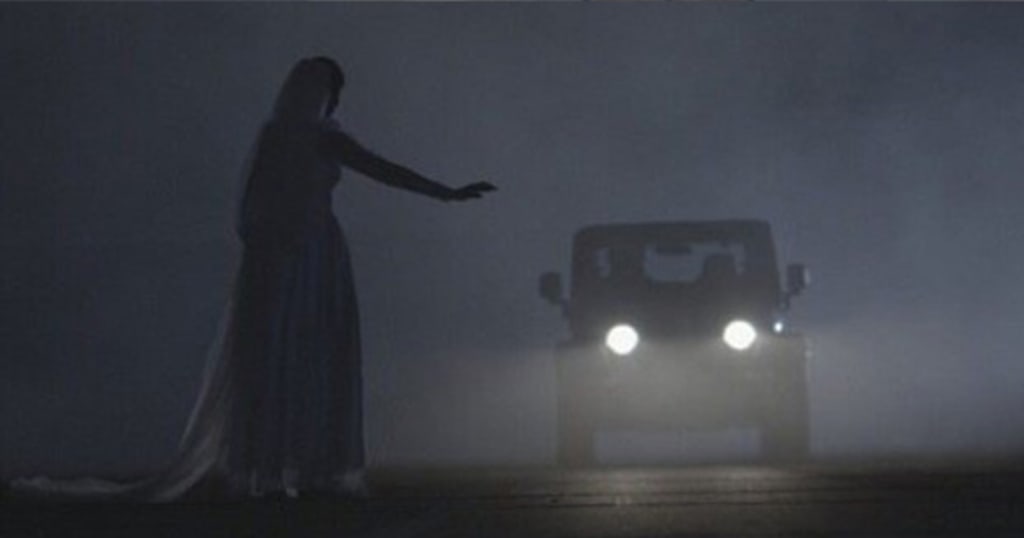
Then someone appears on the shoulder.
A young woman stands alone beside the road. She is dressed too lightly for the cold. Maybe she is wearing white. Maybe she looks soaked from the rain. She does not wave frantically or run toward the car.
She simply waits.
You pull over.
She gives you an address and climbs into the back seat. She barely speaks during the drive. Perhaps you attempt conversation. Perhaps something in her expression convinces you not to.
Then you glance into the mirror.
The seat is empty.
When you reach the address she gave you, an older couple answers the door. You explain what happened. You describe the passenger.
Their faces fall.
That was their daughter.
She died on that road years ago.
It is the kind of story that always happened nearby. The road has a name. The cemetery is real. The family supposedly still lives in the house. The person telling it heard it from a cousin, a coworker, or someone who knew the driver.
Every town seems to have its own version.
That is because the vanishing hitchhiker is not one ghost.
It is a story that learned how to travel.
The Passenger Everyone Recognizes
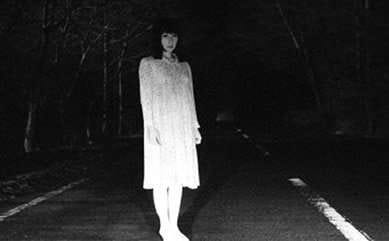
The details change depending on who is telling the story.
Sometimes the passenger is a young woman trying to return home after a dance. Sometimes she is walking away from a cemetery. Sometimes she warns the driver about an approaching disaster. In a few versions, she leaves something behind—a coat, a scarf, or another object that later appears on her grave.
The ending rarely changes.
The passenger disappears before reaching her destination. The driver searches for an explanation and discovers that the stranger was already dead.
It has become one of the most recognizable ghost stories of the automobile age. Even people who have never heard the phrase “vanishing hitchhiker” probably know the shape of it.
A traveler.
A ride.
An unfinished journey.
An empty seat.
Movies, television shows, books, radio dramas, and campfire storytellers have all carried some version of it forward. The legend feels old enough to have always existed, yet modern enough that it could happen tonight.
All it needs is a dark road—and someone kind enough to stop.
The Ghost Story Learns to Drive
Stories about mysterious travelers existed long before automobiles.
Folklore is filled with strangers who appear along roads, accept hospitality, deliver warnings, test the kindness of ordinary people, and then reveal themselves as spirits, saints, gods, or something more dangerous.
The vanishing hitchhiker fits comfortably beside those older traditions, but its familiar form belongs to a world reshaped by the car.
The automobile changed what a road meant.
A journey that once required days could be completed in hours. People traveled farther from their communities, often alone, protected by a moving shell of steel and glass. The darkness outside remained dangerous, but the driver could lock the doors, turn on the headlights, and keep moving.
The car offered control.
The vanishing hitchhiker took that control away.
The ghost no longer waited inside an abandoned house or wandered through a cemetery. It stood beside a public road and asked to be invited into the one place the driver believed was safe.
Once inside, it could not be left behind.
American folklorists Richard Beardsley and Rosalie Hankey conducted an early major study of the legend in 1942 and 1943. After gathering dozens of accounts from across the United States, they organized the stories into several broad patterns: the passenger whose address leads to the discovery of their death, the traveler who predicts a disaster, the young woman connected to a dance or social event, and the hitchhiker eventually identified as a sacred or supernatural figure.
The legend did not have one fixed script.
It had a set of parts storytellers could rearrange.
A Ghost with No Permanent Address
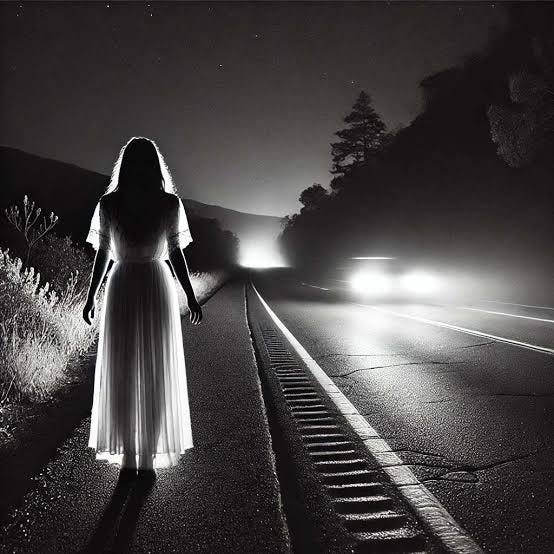
That flexibility may be the secret to the vanishing hitchhiker’s survival.
The story does not demand a castle, an ancient battlefield, or a particular patch of cursed ground. It can settle almost anywhere.
Give the road a local name.
Place a cemetery near the final turn.
Add a dance hall, a bridge, a railroad crossing, or the site of an old accident.
Then tell everyone that it happened to someone who can almost—but never quite—be reached for confirmation.
The resulting story feels specific enough to be true and distant enough to remain impossible to disprove.
That is the machinery of an urban legend.
The person telling the story usually does not claim to have picked up the ghost. Instead, the experience belongs to a friend of a friend: someone close enough to be trustworthy but far enough away that the details cannot be checked.
A stranger’s ghost story can be dismissed.
Your cousin’s coworker’s story is just close enough to make you reconsider driving home alone.
In 1981, folklorist Jan Harold Brunvand helped popularize both the legend and the study of modern folklore with his book The Vanishing Hitchhiker: American Urban Legends and Their Meanings. Its title placed the ghost where it belonged—not outside modern life, but directly inside it.
Urban legends are not lesser myths created after humanity ran out of ancient ones. They are folklore moving at the speed of newspapers, telephones, television, email, and now social media.
The vanishing hitchhiker merely got there first.
Not Every Passenger Is the Same
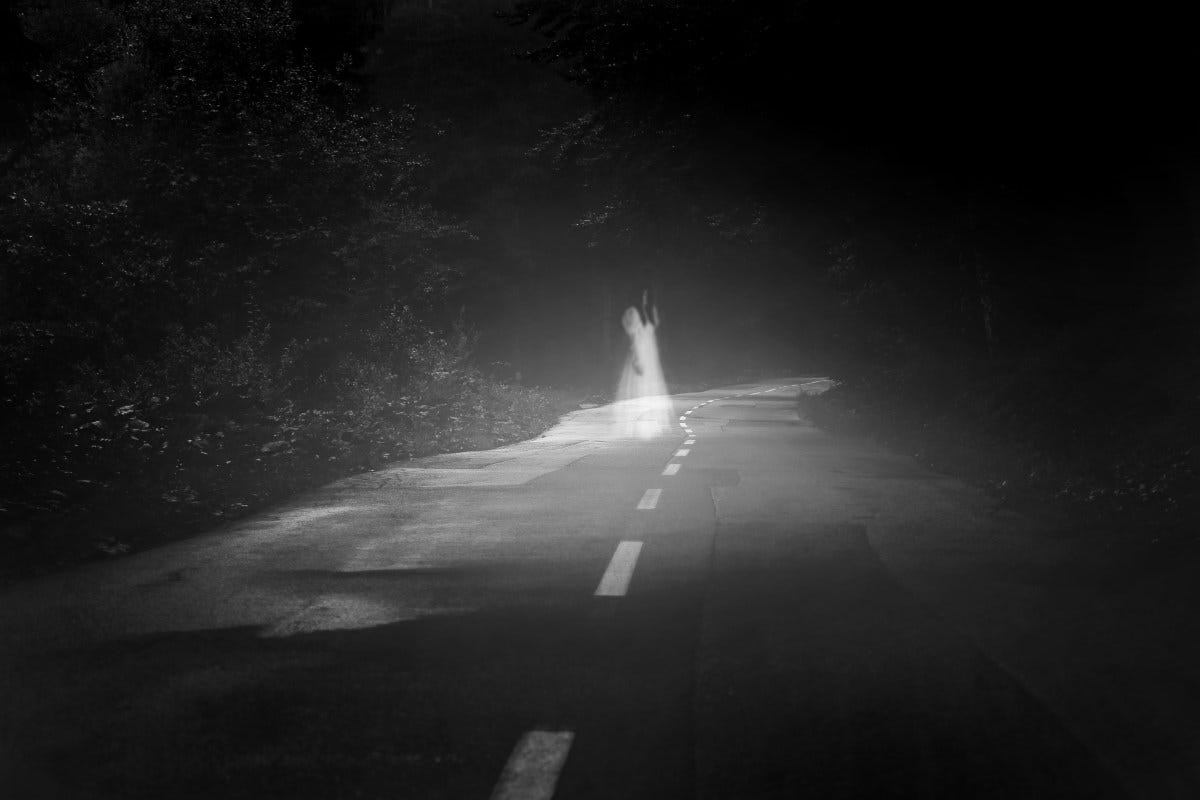
The most familiar hitchhiker is a young woman attempting to return home. Her death was sudden, often caused by an accident on the same road where she now appears.
She is trapped inside a repeated journey.
She may not know she is dead. She may know exactly what happened and be searching for someone willing to help. She may be returning to the place where she was happiest—or trying to complete the trip she never finished.
Other versions change the purpose of the encounter.
A mysterious older passenger may enter the vehicle, predict war, catastrophe, or some other approaching disaster, and vanish. Here, the ghost is not trying to get home. It is a messenger.
Some stories transform the encounter into a test. The driver who stops is rewarded, protected, or warned. The driver who refuses may suffer misfortune.
That structure resembles much older tales in which gods or sacred figures travel in disguise and judge mortals by how they treat a stranger. In Hawaii, for example, versions have identified the mysterious traveler as Pele. Those stories belong to a specific cultural and religious tradition and should not be flattened into just another spooky roadside attraction. They show how easily the traveling-stranger framework can join an existing sacred landscape.
The details change because the passenger becomes whatever the community needs to meet on the road.
- A victim.
- A warning.
- A test.
A memory that refuses to stay buried.
Resurrection Mary Takes Archer Avenue

For Illinois, the vanishing hitchhiker has a name.
Resurrection Mary is said to walk Archer Avenue southwest of Chicago, near Resurrection Cemetery in Justice. She is usually described as a young woman in a white dress, sometimes wearing dancing shoes and carrying little protection against the cold.
In one version, a young man meets Mary at a dance hall. They dance together before she asks for a ride home. As the car approaches Resurrection Cemetery, she disappears.
In another, drivers spot her walking along Archer Avenue and offer her a ride. She enters the vehicle, remains strangely quiet, and vanishes near the cemetery gates.
Some accounts go further, claiming that Mary has stepped in front of moving cars or left marks on the cemetery’s gates while attempting to get inside.
The legend offers several possible identities for her, usually women said to have died during the 1920s or 1930s. None has been conclusively established as the historical Mary. That uncertainty has not weakened the story. It has allowed generations of storytellers to keep searching for the “real” woman behind the white dress.
Chicago did not invent the vanishing hitchhiker, but Resurrection Mary became one of its most famous American forms. The Chicago History Museum notes that similar phantom-passenger stories have been attached to places far beyond Illinois, including South Carolina, England, and the Philippines.
Mary belongs to Archer Avenue.
Her story belongs to the world.
The Proof Left Behind
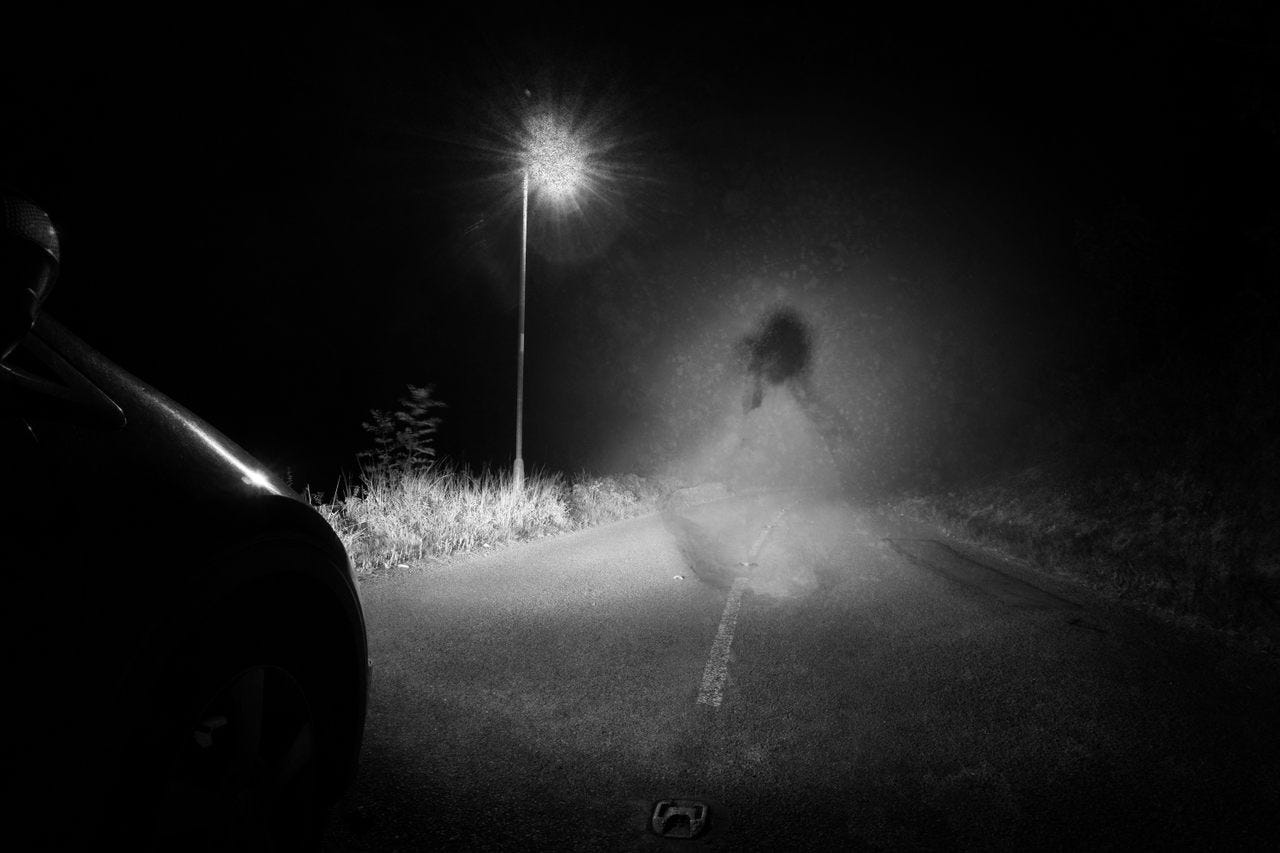
Most ghost stories ask the listener to accept the witness’s word. Vanishing hitchhiker stories frequently offer something more.
A coat borrowed by the passenger is later found folded over a gravestone. A family produces a photograph of its dead daughter, and the shaken driver recognizes her immediately. A cemetery caretaker confirms that others have seen the same woman.
These details function as evidence inside the story. They close the gap between an eerie encounter and a supposedly verified supernatural event.
They are also almost too perfect.
The proof arrives precisely when the story needs it. It confirms the driver’s experience without providing anything the audience can independently inspect. The borrowed coat proves the ghost existed—but only inside the telling.
That does not make the detail useless. It makes it brilliant folklore.
The legend anticipates disbelief and builds its own answer into the plot.
You think the driver imagined her?
Then explain the coat on the grave.
The Passenger Seat in Pop Culture
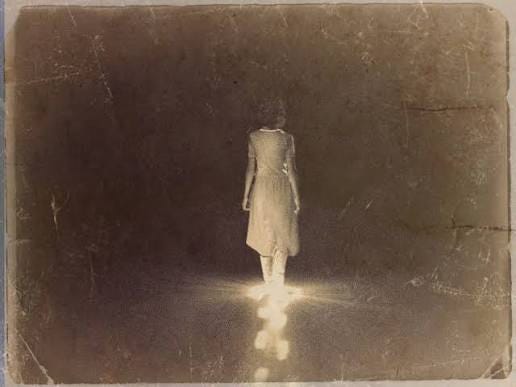
Modern storytellers have repeatedly returned to the lonely road because it provides an almost perfect supernatural stage.
The Twilight Zone episode “The Hitch-Hiker,” adapted from Lucille Fletcher’s radio play, reverses part of the familiar setup. A woman repeatedly encounters the same mysterious hitchhiker during a cross-country drive, only to discover that she is the one who has already died.
The Supernatural episode “Roadkill” plays with a similar realization, placing its ghost inside a journey she does not fully understand.
Other films and television episodes mix the legend with phantom vehicles, looping roads, murderous drivers, and ghosts reenacting their final nights.
The details can be rearranged endlessly because the central fear remains simple: What happens when the person sharing your journey does not belong among the living?
The vanishing hitchhiker also helped establish the grammar of later road legends. The killer hiding in the back seat, the stranger signaling with headlights, the car that follows you home, and the gas-station attendant desperately trying to warn you all turn the automobile into a stage where isolation and vulnerability collide.
The car promises escape.
The road decides whether you receive it.
Why We Keep Stopping
The vanishing hitchhiker survives because almost everyone understands what it means to be between places.
A road is neither the home we left nor the destination we hope to reach. It is a long, narrow space in between.
The hitchhiker exists in another kind of in-between.
She is no longer alive, but she has not completed the journey into death. She returns to the road because something remains unfinished. Perhaps she is trying to reach home. Perhaps she is reliving her final night. Perhaps she simply needs someone to remember that she was once more than a ghost in a white dress.
There is also a moral question waiting on the shoulder.
Do you stop?
Leaving a stranger alone on a dark road feels cruel. Allowing that stranger into your car feels dangerous. The legend traps the driver between compassion and self-preservation.
Stopping may bring the supernatural inside.
Driving past may mean abandoning someone who truly needs help.
That decision was easier to dramatize when hitchhiking was a familiar part of travel, but the emotional machinery still works. We continue to live behind locked doors and rolled-up windows. We still look at stranded strangers and wonder whether helping them will make us heroes, victims, or fools.
The legend offers no safe answer.
The Story in the Rearview Mirror
The vanishing hitchhiker never needed one true ghost.
Its power comes from repetition.
Every retelling gives the passenger another road. Every cemetery gives her another grave. Every generation changes the vehicle, the clothing, and the reason she is waiting—but the empty seat remains.
You can lock the doors.
You can turn up the radio.
You can keep your eyes forward and promise yourself that you will not stop for anyone.
But every road has a shoulder.
And folklore has been waiting there for a ride.
If the same ghost appears on roads all over the world, are we telling different stories—or has one story simply been hitchhiking from town to town?
Ctrl+Binge Question
If you encountered a lonely hitchhiker on the road, would you stop, or just keep on driving?